Find the Best Drain Field Repair Companies for Your Business
No obligation • Fast responses • Nationwide coverage

Why you can trust Septic Spot
Septic Spot is a leading United States resource for understanding and comparing septic services. Our editors review providers using consistent criteria and verify key business details. Listings and scores are independent, and companies cannot pay to influence our content.
Search providers near you
Top Drain Field Repair Companies in Leander, Texas Ranked
A failing drain field is a serious issue for any home with a septic system, leading to unpleasant odors, soggy yards, and potential environmental contamination. In Leander, where clay soils and specific regulations add complexity, addressing absorption field problems promptly and correctly is crucial. This guide explains the process, local requirements, and what to expect when you need to repair or replace your septic system's leach field, helping you connect with qualified local professionals for the job.
HomeField Williamson County
40203 Industrial Park Cir, Georgetown, TX 78626
HomeField Williamson County provides comprehensive septic system services in Austin, TX, covering residential and commercial needs. Their offerings include septic tank pumping, inspections, repairs, installations, drain field replacements, and system design. The company emphasizes local expertise and proactive maintenance plans to help prevent future problems. They serve Williamson County with a team familiar with local regulations and conditions, ensuring septic systems meet current requirements. HomeField also offers various maintenance plans tailored to different levels of coverage and support.
Godinez Septics Inc
5407 Phillips Cir, Austin, TX 78734
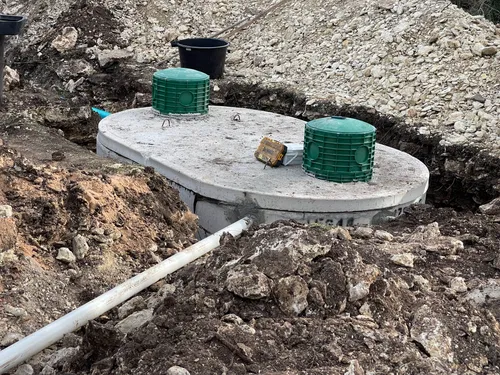
Godinez Septics Inc is a family-owned septic system company serving Austin, TX, and the surrounding Lake Travis area. They provide a range of services including septic tank pumping, inspection, repair, installation, and drain field replacement. The company is licensed by TCEQ for septic system maintenance and installation, offering specialized services such as aerobic system maintenance contracts and hydro-jetting to clear sewer lines. With over 40 years of experience in the septic and excavation business, Godinez Septics is led by Orlando Godinez, a longtime local resident and licensed installer.
Hines Septic Of Austin Tx
Austin, TX
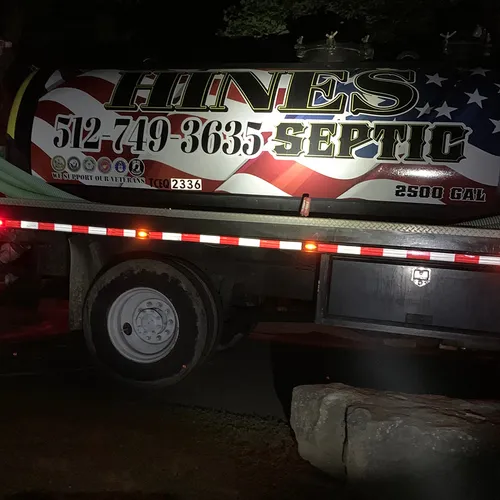
Hines Septic Of Austin Tx is a family-owned septic service provider based in Austin, TX. They offer septic tank pumping, installation, inspection, and repair services, including drain field repair and replacement. The company is fully licensed and insured, ensuring all work is performed to code. They provide 24/7 emergency septic services and back their installations with a one-year labor warranty.

Eco Septic Tank Pumping Austin
Austin, TX
Eco Septic Tank Pumping Austin provides septic tank pumping, inspection, repair, and installation services in Austin, TX. They handle routine septic system cleaning, emergency septic sewer cleaning, and biological treatments to maintain system health. The company also offers septic system repairs and drain field replacement, ensuring compliance with local regulations. Their technicians follow a detailed pumping process and dispose of waste properly at licensed facilities. Eco Septic Tank Pumping Austin serves multiple areas around Austin and emphasizes regular maintenance to prevent system failures.
Sunset Construction & Excavation
Austin, TX
Sunset Construction & Excavation is a septic system service provider based in Austin, TX. They offer septic system installations, repairs, and design services for both residential and commercial clients. Their work includes excavation and landscaping related to septic systems, serving Austin and surrounding areas such as Travis County, Leander, and Bee Cave. The company has over a decade of experience and is licensed by the Texas Commission on Environmental Quality. They also provide hydro-mulching to restore properties after septic work is completed.
Understanding Your Leander Drain Field
The drain field, also known as a leach field or absorption field, is the final and most critical stage of your onsite sewage facility (OSSF). After solids settle in the septic tank, liquid effluent flows into a network of perforated pipes buried in trenches filled with gravel. This effluent slowly percolates into the soil, where natural processes provide final treatment 1. In Leander, the performance of this component is heavily influenced by local geology. Much of the area features clay-heavy soil or shallow rock, which naturally drains very slowly. This soil type can accelerate system failure and often dictates the need for specialized, advanced treatment systems rather than conventional drain fields.
Signs Your Drain Field Needs Attention
Catching problems early can mean the difference between a repair and a full, costly replacement. Homeowners should watch for these key indicators of a failing leach field:
- Surface Water and Odors: The most obvious sign is sewage effluent pooling on the ground above the drain field area or a persistent foul odor 2.
- Unusually Lush Vegetation: Grass or plants over the drain field that are significantly greener and more vigorous than the rest of the yard can indicate a nutrient-rich sewage leak.
- Slow Drains and Backups: If toilets, showers, and sinks drain slowly throughout the house, especially during wet weather, it could signal that the drain field is saturated and not accepting water.
- Standing Water in Inspection Ports: Some systems have small vertical pipes for monitoring. If you check these and find standing wastewater, it suggests a clog or failure in the distribution lines 3.
A professional diagnosis typically involves a load test, where water is run in the home to see if the system can handle normal usage, and sometimes a camera inspection to look for collapsed or clogged pipes within the drain field 4.
Leander and Texas Regulatory Landscape
All work on septic system drain fields in Leander is strictly regulated to protect groundwater and public health. The city falls under the jurisdiction of the Texas Commission on Environmental Quality (TCEQ), and most properties are in Williamson County (with some in Travis County), which enforce TCEQ standards locally 5.
Permits Are Mandatory: A permit is required for any repair, alteration, extension, or replacement of a drain field. The only exception is for emergency repairs to prevent an immediate health hazard, such as fixing a broken pipe, but even these must be reported to the local permitting authority within 72 hours.
Licensed Professionals Required: With few exceptions, any work on an OSSF must be performed by a TCEQ-licensed installer or site evaluator 6. Homeowners may perform repairs on their own single-family residence if they live there, but the work must still meet all code requirements and may require a permit.
Current Standards Apply: A critical rule is that any repaired or replaced drain field must be built to current TCEQ standards (30 TAC 285), regardless of how old the original system was 7 8. This often means a replacement system will need more space or advanced technology than the one it replaces.
Setback Requirements: New or replacement drain fields must maintain minimum distances from other features: at least 100 feet from water wells and 50 feet from property lines, building foundations, and other structures 9 10.
The Professional Process: From Evaluation to Completion
When you contact a licensed professional for a suspected drain field issue, they will follow a structured process.
- Site Evaluation and Soil Testing: This is the essential first step. A licensed site evaluator will conduct a percolation test to determine the soil's absorption rate and probe to establish the depth to groundwater or rock. TCEQ requires a minimum of 4 feet of suitable soil depth for a conventional system 11 12. The slope of the proposed area is also assessed; generally, it should not exceed 15% 13 12.
- System Design and Permitting: Based on the soil test results, house size, and local regulations, the professional will design a system. For Leander's challenging clay soils, this design may call for an aerobic treatment unit (ATU) instead of a conventional septic system. The designer then submits the plans and obtains the necessary permit from the county or city.
- Diagnosis and Recommendation: For an existing failing field, the installer will determine if a repair is possible. In some cases, issues like a clogged distribution box or a crushed pipe can be fixed 14. However, if the soil is completely saturated and clogged (a condition called "biomat overload"), the entire drain field typically must be abandoned and a new one installed in a different location 14.
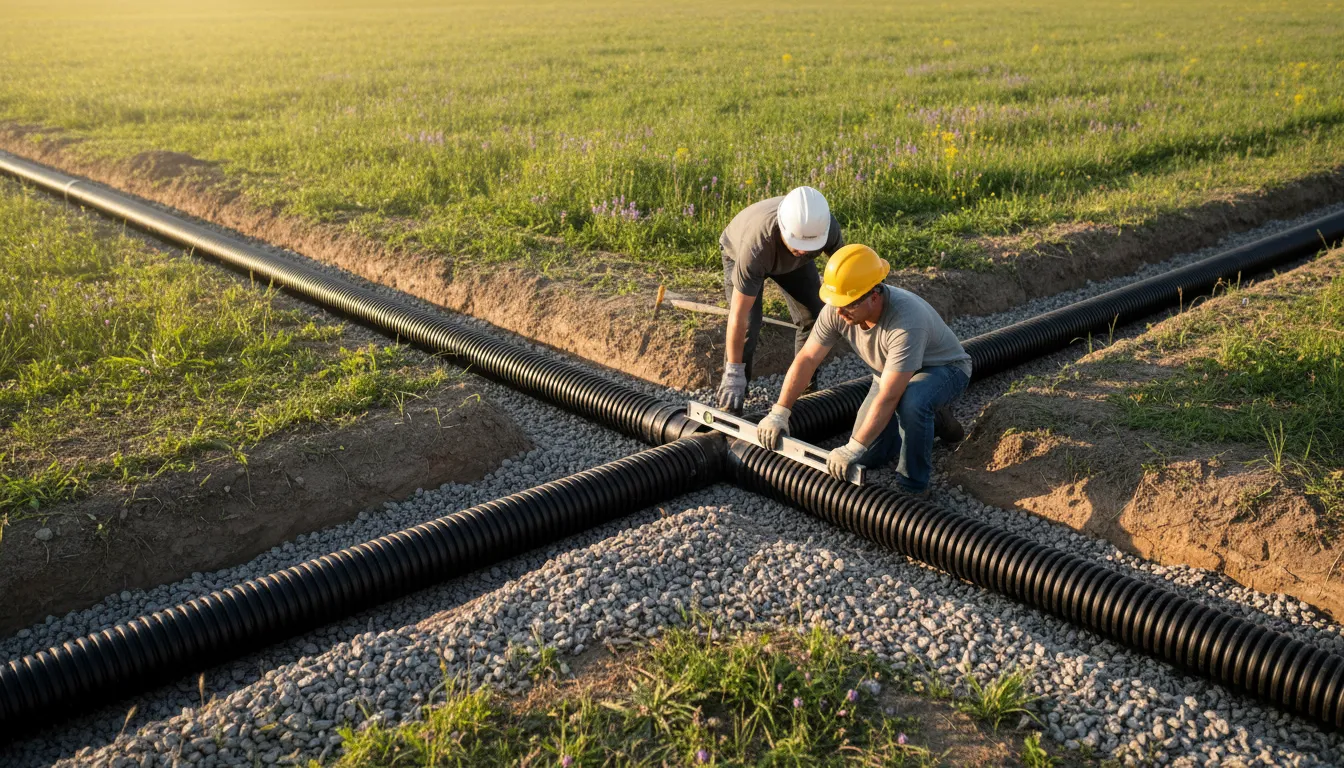
- Installation: The old field is taken out of service. For a new conventional field, trenches are dug, gravel and perforated pipe are laid, and the area is covered. For an aerobic system, the mechanical treatment unit and its associated sprinkler or spray field are installed. All work is inspected by the local authority.
Find the perfect drain field repair companies for your needs
Get personalized recommendations and expert advice
Cost Considerations for Drain Field Work
The cost for drain field solutions in Leander varies widely based on soil conditions and the type of system required. It's important to get multiple detailed quotes from licensed providers.
- Site Evaluation/Soil Test: This initial assessment typically costs between $350 and $750.
- Conventional Drain Field Replacement: If your site supports a standard system, replacing the absorption field can range from $6,000 to $12,000 or more, depending on size and accessibility.
- Aerobic System Installation: Due to the prevalent soil conditions in Central Texas, many homes in Leander will require an advanced aerobic system. Installing a full aerobic treatment system, including the new drain field, generally runs from $12,000 to $20,000+ 15 16.
- Permit Fees: These are paid to the local county (usually Williamson) and can amount to several hundred dollars.
Maintaining a New or Repaired Drain Field
Protecting your investment is key. Proper maintenance includes:
- Directing all roof drains and surface water away from the drain field area.
- Never driving or parking heavy vehicles over the field.
- Planting only grass over the field; avoid trees and deep-rooted plants.
- Practicing water conservation inside the home to avoid overloading the system.
- Having the septic tank pumped regularly (every 3-5 years) to prevent solids from escaping into and clogging the drain field.
Frequently asked questions
Sources
Footnotes
-
Septic systems explained - Texas Water Resources Institute - https://twri.tamu.edu/blog/septic-systems-explained/ ↩
-
Resolving Septic System Malfunctions | US EPA - https://www.epa.gov/septic/resolving-septic-system-malfunctions ↩
-
How to Perform a Drain Field Inspection Yourself: A Complete Guide - https://www.vevor.com/diy-ideas/drain-field-inspection/ ↩
-
Expert Drain Field Repairs - Lakeland Septic Company - https://lakelandsepticcompany.com/drain-field-repair/ ↩
-
Basics for Septic Systems - https://www.tceq.texas.gov/assistance/water/fyiossfs.html ↩
-
Advice for an Owner of an On-Site Sewage Facility (Septic ... - https://www.tceq.texas.gov/permitting/ossf/ossfadvice.html ↩
-
Advice for an Owner of an On-Site Sewage Facility (Septic ... - https://www.tceq.texas.gov/permitting/ossf/ossfadvice.html ↩
-
Texas Septic Tank Rules - https://dillonseptic.com/texas-septic-tank-rules/ ↩
-
Basics for Septic Systems - https://www.tceq.texas.gov/assistance/water/fyiossfs.html ↩
-
Are There Regulations or Guidelines for Septic Tank Drain ... - https://weebeewasteservices.com/are-there-regulations-or-guidelines-for-septic-tank-drain-field-maintenance-in-texas/ ↩
-
Basics for Septic Systems - https://www.tceq.texas.gov/assistance/water/fyiossfs.html ↩
-
Septic Design - https://paulswoyerseptics.com/septic-design/ ↩ ↩2
-
Texas Septic System Regulations - https://dillonseptic.com/texas-septic-system-regulations/ ↩
-
Can Leach Fields Be Repaired? | GoodFlow Solutions - https://www.goodflow.com/can-leach-fields-be-repaired/ ↩ ↩2
-
Texas Septic Systems & OSSF Requirements | 2026 Guide - https://texaslandbrokerage.com/resources/texas-septic-systems-ossf-requirements-guide/ ↩
-
Average Cost to Install Septic System in Texas - https://dillonseptic.com/average-cost-to-install-septic-system-in-texas/ ↩