Find the Best Drain Field Repair Companies for Your Business
No obligation • Fast responses • Nationwide coverage

Why you can trust Septic Spot
Septic Spot is a leading United States resource for understanding and comparing septic services. Our editors review providers using consistent criteria and verify key business details. Listings and scores are independent, and companies cannot pay to influence our content.
Search providers near you
Top Drain Field Repair Companies in Little Elm, Texas Ranked
A failing drain field is a serious issue for any home with a septic system, leading to soggy yards, foul odors, and potential health hazards. Drain field repair or replacement is a significant project that requires navigating local regulations, understanding soil science, and hiring qualified professionals. This guide explains the process, costs, and key considerations for homeowners in Little Elm, ensuring you have the information needed to address septic leach field problems effectively and in compliance with Texas law.
Understanding Your Septic System's Leach Field
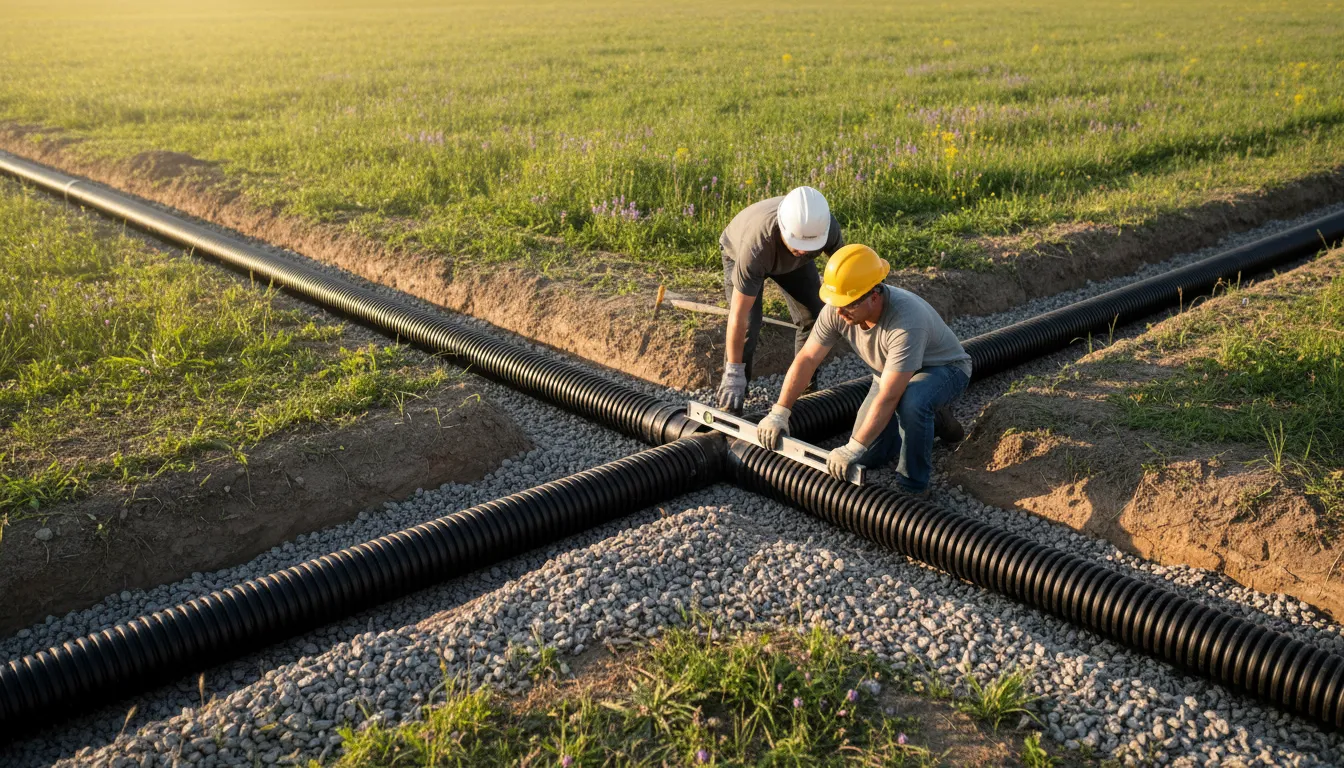
The drain field, also known as a leach field or absorption field, is the final and most critical stage of your on-site sewage facility (OSSF). After solids settle in the septic tank, liquid effluent flows into a network of perforated pipes buried in trenches filled with gravel. This effluent slowly percolates through the soil, where natural processes provide final treatment before it reaches groundwater. When this area fails, it means the soil can no longer absorb and treat the wastewater, causing backups and surface pooling.
Signs You Need Drain Field Repair or Replacement
Recognizing early warning signs can prevent a complete system failure and more expensive repairs. Look for these indicators in your Little Elm yard:
- Soggy Ground or Standing Water: Persistent wet spots or lush, green grass over the drain field area, especially when it hasn't rained.
- Sewage Odors: Foul smells emanating from the yard or near the septic tank.
- Slow Drains & Backups: Gurgling pipes, slow-draining sinks and toilets, or sewage backing up into household drains.
- Contaminated Well Water: If you have a private well, test it regularly. Bacterial contamination can indicate a failing leach field.
If you notice any of these signs, it's crucial to contact a licensed professional immediately for an inspection.
The Regulatory Landscape in Little Elm and Texas
All septic system work in Little Elm is regulated. The Town of Little Elm requires permits for installing, expanding, or altering any part of an OSSF, which includes most drain field repairs. The overarching authority is the Texas Commission on Environmental Quality (TCEQ), which enforces state rules under 30 TAC Chapter 285.
Key Permit Rules:
- Mandatory Permits: Any repair involving the replacement of system components or a change in design requires a permit from the local authority (Town of Little Elm or Denton County).
- Emergency Repairs: Temporary repairs to stop an immediate leak may be performed, but any permanent fix or component replacement still requires a permit 1.
- Penalty for Unpermitted Work: Starting construction or repair before a permit is issued can result in fees that are 100% higher than the standard permit cost 2.
- Licensed Professionals: By law, a licensed OSSF designer must design new or replacement systems, and a licensed installer must perform the work. You cannot legally do this work yourself 3.
The Step-by-Step Process for Leach Field Work
1. Professional Site and Soil Evaluation
This is the non-negotiable first step. A licensed site evaluator will conduct a thorough analysis of your property. They will perform soil tests (often called "perc tests" or soil morphology evaluations) to determine the soil type, depth to groundwater, and slope 4 5. This evaluation dictates what type of septic system your property can support. In areas of Little Elm with high clay content or a high water table, a conventional gravel trench system may not be viable, necessitating an advanced aerobic treatment unit (ATU) 6.
2. System Design and Permit Application
Using the soil evaluation data, a licensed designer creates a detailed system plan. This plan must adhere to strict state and local setbacks from property lines, wells, water bodies, and structures 7. The designer or your chosen installer will then submit this plan, along with the permit application, to the local permitting authority for approval 8.
3. Installation or Repair Execution
Once the permit is secured, the licensed installer can begin work. For a full replacement, this involves excavating the old leach field (if necessary) and constructing the new one according to the approved design. This stage includes laying distribution lines, adding gravel, and covering with soil.
4. Final Inspection and System Closure
Before the new or repaired drain field can be covered with topsoil and sod, a final inspection must be passed. This ensures the installation matches the permitted design and meets all health and safety codes. Only after this inspection can the system be put into service 9.
Find the perfect drain field repair companies for your needs
Get personalized recommendations and expert advice
Cost Factors for Drain Field Projects in Little Elm
The cost for septic leach field work varies widely based on system type, soil conditions, and property size. The figures below are estimates to help you budget.
- Soil & Site Evaluation: $350 - $750.
- Conventional Drain Field Repair/Replacement: $6,000 - $12,000+. This is for standard gravel trench systems in suitable soil.
- Aerobic Treatment System (ATS) Installation: $12,000 - $20,000+. Required for poor soils, these systems mechanically treat effluent before it reaches the drain field, which can be smaller as a result.
- Aerobic System Annual Maintenance Contract: $400 - $800 per year 10. These systems have mechanical parts and require quarterly servicing by a licensed maintenance provider.
What Influences Cost?
- Soil Conditions: Difficult soils (heavy clay, shallow bedrock) require more complex, expensive systems.
- System Size: Based on your home's bedroom count and water usage.
- Property Accessibility: Easy access for heavy machinery keeps costs down.
- Permit Fees: Local government fees for plan review and inspections.
Maintaining Your New or Repaired Drain Field
Protecting your investment is key. Proper maintenance extends the life of your entire septic system for decades.
- Regular Pumping: Have your septic tank pumped every 3-5 years by a licensed pumper to prevent solids from clogging the drain field 11 12.
- Conserve Water: Spread out laundry loads and fix leaks to avoid hydraulically overloading the system.
- Mind What You Flush: Only human waste and toilet paper. Never flush chemicals, wipes, or grease.
- Protect the Area: Never drive or park vehicles over the drain field. Do not plant trees or deep-rooted shrubs nearby. Ensure roof gutters and yard drainage divert water away from the field 13.
Choosing the Right Professional in Little Elm
Given the technical and regulatory complexity, selecting the right contractor is critical.
- Verify Licenses: Always ask for and verify the contractor's TCEQ license number for both design and installation.
- Get Multiple Quotes: Obtain detailed written estimates from 2-3 licensed installers.
- Check References & Reviews: Ask for local references and check online reviews specific to drain field work.
- Understand the Proposal: Ensure the quote includes soil testing, design, permitting, installation, and the final inspection.
Frequently asked questions
Sources
Footnotes
-
Getting a Permit for an OSSF - Such as a Septic System - https://www.tceq.texas.gov/permitting/ossf/ossfpermits.html ↩
-
Building Safety | Town of Little Elm, TX - Official Website - https://www.littleelm.gov/82/Building-Permits-Safety ↩
-
Advice for an Owner of an On-Site Sewage Facility (Septic ... - https://www.tceq.texas.gov/permitting/ossf/ossfadvice.html ↩
-
Septic Tank Laws in Texas - https://dillonseptic.com/septic-tank-laws-in-texas/ ↩
-
Texas Septic System Regulations - https://dillonseptic.com/texas-septic-system-regulations/ ↩
-
What is the best septic system if your land fails a perc test? - https://www.premiertechaqua.com/en-us/blog/best-septic-system-failed-perc-test ↩
-
Septic tank installation san antonio: Secure 2025 - https://www.vdwws.com/blog/septic-tank-installation-san-antonio-guide ↩
-
Are There Regulations or Guidelines for Septic Tank Drain ... - https://weebeewasteservices.com/are-there-regulations-or-guidelines-for-septic-tank-drain-field-maintenance-in-texas/ ↩
-
Texas Septic Tank Rules - https://dillonseptic.com/texas-septic-tank-rules/ ↩
-
Texas Septic Systems & OSSF Requirements | 2026 Guide - https://texaslandbrokerage.com/resources/texas-septic-systems-ossf-requirements-guide/ ↩
-
Basics for Septic Systems - https://www.tceq.texas.gov/assistance/water/fyiossfs.html ↩
-
Septic systems explained - Texas Water Resources Institute - https://twri.tamu.edu/blog/septic-systems-explained/ ↩
-
Septic System Owner's Guide | NC State Extension Publications - https://content.ces.ncsu.edu/septic-system-owners-guide ↩