Find the Best Drain Field Repair Companies for Your Business
No obligation • Fast responses • Nationwide coverage

Why you can trust Septic Spot
Septic Spot is a leading United States resource for understanding and comparing septic services. Our editors review providers using consistent criteria and verify key business details. Listings and scores are independent, and companies cannot pay to influence our content.
Search providers near you
Top Drain Field Repair Companies in McKinney, Texas Ranked
A failing drain field, also known as a leach field or absorption field, is a serious issue for any home with a septic system. It's the final and most critical stage where treated wastewater is safely returned to the soil. When this component fails, it can lead to sewage backups, soggy yards, and environmental contamination. For homeowners in McKinney, navigating the repair or replacement of a septic drain field involves understanding local regulations, soil conditions, and finding qualified professionals. This resource is designed to help you understand the process, costs, and key considerations for restoring your system's functionality.

Understanding Your Drain Field in North Texas
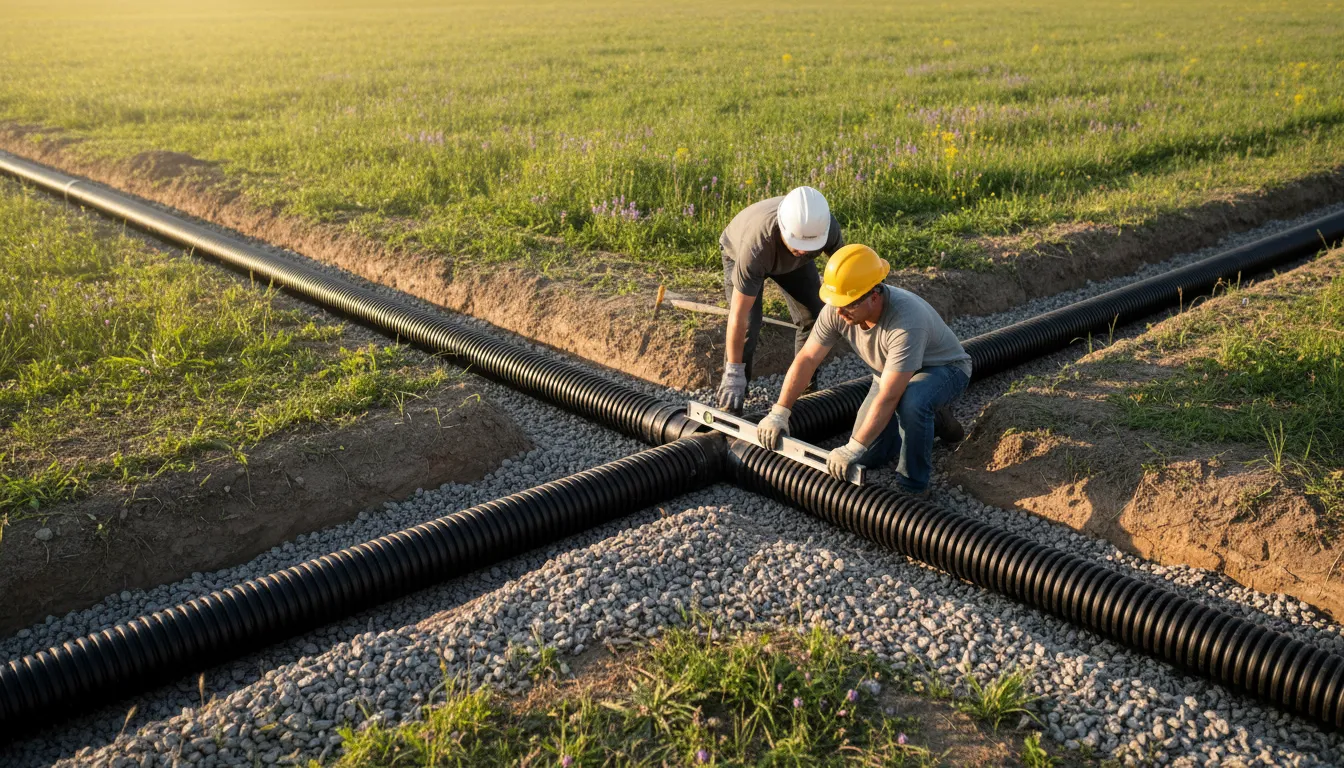
The drain field is a network of perforated pipes buried in trenches filled with gravel. After solids settle in the septic tank, the liquid effluent flows into this field, where it percolates through the soil for final treatment. In McKinney and surrounding Collin County, the performance of your leach field is heavily influenced by local geology. The area is known for its clay-heavy soils, which have slow permeability. This means water doesn't drain as quickly, making systems more prone to saturation and failure if not properly designed and maintained. Understanding this soil constraint is the first step in diagnosing problems and planning effective solutions.
Signs You Need Drain Field Service
Recognizing early warning signs can prevent a minor issue from becoming a catastrophic system failure. Look for these indicators around your property:
- Surface Ponding: Puddles of smelly, greyish water or consistently soggy soil over the drain field area, especially when it hasn't rained.
- Slow Drains and Backups: Gurgling pipes, slow-draining sinks and toilets, or sewage backups in the home, which suggest the entire system is not draining properly.
- Unpleasant Odors: Foul sewage smells emanating from the yard or near the drain field trenches.
- Unusually Lush Grass: While a small green patch can be normal, an area of grass that is significantly greener, thicker, and grows faster than the rest of the lawn may indicate a nutrient-rich effluent surfacing.
- Algae Blooms: In nearby ponds or ditches, which can be caused by nutrient-rich wastewater from a failing system.
If you notice any of these signs, it's crucial to contact a licensed professional for an inspection immediately. Ignoring slow drains or soft spots in the yard can lead to more extensive and expensive damage.
The Inspection and Diagnosis Process
A proper diagnosis by a licensed expert is essential before any repair or replacement begins. This process typically involves several steps:
- Visual Site Evaluation: A professional will walk the property to look for the surface signs mentioned above and assess the overall landscape, slope, and proximity to wells or water bodies.
- Component Check: They will inspect the septic tank to check baffle integrity, sludge/scum levels, and the effluent filter (if present). For systems with pumps, the pump function and alarm will be tested.
- Soil and Percolation Testing: A licensed Site Evaluator may perform tests to determine the soil's absorption rate (percolation) and depth to groundwater or bedrock. This is critical for designing any new system or replacement field 1.
- Effluent Testing (for aerobic systems): In McKinney, many systems are aerobic treatment units (ATUs) that spray treated effluent. These require testing for clarity and chlorine residual to ensure proper disinfection 2.
This comprehensive inspection will determine whether a repair is feasible or if a full leach field replacement is necessary 3 4.
Repair vs. Replacement: Understanding Your Options
The course of action depends entirely on the root cause of the failure.
Drain Field Repair ($1,000 - $5,000): Repairs are possible if the problem is localized and the soil itself is not permanently clogged. Common repairable issues include:
- Clogged Pipes: Buildup of sludge or biomat can be cleared using high-pressure jetting or mechanical augering.
- Broken or Crushed Pipes: Sections of the distribution pipes can be excavated and replaced.
- Minor Soil Compaction: Techniques like terra-lifting (injecting air under pressure) can fracture compacted soil around the pipes to restore flow.
Drain Field Replacement ($5,000 - $20,000+): A full replacement is required when the soil absorption area has become permanently clogged (a condition known as "biomat failure"), the system is undersized for the home's current use, or the system has simply reached the end of its lifespan (often 20-30 years) 5 6 7. Replacement often involves:
- Constructing a New Field: Installing a completely new set of trenches in a different location on the property.
- System Upgrades: Older conventional systems may need to be upgraded to current standards, which in McKinney's clay soils frequently means installing an aerobic treatment system (ATS) with a spray field.
- Advanced Treatment Systems: For properties with severe soil or space limitations, engineered alternatives like sand filters or drip irrigation systems may be required.
Find the perfect drain field repair companies for your needs
Get personalized recommendations and expert advice
Regulations, Permits, and Licensing in McKinney
All work on septic systems in Texas is regulated by the Texas Commission on Environmental Quality (TCEQ). In Collin County, local environmental health departments enforce these rules. You cannot legally begin repair or replacement without following these steps:
- Licensing: Any company performing evaluation, design, or installation must be licensed by the TCEQ. For drain field work, you need either a licensed Installer II or a Site Evaluator 8.
- Permits: A permit must be obtained from the local permitting authority (Collin County Environmental Health) before any construction begins. The licensed professional you hire will typically pull this permit on your behalf.
- Setbacks: Regulations mandate minimum distances from other structures. Key setbacks include at least 100 feet from a water well and typically 50 feet from a home's foundation 9.
- Maintenance Contracts (for Aerobic Systems): If your repair or replacement involves an aerobic system, state law requires an active maintenance contract with a licensed Maintenance Provider. This provider must inspect the system regularly and report its operational status to the county 10.
Failing to obtain the proper permit for repairs or replacements can result in fines and legal complications, and may void any warranties on the work performed 11 12.
Cost Factors for Drain Field Work in McKinney
Costs can vary dramatically based on the scope of work and site-specific challenges. Here's a general breakdown based on regional data:
- Basic Drain Field Repairs: $550 - $6,000
- Major Repair or Full Replacement: $3,500 - $18,000+
- Professional System Inspection: $175 - $400
- Septic Tank Pumping: $275 - $550 (a necessary step often required during drain field work) 13
The final price is influenced by:
- System Type & Size: Aerobic systems are more complex and costly than conventional systems. Larger homes require larger drain fields.
- Soil Conditions: Difficult, clay-heavy soil may require more extensive excavation or advanced treatment technology, increasing costs.
- Site Accessibility: Easy access for heavy machinery keeps costs down. Tight spaces or landscaped yards can increase labor time.
- Permit and Design Fees: These are separate costs that will be part of the overall project estimate.
Maintaining Your New or Repaired Drain Field
Protecting your investment is key. After service, follow these guidelines:
- Practice Water Conservation: Spread out laundry loads, fix leaks, and use water-efficient fixtures to avoid hydraulically overloading the field.
- Divert Surface Water: Ensure roof gutters, sump pumps, and yard drainage do not flow over the drain field area.
- Avoid Compaction: Never drive or park vehicles, or place heavy structures like sheds or pools, on the drain field.
- Mind What You Flush: Only human waste and toilet paper should go down the drain. Avoid chemicals, grease, wipes, and feminine hygiene products.
- Schedule Regular Maintenance: Have your septic tank pumped every 3-5 years and adhere to all inspection requirements for aerobic systems.
Frequently asked questions
Sources
Footnotes
-
Septic Tank Laws in Texas - https://dillonseptic.com/septic-tank-laws-in-texas/ ↩
-
Texas OSSF Inspection Requirements: Complete Guide for 2025 - https://www.fieldbaseos.com/blog/texas-ossf-inspection-requirements.html ↩
-
Drain Field Repair - https://www.amseptic.com/drain-field-repair ↩
-
Septic systems explained - Texas Water Resources Institute - https://twri.tamu.edu/blog/septic-systems-explained/ ↩
-
Cost to Replace Septic Tank and Drain Field [2026 Data] | Angi - https://www.angi.com/articles/how-much-new-drain-fields-foot.htm ↩
-
Septic System Repair Costs in Texas | 1 Source - https://tx1source.com/blog/septic-system-repair-costs-texas/ ↩
-
Septic System Inspections for Homes in Rural DFW Areas - https://www.sfrinspections.com/septic-system-inspections-for-homes-in-mckinney-and-rural-dfw-areas ↩
-
Texas Septic System Regulations - https://dillonseptic.com/texas-septic-system-regulations/ ↩
-
Are There Regulations or Guidelines for Septic Tank Drain ... - https://weebeewasteservices.com/are-there-regulations-or-guidelines-for-septic-tank-drain-field-maintenance-in-texas/ ↩
-
SEPTIC SYSTEM LAWS IN TEXAS - https://www.terseptic.com/posts/septic-systems-its-the-law ↩
-
Texas Septic Systems & OSSF Requirements | 2026 Guide - https://texaslandbrokerage.com/resources/texas-septic-systems-ossf-requirements-guide/ ↩
-
Texas Septic Tank Rules - https://dillonseptic.com/texas-septic-tank-rules/ ↩
-
Septic Tank Pumping Cost in Texas (2026) - https://callseptic.com/costs/texas ↩