Find the Best Drain Field Repair Companies for Your Business
No obligation • Fast responses • Nationwide coverage

Why you can trust Septic Spot
Septic Spot is a leading United States resource for understanding and comparing septic services. Our editors review providers using consistent criteria and verify key business details. Listings and scores are independent, and companies cannot pay to influence our content.
Search providers near you
Top Drain Field Repair Companies in North Richland Hills, Texas Ranked
A failing drain field is a serious issue for any home with a septic system, leading to soggy yards, foul odors, and potential health hazards. Drain field repair or replacement is a critical service that restores your property's wastewater treatment and disposal function, ensuring environmental safety and system longevity. This guide provides essential information on the process, regulations, and local considerations in North Richland Hills to help you understand your options and connect with qualified professionals.
Understanding Your Drain Field's Role
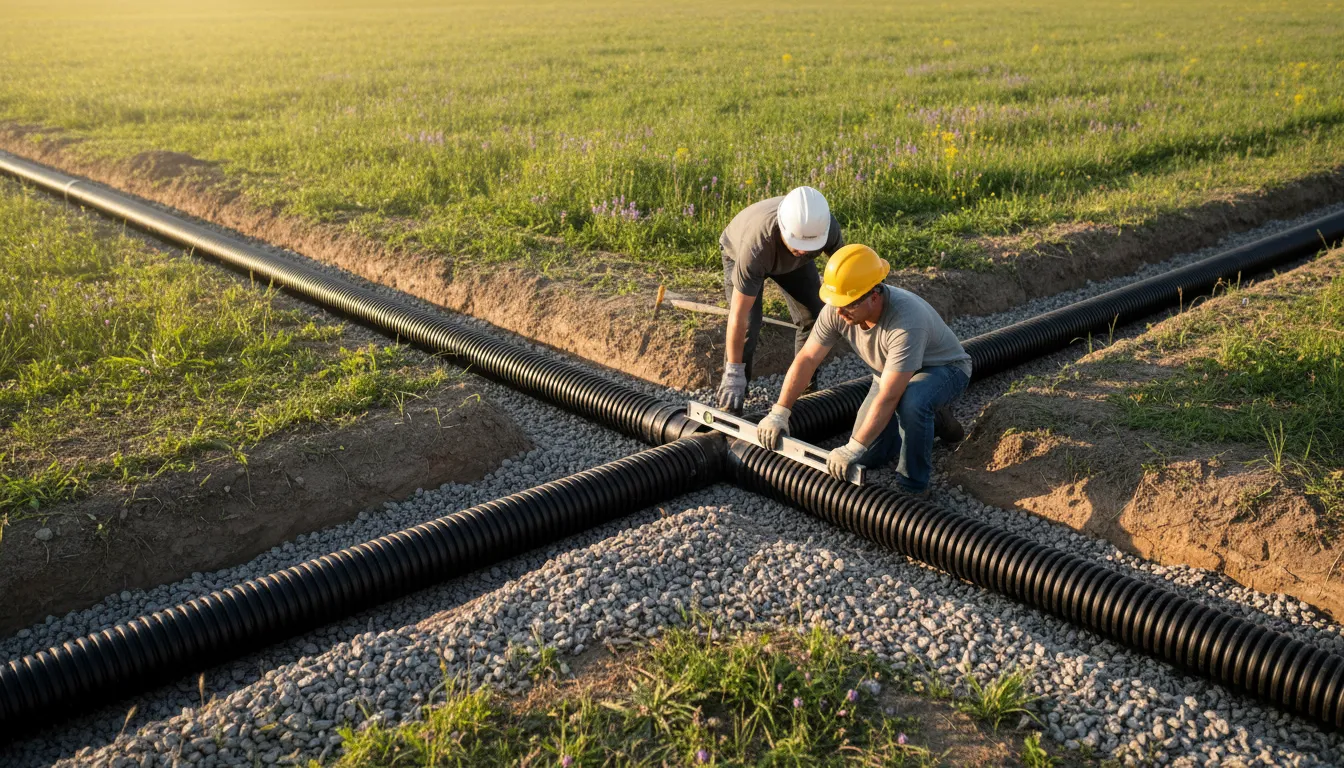
Often called a leach field or absorption field, the drain field is the final, crucial stage of your On-Site Sewage Facility (OSSF). After solids settle in the septic tank, the clarified liquid effluent flows into a network of perforated pipes buried in trenches filled with gravel. This effluent then percolates down through the soil, where natural biological processes provide the final treatment before it rejoins the groundwater. When this area fails, untreated wastewater can surface, creating significant problems.
Common signs you may need drain field services include:
- Persistently soggy or spongy ground over the field area, even in dry weather.
- Sewage odors emanating from the yard, especially near the drain field.
- Slow-draining household fixtures like toilets and sinks.
- Unusually lush, green grass growing over the drain field.
- Standing water or sewage backing up into the home.
North Texas Regulations and the Permitting Process
In Tarrant County, all work on a septic system's drain field is strictly regulated by the Texas Commission on Environmental Quality (TCEQ) and enforced locally by Tarrant County Public Health. You cannot simply hire an excavator to dig up and replace lines. A formal, multi-step process is required by law to protect public health and water quality.
1. Site and Soil Evaluation: This mandatory first step must be conducted by a licensed site evaluator (LSE) or a professional engineer (PE). They will visit your property to drill soil borings or dig test pits-typically at least two-to assess critical factors like soil permeability (how fast water moves through it), texture, and the depth to groundwater or bedrock. This evaluation determines the feasibility and design of any repair or new drain field.
2. System Design and Permit Application: Based on the site evaluation, a system design is created. For many repairs and all replacements, you must obtain an "Authorization to Construct" permit from Tarrant County. The application includes the design plans, the site evaluator's report, and proof that a TCEQ-licensed installer will perform the work. The county reviews this to ensure it meets all state and local codes before issuing the permit.
3. Installation by a Licensed Professional: All construction must be performed by a TCEQ-licensed OSSF installer. It is illegal for an unlicensed person to install or replace a septic system component in Texas 1.
4. Required Inspections: The county performs inspections during construction (like checking trench depth and pipe placement) and a final inspection once work is complete. Only after passing the final inspection will the county issue an operating permit for the new or repaired system 2.
Key Local Considerations for Drain Field Projects
North Richland Hills properties present specific challenges and requirements for drain field work.
- Setback Distances: Regulations mandate strict minimum distances from the drain field to other features. These include at least 50 feet from a building, 100 feet from a water well, and 10 feet from property lines 3. These setbacks can limit where a new field can be placed on an existing lot.
- Soil and Drainage: Our North Texas soils can be highly variable, with areas of heavy clay that drain poorly. Proper site grading and soil evaluation are essential to ensure the field does not become saturated from surface runoff or a high water table 4.
- Access and Space: Replacement requires heavy equipment like excavators and dump trucks. Mature trees, fences, pools, and steep driveways common in established neighborhoods can complicate access and limit the available space for a new field 5.
- Aerobic System Maintenance: If your home has an aerobic treatment unit (ATU), state law requires an ongoing maintenance contract with a licensed provider. Any drain field work for an ATU system must be coordinated with your maintenance provider 6.
Find the perfect drain field repair companies for your needs
Get personalized recommendations and expert advice
Types of Drain Field Services and Associated Costs
The scope of work and cost can vary dramatically, from a minor repair to a full replacement.
- Inspection and Diagnosis ($300 - $800): This is the essential starting point. A professional will conduct a thorough evaluation, which may include a camera inspection of lines, soil tests, and a hydraulic load test, to accurately diagnose the problem 7.
- Minor Repairs ($500 - $2,000): Not all drain field issues require a full rebuild. Solutions may include cleaning clogged distribution lines, repairing a broken pipe segment, or replacing a damaged distribution box that controls effluent flow to the field.
- Partial or Full Replacement ($5,000 - $15,000+): This is a major construction project. Costs depend heavily on the size of the system (based on home bedroom count), soil conditions, accessibility, and the type of system installed. Complex sites or those requiring advanced treatment designs can exceed this range 8 9 10.
Maintaining Your Drain Field Health
Prevention is the best strategy. Once your drain field is repaired or replaced, proper care will extend its life for decades.
- Practice Water Conservation: Spread out laundry loads, fix leaky fixtures, and avoid long showers to prevent hydraulically overloading the field.
- Mind What You Flush: Only human waste and toilet paper should go into the system. Avoid chemicals, grease, wipes, and feminine hygiene products.
- Protect the Area: Never drive, park, or build structures (like sheds) over the drain field. The weight compacts the soil and can crush pipes. Only plant grass over the field; tree and shrub roots can infiltrate and clog lines 11.
- Pump the Tank Regularly: Have your septic tank pumped every 3-5 years by a licensed pumper to prevent solids from escaping into and clogging the drain field.
Frequently asked questions
Sources
Footnotes
-
SEPTIC SYSTEM LAWS IN TEXAS - https://www.terseptic.com/posts/septic-systems-its-the-law ↩
-
Tips and Information for your septic system - N-Tex Construction - https://www.n-tex.com/tips.htm ↩
-
Texas Septic Tank Rules - https://dillonseptic.com/texas-septic-tank-rules/ ↩
-
What You Should Know About Septic Systems When Building a ... - https://riverhillsbuilder.com/septic-systems-hill-country/ ↩
-
Septic Tank Laws in Texas - https://dillonseptic.com/septic-tank-laws-in-texas/ ↩
-
Are There Regulations or Guidelines for Septic Tank Drain ... - https://weebeewasteservices.com/are-there-regulations-or-guidelines-for-septic-tank-drain-field-maintenance-in-texas/ ↩
-
PLANNING, CONSTRUCTION, AND - Tarrant County - https://www.tarrantcountytx.gov/content/dam/main/transportation/ossf/OSSF_Rules_and_Regulations.pdf ↩
-
Texas Septic Systems & OSSF Requirements | 2026 Guide - https://texaslandbrokerage.com/resources/texas-septic-systems-ossf-requirements-guide/ ↩
-
Drain Field Repair | A & M Septic | North Texas Area - https://www.amseptic.com/drain-field-repair ↩
-
The Ultimate Guide to Replacing a Septic Drain Field - https://www.rciseptic.com/the-ultimate-guide-to-replacing-a-septic-drain-field ↩
-
Septic System - Texas Water Resources Institute - https://twri.tamu.edu/wp-content/uploads/2024/04/em-126-septic-system-maintenance-inspection-pocket-guide.pdf ↩