Find the Best Drain Field Repair Companies for Your Business
No obligation • Fast responses • Nationwide coverage

Why you can trust Septic Spot
Septic Spot is a leading United States resource for understanding and comparing septic services. Our editors review providers using consistent criteria and verify key business details. Listings and scores are independent, and companies cannot pay to influence our content.
Search providers near you
Top Drain Field Repair Companies in Pearland, Texas Ranked
A failing drain field is a serious issue for any home with a septic system, leading to soggy yards, foul odors, and potential health hazards. In Pearland, the unique soil conditions make these problems more common and the solutions more specialized. This guide explains the critical process of repairing or replacing a septic drain field, why local regulations are so important, and how to connect with qualified professionals who understand the specific challenges of the area. You can use this information to understand the scope of work, ask the right questions, and find a licensed installer to restore your property's wastewater system safely and effectively.

Understanding Pearland's Unique Septic Challenges
The primary challenge for septic systems in Pearland is the soil. The area is characterized by heavy, low-permeability clay soil, which severely restricts the rate at which water can percolate downward-often less than one inch per hour. This dense clay creates a hostile environment for traditional septic drain fields, also known as leach fields or absorption fields. When effluent from the septic tank cannot properly disperse into the ground, it backs up, saturates the soil surface, and causes system failure.
This high-clay content also leads to significant seasonal changes. The soil shrinks during dry periods and swells when wet, a process that can crack pipes, crush distribution boxes, and disrupt the entire drainage network 1 2. Consequently, a system that worked for years may suddenly fail due to these shifting ground conditions. It's estimated that traditional gravel-and-pipe drain fields in Pearland have a high failure rate, often necessitating more advanced solutions from the outset or when a repair is needed.
Signs You Need Drain Field Attention
Recognizing early warning signs can prevent a minor issue from becoming a catastrophic and expensive replacement. Look for these indicators of a struggling or failed drain field:
- Soggy Ground or Surfacing Effluent: Puddles of wastewater or persistently soggy, spongy soil over the drain field area, especially when it hasn't rained.
- Slow Drains and Sewage Backups: Gurgling pipes, slow-draining sinks and toilets, or sewage backing up into household drains.
- Unpleasant Odors: Foul smells of sewage in the yard or near the drain field.
- Unusually Green Grass: Patches of grass over the drain field that are much lusher and greener than the rest of the lawn, indicating a nutrient-rich effluent surfacing.
- Failed Inspection: A routine septic inspection by a professional identifies saturated soil or other failures in the absorption area.
If you notice any of these signs, it's crucial to contact a licensed septic professional immediately to assess the situation. Ignoring them can lead to environmental contamination, property damage, and violations of local health codes.
The Regulatory Landscape: Permits and Professionals
In Texas, all septic system work is governed by the Texas Commission on Environmental Quality (TCEQ) under Title 30, Chapter 285 of the Texas Administrative Code (30 TAC 285). For Pearland residents, this means any repair that alters, extends, or replaces a drain field or tank requires a permit from the local authorized agent, which is typically the City of Pearland or Brazoria County 3.
- Permit Process: You or your licensed installer must submit a permit application, which includes a site evaluation and system design. Work cannot legally begin until the permit is issued.
- Emergency Exception: The only exception is for urgent repairs critical to preventing a health hazard, such as replacing a failed pump. In such cases, work may start, but the permitting authority must be notified within 72 hours.
- Licensing is Mandatory: All design and installation work must be performed by a TCEQ-licensed Site Evaluator, Designer, or Installer. Homeowners may only work on their own system if it serves their single-family residence, but they are still responsible for obtaining permits and passing inspections.
- Setback Requirements: Strict minimum distances must be maintained between the new or repaired drain field and property lines, water wells, buildings, and other structures to prevent contamination 4.
Find the perfect drain field repair companies for your needs
Get personalized recommendations and expert advice
The Step-by-Step Process for Repair or Replacement
Addressing a drain field issue is a multi-stage process designed to ensure a safe, long-lasting, and code-compliant solution.
- Professional Site Evaluation: A licensed Site Evaluator will conduct soil borings on your property to determine the soil texture, depth to groundwater, and overall site suitability. In Pearland's clay, this evaluation is critical for determining the correct type of system 5.
- System Design: Based on the evaluation, a professional designer creates a plan. For most Pearland properties with failing traditional fields, this will involve designing an engineered aerobic treatment unit (ATU). These systems treat effluent to a higher standard and use methods like shallow, low-pressure dosing or spray irrigation that are better suited to dense soils 6 7.
- Permitting: The design plans are submitted to the local permitting authority along with the application. Once reviewed and approved, a permit is issued.
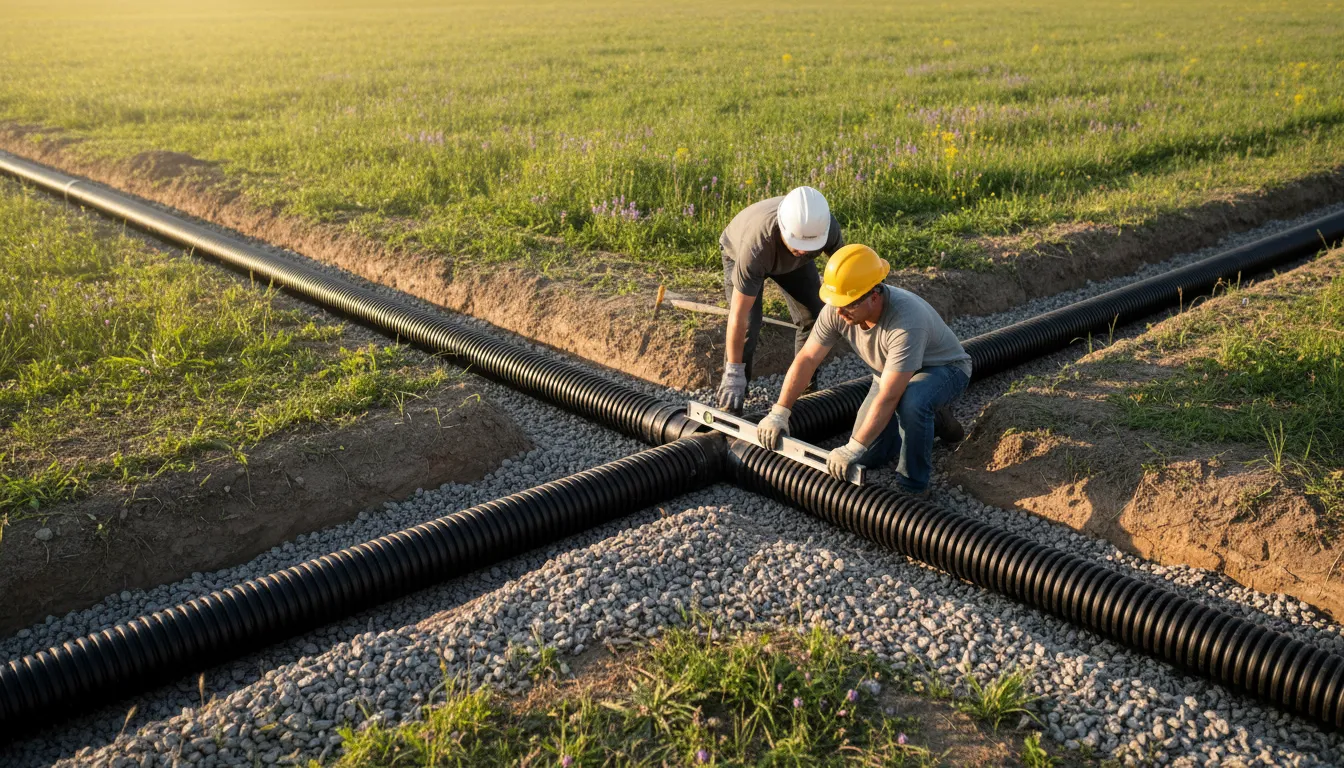
- Installation: A licensed installer executes the plan. This may involve excavating and removing the old, failed drain field lines and installing the new engineered system according to the exact specifications.
- Final Inspection: Before the new system is covered, a local inspector must visit the site to verify the installation matches the permitted design and meets all code requirements 8 9. Only after passing this inspection can the system be covered and put into use.
Understanding Costs and System Options
The cost for drain field work in Pearland varies widely based on the extent of the problem and the required solution. Minor repairs, such as clearing a clogged line or replacing a section of pipe, will be less expensive but are often temporary fixes in challenging soils.
A full drain field replacement is a major undertaking. For a conventional field replacement, costs can start around $7,000 or more 10 11. However, given Pearland's soil, a full upgrade to an aerobic treatment system is frequently necessary. The total cost for a complete septic system replacement with an ATU typically ranges from $6,000 to over $15,000, depending on the property size, system complexity, and site accessibility 10 12. These figures do not include permit fees, which are charged by the local authority, or the cost of annual maintenance contracts required for aerobic systems.
Maintaining Your New or Repaired System
Protecting your investment is key. For traditional systems, an annual inspection is recommended to check for early signs of trouble 13. For the aerobic systems commonly required in Pearland, state law mandates a maintenance contract. A licensed maintenance provider must inspect the system every four months to ensure all mechanical components (like aerators and pumps) are functioning correctly 13 14. Proper maintenance is the best way to extend the life of your drain field and avoid another costly failure.
Frequently asked questions
Sources
Footnotes
-
What You Should Know About Septic Systems When Building a ... - https://riverhillsbuilder.com/septic-systems-hill-country/ ↩
-
Essential Guide to Septic System Installation NH - https://swallowandsonsexcavation.com/f/essential-guide-to-septic-system-installation-nh ↩
-
Basics for Septic Systems - https://www.tceq.texas.gov/assistance/water/fyiossfs.html ↩
-
SEPTIC SYSTEM LAWS IN TEXAS - https://www.terseptic.com/posts/septic-systems-its-the-law ↩
-
Texas Septic Tank Rules - https://dillonseptic.com/texas-septic-tank-rules/ ↩
-
Pearland Septic Systems Guide | New Texas Homeowners - https://accurateplumbingtx.com/pearland-septic-systems-new-homeowner-guide/ ↩
-
Pearland Clay Soil vs Septic Systems | 40% Failure Rate - https://accurateplumbingtx.com/pearland-clay-soil-septic-system-failure/ ↩
-
Advice for an Owner of an On-Site Sewage Facility (Septic ... - https://www.tceq.texas.gov/permitting/ossf/ossfadvice.html ↩
-
Are There Regulations or Guidelines for Septic Tank Drain ... - https://weebeewasteservices.com/are-there-regulations-or-guidelines-for-septic-tank-drain-field-maintenance-in-texas/ ↩
-
Cost to Replace Septic Tank and Drain Field [2026 Data] | Angi - https://www.angi.com/articles/how-much-new-drain-fields-foot.htm ↩ ↩2
-
Septic Drain Field Repair - https://www.benjaminfranklinplumbing.com/league-city/blog/2025/april/can-a-septic-drain-field-be-repaired-key-considerations-and-solutions/ ↩
-
Cost of a Septic System in Texas - https://dillonseptic.com/cost-of-a-septic-system-in-texas/ ↩
-
Maintenance of On-Site Sewage Facilities (Septic Systems) - https://www.tceq.texas.gov/permitting/ossf/ossfmaintenance.html ↩ ↩2
-
Septic systems explained - Texas Water Resources Institute - https://twri.tamu.edu/blog/septic-systems-explained/ ↩