Find the Best Drain Field Repair Companies for Your Business
No obligation • Fast responses • Nationwide coverage

Why you can trust Septic Spot
Septic Spot is a leading United States resource for understanding and comparing septic services. Our editors review providers using consistent criteria and verify key business details. Listings and scores are independent, and companies cannot pay to influence our content.
Search providers near you
Top Drain Field Repair Companies in Pflugerville, Texas Ranked
A failing drain field is a serious issue that can lead to sewage backups, soggy lawns, and environmental contamination. In Pflugerville, repairing or replacing this critical component of your septic system is a regulated process that requires professional expertise and adherence to strict state and local codes. This guide explains the local requirements, costs, and steps involved in drain field work, helping you understand what to expect and how to find qualified professionals to restore your system's function.
HomeField Williamson County
40203 Industrial Park Cir, Georgetown, TX 78626
HomeField Williamson County provides comprehensive septic system services in Austin, TX, covering residential and commercial needs. Their offerings include septic tank pumping, inspections, repairs, installations, drain field replacements, and system design. The company emphasizes local expertise and proactive maintenance plans to help prevent future problems. They serve Williamson County with a team familiar with local regulations and conditions, ensuring septic systems meet current requirements. HomeField also offers various maintenance plans tailored to different levels of coverage and support.
Godinez Septics Inc
5407 Phillips Cir, Austin, TX 78734
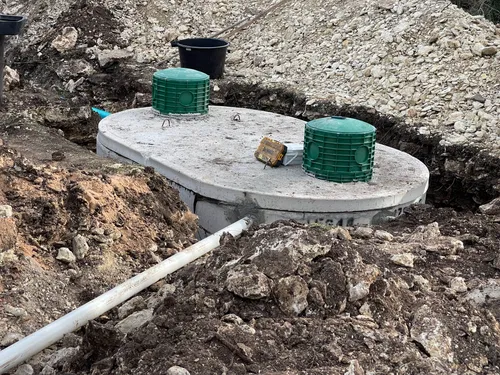
Godinez Septics Inc is a family-owned septic system company serving Austin, TX, and the surrounding Lake Travis area. They provide a range of services including septic tank pumping, inspection, repair, installation, and drain field replacement. The company is licensed by TCEQ for septic system maintenance and installation, offering specialized services such as aerobic system maintenance contracts and hydro-jetting to clear sewer lines. With over 40 years of experience in the septic and excavation business, Godinez Septics is led by Orlando Godinez, a longtime local resident and licensed installer.
Hines Septic Of Austin Tx
Austin, TX
Hines Septic Of Austin Tx is a family-owned septic service provider based in Austin, TX. They offer septic tank pumping, installation, inspection, and repair services, including drain field repair and replacement. The company is fully licensed and insured, ensuring all work is performed to code. They provide 24/7 emergency septic services and back their installations with a one-year labor warranty.

Eco Septic Tank Pumping Austin
Austin, TX
Eco Septic Tank Pumping Austin provides septic tank pumping, inspection, repair, and installation services in Austin, TX. They handle routine septic system cleaning, emergency septic sewer cleaning, and biological treatments to maintain system health. The company also offers septic system repairs and drain field replacement, ensuring compliance with local regulations. Their technicians follow a detailed pumping process and dispose of waste properly at licensed facilities. Eco Septic Tank Pumping Austin serves multiple areas around Austin and emphasizes regular maintenance to prevent system failures.
Sunset Construction & Excavation
Austin, TX
Sunset Construction & Excavation is a septic system service provider based in Austin, TX. They offer septic system installations, repairs, and design services for both residential and commercial clients. Their work includes excavation and landscaping related to septic systems, serving Austin and surrounding areas such as Travis County, Leander, and Bee Cave. The company has over a decade of experience and is licensed by the Texas Commission on Environmental Quality. They also provide hydro-mulching to restore properties after septic work is completed.
Understanding Your Drain Field's Role
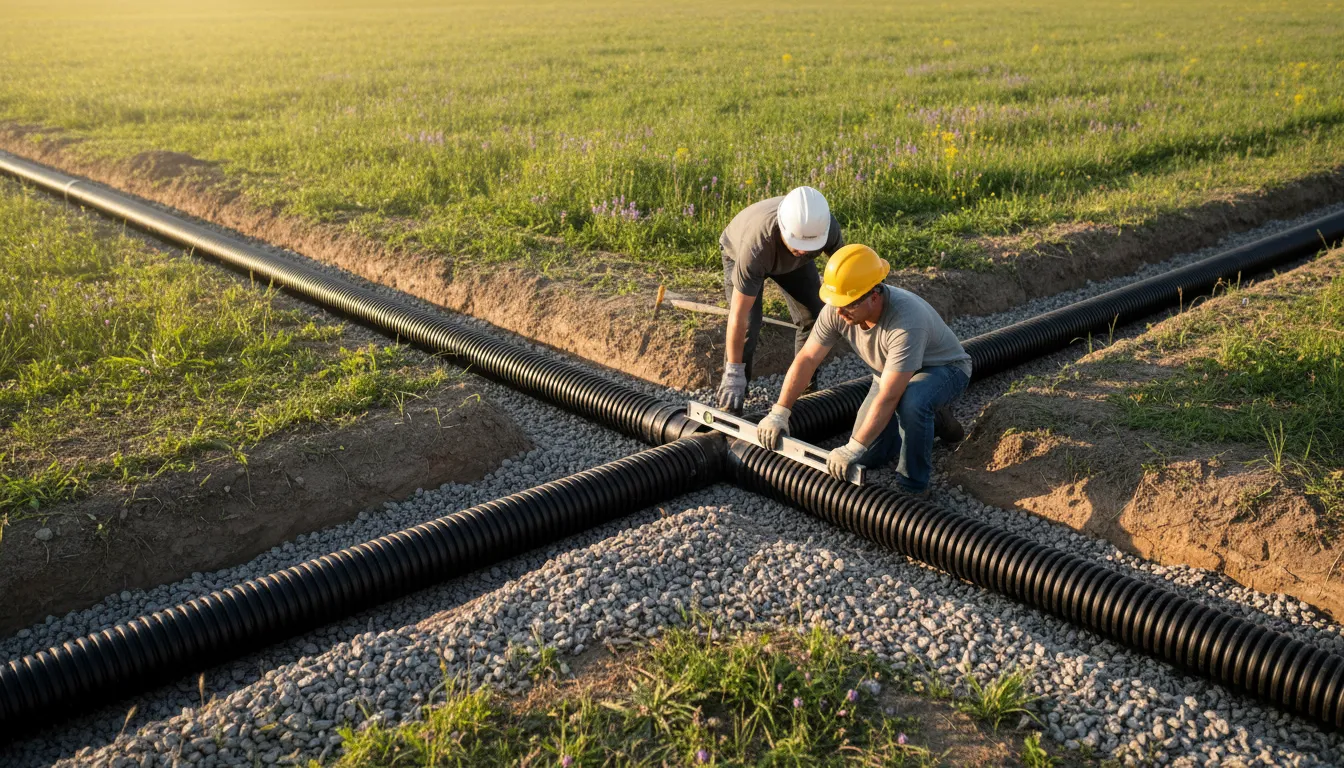
Often called a leach field or absorption field, the drain field is the final stage of your on-site sewage facility (OSSF). After solids settle in the septic tank, the treated liquid effluent flows into a network of perforated pipes buried in trenches filled with gravel. This effluent slowly percolates through the soil, where natural processes provide final treatment before it reaches groundwater. When the soil becomes clogged or the system is overloaded, the drain field fails, necessitating repair or a full replacement.
Pflugerville and Travis County Regulations You Must Follow
All work on a septic system drain field in Pflugerville is governed by Texas Commission on Environmental Quality (TCEQ) rules, specifically Title 30, Chapter 285 of the Texas Administrative Code (30 TAC 285) 1. The local permitting authority is either the City of Pflugerville Engineering Department or Travis County, depending on your location2.
Key regulatory requirements include:
- Permit to Construct: A permit is mandatory for repairing, extending, or completely replacing a drain field. You cannot begin any excavation or installation work without this approved permit.
- Emergency Repairs: If a situation poses an immediate health hazard, you may begin emergency repairs. However, you must notify the permitting authority (City or County) in writing within 72 hours of starting the work.
- Final Inspection: Once work is complete, a final inspection by the permitting authority is required to ensure the system complies with all TCEQ standards before it can be covered and put into use.
The Critical First Step: Professional Site Evaluation
Before any design or permit application, a licensed site evaluator must assess your property. This is not a mere formality; Central Texas soil, particularly the heavy clay common in the area, presents significant challenges for conventional leach fields.
The evaluator will test:
- Soil Permeability: How quickly water moves through the soil.
- Depth to Groundwater: The system must have adequate separation from the water table.
- Slope: The topography of the proposed area.
This evaluation determines if a traditional drain field is viable or if an alternative system, like an aerobic treatment unit (ATU), is necessary.
Design Options for Drain Field Systems
Based on the site evaluation, a licensed designer will create a system plan for permit submission. The main options are:
- Conventional Drain Field: A standard trench or bed system. This is only viable if the soil evaluation shows suitable percolation rates and depth. Due to clay soils, this option is often not feasible for replacements in older Pflugerville homes3.
- Aerobic Treatment System (ATU): An aerobic system injects oxygen into the treatment tank, breaking down waste more efficiently and producing a higher-quality effluent that can be dispersed in more challenging soils. These systems are frequently required for replacements in the area but come with additional operational requirements4.
- Other Alternatives: For sites with high groundwater, poor soil, or limited space, other engineered alternatives like drip irrigation or sand filter systems may be designed.
Vital Setback Distances: Regardless of design, your new or repaired absorption field must meet minimum setback distances, including at least 50 feet from buildings and 100 feet from water wells5 6.
Find the perfect drain field repair companies for your needs
Get personalized recommendations and expert advice
The Step-by-Step Process for Repair or Replacement
Navigating a drain field project involves a clear sequence of events:
- Site Evaluation & Diagnosis: A professional inspects the failing system and conducts the required soil and site evaluation to diagnose the cause of failure and determine the correct solution.
- System Design & Permitting: A licensed designer creates the construction plans. Your contractor or designer then submits these plans with the permit application to the City or County for approval.
- Installation or Repair Work: Once the permit is issued, a licensed installer performs the excavation and construction. For a full replacement, this includes properly abandoning the old drain field.
- Final Inspection: The permitting authority conducts a final inspection to verify the installation matches the permitted design and complies with all regulations.
- Ongoing Maintenance: For conventional systems, regular pumping (every 3-5 years) is crucial. For aerobic systems, Texas law requires a valid maintenance contract with a licensed provider and the submission of regular inspection reports to the local authority7 8.
Cost Considerations for Pflugerville Homeowners
Drain field work is a significant investment. Costs vary widely based on system type, soil conditions, and property size, but you can expect the following ranges9:
- Soil Test / Site Evaluation: $350 - $750
- Conventional Drain Field Replacement: $6,000 - $12,000+
- Aerobic System Replacement: $12,000 - $20,000+
- Annual Aerobic System Maintenance Contract: $400 - $800
These figures are estimates; obtaining multiple quotes from licensed, insured professionals is essential.
Protecting Your New Drain Field
After a major investment, proper care will extend the life of your new leach field.
- Pump Regularly: Have your septic tank pumped every 3-5 years to prevent solids from escaping into and clogging the new field10.
- Mind the Location: Never drive, park, or build structures (like sheds or patios) over the drain field area. The weight can crush pipes and compact the soil.
- Landscaping Care: Plant trees and shrubs far away from the drain field to prevent roots from infiltrating and damaging the pipes11.
- Water Wisely: Avoid concentrating excessive water runoff from roofs or driveways onto the drain field area.
Frequently asked questions
Sources
Footnotes
-
Texas Septic System Regulations - https://dillonseptic.com/texas-septic-system-regulations/ ↩
-
Residential Building Applications & Guidelines - Pflugerville, TX - https://www.pflugervilletx.gov/207/Residential-Building-Applications-Guidel ↩
-
Septic Tank Laws in Texas - https://dillonseptic.com/septic-tank-laws-in-texas/ ↩
-
Are There Regulations or Guidelines for Septic Tank Drain ... - https://weebeewasteservices.com/are-there-regulations-or-guidelines-for-septic-tank-drain-field-maintenance-in-texas/ ↩
-
Texas Septic Tank Rules - https://dillonseptic.com/texas-septic-tank-rules/ ↩
-
Document Viewer | Travis County Code - enCodePlus - https://online.encodeplus.com/regs/traviscounty-tx/doc-viewer.aspx?secid=2829 ↩
-
Maintenance of On-Site Sewage Facilities (Septic Systems) - https://www.tceq.texas.gov/permitting/ossf/ossfmaintenance.html ↩
-
Navigating Well and Septic Systems: Types, Costs, and Installation Process - https://landlimited.com/blogs/navigating-well-and-septic-systems-types-costs-and-installation-process ↩
-
Texas Septic Systems & OSSF Requirements | 2026 Guide - https://texaslandbrokerage.com/resources/texas-septic-systems-ossf-requirements-guide/ ↩
-
Basics for Septic Systems - https://www.tceq.texas.gov/assistance/water/fyiossfs.html ↩
-
Septic System - Texas Water Resources Institute - https://twri.tamu.edu/wp-content/uploads/2024/04/em-126-septic-system-maintenance-inspection-pocket-guide.pdf ↩