Find the Best Drain Field Repair Companies for Your Business
No obligation • Fast responses • Nationwide coverage

Why you can trust Septic Spot
Septic Spot is a leading United States resource for understanding and comparing septic services. Our editors review providers using consistent criteria and verify key business details. Listings and scores are independent, and companies cannot pay to influence our content.
Search providers near you
Top Drain Field Repair Companies in The Colony, Texas Ranked
A failing drain field is a serious issue for any home with a septic system, leading to soggy yards, foul odors, and potential environmental contamination. Drain field repair or replacement is a significant project governed by strict Texas regulations to protect public health and groundwater. This guide explains the process, costs, and local requirements for leach field work in The Colony, helping you understand what to expect and how to connect with qualified local professionals for an evaluation.

Understanding Your Septic Drain Field
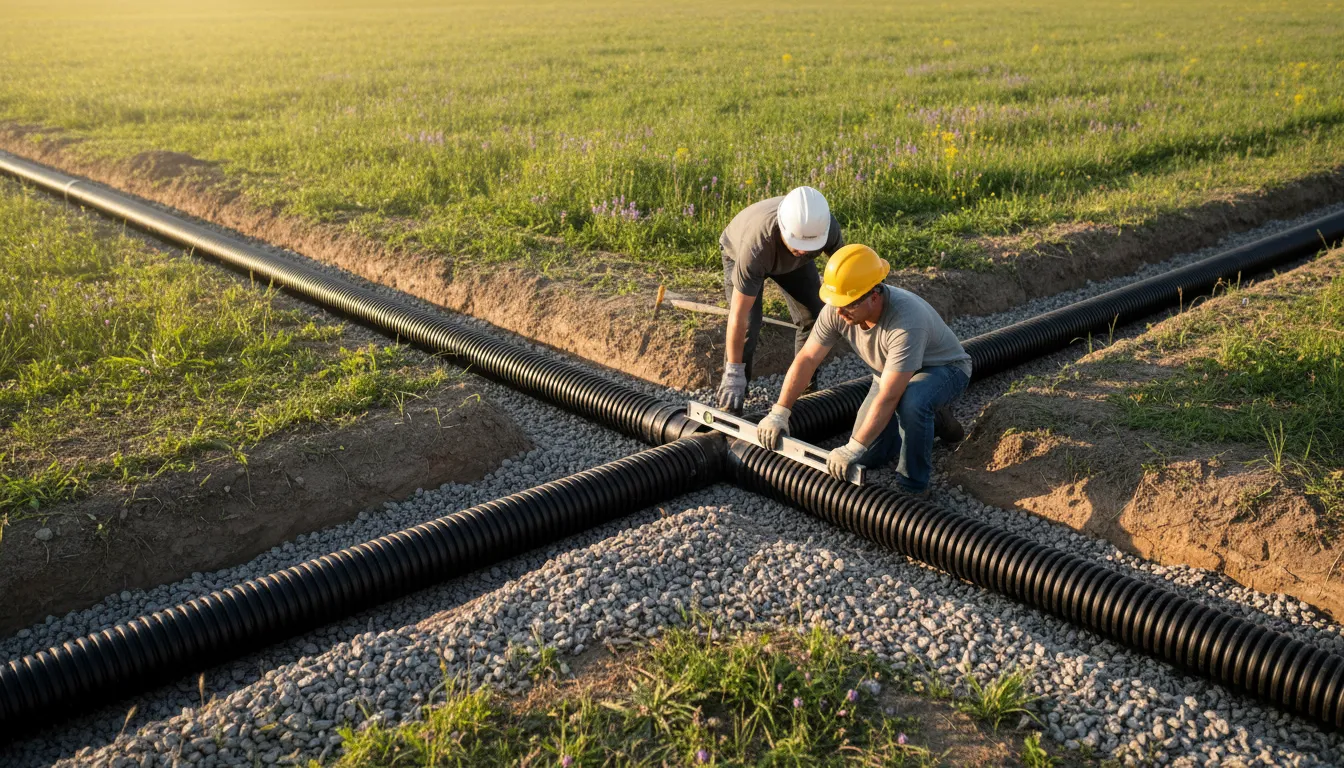
Often called a leach field or absorption field, the drain field is the final, crucial stage of your onsite sewage facility (OSSF). After solids settle in the septic tank, the treated liquid effluent flows into a network of perforated pipes buried in trenches filled with gravel. This effluent then percolates through the soil, where natural processes provide final treatment before it rejoins the groundwater. When this area fails, wastewater can no longer be absorbed, causing backups and surface pooling.
Signs You Need Drain Field Repair or Replacement
Recognizing early warning signs can prevent a complete system failure and more costly repairs. Look for these common indicators:
- Soggy Ground or Standing Water: Persistent wet spots or lush, green grass over the drain field area, especially when it hasn't rained.
- Slow Drains and Sewage Backups: Gurgling pipes, slow-draining sinks and toilets, or sewage backing up into household drains.
- Foul Odors: Unpleasant sewage smells emanating from your yard or near the septic tank area.
- Nitrate Contamination: Test results from your well water showing high nitrate levels, which can indicate a failing system is contaminating groundwater.
If you notice any of these signs, it's time to contact a licensed septic professional in The Colony for a diagnostic inspection.
The Regulatory Landscape in Texas and The Colony
All septic system work in Texas is regulated by the Texas Commission on Environmental Quality (TCEQ) under 30 TAC Chapter 285. Local authorities, such as the City of The Colony or Denton County, typically manage the permitting process and enforce these state rules with additional local specifications.
Key regulations impacting drain field projects include:
- Mandatory Site Evaluation: Before any design or repair, a licensed professional must conduct a thorough site evaluation. This is not a suggestion-it's a legal requirement to obtain a permit.
- Soil Testing is Critical: A percolation (perc) test and deep observation hole analysis determine the soil's absorption rate and seasonal high groundwater level. This data dictates the type and size of the drain field system that can be legally installed.
- Strict Setback Requirements: Drain fields must maintain minimum distances from other features:
- 100 feet from water wells.
- 50 feet from home foundations.
- 10 feet from property lines 1.
- Professional Licensing: Design, installation, and repair must be performed or supervised by a licensed installer or professional engineer registered in Texas.
Find the perfect drain field repair companies for your needs
Get personalized recommendations and expert advice
The Step-by-Step Process for Repair or Replacement
1. Professional Inspection and Diagnosis
A licensed technician will inspect your entire system, often using a camera to scope lines, to determine if the issue is a simple clog, broken pipe, or a full drain field failure. For suspected failure, a soil evaluation is the next mandatory step.
2. Site Evaluation and Soil Testing
A licensed site evaluator will perform tests to analyze soil composition, structure, and percolation rate. North Texas soils, often heavy with clay, have slow absorption rates 2. This evaluation determines if a conventional system is possible or if an engineered alternative is required.
3. System Design and Permitting
Based on the soil report, a system is designed. For poor-draining soils, this often means an aerobic treatment unit (ATU) with a specialized drain field. The design and permit application are submitted to local authorities for approval before any work begins.
4. Repair vs. Replacement Decision
- Minor Repairs: Issues like a crushed pipe or root intrusion may cost between $200 and $1,000 to fix 3.
- Major Replacement: A completely failed field cannot be repaired; it must be replaced. This involves excavating a new field in a different location or using advanced technologies to remediate the existing site.
5. Installation and Final Inspection
The new leach field is installed according to the approved design. Once complete, a local authority inspector performs a final review before the system is covered. For aerobic systems, remember that Texas law requires ongoing maintenance contracts with inspections every four months 4.
Cost Factors for Drain Field Projects in The Colony
Costs for drain field replacement vary widely based on system type, soil conditions, and site complexity. Typical ranges in the area are:
- Conventional Drain Field Replacement: $5,000 - $10,000. This is for sites with suitable soil and space.
- Aerobic System Drain Field: $7,000 - $20,000+ 5 6. Engineered systems for challenging soils are more complex and costly.
- Soil Evaluation and Testing: $350 - $750 7 8.
- Engineering and Permitting: These fees are often included in higher-end estimates but can add significant cost for complex projects.
The primary cost drivers are:
- Soil Type: Clay-heavy soil requires more expensive, engineered solutions.
- System Type: Aerobic systems cost more than conventional systems.
- Site Accessibility: Difficult access for machinery can increase labor costs.
- Local Permit Fees: Fees vary by jurisdiction within Denton County.
Engineered System Options for Challenging Soils
Given the soil conditions in The Colony, many properties will require an engineered system. Common alternatives to a conventional gravel trench include:
- Low-Pressure Dosing (LPD) Systems: Effluent is pumped in controlled doses to ensure even distribution and resting periods for the soil.
- Aerobic Treatment Systems: These systems inject oxygen to break down waste more thoroughly, producing a higher-quality effluent that can be used with spray irrigation or smaller drain fields 9.
- Sand Filter or Peat Filter Systems: These are above-ground media filters that treat effluent before it reaches the soil absorption area.
Your licensed professional will recommend the most compliant and cost-effective option for your specific property.
Maintaining Your New Drain Field
Protect your investment with proper care:
- Direct Water Away: Ensure roof drains and yard drainage do not flow over the drain field.
- No Driving or Building: Never park vehicles or build structures (sheds, patios) over the drain field.
- Mind Your Landscaping: Plant only grass over the field. Tree and shrub roots can clog and damage pipes.
- Conserve Water: Use water-efficient fixtures and spread out laundry loads to avoid hydrating the field.
Frequently asked questions
Sources
Footnotes
-
Are There Regulations or Guidelines for Septic Tank Drain ... - https://weebeewasteservices.com/are-there-regulations-or-guidelines-for-septic-tank-drain-field-maintenance-in-texas/ ↩
-
Septic Tank Laws in Texas - https://dillonseptic.com/septic-tank-laws-in-texas/ ↩
-
How Much Does It Cost to Replace a Septic System? - https://alphaenvironmental.net/blog/how-much-cost-replace-septic-system/ ↩
-
SEPTIC SYSTEM LAWS IN TEXAS - https://www.terseptic.com/posts/septic-systems-its-the-law ↩
-
Septic Drain Field Replacement Cost - https://dillonseptic.com/septic-drain-field-replacement-cost/ ↩
-
Cost to Replace Septic Tank and Drain Field [2026 Data] | Angi - https://www.angi.com/articles/how-much-new-drain-fields-foot.htm ↩
-
Texas Septic Systems & OSSF Requirements | 2026 Guide - https://texaslandbrokerage.com/resources/texas-septic-systems-ossf-requirements-guide/ ↩
-
The Complete Guide to Soil Testing for Septic System Design: Ensuring Regulatory Compliance and System Longevity - https://www.mapengineering.net/the-complete-guide-to-soil-testing-for-septic-system-design/ ↩
-
Texas Septic Tank Rules - https://dillonseptic.com/texas-septic-tank-rules/ ↩