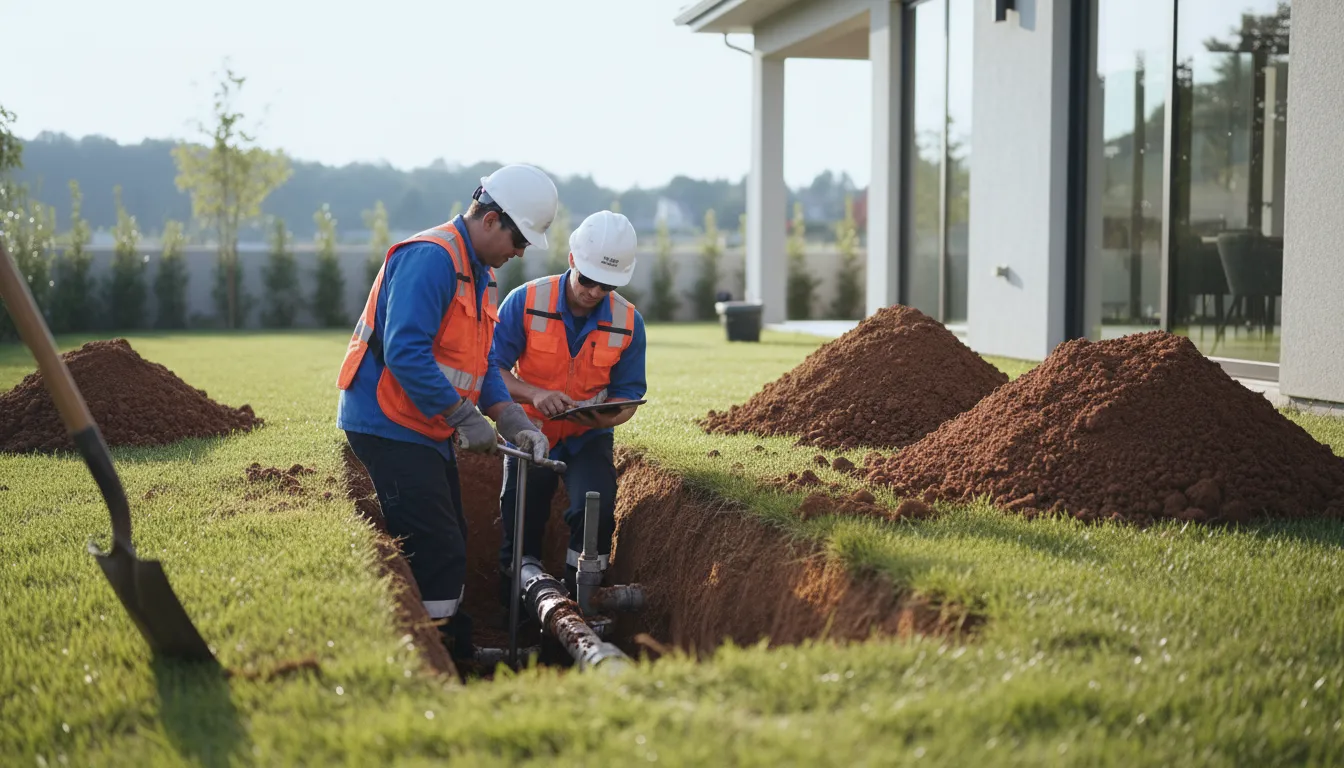
Find the Best Septic System Repair Companies for Your Business
No obligation • Fast responses • Nationwide coverage

Why you can trust Septic Spot
Septic Spot is a leading United States resource for understanding and comparing septic services. Our editors review providers using consistent criteria and verify key business details. Listings and scores are independent, and companies cannot pay to influence our content.
Search providers near you
Top Septic System Repair Companies in Hickory, North Carolina Ranked
When your home's onsite wastewater system shows signs of trouble, timely and proper repair is essential for protecting your property, your health, and the local environment. Septic system repair involves diagnosing and fixing issues with components like the tank, distribution box, drainfield, or pumps to restore safe and efficient operation. For homeowners in Hickory, navigating this process requires understanding local regulations, common repair types, and how to find qualified professionals. This guide provides the information you need to address septic problems effectively and connect with certified local experts.

Lentz Wastewater Management - Mooresville
Charlotte, NC
Lentz Wastewater Management - Mooresville offers septic system repair, installation, and maintenance services in Charlotte, NC. They handle septic tank replacements, drain field repairs, and septic pump services, including installation of risers and sanitary tees to extend system life. The company also provides Terralift technology to address saturated drain fields without excavation. With over twenty years of experience, Lentz Wastewater Management installs various septic systems, including conventional and alternative types, and offers warranties on parts and workmanship.
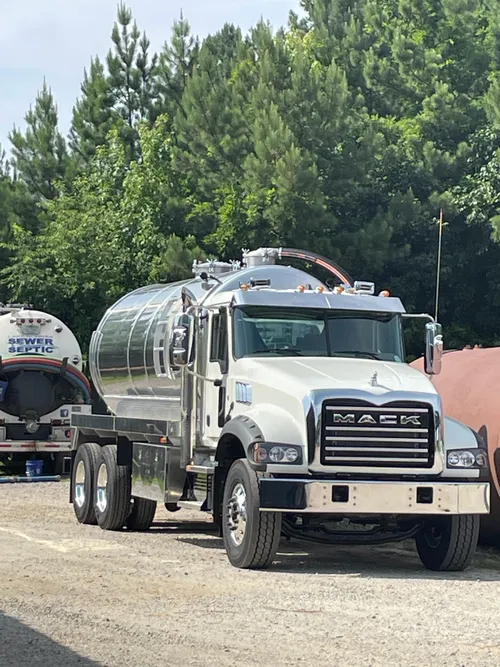
Lake Norman Sewer & Septic Services
6656 North Carolina Hwy 150, Maiden, NC 28650
Lake Norman Sewer & Septic Services is a septic system repair company serving Charlotte, NC, and nearby areas including Maiden and Denver. The family-owned business has been operating since 1997, with roots in septic repair dating back to the 1960s. They provide comprehensive septic system services to address various septic problems and maintain proper sewage function. The company respects first responders and offers special discounts for military, veterans, and emergency personnel.
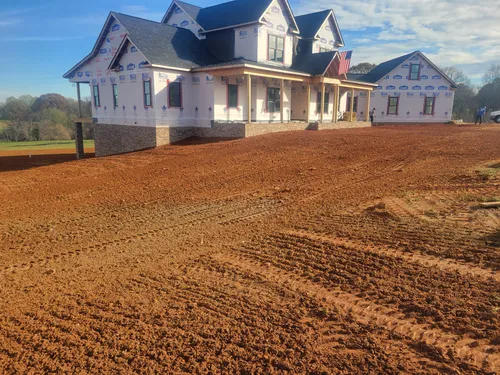
Foothills Septic & Grading LLC
2819 Sigmon Dairy Rd, Newton, NC 28658
Foothills Septic & Grading LLC is a family-owned company providing septic tank inspection, repair, and installation services in Charlotte, NC. They are Level 4 Installers and Inspectors, offering Point of Sale septic system inspections. The company also handles lot clearing and large field bush hogging. Serving multiple areas including Alexander, Caldwell, Catawba, Burke, Lincoln, Gastonia, Iredell, and the Mountains, they handle a variety of septic and grading needs.
Understanding Local Regulations and Permits
In Catawba County, all work on a septic system is regulated to ensure public and environmental safety. Before any repair work begins-whether it's fixing a broken pipe or replacing a drainfield-you must obtain a permit from the Catawba County Environmental Health Division. This rule applies to any alteration, replacement, or repair of existing system components. The primary goal of these regulations is to prevent untreated sewage from surfacing, which can contaminate groundwater and pose serious health risks.
The permit process is designed to ensure repairs are performed correctly. Applications are typically submitted through the county's ePermits system and often require a site plan 1. For complex repairs, an Environmental Health Specialist (EHS) may need to re-evaluate the soil and site conditions to determine the appropriate solution 2. Crucially, all repair work must be conducted by a contractor certified by the North Carolina Onsite Wastewater Contractor Inspector Certification Board (NCOWCICB) 3 4. Hiring a certified professional is not just a recommendation; it's a legal requirement that guarantees the individual has the state-mandated training and knowledge.
Common Types of Septic Repairs in Hickory
Septic system issues can range from minor fixes to major overhauls. Understanding the common repairs helps you communicate effectively with contractors and anticipate the scope of work.
Tank Maintenance and Minor Fixes: Often, the first line of defense is proper maintenance. Regularly pumping the septic tank (every 3-5 years) can prevent solids from clogging the drainfield, which is a common cause of system failure. Installing or cleaning an effluent filter on the tank's outlet is a simple repair that can extend the life of your drainfield by catching solids. Other minor repairs include fixing leaking tank lids or repairing cracked inlet/outlet pipes.
Distribution Box (D-Box) Repair or Replacement: The D-box evenly distributes liquid effluent from the tank to the drainfield lines. If it becomes damaged, clogged, or unlevel, it can cause uneven drainage and system failure. Replacing a D-box is a common repair that a certified contractor can often perform without a full system redesign, provided the drainfield itself is still functional.
Drainfield Repair and Replacement: This is typically the most extensive and costly type of repair. A drainfield fails when the soil becomes clogged and can no longer absorb liquid. Signs include surfacing sewage, soggy ground, or unusually lush grass over the field 5 6. If the failure is localized, a contractor might repair or replace just the affected trenches. However, a complete drainfield replacement is often necessary. This involves installing new trenches in a suitable area of your property, if space allows 7 8.
Pump System Repair: Many systems in Hickory, especially those with elevation challenges or alternative designs, include a pump or lift station. Repairing these systems involves fixing electrical components, replacing faulty pumps, or repairing the associated piping and alarms.
Alternative System Repairs: In areas with challenging soil conditions, homes may have "innovative" or alternative systems, such as low-pressure pipe (LPP) systems, mound systems, or aerobic treatment units (ATUs). Repairs for these systems are often more specialized and can involve fixing pumps, timers, spray heads, or proprietary treatment components 9.
Find the perfect septic system repair companies for your needs
Get personalized recommendations and expert advice
The Diagnostic Process: From Problem to Solution
A proper repair begins with a thorough diagnosis. Here's what you and a professional can expect during an inspection.
1. Locating the System: The first step is to find all system components. Your county health department may have a record of the original system installation, known as an "as-built" diagram. If not, a contractor will use probes and other tools to locate the tank, distribution box, and drainfield lines.
2. Excavation and Access: The area around the septic tank lids is excavated to allow full access. A professional will open all tank compartments to inspect the inlet, outlet, and baffles.
3. Tank Pumping and Inspection: While not always mandatory for a repair permit, pumping the tank is highly recommended for a complete inspection. With the tank empty, the inspector can check for structural cracks, leaks, and ensure the baffle wall (which keeps solids in the tank) is intact 10.
4. Component Assessment: The inspector will check all mechanical parts. This includes testing pumps (if present), checking effluent filters, and inspecting the distribution box for proper function and level alignment 11.
5. Drainfield Evaluation: This is a critical step. The professional will look for the classic signs of failure: standing water, soggy soil, or foul odors in the drainfield area. They may also use a soil probe to check for saturation and biomat (clogging layer) development. This evaluation determines whether a simple component repair will suffice or if drainfield work is needed 12.
Understanding Repair Costs
The cost of septic system work in Hickory varies widely based on the repair's complexity, system type, and soil conditions. It's important to get detailed estimates from multiple certified contractors.
- Septic Inspection: A pre-purchase or diagnostic inspection typically ranges from $300 to $600.
- Tank Pumping: Routine pumping costs between $250 and $500, depending on tank size 13.
- Minor Repairs: Fixing a distribution box, replacing a section of pipe, or repairing a pump can cost between $500 and $1,500 14.
- Major Repairs (Drainfield Replacement): This is a significant investment, often ranging from $3,000 to over $10,000, depending on the size and soil work required.
- Alternative System Repair: Due to specialized components and engineering, repairs for mound, LPP, or aerobic systems can easily exceed $15,000 15.
Disclaimer: These are estimated price ranges. For accurate, up-to-date costing and to understand all permit fees, contact the Catawba County Environmental Health department and obtain quotes from local certified professionals.
Maintaining Your System Post-Repair
After a successful repair, proper maintenance is key to preventing future problems. Adhere to a regular pumping schedule based on your household size and tank capacity. Be mindful of what goes down your drains-avoid flushing chemicals, grease, and non-biodegradable items. Conserve water to avoid hydraulically overloading the system. Finally, keep detailed records of all inspections, pumpings, and repairs, as these are valuable for future maintenance and if you sell your home 16.
Frequently asked questions
Sources
Footnotes
-
Government Financing for On-Site Wastewater Treatment ... - https://www.sog.unc.edu/sites/default/files/articles/article4_27.pdf ↩
-
Septic Systems - Catawba County, North Carolina - https://catawbacountync.gov/county-services/environmental-health/septic-wells/septic-systems/ ↩
-
NC General Statutes - Chapter 130A Article 11 - https://www.ncleg.gov/EnactedLegislation/Statutes/PDF/ByArticle/Chapter_130A/Article_11.pdf ↩
-
Septic Program | Henderson County North Carolina - https://www.hendersoncountync.gov/health/page/septic-program ↩
-
Septic System Owner's Guide - NC State Extension Publications - https://content.ces.ncsu.edu/septic-system-owners-guide ↩
-
NC Homeowners: Caring for Your Septic System - https://www.dph.ncdhhs.gov/programs/environmental-health/site-water-protection-branch/site-wastewater-program/nc-homeowners-caring-your-septic-system ↩
-
Understanding and Protecting Your Septic System - https://ehs.dph.ncdhhs.gov/oswp/docs/Understanding-protecting-septic-systems-FACTSHEET.pdf ↩
-
LAWS AND RULES FOR SEWAGE TREATMENT, AND DISPOSAL ... - https://ehs.dph.ncdhhs.gov/oswp/docs/rules/Aug98amen.pdf ↩
-
18A .1900 NORTH CAROLINA ADMINISTRATIVE CODE 01/21/99 ... - https://ehs.dph.ncdhhs.gov/oswp/docs/rules/jan99amen.pdf ↩
-
Investigate Before You Invest - NC State Extension Publications - https://content.ces.ncsu.edu/investigate-before-you-invest ↩
-
What to Expect from a Septic Inspection - https://www.wrenvironmental.com/blog/2023/may/what-to-expect-from-a-septic-inspection/ ↩
-
NC SEPTIC LAW - Elite Home Inspections - https://www.elitehomeinspectionsnc.com/nc-septic-law ↩
-
2025 Septic Pumping & Septic System Facts for North Carolina - https://www.clearwatersepticandpumping.com/septic-tips/2025-septic-pumping-facts-charlotte-nc ↩
-
Loose Ends Repair & Septic Tank Pumping: Septic Services Hickory ... - https://www.looseendssepticcleaning.com/ ↩
-
Pre-Purchase Septic Inspections: Protect Your Investment - https://septic911.com/prepurchase-septic-inspections/ ↩
-
Septic Systems and Their Maintenance - https://content.ces.ncsu.edu/septic-systems-and-their-maintenance ↩