Find the Best Septic Tank Inspection Companies for Your Business
No obligation • Fast responses • Nationwide coverage

Why you can trust Septic Spot
Septic Spot is a leading United States resource for understanding and comparing septic services. Our editors review providers using consistent criteria and verify key business details. Listings and scores are independent, and companies cannot pay to influence our content.
Search providers near you
Top Septic Tank Inspection Companies in Lancaster, California Ranked
A septic system inspection is a critical evaluation of your onsite wastewater treatment system's health and functionality. This professional assessment ensures your system is safely processing household waste and complying with local regulations, which is vital for protecting your property value, your family's health, and the local environment. For Lancaster homeowners, understanding the inspection process and local requirements is the first step toward responsible system ownership. This guide will help you learn what to expect from a septic evaluation and how to find qualified local professionals to perform it.

Brothers Plumbing And Septic
42552 3rd St E, Lancaster, CA 93535
Brothers Plumbing And Septic is a family-owned business with over 20 years of experience serving Los Angeles, CA, and surrounding areas. They offer a range of septic system services including inspections, maintenance, repairs, and full replacements. The company also handles general plumbing issues and commercial plumbing needs. Their expertise includes diagnosing septic tank problems and providing reliable repairs to protect properties. Brothers Plumbing And Septic provides 24/7 emergency plumbing services to address urgent issues promptly.
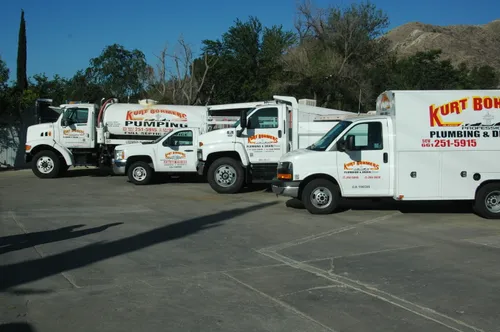
Kurt Bohmer Plumbing Inc.
16743 Sierra Hwy, Canyon Country, CA 91351
Kurt Bohmer Plumbing Inc. is a plumbing and septic service provider based in Los Angeles, CA. They serve the Santa Clarita Valley, Antelope Valley, and Ventura County, offering residential and commercial plumbing solutions. Their services include septic tank pumping, installation, repairs, and complete system design, supported by a fleet of pumping trucks and 24/7 availability for septic tank pumping. They also provide sewer and drain cleaning with high-pressure water jetting and video camera inspections. With over 35 years of experience, Kurt Bohmer Plumbing Inc. has established a long-standing presence in Southern California.
Why Septic System Inspections Are Essential in Lancaster
In Lancaster and the surrounding Antelope Valley, many homes rely on septic systems rather than municipal sewer lines. These systems are a significant long-term investment and require regular maintenance to function properly. A professional septic inspection provides a clear picture of your system's condition, identifying potential problems before they become costly emergencies or environmental hazards.
The Los Angeles County Department of Public Health (LACDPH) regulates all Onsite Wastewater Treatment Systems (OWTS) in the area. They recommend an inspection every 3-5 years as a cornerstone of preventative maintenance 1. More importantly, a system evaluation is typically mandatory during a property transfer (point of sale) to ensure the system is structurally sound and operating safely before the home changes hands. Staying ahead of inspections can prevent last-minute surprises during a real estate transaction and help you avoid the fines associated with a system deemed a public nuisance.
What Lancaster Regulations Require
Navigating local codes is a key part of septic system ownership. The LACDPH's Environmental Health - Onsite Wastewater Treatment Program enforces state and county policies designed to protect groundwater and public health.
- Permits Are Required: Any repair, alteration, or new installation of a septic system in Lancaster requires a permit from the LACDPH. Performing work without approval is unlawful.
- System Failure is a Nuisance: A failing system-indicated by sewage odors, soggy ground over the drainfield, or sewage backing up into the home-is considered a public health nuisance and requires immediate corrective action 2.
- Strict Setbacks: California Water Boards regulations mandate specific setback distances for septic tanks and drainfields from property lines, buildings, and water wells. These rules are strictly enforced to prevent contamination 3 4.
The Professional Inspection Process: A Step-by-Step Look
A comprehensive septic system assessment, often performed by a licensed contractor or specialized inspector, involves a series of methodical steps. Many homeowners opt to combine their inspection with a routine pumping service for efficiency.
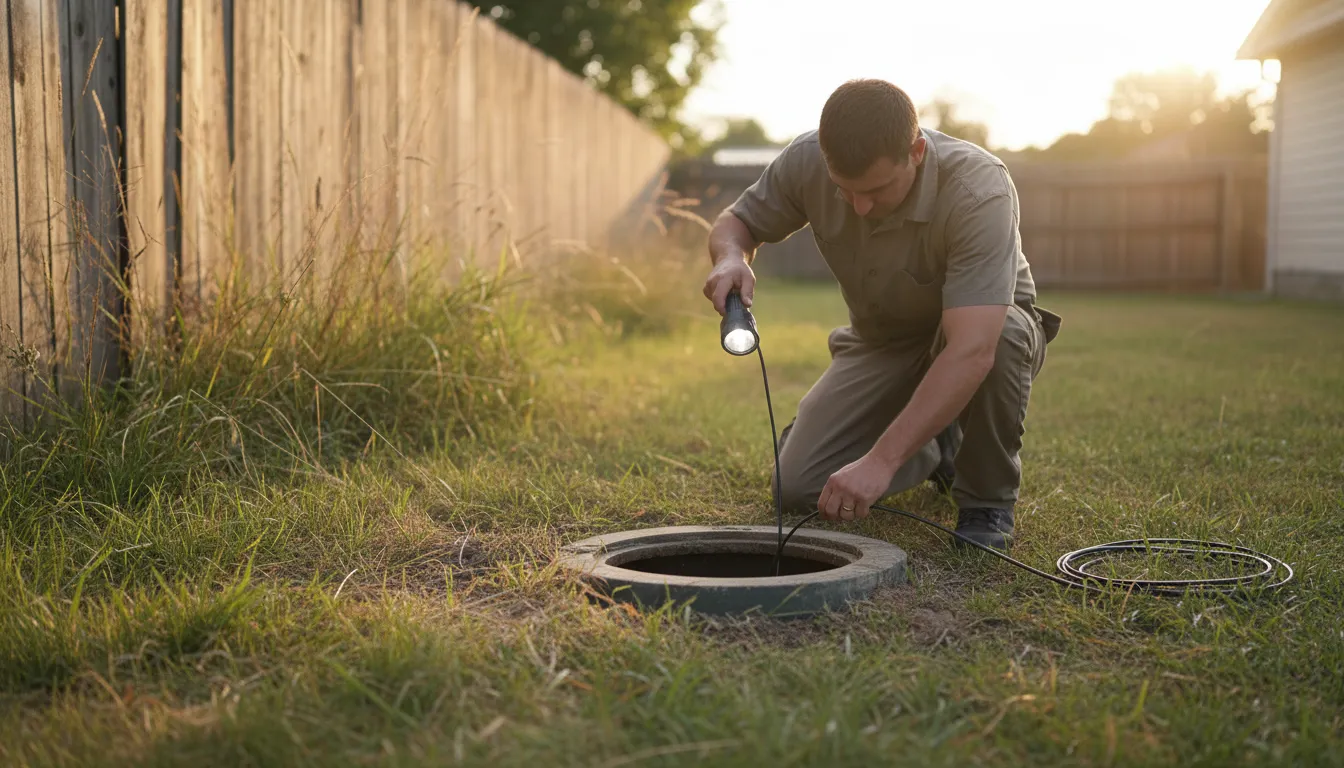
- Locate and Access the System: The inspector will first locate the tank and distribution box. If the tank lacks risers (access ports at the surface), they may need to excavate to open the inspection lids.
- Check Tank Integrity: Once opened, the inspector examines the tank's interior for structural issues like cracks, and checks the condition of critical components like the inlet and outlet baffles, which prevent solids from flowing into the drainfield 5.
- Measure Sludge and Scum: Using a tool called a "sludge judge," the professional measures the depth of the sludge layer at the bottom of the tank and the floating scum layer at the top. If the combined sludge and scum fill more than one-third of the tank's liquid depth, pumping is immediately necessary 6 7.
- Evaluate Components: The inspection includes checking any effluent filters (which require periodic cleaning) and assessing pump systems, alarms, and electrical components if the system includes them 8.
- Inspect the Drainfield: The inspector will examine the area above and around the leach field for telltale signs of failure, such as standing water, overly lush grass, or foul odors, which indicate the soil is no longer absorbing treated effluent.
- Pumping (If Combined): If the inspection is paired with pumping, the tank will be emptied using a vacuum truck. This allows for a clearer view of the tank's interior and is a core part of routine maintenance.
- Provide a Detailed Report: Finally, you will receive a written report detailing the system's condition, any deficiencies found, and recommendations for repairs or maintenance. This report is the official document used for compliance and real estate transactions 9.
Find the perfect septic tank inspection companies for your needs
Get personalized recommendations and expert advice
Understanding Inspection Costs in Lancaster
The cost of a septic system evaluation in Lancaster can vary based on the system's size, complexity, and accessibility. Here is a general breakdown of what you might expect:
- Inspection Only: A standard visual and operational inspection typically ranges from $300 to $600. This covers the assessment of the tank and a visual check of the drainfield 10 11.
- Combined Inspection and Pumping: Most service providers offer a package deal. Pumping a standard 1,000-1,500 gallon tank combined with a full inspection usually costs between $500 and $900+ 12 13.
- Additional Potential Charges: Be aware that extra services will increase the total. These can include fees for locating a buried tank, excavating to install new access risers (highly recommended for future service), or performing a more invasive dye test to check for drainfield failure.
Proactive Maintenance for a Healthy System
An inspection tells you the current state of your system, but proper ongoing care determines its future. Following these best practices can extend the life of your septic system and help it pass every inspection:
- Pump Regularly: The universal recommendation is to have your tank pumped every 3 to 5 years, though the exact frequency depends on household size and usage 14.
- Conserve Water and Mind Your Drains: Excessive water flow can overload the system. Spread out laundry loads, fix leaks promptly, and avoid using a garbage disposal excessively, as it adds significant solids to the tank. Never pour grease, chemicals, paints, or non-biodegradable items down the drain.
- Protect the Drainfield: Never drive or park vehicles over the leach field, as compaction destroys the soil's ability to absorb water. Also, avoid planting trees or deep-rooted shrubs near the field, as roots can clog and damage the pipes 15 16.
Frequently asked questions
Sources
Footnotes
-
Homeowner's Guide to Septic Systems - Tuolumne County - https://www.tuolumnecounty.ca.gov/DocumentCenter/View/21759/Onsite-System-Care-and-Maintenance ↩
-
onsite-wastewater-treatment-system-requirements-procedures ... - http://www.publichealth.lacounty.gov/eh/docs/permit/onsite-wastewater-treatment-system-requirements-procedures.pdf ↩
-
Onsite Wastewater Information (Septic Systems) - https://www.waterboards.ca.gov/centralcoast/water_issues/programs/septics/ ↩
-
California Septic Tank Requirements | Onsite Wastewater ... - https://www.ntotank.com/blog/california-septic-tank-requirements ↩
-
Septic System Inspections - InterNACHI - https://www.nachi.org/inspecting-septic-systems.htm ↩
-
Frequent Questions on Septic Systems | US EPA - https://www.epa.gov/septic/frequent-questions-septic-systems ↩
-
How to Get Septic to Pass Inspection - https://www.guardianangelinspections.com/how-to-get-septic-to-pass-inspection ↩
-
what is septic inspection? | ProSpect Inspection Services - https://gopro-spect.com/what-is-a-septic-inspection/ ↩
-
Point of Sale Septic Inspections: What to Expect - https://westcoastsanitationinc.com/point-of-sale-septic-inspections-what-to-expect/ ↩
-
Septic Inspections: What to Know About a Septic System Inspection - https://www.maxrealestateexposure.com/septic-inspections/ ↩
-
what is septic inspection? | ProSpect Inspection Services - https://gopro-spect.com/what-is-a-septic-inspection/ ↩
-
Stay Compliant: Avoid Fines with Septic System Regulations - https://smartsepticpros.com/blog/septic-system-regulations/ ↩
-
A Complete Guide to Septic System Inspections | GAI Inc - https://www.guardianangelinspections.com/complete-guide-septic-system-inspection ↩
-
The Californian's Guide To Septic Tanks - https://cacciaplumbing.com/blog/california-septic-tank-guide/ ↩
-
Maintaining your Septic System A Guide for Homeowners - https://www.ihs.gov/california/tasks/sites/default/assets/File/SFC-MaintainingYourSepticSystemGuide.pdf ↩
-
Septic System DO's and DONT's - https://www.ihs.gov/california/index.cfm/offices/oehe/dsfc/water-san/maintaining-your-septic-system-guide/septic-system-do-s-and-dont-s/ ↩