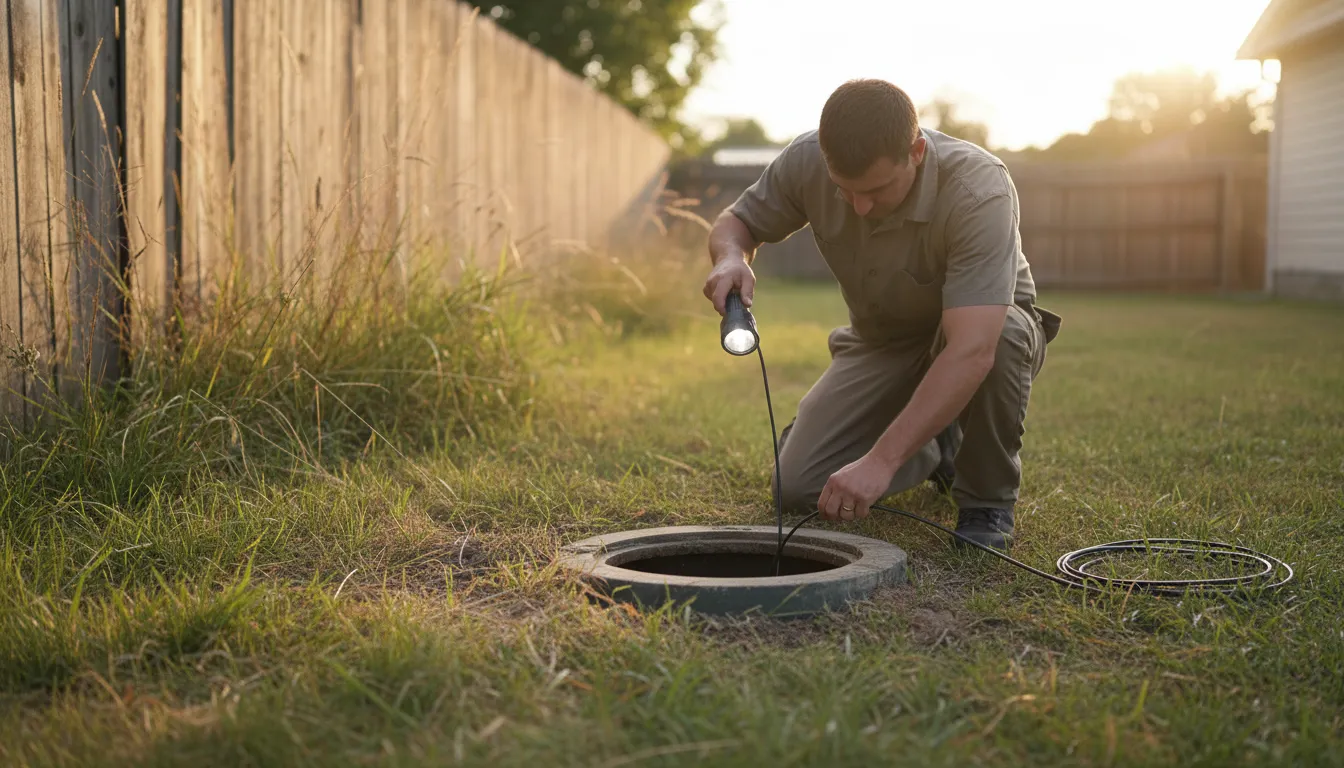
Find the Best Septic Tank Inspection Companies for Your Business
No obligation • Fast responses • Nationwide coverage

Why you can trust Septic Spot
Septic Spot is a leading United States resource for understanding and comparing septic services. Our editors review providers using consistent criteria and verify key business details. Listings and scores are independent, and companies cannot pay to influence our content.
Search providers near you
Top Septic Tank Inspection Companies in Modesto, California Ranked
A professional septic tank inspection is a critical evaluation of your onsite wastewater system's health and functionality. In Modesto, where many homes rely on these private systems, regular assessments are essential for protecting your property value, ensuring environmental safety, and preventing costly failures. This guide will help you understand the inspection process, local requirements, and how to find qualified professionals to evaluate your septic system.
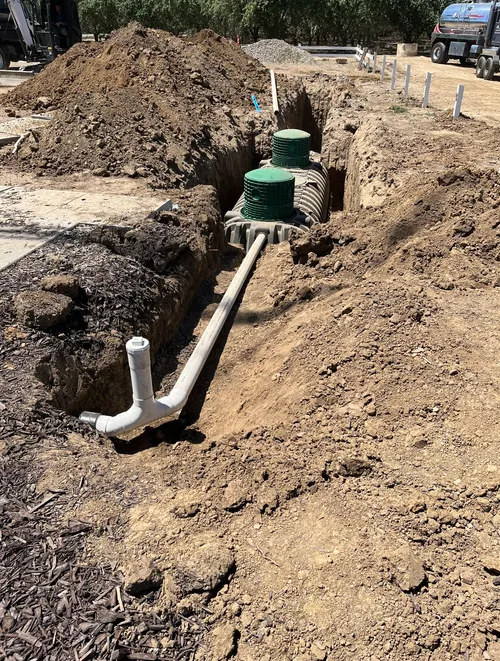
A-1 Septic Services
2125 Wylie Dr #6, Modesto, CA 95355
A-1 Septic Services is a full-service septic company based in San Jose, CA, offering comprehensive septic system solutions. They provide septic tank installation, repair, pumping, inspections, and drain field services, along with grading, excavation, and underground utility trenching. The company manages all aspects from design and permitting to final installation, ensuring code compliance and system longevity. With over 30 years of experience serving Stanislaus, San Joaquin, and Merced counties, A-1 Septic Services has extensive local knowledge and expertise. Their capabilities include septic system design, leach field installation, and utility trenching, supported by in-house crews and equipment to maintain control over project quality and scheduling.
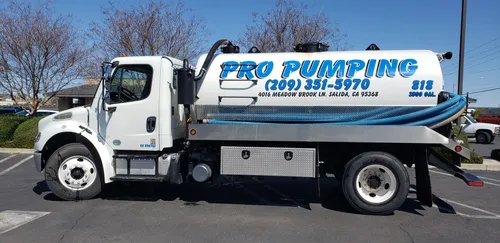
Pro Pumping Septic Service
4016 Meadow Brook Ln, Salida, CA 95368
Pro Pumping Septic Service is a septic tank pumping, inspection, and repair company serving San Jose, CA. They offer septic tank pumping, cleaning, maintenance, site inspections, and repairs for both residential and commercial clients. As an owner-operated business, they focus on personalized service and work to ensure safe and environmentally sound septic systems. Pro Pumping serves homeowners, restaurant owners, and commercial accounts in the San Jose area.
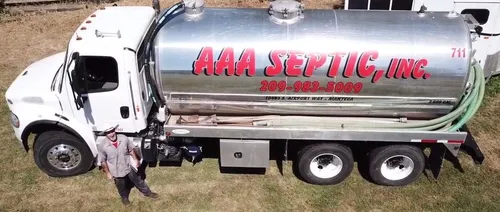
AAA Septic Inc.
10583 S Airport Way, Manteca, CA 95336
AAA Septic Inc. provides septic tank pumping and inspection services in Stockton, CA. They offer regular septic pumping to help maintain system efficiency and prevent backups, with advice tailored to household size and water use. Their services include locating and cleaning septic tanks, inspecting for damage, and installing septic risers for easier maintenance access. These capabilities help extend the life of septic systems and improve safety during yard activities.
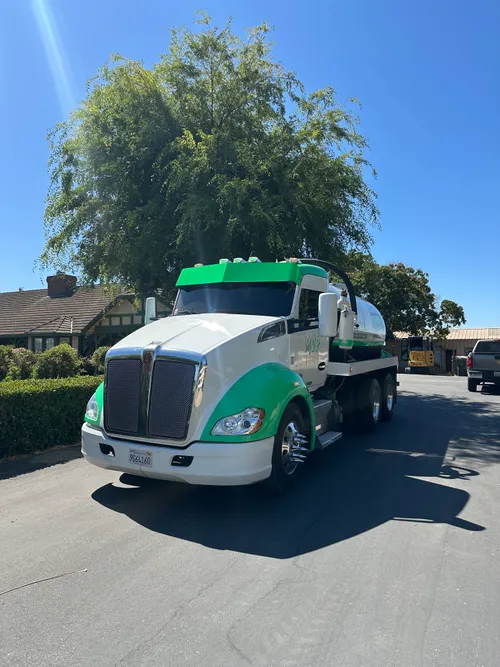
Mountain Valley Pumping
581 Hi Tech Pkwy, Oakdale, CA 95361
Mountain Valley Pumping is a septic tank pumping, inspection, repair, and installation company serving San Jose, CA. They provide a range of services including septic tank pumping, system inspections, repairs, and maintenance, as well as commercial lift station and grease trap pumping. The company uses up-to-date pumping technology to address various septic system issues. Mountain Valley Pumping offers 24-hour emergency service to assist customers whenever needed.
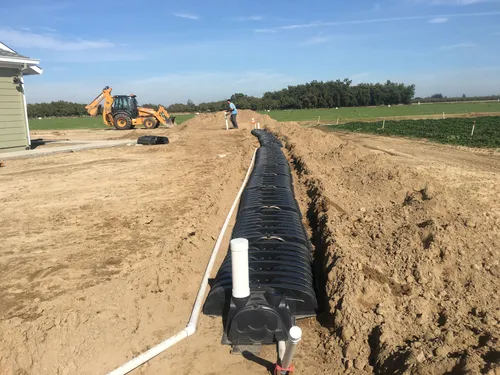
Applegate Septic & Sewer
1404 Fernview Dr, Modesto, CA 95355
Applegate Septic & Sewer is a septic tank pumping, inspection, repair, and installation company serving San Jose, CA. Since 1995, they have provided septic and sewer services for residential and commercial clients in Modesto and nearby cities. The company is fully licensed and bonded, with a large fleet of service trucks and certified septic inspection capabilities. They offer 24/7 service and specialize in septic system construction and maintenance, ensuring precise and reliable work.
Why Septic System Inspections Are Essential in Stanislaus County
Your septic system is a significant, out-of-sight investment. In Modesto and throughout Stanislaus County, routine septic system evaluations are not just a good idea-they are a key part of responsible homeownership mandated by local and state guidelines 1. A failing system can lead to sewage backups into your home, contamination of groundwater, and violations that come with hefty fines from the Stanislaus County Department of Environmental Resources. Proactive inspections help you catch minor issues like a cracked baffle or high sludge levels before they escalate into a full drainfield replacement, which can cost tens of thousands of dollars.
Understanding Local Inspection Regulations and Frequency
Modesto homeowners must adhere to regulations set by the California Regional Water Quality Control Board and local Stanislaus County building codes 2. While requirements can vary, a general rule is to have a standard septic system inspected every 1 to 3 years. The frequency can depend on your household size, tank capacity, and overall usage.
One of the most common triggers for a mandatory inspection is a property sale. A thorough point-of-sale septic inspection is typically required prior to the transfer of property ownership to ensure the system is functioning correctly and poses no liability for the new homeowner. This specialized evaluation is often more detailed than a routine maintenance check.
The Step-by-Step Septic Inspection Process
A comprehensive septic tank assessment involves several key steps performed by a licensed professional:
- Locating the System: The inspector begins by finding the tank and access manholes. If risers are not installed, this may require excavation, which highlights the value of adding risers for future ease of access.
- Measuring Sludge and Scum: This is the core of the inspection. The inspector measures the depth of the sludge layer at the bottom and the scum layer at the top. Pumping is generally recommended when the sludge is within 12 inches of the outlet baffle.
- Component Check: The inspector examines the structural integrity of the tank, checks inlet and outlet baffles for damage or blockage, and inspects the septic tank effluent filter (if present), cleaning it as necessary 3.
- Hydraulic Load Test (Common for Real Estate): To check the drainfield's absorption capacity, the inspector may run a significant amount of water into the system to monitor for slow drainage or surfacing effluent, which indicates a failure 4.
- Visual Survey of Drainfield: The area over the leach field is inspected for signs of failure, such as overly lush grass, soggy soil, or unpleasant odors.
What to Expect: Inspection and Pumping Costs
Understanding the costs involved helps you budget for this necessary maintenance. In the Modesto area, pricing typically falls within these ranges:
- Routine Inspection Only: $150 - $300 5.
- Septic Tank Pumping Only: $250 - $600+, with variation based on tank size.
- Combined Inspection and Pumping Service: Often the most cost-effective approach, commonly ranging from $300 to $600 for both services together 6 7.
It's important to note that these are estimates. Always get a detailed quote from your service provider, as prices for a full system evaluation can be higher for larger systems or more complex property transfer inspections.
Find the perfect septic tank inspection companies for your needs
Get personalized recommendations and expert advice
Preparing for Your Inspection: A Homeowner's Checklist
A little preparation can make the inspection process smoother and more efficient.
- Locate Your Records: Contact the Stanislaus County Department of Environmental Resources to request a copy of your septic system's plot plan or "as-built" diagram. This document shows the tank and drainfield location, saving time and potential digging fees 8.
- Clear Access: Ensure the inspector has clear access to the area where your tank is buried. Move vehicles, lawn furniture, or stored items.
- Know Your System: Be prepared to inform the inspector of your household size, any recent issues (slow drains, odors), and the last known pumping date.
- Consider Installing Risers: If your tank lids are buried deep, installing risers brings access to the surface. This is a one-time cost that reduces excavation fees for every future inspection and pumping 9 10.
Maintaining Your System Between Inspections
Professional inspections are crucial, but day-to-day care extends your system's life. Follow these preventive maintenance tips:
- Conserve Water: Spread out laundry and dishwasher use to avoid overwhelming the system.
- Mind What You Flush: Only human waste and toilet paper should go in. Avoid flushing sanitary products, wipes (even "flushable" ones), chemicals, grease, and medications 11.
- Protect the Drainfield: Never drive or park over it. Plant only grass over the area; tree and shrub roots can damage pipes.
- Keep Records: Maintain a log of all inspections, pumpings, and repairs. This is invaluable for troubleshooting and is essential documentation if you sell your home.
Signs You Need an Inspection Sooner Than Scheduled
Don't wait for your scheduled check-up if you notice any of these red flags, which indicate your system needs immediate professional attention:
- Slow drains or gurgling pipes throughout the house.
- Sewage odors in your yard or home.
- Wet, spongy, or overly green grass over the drainfield area.
- Sewage backing up into household drains or surfacing in your yard.
If you observe any of these issues, contact a septic professional in Modesto for an assessment immediately to prevent further damage and potential health hazards.
Frequently asked questions
Sources
Footnotes
-
Frequent Questions on Septic Systems | US EPA - https://www.epa.gov/septic/frequent-questions-septic-systems ↩
-
Chapter 6.4 SEWAGE STANDARDS - https://www.codepublishing.com/CA/SolanoCounty/html/SolanoCounty0604.html ↩
-
Modesto Septic Inspections - Clark Septic Service - https://www.clarksepticservice.com/inspection-certification ↩
-
Point of Sale Septic Inspections: What to Expect - https://westcoastsanitationinc.com/point-of-sale-septic-inspections-what-to-expect/ ↩
-
Stay Compliant: Avoid Fines with Septic System Regulations - https://smartsepticpros.com/blog/septic-system-regulations/ ↩
-
Maintaining your Septic System A Guide for Homeowners - https://www.ihs.gov/california/tasks/sites/default/assets/File/SFC-MaintainingYourSepticSystemGuide.pdf ↩
-
Homeowner's Guide to Septic Systems - Tuolumne County - https://www.tuolumnecounty.ca.gov/DocumentCenter/View/21759/Onsite-System-Care-and-Maintenance ↩
-
Septic System Inspections - InterNACHI® - https://www.nachi.org/inspecting-septic-systems.htm ↩
-
Septic Tank Testing & Inspection | What to Expect Guide | Blog - https://www.blueribbonseptic.com/blog/septic-tank-testing-and-inspection ↩
-
Septic Tank Inspection - https://actat.wvu.edu/files/d/1afeab1e-668e-4eaa-8336-a1f35fe656ce/sfq_w04.pdf ↩
-
Pumping and Inspecting Your System - Indian Health Service (IHS) - https://www.ihs.gov/california/index.cfm/offices/oehe/dsfc/drinking-water-and-sanitation/maintaining-your-septic-system-guide/pumping-and-inspecting-your-system/ ↩