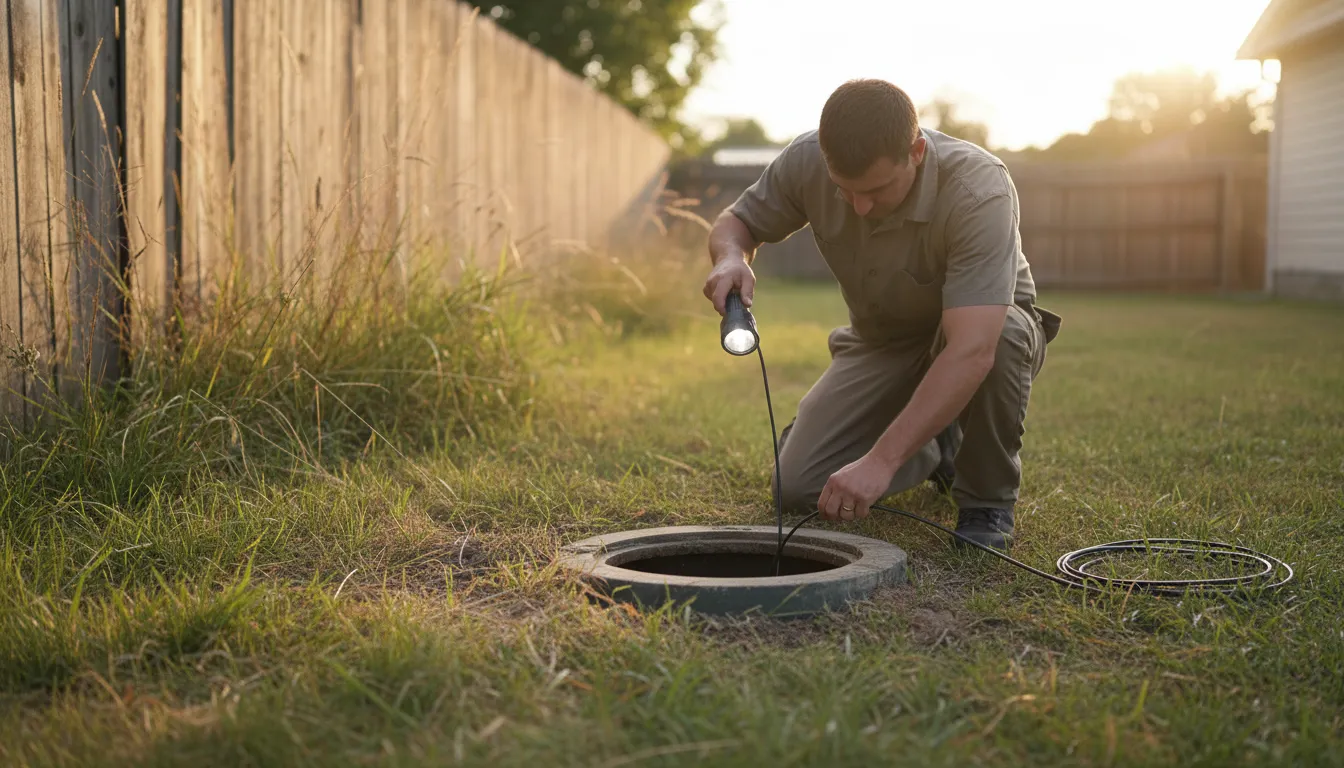
Find the Best Septic Tank Inspection Companies for Your Business
No obligation • Fast responses • Nationwide coverage

Why you can trust Septic Spot
Septic Spot is a leading United States resource for understanding and comparing septic services. Our editors review providers using consistent criteria and verify key business details. Listings and scores are independent, and companies cannot pay to influence our content.
Search providers near you
Top Septic Tank Inspection Companies in Napa, California Ranked
A septic system inspection is a critical evaluation of your onsite wastewater treatment system's condition and functionality. In Napa, these assessments are not just a good idea for maintenance-they are often a legal requirement for property transactions, renovations, and expansions. Understanding the inspection process, local regulations, and associated costs helps you protect your property investment and the local environment. This guide provides the information you need to find qualified local professionals and navigate the requirements for septic system evaluations in Napa County.

Superior Septic Pumping Service
Santa Rosa, CA
Superior Septic Pumping Service is a septic system maintenance and repair company based in Santa Rosa, CA. They offer services including septic pumping, tank cleanouts, repairs, and real estate inspections. With over 20 years of experience, the owner-operated business uses advanced equipment to handle issues such as sludge buildup, cracked pipes, and faulty drain fields. Their team serves Santa Rosa and surrounding areas, providing comprehensive septic solutions to help prevent backups and contamination.
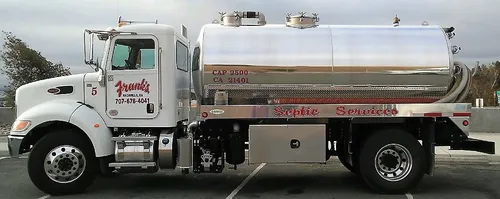
Frank's Septic Service, Inc.
Fairfield, CA
Frank's Septic Service, Inc. is a family-owned and operated company based in Fairfield, CA, providing septic system services since 1949. They offer a range of services including septic tank pumping, inspections, repairs, installations, and trucked waste removal for residential, agricultural, commercial, and municipal clients. Serving areas across Colusa, Solano, and Yolo Counties, including Vacaville, Woodland, and Davis, the company specializes in system upgrades, leach field repairs, and certified inspections. Their fleet includes vacuum tankers with capacities between 5,000 and 6,500 gallons. Frank's Septic Service also provides 24/7 after-hours and emergency support.
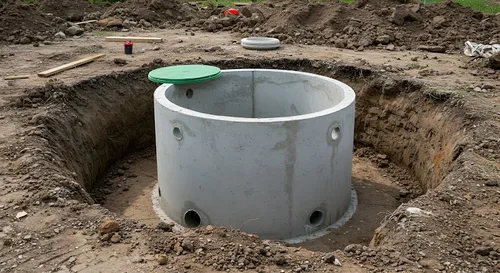
BDK Septic Service
2100 Llano Rd, Santa Rosa, CA 95407
BDK Septic Service is a family-owned company based in Santa Rosa, CA, serving homeowners and businesses throughout Sonoma County. They specialize in septic tank pumping and inspections, offering detailed reports to ensure system functionality and detect any damages. The company is NAWT certified and licensed for a range of services including alarm troubleshooting, line locating, and camera diagnostics. BDK Septic Service is also a certified provider for various pre-treatment septic systems and holds a C-42 contractor license.
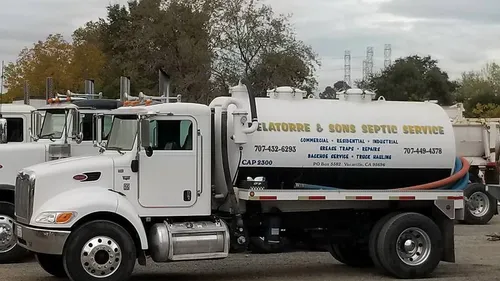
Delatorre Septic and Trucking LLC
7000 Leisure Town Rd, Vacaville, CA 95688
Delatorre Septic and Trucking LLC is a family-owned business providing septic system services in Fairfield, CA, and surrounding areas including Napa, Yolo, and Solano Counties. They offer septic tank pumping, inspection, repair, and installation for both residential and commercial customers. Established in 1992 initially as a trucking company, they have expanded to specialize in septic services and provide 24/7 emergency support. Their trucks can hold up to 2,600 gallons, enabling efficient waste removal for septic systems.
NorCal Superior Systems
Santa Rosa, CA
NorCal Superior Systems is a septic tank inspection, repair, and installation company serving Santa Rosa, CA, and the surrounding Napa, Sonoma, and Marin counties. With over 20 years of experience, the company offers services including septic system installations, repairs, hydrojet septic line cleaning, and inspections using advanced technology like borescopes for precise diagnostics. As a licensed, bonded, and insured contractor, NorCal Superior Systems handles both commercial and residential projects with a focus on safety and quality.
Why Septic Inspections Are Required in Napa
Napa County, through its Planning, Building & Environmental Services (PBES) department, mandates septic system evaluations for specific property events to ensure public health and environmental safety. The primary triggers for a mandatory inspection include:
- Property Transfer: Selling your home? A passing inspection report is typically required before the sale can be finalized to verify the system is operational and compliant.
- Home Additions & Renovations: Planning to increase your home's square footage by more than 25% or add bedrooms? You'll need a system inspection and approval 1.
- New Construction or "Like-for-Like" Replacement: If you're building a new home or replacing an existing one, the current septic system must be inspected by a licensed contractor to confirm it is in good condition, is not a prohibited cesspool, and is expected to function properly 2.
- Suspected System Failure: Signs like slow drains, sewage odors, or soggy ground over the leach field necessitate an immediate inspection.
These regulations are designed to prevent groundwater contamination in Napa's sensitive watersheds and ensure systems can handle increased wastewater loads.
The Standard Septic Inspection Procedure
A comprehensive septic system evaluation in Napa follows a detailed protocol. Hiring a professional who understands local county forms and requirements is essential. The standard process includes:
1. Locating and Uncovering the System The inspector will begin by reviewing any existing plot plan of your property. This plan should show the septic tank, distribution box, leach field, and any wells. If the components are buried, the inspector will probe the ground to locate them. All inspection ports, tank manways (lids), and the distribution box must be fully uncovered for access 3.
2. Pumping and Internal Tank Inspection For a thorough evaluation, the tank should be pumped during the inspection visit. This allows the inspector to examine the tank's interior for structural integrity, checking concrete or fiberglass for cracks, leaks, root intrusion, and baffle condition. Napa County standards require tanks to be watertight and typically have two compartments 4 5.
3. Measuring Scum and Sludge Levels A key metric of system health is the accumulation of solids. The inspector measures the sludge layer at the bottom of the tank. If the sludge occupies one-third or more of the tank's liquid depth, pumping is required. This measurement is a primary factor in determining if the system "passes" 6.
4. Checking the Distribution Box and Leach Field The inspector will verify that the distribution box is level to ensure equal wastewater flow to all legs of the leach field. They will also visually assess the leach field area for signs of failure, such as surfacing effluent, overly lush vegetation, or soggy soil 7.
5. Documentation and Reporting The inspecting contractor will complete the official Napa County Contractor Inspection Report Form. This report includes the plot plan, findings on each system component, and a pass/fail determination. It is the contractor's responsibility to submit this report directly to the Napa County Department of Environmental Management.
Find the perfect septic tank inspection companies for your needs
Get personalized recommendations and expert advice
Understanding Inspection Costs and Pricing
The cost of a septic inspection in Napa depends on whether it's a standalone evaluation or combined with pumping. Prices can also vary based on tank size, accessibility, and property location.
- Standalone Inspection: If the tank has been recently pumped and only an inspection is needed, costs typically range from $150 to $250.
- Combined Inspection & Pumping: Most inspections for real estate or permit purposes require pumping. The combined service is common, with total costs generally falling between $450 and $850. This includes the inspection fee plus pumping, which usually costs $300 to $600+ depending on tank capacity (e.g., 1,000-gallon vs. 1,500-gallon).
- System Replacement: If an inspection reveals a failed system that cannot be repaired, replacement costs are significant. Installing a new conventional septic system in Napa can range from $3,000 to $10,000 or more, with complex alternative systems for challenging soils costing even more 8.
Key Napa County Regulations Homeowners Should Know
Beyond the inspection triggers, several local standards directly impact the inspection outcome:
- Tank Access: Modern regulations require septic tanks to have risers with lids that extend to ground level. This provides easy access for future inspection and pumping without excavation. Older systems without risers may still pass inspection but are noted for being less accessible.
- System Expansion Area: Your property must have a designated 100% expansion area-a space where a replacement leach field could be installed if the original fails. This area must be shown on the plot plan submitted with the inspection report and must be free of impermeable structures like pools or additions 9.
- Watertight Testing: The county may require a 24-hour watertight test on septic tanks, sumps, and grease interceptors as part of the inspection process to confirm there are no leaks 10.
- Permit Compliance: Any system modifications or repairs must be permitted through Napa County PBES. An inspector can identify unpermitted work that may need to be addressed.
Preparing Your Property for a Septic Inspection
A little preparation can ensure your inspection goes smoothly and may improve the likelihood of a passing grade.
- Gather Documentation: Locate any existing "as-built" drawings, plot plans, or past maintenance records for your septic system. This information is invaluable for the inspector.
- Locate and Uncover Components: Before the inspector arrives, identify the location of your tank lids and distribution box. If they are buried, consider having them excavated to save time. Clear any debris, vegetation, or stored items from the area.
- Conserve Water: Avoid excessive water use (like running multiple laundry loads) for 24-48 hours before the inspection. A tank at normal levels is easier to evaluate accurately.
- Provide Clear Access: Ensure the inspector can easily reach the septic area with their truck and pumping equipment.
What Happens After the Inspection?
The inspector will provide you with a copy of their findings. If the system passes, the report will be filed with the county, satisfying the requirement for your real estate transaction or building permit application.
If the system fails, the report will detail the deficiencies. Common reasons for failure include:
- Excessive sludge requiring immediate pumping.
- Structural damage to the tank (cracks, compromised baffles).
- A malfunctioning distribution box or signs of leach field failure.
- Lack of required risers for access.
- Non-compliance with county standards (e.g., a prohibited cesspool).
For minor issues, repairs may be possible. For major failures, you will need to consult with a licensed septic contractor to design a repair or full system replacement, which will require a county permit.
Frequently asked questions
Sources
Footnotes
-
Septic requirements - Napa County - https://www.napacounty.gov/DocumentCenter/View/7894/Septic-requirements---important-items?bidId= ↩
-
Step 3: Prepare Plans - https://www.napacounty.gov/2988/Step-3-Prepare-Plans ↩
-
Wait to Pump Your Tank | Van Delden Wastewater Systems - https://www.vdwws.com/blog/selling-your-house-dont-pump-your-tank-yet ↩
-
California Septic Tank Requirements | Onsite Wastewater Treatment ... - https://www.ntotank.com/blog/california-septic-tank-requirements ↩
-
Septic Inspections: What to Know About a Septic System Inspection - https://www.maxrealestateexposure.com/septic-inspections/ ↩
-
How to Get Septic to Pass Inspection - https://www.guardianangelinspections.com/how-to-get-septic-to-pass-inspection ↩
-
Division II - Chapters 13.16-13.58 - Napa County - https://www.napacounty.gov/DocumentCenter/View/3833/2015-Tracked-Sewage-Ordinance-Chapter-1316-AB-885-PDF ↩
-
Maintaining your Septic System A Guide for Homeowners - https://www.ihs.gov/california/tasks/sites/default/assets/File/SFC-MaintainingYourSepticSystemGuide.pdf ↩
-
A PLOT PLAN OF THE SEPTIC SYSTEM AND ALL OTHER ... - https://www.napacounty.gov/DocumentCenter/View/4048/Contractor-Inspection-Report-Form-PDF?bidId= ↩
-
Chapter 13.44 - SEPTIC TANKS* | Code of Ordinances - https://library.municode.com/ca/napa_county/codes/code_of_ordinances/379242?nodeId=TIT13WASEPUSE_CH13.44SETA ↩