Find the Best Septic Tank Inspection Companies for Your Business
No obligation • Fast responses • Nationwide coverage

Why you can trust Septic Spot
Septic Spot is a leading United States resource for understanding and comparing septic services. Our editors review providers using consistent criteria and verify key business details. Listings and scores are independent, and companies cannot pay to influence our content.
Search providers near you
Top Septic Tank Inspection Companies in Palm Springs, California Ranked
A septic tank inspection is a professional evaluation of your onsite wastewater system, a critical service for maintaining your home's sanitation and protecting your property value. In Palm Springs, where desert soils and specific county regulations govern these systems, regular inspections are not just recommended-they're often required. This guide helps you understand the process, local rules, and typical costs, so you can confidently find qualified professionals to assess your septic system.
Wright Septic Tank Services
511 N Dillon Ave, San Jacinto, CA 92582
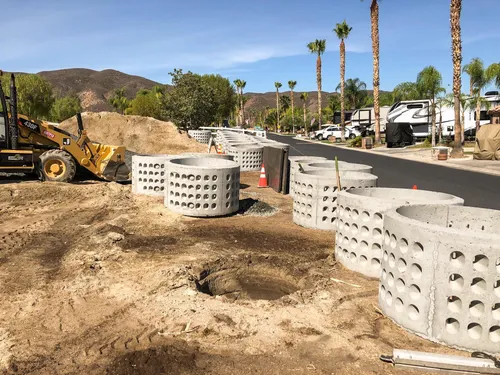
Wright Septic Tank Services is a licensed C42 and C36 contractor based in Los Angeles, CA, offering residential and commercial septic system solutions. Their services include septic tank pumping, repairs, maintenance, installation of new septic systems and leach lines, camera inspections, and electronic tank locating. With over 55 years of experience, Wright Septic uses advanced technology such as waterproof cameras and electronic locating devices to diagnose and address septic system issues effectively.
24/7 Pumping & Septic
985 Joseph Dr, Hemet, CA 92545
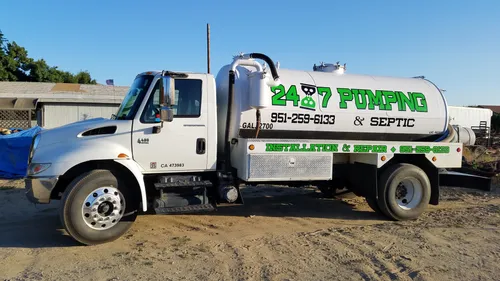
24/7 Pumping & Septic provides septic tank pumping, inspection, repair, and installation services in Los Angeles, CA. The company offers thorough septic tank cleaning and certified inspections for home sales to help maintain system function and compliance. Their team also handles septic system repairs and new installations tailored to property needs, aiming to prevent backups and costly damage.

Ballinger Septic
40101 Monterey Ave, Rancho Mirage, CA 92270
Ballinger Septic is a licensed contractor providing septic system installation, repair, and certification services in Los Angeles, CA. They serve a wide area across Southern California, including Riverside and San Bernardino Counties. Their capabilities include septic system installation, septic repairs, sewer hookups, and leach field repair or replacement. Ballinger Septic works with real estate agents, escrow companies, and homeowners to ensure septic certifications and system compliance. The company is experienced in handling septic system design, permits, and installation for both residential and commercial properties.
Why Septic System Inspections Are Crucial in the Coachella Valley
Living in the Palm Springs area means your property likely relies on a septic system rather than a municipal sewer line. These systems are a self-contained method of treating household wastewater, and their failure can lead to costly repairs, environmental contamination, and health hazards. The dry, sandy soil common to the region can present unique challenges for proper wastewater percolation, making professional oversight even more important. A thorough septic evaluation ensures that everything from the tank to the drainfield is functioning correctly, safeguarding your investment and the local environment 1.
Riverside County Regulations and Certification
Septic systems in Palm Springs are regulated by the Riverside County Department of Environmental Health. The county mandates that inspections be performed by a certified Qualified Service Provider (QSP). This certification is particularly important for:
- Property Transfers: A QSP's certification of the existing system is generally required when selling a home.
- New System Installation: All new installations must be evaluated and approved by a QSP.
- Alternative Systems: Many homes in the area use Alternative Treatment Systems (ATUs), which are often necessary for the local soil conditions. These systems require an annual operating permit from the county, which involves an inspection 2.
Using a county-certified QSP ensures the inspection meets all legal standards and provides documentation that can be used for real estate transactions or permit applications.
What Does a Professional Septic Inspection Involve?
A standard septic system check-up, often performed in conjunction with pumping, is a multi-step process designed to assess the health of every component.
1. Locating and Accessing the System
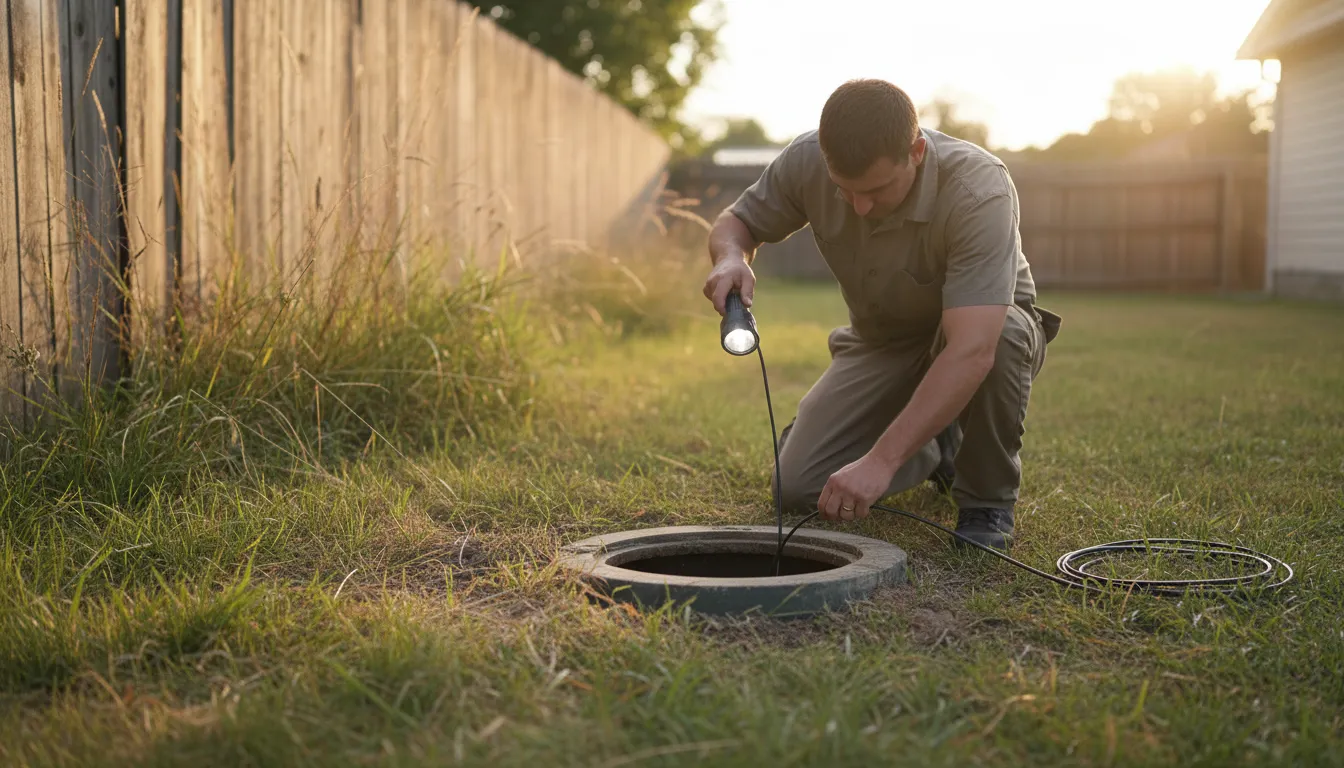
The inspector will first locate and excavate the tank's manhole covers to gain access to the interior. Proper access is the first step to a comprehensive evaluation.
2. Assessing Tank Conditions and Sludge Levels
This is the core of the inspection. The professional will:
- Measure Sludge and Scum: They use specialized tools to measure the depth of sludge at the bottom of the tank and the scum layer floating at the top. This determines if the tank needs to be pumped.
- Inspect Structural Integrity: The tank walls, baffles (or tees), and lids are checked for cracks, corrosion, or damage that could lead to leaks or system failure.
- Clean the Effluent Filter: Many modern tanks have an effluent filter that prevents solids from entering the drainfield. The inspector will clean this filter as part of the service 3.
3. Evaluating the Drainfield
The inspector doesn't stop at the tank. A crucial part of the process is assessing the soil absorption field, or drainfield. They look for signs of failure, such as:
- Soggy ground or standing water over the field.
- Unpleasant odors.
- Unusually lush grass growth in the drainfield area. These signs indicate that the system is not properly absorbing and filtering the treated wastewater.
Find the perfect septic tank inspection companies for your needs
Get personalized recommendations and expert advice
Inspection Frequency and Scheduling
How often should you get your septic tank inspected? General guidelines recommend a professional septic system evaluation every 1 to 3 years 4. Pumping is typically needed less frequently, about every 3 to 5 years, but an inspection can determine the exact need. Households with 5 or more people should consider inspections and pumping more frequently, potentially every 2-3 years, due to higher wastewater output 4.
Scheduling is straightforward. You can locate and schedule inspections with certified providers directly, and the City of Palm Springs also offers a self-service portal for managing inspection-related appointments 5.
Understanding Costs for Septic Inspections in Palm Springs
The cost of a septic inspection can vary based on the scope of work and your specific situation. Here's a breakdown of typical price ranges:
- Routine Inspection-Only Service: If you are scheduling a periodic check without pumping, costs typically range from $100 to $200.
- Combined Inspection and Pumping: Most homeowners opt for this combined service. In the Palm Springs area, you can expect to pay between $300 and $1,200 or more for a full pump-out and comprehensive inspection 6. The final price depends on tank size, accessibility, and sludge levels.
- Real Estate Transaction Inspection: An inspection for a home sale, which includes a detailed report for the buyer and seller, often falls in the range of $300 to $600.
It's important to view an inspection as a diagnostic investment. While an inspection might cost a few hundred dollars, it can identify minor issues before they become major expenses. For example:
- Baffle Repair: Fixing or replacing inlet/outlet baffles can cost $300 to $900.
- Full System Replacement: In a worst-case scenario, replacing a failed septic system in our region can be a significant undertaking, with costs often exceeding $8,000 to $22,000+ 7 8.
Maintaining Your System Between Inspections
A professional inspection is essential, but day-to-day care extends the life of your system. Good practices include:
- Conserving water to avoid overloading the system.
- Avoiding flushing anything besides human waste and toilet paper.
- Never pouring grease, chemicals, or paints down the drain.
- Keeping vehicles and heavy structures off the drainfield area.
- Diverting rainwater drainage systems away from the septic field.
Frequently asked questions
Sources
Footnotes
-
Frequent Questions on Septic Systems | US EPA - https://www.epa.gov/septic/frequent-questions-septic-systems ↩
-
Septic Systems | Riverside County Department of Environmental Health - https://rivcoeh.org/septic-systems ↩
-
Pumping and Inspecting Your System - Indian Health Service (IHS) - https://www.ihs.gov/california/index.cfm/offices/oehe/dsfc/drinking-water-and-sanitation/maintaining-your-septic-system-guide/pumping-and-inspecting-your-system/ ↩
-
How to Keep Your Septic System Healthy in Riverside County (Pro ... - https://www.lanikseptic.com/how-to-keep-your-septic-system-healthy/ ↩ ↩2
-
Inspections | City of Palm Springs - https://www.palmspringsca.gov/government/departments/building/inspections ↩
-
Septic Tank pumping? : r/FirstTimeHomeBuyer - Reddit - https://www.reddit.com/r/FirstTimeHomeBuyer/comments/1inpsh4/septic_tank_pumping/ ↩
-
Septic Tank Pumping Cost: Guide & Pricing in 2025 - Splash Plumbing - https://www.splashplumbing.com/how-much-does-it-cost-to-pump-septic-tank-understanding-pricing-and-factors-involved/ ↩
-
How Much Should a Septic Inspection Cost: Ultimate Money-Saving ... - https://www.firstcallseptic.com/septic-blog/how-much-should-a-septic-inspection-cost ↩