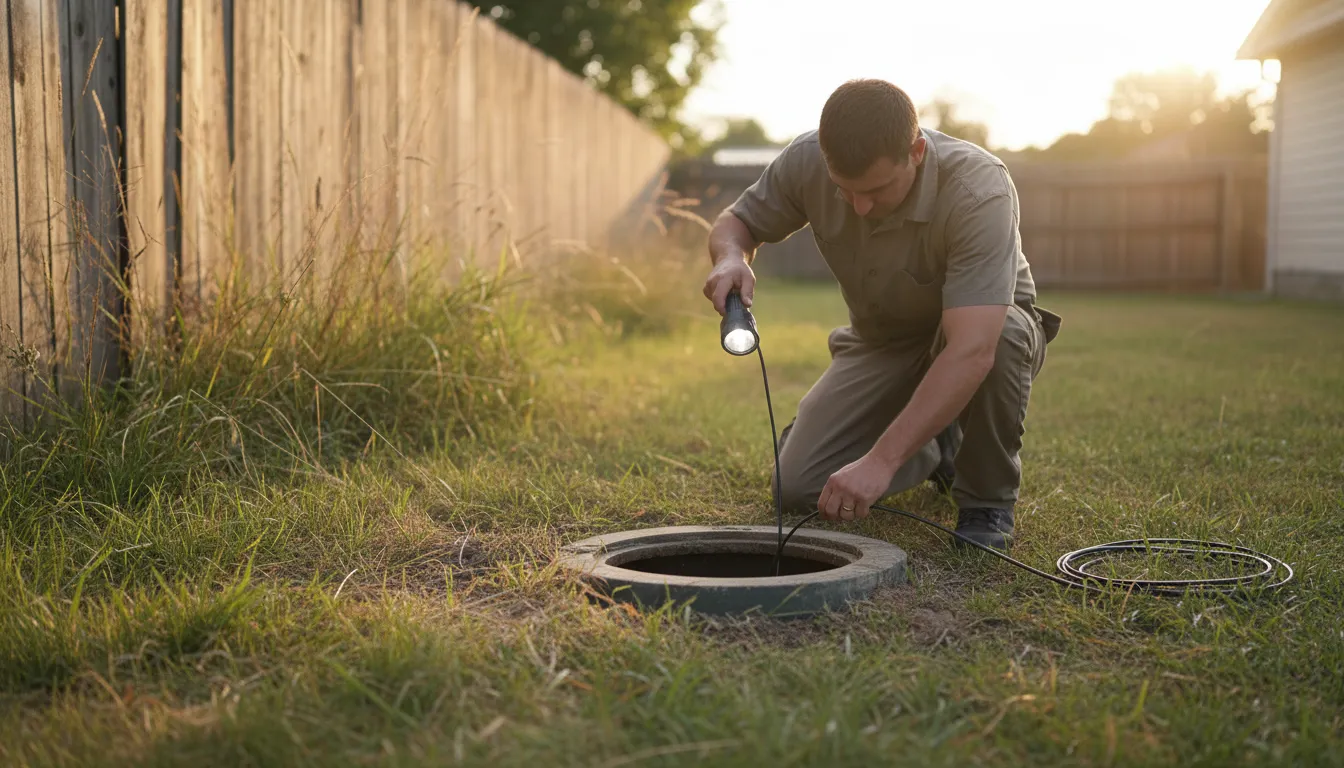
Find the Best Septic Tank Inspection Companies for Your Business
No obligation • Fast responses • Nationwide coverage

Why you can trust Septic Spot
Septic Spot is a leading United States resource for understanding and comparing septic services. Our editors review providers using consistent criteria and verify key business details. Listings and scores are independent, and companies cannot pay to influence our content.
Search providers near you
Top Septic Tank Inspection Companies in Stonecrest, Georgia Ranked
For homeowners in Stonecrest, a properly functioning septic system is essential for health, property value, and environmental protection. A professional septic tank inspection is a critical evaluation that assesses the condition of your entire on-site sewage management system, from the tank to the drain field. This guide will help you understand the process, local regulations, and how to find qualified local professionals to ensure your system operates safely and efficiently.
Right Price Plumbing and Septic
Atlanta, GA
Right Price Plumbing and Septic is a local, family-owned company serving Atlanta, GA, and surrounding counties. They provide a range of residential and commercial plumbing and septic services, including septic tank pumping, inspection, repair, and installation. The company also offers drain inspection, emergency plumbing, and water heater repair. They are known for their comprehensive service options and have experience handling various plumbing and septic system needs. Right Price Plumbing and Septic serves multiple counties in Georgia and offers financing options to customers.
Septic On Call
2180 Satellite Blvd NW #400, Duluth, GA 30097
Septic On Call is a septic tank service provider based in Atlanta, GA. The company offers a range of services including septic tank pumping, inspections, repairs, and installation of septic tanks and drainfields. They provide thorough cleaning and maintenance to help prevent costly repairs and ensure proper system function. Septic On Call also specializes in diagnosing and repairing septic system issues, from minor leaks to major damage. The company offers 24/7 emergency services for septic tank problems and backups, responding quickly to urgent repair needs.
Independent Septic and Sewer LLC
Atlanta, GA
Independent Septic and Sewer LLC is a family-owned business serving Atlanta, GA, and surrounding counties. They provide septic tank pumping, cleaning, inspection, repair, and installation services for residential and commercial properties. With over 20 years of experience, the company offers expertise in diagnosing and repairing septic system issues, including drain field repairs and sewer line maintenance. They also provide a 10-year warranty on repairs and handle all necessary permits and building code requirements. Their services include thorough septic tank pumping that removes both liquids and solids, as well as hydro jetting and camera inspections when needed.
Easy Clean Septic
6520 Roswell Rd, Atlanta, GA 30328
Easy Clean Septic is a septic tank service provider based in Atlanta, GA. They offer septic tank pumping, inspection, installation, and repair services to maintain effective septic systems. The company uses modern tools and technology to address a range of septic issues, from minor repairs to full system replacements. Established in 2018 by a team with over 15 years of experience in the plumbing and septic industry, Easy Clean Septic emphasizes integrity and thorough workmanship. Their services include detailed inspections to detect potential problems early and comprehensive repairs to restore system function.
Wincorp Master Plumbers
South Fulton, GA
Wincorp Master Plumbers provides septic tank pumping, inspection, and repair services in South Fulton, GA. They serve both residential and commercial clients, offering expert plumbing solutions including hydro-jetting to clear deep blockages and maintain efficient drains. The company is staffed by fully licensed plumbers who handle new construction, remodels, and emergency plumbing needs. Wincorp Master Plumbers also offers 24/7 emergency plumbing services to address urgent issues promptly. Their service area includes Woodstock, Roswell, Alpharetta, Canton, Sandy Springs, and Milton, GA.
Why Septic System Evaluations Are Crucial in DeKalb County
In Stonecrest, your septic system is a private wastewater treatment plant. Unlike a municipal sewer connection, you are solely responsible for its maintenance and repair. Regular septic inspections are not just a good idea-they are often mandated by local health codes to protect groundwater and public health. DeKalb County, under Georgia state rules, typically requires these evaluations every 1 to 3 years, depending on the system type and usage. A thorough assessment can identify minor issues before they become catastrophic failures, saving you thousands of dollars in emergency repairs and preventing unsanitary conditions on your property.
What a Professional Inspection Entails
A comprehensive septic system inspection in Stonecrest goes far beyond just looking at the tank. Licensed professionals follow a detailed process to evaluate every component.
Initial Steps: Locating and Accessing the System The inspector will first locate your tank and drain field, often using county records or specialized probes. Tanks are typically buried 10 to 25 feet from the home. They will then excavate to uncover the inspection and pump-out lids, which is the first step in evaluating accessibility for future maintenance.
Internal Tank Assessment This is the core of the inspection. The professional will:
- Measure Sludge and Scum Levels: Using specialized tools, they measure the accumulation of solids (sludge) and floating materials (scum). This determines if the tank needs immediate pumping to prevent solids from flowing into and clogging the critical absorption field.
- Inspect Structural Integrity: They check the tank walls, lid, and baffles (T-shaped pipes at the inlet and outlet) for cracks, corrosion, or damage that could compromise the tank's function.
- Check Effluent Filters: Many modern tanks have an effluent filter on the outlet baffle to prevent solids from escaping. The inspector will ensure it is present and clean.
Drain Field Evaluation The inspector will examine the soil absorption field for signs of failure, which is a leading cause of system replacement. Warning signs include:
- Sewage odors in the yard.
- Unusually lush, green grass or soggy, wet spots over the field area.
- Sewage backing up into the home or surfacing in the yard.
Understanding Local Regulations and Requirements
Stonecrest homeowners must adhere to DeKalb County and Georgia state regulations for on-site sewage management systems.
System Standards and Setbacks Georgia law requires conventional septic systems to have a minimum 1,000-gallon, two-compartment tank 1. Strict setback distances are also enforced: septic tanks must be at least 50 feet from any well and 10 feet from property lines, with absorption fields requiring a 5-foot setback 1. Knowing these rules is vital for any new installation or property modification.
Documentation You Should Have Always request a copy of your system's most recent inspection report and the original "as-built" diagram from the DeKalb County Health Department. This document is your roadmap, detailing the exact location, size, and layout of your tank and drain field-information that is invaluable for maintenance and repairs.
Find the perfect septic tank inspection companies for your needs
Get personalized recommendations and expert advice
Recognizing Signs You Need an Inspection or Service
Don't wait for a scheduled check-up if you notice these red flags. Contact a professional immediately if you experience:
- Slow Drains and Gurgling Pipes: Throughout the home, especially after flushing toilets or running washing machines.
- Sewage Odors: Indoors near drains or outdoors near the tank/drain field.
- Pooling Water or Lush Vegetation: Over the drain field area, particularly when it hasn't rained.
- Sewage Backup: The most severe sign, indicating a significant blockage or system failure 2 3.
The Importance of Hiring a Licensed Professional
In Georgia, all septic system inspections, pumping, and repairs must be performed by a state-licensed On-Site Sewage Management (OSSM) contractor 4 5. These professionals have passed rigorous exams on state codes, system design, and safety protocols 6 5. Hiring a licensed expert ensures the evaluation is done correctly, meets legal standards, and provides a valid report for county compliance. It also protects you from liability and ensures the work is performed safely.
Cost Considerations for Inspection and Maintenance
Understanding the potential costs helps in planning for this essential home maintenance.
Inspection Costs A full septic system inspection in the Stonecrest area typically ranges from $400 to $600. This fee covers the professional's time, expertise, and report generation. It is a valuable investment for peace of mind and proactive system care.
Pumping Costs If the inspection reveals that sludge and scum levels are too high (generally more than one-third of the tank's depth), pumping will be recommended. Pumping costs in Georgia usually range from $300 to $600 or more, depending on your tank's size (e.g., 1,000 vs. 1,500 gallons) and ease of access 7 8 9. Regular pumping every 3-5 years is the single most effective way to extend the life of your drain field and avoid costly failures 7 10.
Frequently asked questions
Sources
Footnotes
-
Georgia Septic Tank Requirements | On-Site Sewage Management ... - https://www.ntotank.com/blog/georgia-septic-tank-requirements ↩ ↩2
-
DIY Septic Maintenance Tips for Georgia Homeowners - https://smartsepticpros.com/blog/diy-septic-system-maintenance-georgia/ ↩
-
Septic Inspection - Keith McDonald Plumbing - https://www.keithmcdonaldplumbing.com/septicinspection ↩
-
GA R&R - GAC - Subject 511-3-1 ON-SITE SEWAGE MANAGEMENT SYSTEMS - https://rules.sos.ga.gov/gac/511-3-1 ↩
-
Georgia Septic License & Certification | 2024 Contractor Guide - https://www.servicetitan.com/licensing/septic/georgia ↩ ↩2
-
ON-SITE SEWAGE CONTRACTOR EXAMINATION STUDY GUIDE - https://gnrhealth.com/wp-content/uploads/2012/01/Residential-Study-Guide.pdf ↩
-
Septic Systems | DeKalb Public Health - https://dekalbpublichealth.com/environmental-health/septic-systems/ ↩ ↩2
-
A HOMEOWNER'S GUIDE TO ON-SITE SEWAGE ... - https://dph.georgia.gov/document/document/guide-septic-tanks/download ↩
-
Septic System Inspections in Acworth, GA - CityWIDE Plumbing - https://www.citywideplumbing.com/septic-inspections/ ↩
-
Frequent Questions on Septic Systems | US EPA - https://www.epa.gov/septic/frequent-questions-septic-systems ↩