
Find the Best Septic Tank Installation & Replacement Contractors for Your Business
No obligation • Fast responses • Nationwide coverage

Why you can trust Septic Spot
Septic Spot is a leading United States resource for understanding and comparing septic services. Our editors review providers using consistent criteria and verify key business details. Listings and scores are independent, and companies cannot pay to influence our content.
Search providers near you
Top Septic Tank Installation & Replacement Contractors in Newark, Ohio Ranked
Installing or replacing a septic system is a significant home improvement project that ensures the safe and effective treatment of household wastewater. In Ohio, this process is strictly regulated to protect public health and the environment. Understanding the state's rules, the steps involved, and the factors that influence cost is essential for any homeowner. This guide provides a clear overview of the process, from initial soil evaluation to final inspection, to help you navigate your project with confidence.
Austin's Septic
Columbus, OH
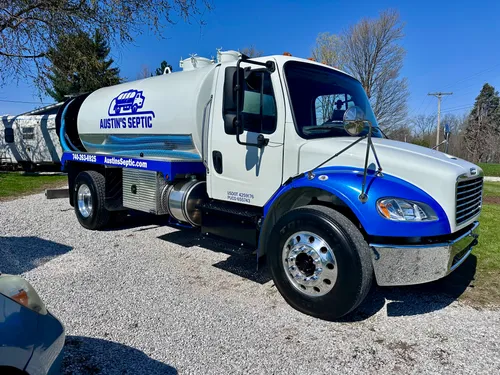
Austin's Septic is a septic tank pumping and maintenance company serving Columbus, OH, and the surrounding Central Ohio area. They provide septic tank pumping, system installation, inspections, emergency services, precision locating, sewer camera inspections, and high-pressure sewer jetting for both residential and commercial clients. The company emphasizes skilled service backed by years of experience and offers competitive pricing. Their expertise includes lift station pumping, which is important for maintaining wastewater systems in the region.
A & B Sanitation Inc
Columbus, OH
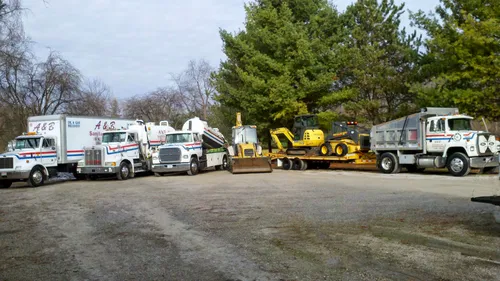
A & B Sanitation Inc is a septic service provider located in Columbus, OH. The company offers septic tank pumping, inspection, installation, and repair services. They use modern technology including jetting, vacuum services, and video camera pipe inspections to handle various septic system needs. Established in 1955, A & B Sanitation also provides storm water management repairs and environmental services. They have a 24/7 emergency response program for hazardous material releases and are a distributor for Norweco wastewater treatment products.
Ohio Regulations and Permits
All new, altered, or replacement household sewage treatment systems in Ohio are regulated under Ohio Administrative Code Chapter 3701-29. The Ohio Department of Health (ODH) sets the statewide standards, but the rules are administered and enforced by your local county or city health district.
The cornerstone of the process is the permit. You must obtain a permit from your local health district before any construction begins. It is illegal to install a system without this approval. The permit application will require detailed information, including the results of a site-soil evaluation and a system design prepared by a qualified professional.
Only registered contractors are legally allowed to install septic systems in Ohio 1. Hiring a registered professional ensures the work will meet state code and pass the required inspections. Your local health district can provide a list of registered installers active in your area.
The Planning Process: Site Evaluation and System Design
A successful installation starts long before the backhoe arrives. Proper planning is critical to designing a system that functions correctly for decades.
Site-Soil Evaluation (SSE)
This is the most important first step. A qualified evaluator will assess your property to determine:
- Soil Absorption Rate: How quickly water drains through the soil.
- Depth to Bedrock or Limiting Layer: How deep usable soil extends.
- Seasonal High Water Table: The highest level the groundwater rises to during the year.
This evaluation determines what type of system your property can support and dictates the size and design of the absorption field (leach field).
System Sizing and Selection
Systems are primarily sized based on the number of bedrooms in the home, which estimates daily wastewater flow. Based on the SSE results, your designer will recommend a system type:
- Conventional Gravity System: The most common and least expensive option, suitable for properties with deep, permeable soil and low groundwater. Wastewater flows by gravity from the tank to a network of underground pipes in a soil absorption field.
- Mound System: A common specialized system in Ohio for sites with shallow soil, high water tables, or slow-percolating soils 2. An elevated mound of sand is constructed above the natural grade, and the effluent is pumped into it for treatment.
- Other Alternative Systems: For challenging sites, other options like sand filters or aerobic treatment units (ATUs) may be necessary.
Key System Components
Modern septic systems in Ohio include several required components:
- Septic Tank: A watertight, buried tank that separates solids from liquids. Tanks must have at least two risers with secure lids that extend to or above the ground surface for easy access for pumping and inspection 3.
- Effluent Filter: A required device installed on the outlet of the septic tank to prevent solids from entering and clogging the absorption field 4.
- Distribution Box: A component that evenly distributes liquid effluent (wastewater) from the tank to the various pipes in the absorption field.
- Absorption Field (Leach Field): A series of perforated pipes buried in trenches filled with gravel or chambers, where the final treatment and dispersal of effluent into the soil occurs.
Find the perfect septic tank installation & replacement contractors for your needs
Get personalized recommendations and expert advice
The Installation and Inspection Process
Once the design is approved and the permit is issued, installation can proceed. The process is closely monitored by your local health district.
- Pre-Construction Meeting/Site Review: An inspector may visit the site with the installer to review the staked-out design before digging begins.
- Excavation and Installation: The installer will excavate for the tank and absorption field, carefully following the approved design. All components are placed and connected.
- Rough-In Inspection: Before the tank and distribution box are buried, the health inspector will visit to verify they are installed correctly, are watertight, and meet code specifications 5 6. This is a critical inspection.
- Backfilling and Final Grading: After passing the rough-in inspection, the installer can backfill the excavations. The absorption field is often covered with a specific soil material, and the site is graded to direct surface water away from the system.
- Final Inspection: Once installation is complete, a final inspection is conducted to ensure the entire system matches the approved plans and that site restoration is proper 7 8. Passing this inspection leads to final approval of the system.
Understanding Costs in Ohio
The cost for a septic system in Ohio varies dramatically based on system type, soil conditions, property size, and local permit fees. Always get multiple detailed quotes from registered contractors.
- Conventional Gravity System: For a suitable site, this is typically the most affordable option. Installed costs often range from $5,000 to $10,000+, depending on tank size and field length.
- Mound System: Due to the need for additional sand, a pump chamber, and more complex construction, mound systems are significantly more expensive. Costs frequently range from $15,000 to over $30,000 9 10.
- Component Costs: The septic tank itself is a major cost. For example, a standard 1,250-gallon concrete tank may cost around $1,500 for the unit alone, before delivery and installation 11. Distribution boxes, piping, sand, and gravel add to the total.
- Permit and Inspection Fees: These are set by your local health district and are non-negotiable. They can be several hundred dollars. For example, in Wood County, the total fee for a permit, inspections, and initial maintenance contract for a replacement system is listed at $744 12.
Maintaining Your New System
A new system is a major investment. Protect it by:
- Pumping the Tank Regularly: Typically every 3-5 years, depending on usage.
- Conserving Water: Spread out laundry loads and fix leaks.
- Avoiding Flushing Harmful Items: Never flush wipes, feminine hygiene products, grease, or chemicals.
- Keeping the Drain Field Clear: Don't drive or park vehicles over it, and don't plant trees nearby.
Frequently asked questions
Sources
Footnotes
-
Information for Contractors - https://odh.ohio.gov/know-our-programs/sewage-treatment-systems/INFORMATION-FOR-CONTRACTORS ↩
-
Mound Systems for Onsite Wastewater Treatment, Bulletin 813 - https://www.browntwp.org/site/assets/files/1090/e813_2_-1.pdf ↩
-
New or Replacement Sewage Treatment Systems - https://www.scph.org/water-quality/new-or-replacement-sewage-treatment-systems ↩
-
Sewage Treatment System Rules-Regulation 415 - https://ccphohio.org/wp-content/uploads/sites/21/2017/02/reg415effective2012.pdf ↩
-
Sewage Treatment Systems - Ohio Department of Health - https://odh.ohio.gov/know-our-programs/sewage-treatment-systems ↩
-
Step-by-Step Guide to Septic Tank Installation - https://www.septicblueraleigh.com/understanding-the-septic-tank-installation-process-step-by-step-html ↩
-
Information for Homeowners - https://odh.ohio.gov/know-our-programs/sewage-treatment-systems/INFORMATION-FOR-HOMEOWNERS ↩
-
Sewage Program Information & Fees - https://sciotocountyhealth.com/environmental/sewage_program_information___fees/index.php ↩
-
Septic Tank: Mound System - Ohioline - The Ohio State University - https://ohioline.osu.edu/factsheet/aex-744 ↩
-
Septic System Cost Estimate: A Complete Breakdown - https://landperc.com/septic-system-cost-estimate/ ↩
-
Septic System Install | Complete Cost Breakdown - https://www.youtube.com/watch?v=swCz8hxd1-8&t=935 ↩
-
Procedure for Installing a Replacement Sewage Treatment System ... - https://woodcountyhealth.org/wp-content/uploads/2021/04/Procedure-for-Installing-a-Septic-Replacement-System.pdf ↩