
Find the Best Septic Tank Installation & Replacement Contractors for Your Business
No obligation • Fast responses • Nationwide coverage

Why you can trust Septic Spot
Septic Spot is a leading United States resource for understanding and comparing septic services. Our editors review providers using consistent criteria and verify key business details. Listings and scores are independent, and companies cannot pay to influence our content.
Search providers near you
Top Septic Tank Installation & Replacement Contractors in Chattanooga, Tennessee Ranked
Installing or replacing a septic system is a significant investment in your property's long-term health and value. In Chattanooga and Hamilton County, this process is governed by specific state and local regulations designed to protect public health and the environment. A properly designed and permitted onsite wastewater system ensures safe wastewater treatment and prevents contamination of groundwater. This guide outlines the key steps, requirements, and considerations for septic tank installation and replacement in the area, helping you navigate the process from initial site evaluation to final inspection.
Poop Dudes
2715 Forest Rd, Chattanooga, TN 37406
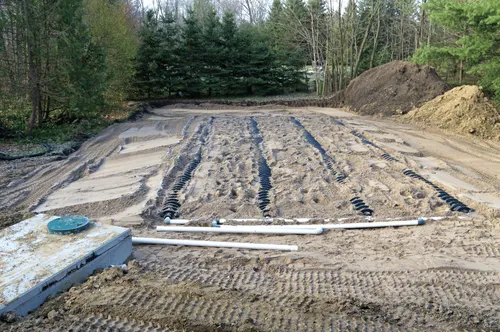
Poop Dudes is a family-owned septic service company based in Chattanooga, TN, serving the greater Chattanooga area and north Georgia. With over 20 years of experience, they provide a full range of septic services including tank pumping, inspections, repairs, and installations. Their licensed technicians handle various septic systems such as standard, low pressure pipe, mound, and drip systems. Poop Dudes also offers 24-hour emergency septic services to address urgent needs promptly.
Flush Fellas Septic and Excavating - Chattanooga
Chattanooga, TN
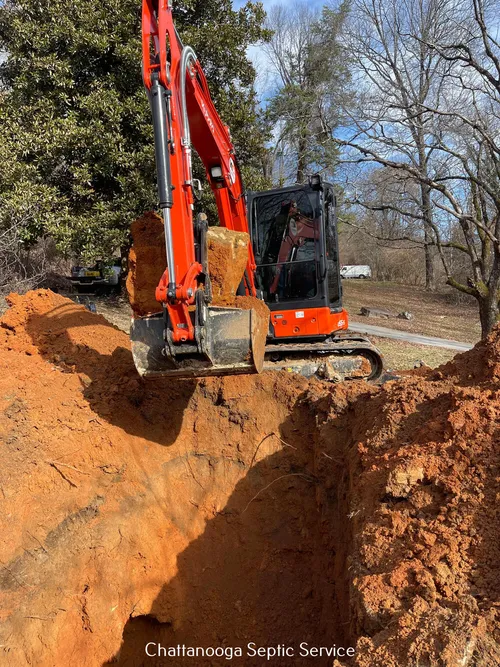
Flush Fellas Septic and Excavating - Chattanooga is a veteran-owned septic service company based in Chattanooga, TN. They provide residential and commercial septic tank pumping, installation, inspection, and repair services, including drain field repair and septic pump replacement. The company uses video scoping technology to diagnose septic issues and offers detailed post-service reports with maintenance recommendations. Licensed in Tennessee and Georgia, Flush Fellas serves the Chattanooga area and North Georgia metro region. They also provide 24/7 emergency septic services for urgent repairs and pump issues.

Hiller Plumbing, Heating, Cooling & Electrical
7339 Lee Hwy, Chattanooga, TN 37421
Hiller Plumbing, Heating, Cooling & Electrical is a service provider based in Chattanooga, TN, offering septic system repair and septic tank installation among other services. They handle installation, maintenance, and repair of septic systems with thorough testing and checks to ensure functionality. The company also provides plumbing, HVAC, and electrical services, addressing issues such as clogged pipes, heating and cooling system repairs, and electrical safety concerns.
Rapid Rooter Septic Services
Chattanooga, TN
Rapid Rooter Septic Services is a family-owned company serving Chattanooga, TN, and north Georgia with over 20 years of experience in septic system services. They offer a wide range of services including septic tank pumping, inspections, repairs, installations, and drain field repairs. The company is licensed to work on all types of septic systems in Tennessee and provides 24-hour emergency service for urgent septic needs. Their team is skilled in handling everything from routine maintenance to complex repairs and new system installations.
Emergency No More 24hr. Septic, Drain & More
1501 S Lee Hwy, Cleveland, TN 37311
Emergency No More 24hr. Septic, Drain & More is a septic system repair and installation company serving Chattanooga, TN and nearby areas. They provide 24/7 emergency septic services, including septic tank repair, pump repair and maintenance, drain repair, and water heater services. The company uses state-of-the-art equipment and proven techniques to address septic system emergencies and ensure reliable system performance. They also offer whole house repiping services to support plumbing system longevity.
Understanding the Regulatory Landscape
In Tennessee, septic system installation is regulated by the Tennessee Department of Environment & Conservation (TDEC). Locally, the Hamilton County Environmental Health office is your primary point of contact for permitting and inspections 1. Whether you're building a new home on a rural lot or replacing a failing system, you must obtain a construction permit before any work begins. The type of permit and associated costs depend on the system design. For conventional systems handling less than 1,000 gallons per day, the permit fee is approximately $400. For alternative or engineered systems, which are often required for challenging sites, the permit fee starts at around $500 or more.
The permitting process is not just a formality; it's a structured review to ensure the proposed wastewater treatment system is appropriate for your specific property conditions. The goal is to design a system that will function effectively for decades.
The Critical First Step: Site and Soil Evaluation
The cornerstone of any septic system design is a thorough site and soil evaluation. This assessment determines the land's ability to absorb and treat wastewater. In Chattanooga's varied terrain, which can include clay-heavy soils and sloping lots, this step is non-negotiable.
A certified soil scientist or inspector must perform a formal soil evaluation, which includes a percolation (or "perc") test. This test measures how quickly water drains through the soil. State regulations specify that soils with a percolation rate slower than 75 minutes per inch are generally unsuitable for a conventional drain field 2. The results of this test directly dictate the type of system you can install.
Key components of a site evaluation include:
- Soil Morphology: Examining soil layers, texture, and structure to depth.
- Percolation Rate: Quantifying the soil's absorption speed.
- Groundwater Level: Ensuring a safe separation distance between the drain field and seasonal high water table.
- Site Topography: Accounting for slope and landscape position.
- Available Space: Determining if there is adequate area for the tank, drain field, and repair area.
This evaluation generates a report that a licensed designer uses to create a system plan for permit submission.
System Types: Conventional vs. Alternative
Based on the site evaluation, your property will be suited for one of two broad categories of onsite wastewater systems.
Conventional Septic Systems These are the most common type when site conditions are favorable. A conventional system typically consists of a septic tank and a subsurface trench drain field. It relies on naturally occurring soil bacteria to provide final treatment of the effluent after it leaves the tank. These systems are usually the most cost-effective option but require suitable soil with acceptable percolation rates and depth 3.
Alternative (Engineered) Systems If your soil fails the perc test, has a high water table, is too shallow to bedrock, or the lot is too small, an alternative system will be necessary. These are engineered solutions that may include:
- Mound Systems: Where a sand-filled mound is constructed above the natural soil to provide treatment.
- Low-Pressure Dose (LPD) Systems: Which use a pump to distribute effluent evenly across a drain field.
- Aerobic Treatment Units (ATUs): Which introduce oxygen into the treatment process to break down waste more efficiently. While more expensive initially, these systems allow development on sites that could not otherwise support a standard septic tank and drain field 4.
Navigating the Permit Application Process
Once you have a design from a licensed installer or designer, you can apply for a permit. The application is submitted to the local environmental field office for Hamilton County.
Required documentation typically includes:
- A completed application form.
- A detailed site plan (plot plan) showing the proposed system location, property lines, wells, water bodies, and structures.
- The official soil evaluation report.
- The engineered system design, if applicable.
Authorities have a maximum of 45 days to review an application, though reviews often conclude within 10 business days 5 6 7. It is illegal to begin construction without an approved permit in hand.
Find the perfect septic tank installation & replacement contractors for your needs
Get personalized recommendations and expert advice
Installation and Inspection Phases
After permit approval, a licensed septic contractor can begin installation. The process involves excavating for the tank and drain field, placing the tank, constructing the distribution lines, and backfilling. It's crucial that installation follows the approved design exactly.
Hamilton County requires a construction inspection before the system is covered and backfilled. This inspection, which typically costs between $100 and $200, verifies that the materials and installation techniques meet code 8. The inspector checks tank placement, pipe slopes, and the integrity of the drain field. Only after passing this inspection should the contractor proceed to final backfilling.
Upon successful inspection, the county issues a Certificate of Completion. This document is essential for closing out building permits and is proof that your system was installed legally and correctly. You can check for existing permit records for properties in Chattanooga through the Hamilton County Building Inspection website.
Cost Considerations for Installation and Replacement
The total cost for a new septic system in the Chattanooga area is highly variable. While permit and inspection fees are relatively fixed, the bulk of the expense is in equipment, materials, and labor.
- Permit Fees: ~$400 for conventional; $500+ for alternative systems.
- Soil Evaluation: Several hundred dollars, depending on the professional.
- Construction Inspection: ~$100-$200 9 10.
- Total System Installation: Can range widely from $5,000 to $15,000 or more. The final price depends on system type (conventional vs. alternative), tank size, soil conditions, accessibility of the site, and the amount of excavation required 11 12.
For system replacement, costs can be similar to a new installation, especially if the existing drain field has failed and a completely new field in a different location is needed. Always get multiple detailed quotes from licensed and insured contractors.
Maintaining Your New System
A properly installed system is the first step. Protecting your investment requires regular maintenance. This includes having the septic tank pumped every 3-5 years by a licensed pumper, conserving water to avoid overloading the drain field, and avoiding flushing harmful chemicals or non-biodegradable materials. Proper care extends the life of your system and prevents premature, costly failures.
Frequently asked questions
Sources
Footnotes
-
Septic Information and Forms - Hamilton County Government - https://www.hamiltontn.gov/BuildingInspection_Septic.aspx ↩
-
0400-48-01-.01 - https://publications.tnsosfiles.com/rules/0400/0400-48/0400-48-01.20140408.pdf ↩
-
Tennessee Code Title 68. Health, Safety and Environmental Protection § 68-221-403 | FindLaw - https://codes.findlaw.com/tn/title-68-health-safety-and-environmental-protection/tn-code-sect-68-221-403.html/ ↩
-
Online Application for Septic Related Services - TN.gov - https://www.tn.gov/environment/permit-permits/water-permits1/septic-systems-permits/ssp/wr-sds-online-application-for-ground-water-protection-services.html ↩
-
Septic Question I've had Soil testing done and picking up ... - https://www.facebook.com/groups/barndominiums/posts/1323366075758900/ ↩
-
I need a perc test! - Tennessee Land Development Services - https://www.tnlds.com/need-perc-test/ ↩
-
The Complete Guide to Soil Testing for Septic System Design: Ensuring Regulatory Compliance and System Longevity - https://www.mapengineering.net/the-complete-guide-to-soil-testing-for-septic-system-design/ ↩
-
Tenn. Comp. R. & Regs. 0400-48-01-.07 - Law.Cornell.Edu - https://www.law.cornell.edu/regulations/tennessee/Tenn-Comp-R-Regs-0400-48-01-.07 ↩
-
Septic System Construction Permit - TN.gov - https://www.tn.gov/environment/permit-permits/water-permits1/septic-systems-permits/ssp/permit-water-septic-system-construction-permit.html ↩
-
What is a Site Evaluation? How to Get Started - https://www.shensoil.com/post/what-is-a-site-evaluation-how-to-get-started ↩
-
Understanding Septic Tank Permits and Regulations - https://westcoastsanitationinc.com/understanding-septic-tank-permits-and-regulations/ ↩
-
What Land Owners Need to Know About Installing Septic Systems - https://rethinkrural.raydientrural.com/blog/everything-you-need-to-know-about-septic-systems ↩