Find the Best Septic Tank Pumping Contractors for Your Business
No obligation • Fast responses • Nationwide coverage

Why you can trust Septic Spot
Septic Spot is a leading United States resource for understanding and comparing septic services. Our editors review providers using consistent criteria and verify key business details. Listings and scores are independent, and companies cannot pay to influence our content.
Search providers near you
Top Septic Tank Pumping Contractors in Alameda, California Ranked
Maintaining a healthy septic system is a critical responsibility for homeowners in Alameda. Regular septic tank pumping is the cornerstone of this maintenance, preventing system failures, protecting public health, and ensuring compliance with local Alameda County regulations. This essential service removes accumulated solids that, if left unchecked, can clog your drainfield and lead to costly repairs or environmental contamination. Understanding the recommended schedule, costs, and how to find qualified local professionals can help you protect your property and investment for years to come.

Roto-Rooter Plumbing & Water Cleanup
2078 Walsh Ave c1, Santa Clara, CA 95050
Roto-Rooter Plumbing & Water Cleanup offers a wide range of plumbing services in San Jose, CA, including septic tank pumping, drain cleaning, sewer line repair, and water heater maintenance. They serve both residential and commercial customers, addressing issues from clogged drains to sewer line inspections using video camera technology and trenchless repair methods. The company is available 24/7 for emergency plumbing services, ensuring assistance whenever urgent problems arise.
Trinity Liquid Waste Services
San Jose, CA
Trinity Liquid Waste Services provides septic tank pumping, inspection, repair, and maintenance services for residential and commercial clients in San Jose, CA. The family-owned company offers a wide range of septic system solutions including grease trap pumping, sewage ejector tank maintenance, and water jetting to keep systems functioning properly. They also handle storm drain cleaning and provide 24/7 same-day service for urgent septic issues. Their team is experienced in addressing common septic problems caused by household appliance overuse and sediment buildup, helping customers maintain optimal system performance.
PICHANGA PUMPING SERVICE LLC
901 N Rengstorff Ave, Mountain View, CA 94043
PICHANGA PUMPING SERVICE LLC is a family-owned business with over 10 years of experience, serving San Jose, CA. They provide septic tank pumping, inspection, repair, and installation services. The company uses specialized equipment for camera inspections and locating issues within pipes and sewer lines. They also offer restroom rentals. Pichanga Pumping Service provides after-hours and emergency services for added convenience.
Castle Pumping and Plumbing Services
San Jose, CA
Castle Pumping and Plumbing Services is a locally owned company based in San Jose, CA, offering comprehensive septic system services including pumping, inspections, repairs, and installations. With over 32 years of experience, they serve residential and commercial properties in the San Jose area. Their expertise includes locating septic tanks, performing detailed inspections of tank components, and specialized outflow line exploration to diagnose backups without unnecessary replacements. The company uses advanced equipment and techniques to maintain and repair septic systems, ensuring long-lasting functionality.
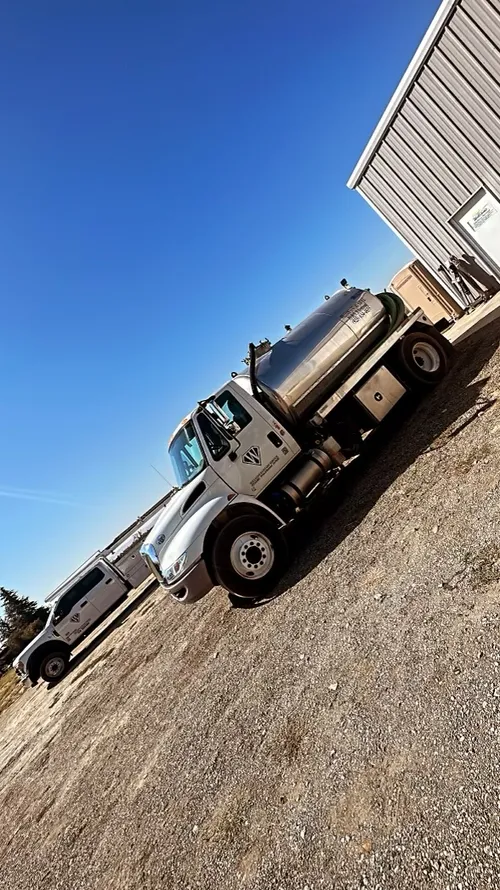
Williams Sanitary Service Inc
Oakland, CA
Williams Sanitary Service Inc is a family-owned septic system company serving Oakland, CA, and surrounding areas since 1950. They provide a full range of septic services including pumping, inspection, repair, and installation for both residential and commercial clients. The company also offers general plumbing services such as drain cleaning and water heater repair. Williams Sanitary Service Inc is equipped to handle all sizes of septic jobs across Contra Costa and Alameda Counties and offers 24/7 service availability.
Why Septic System Maintenance is Non-Negotiable
A septic system is an on-site wastewater treatment plant for your property. When it functions correctly, it safely processes household waste. However, when maintenance is neglected, the consequences can be severe. A failing system can cause sewage backups into your home, foul odors in your yard, and contamination of local groundwater. In Alameda County, the Environmental Health Department strictly oversees these systems to protect community health and the environment, particularly the sensitive San Francisco Bay ecosystem 1. Proactive maintenance, starting with routine pumping, is far less expensive than the emergency repairs or full system replacement required after a failure.
Understanding Your Septic System: The Basics
Before diving into pumping schedules, it helps to know how your system works. A standard system has two main parts:
- The Septic Tank: A buried, watertight container typically made of concrete, fiberglass, or polyethylene. All wastewater from your home flows into it. Here, solids settle to the bottom as "sludge," and oils and grease float to the top as "scum." The liquid wastewater (effluent) in the middle layer then exits the tank.
- The Drainfield (or Leach Field): A shallow, covered excavation where the effluent is discharged. Perforated pipes allow the liquid to seep into the soil, which provides final treatment by removing harmful bacteria, viruses, and nutrients.
Pumping is necessary because the sludge and scum layers accumulate over time. If not removed, they can overflow into the drainfield, clogging the soil and causing the entire system to fail. Only the accumulated solids are pumped out; the tank's biological activity for breaking down waste remains.
How Often Should You Schedule Septic Tank Pumping?
The most common question homeowners have is about frequency. While the general rule for Alameda County is to pump every 3 to 5 years, the exact schedule for your home depends on several key factors.
- Household Size and Water Usage: More people generally means more wastewater and solids. A family of 5 will need more frequent pumping than a single occupant.
- Tank Size: Smaller tanks fill with solids faster than larger ones.
- Volume of Solids in Wastewater: Using a garbage disposal frequently adds significant solids, shortening the time between necessary pump-outs.
A more tailored guideline based on tank size and usage is:
- 1-2 people / small tank: Consider pumping every 5-7 years 2.
- 3-4 people / average tank: The standard 3-5 year interval applies.
- 5+ people / large tank: May require pumping as often as every 1-2 years 3.
The most reliable method is to have your tank inspected annually. A professional can measure the sludge and scum layers and tell you precisely when pumping is needed-typically when solids fill about one-third of the tank's capacity 4 5.
The Critical Role of Annual Inspections
Pumping and inspection go hand-in-hand. An annual inspection by a licensed contractor is strongly recommended, even in years you don't pump 6. A thorough check-up includes:
- Locating and uncovering the tank access lids.
- Measuring sludge and scum levels.
- Inspecting the tank's inlet and outlet baffles for blockages or damage.
- Checking for signs of leakage or structural damage.
- Assessing the drainfield for any surfacing effluent or soggy areas.
These inspections catch small problems before they become expensive disasters and provide the data you need to plan your pumping schedule accurately.
Find the perfect septic tank pumping contractors for your needs
Get personalized recommendations and expert advice
What to Expect: The Pumping Process and Costs
When you hire a professional for septic tank cleaning, here's what typically happens:
- The technician locates and uncovers the tank's manhole access port(s).
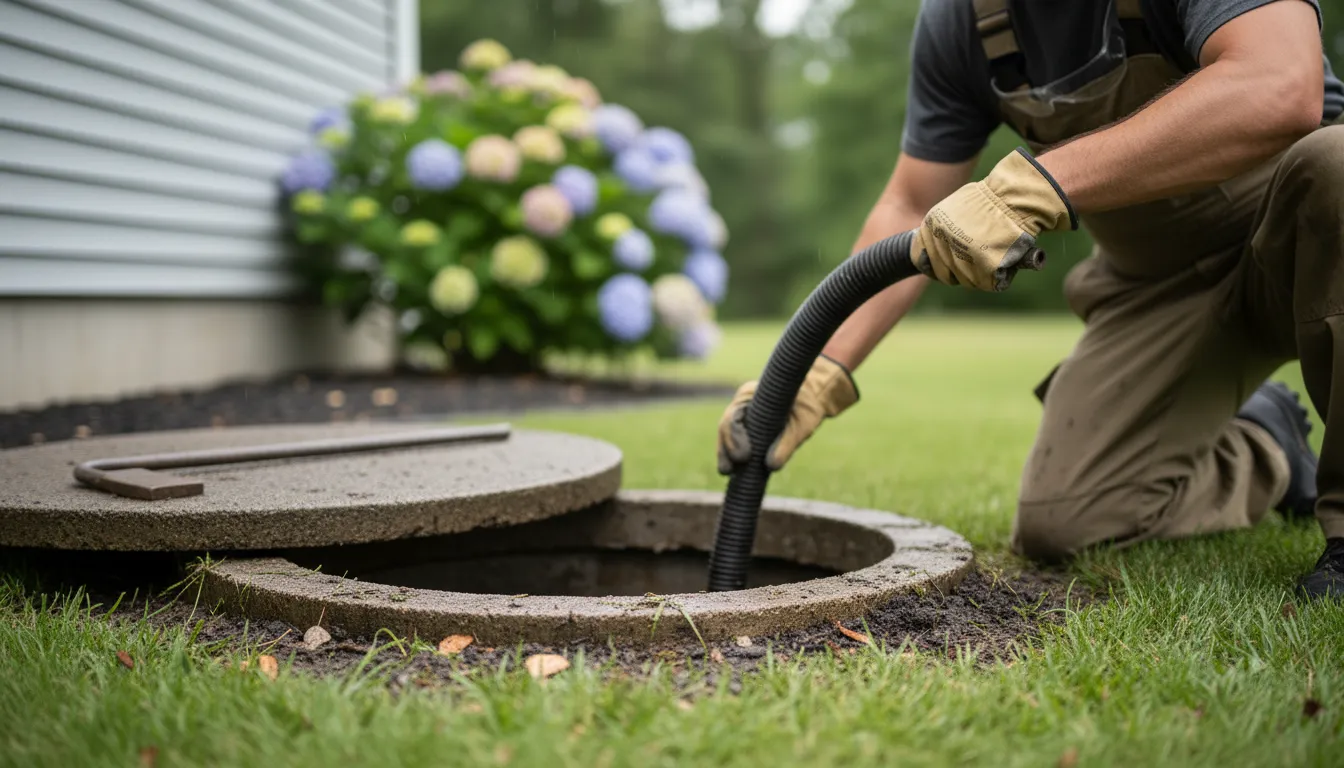
- They insert a large hose into the tank to vacuum out all the accumulated sludge, scum, and liquid into a specialized truck.
- The tank may be rinsed to help remove residual solids, and the technician will inspect the empty tank for cracks, baffle issues, or other damage.
- Everything is securely closed up, and the waste is transported to an approved treatment facility.
For homeowners in Alameda, understanding the cost is important. Pricing for septic tank pumping is not one-size-fits-all but is typically based on tank size and accessibility. Common costs in California generally range between $350 and $1,000.
- A standard pumping job for an average-sized, easily accessible tank often falls in the $350 to $400 range 7.
- Costs can reach the higher end of the scale (up to $1,000) for larger tanks (over 1,500 gallons), difficult access, or if additional services like a detailed inspection or minor repairs are needed 8 9.
Choosing a Qualified Service Provider in Alameda
Selecting the right contractor is crucial. Always choose a licensed septic service professional. They have the expertise, equipment, and insurance to handle hazardous waste safely and in compliance with Alameda County regulations. When evaluating providers, ask if they are licensed, inquire about their experience, and request a detailed estimate that outlines what services are included. A reputable company will be happy to explain the process and answer your questions.
Proactive Maintenance Tips Between Pumpings
Your daily habits directly impact your system's health and how often it needs pumping. Follow these tips to extend its life:
- Conserve Water: Spread out laundry loads, fix leaky faucets, and install high-efficiency fixtures. Excessive water flow can overwhelm the tank, pushing solids into the drainfield 10 11.
- Mind What You Flush: Only human waste and toilet paper should go down the drain. Never flush wipes (even "flushable" ones), feminine hygiene products, dental floss, diapers, or cooking grease.
- Use Garbage Disposals Sparingly: They significantly increase the solid load in your tank. Compost food scraps when possible.
- Protect Your Drainfield: Never park vehicles or build structures over it. Keep roof drains, sump pumps, and other rainwater runoff away from the area to prevent saturation.
Signs Your Septic Tank Needs Immediate Attention
Don't wait for a complete failure. Contact a professional if you notice:
- Slow drains or gurgling plumbing fixtures throughout the house.
- Sewage backups in toilets, showers, or sinks.
- Unpleasant odors around the tank or drainfield area.
- Unusually lush, green grass or soggy, wet spots over the drainfield.
- Standing water or surfacing sewage in your yard.
Frequently asked questions
Sources
Footnotes
-
The Californian's Guide To Septic Tanks - https://cacciaplumbing.com/blog/california-septic-tank-guide/ ↩
-
How Often Should You Get Your Septic Tank Pumped? - https://www.coastalsepticsolutions.com/blog/how-often-should-you-get-your-septic-tank-pumped ↩
-
Septic Pumping: A Guide To Costs, How Often And Signs You Need It - https://www.alltoconstruction.com/blog/septic-pumping-ontario ↩
-
Why Maintain Your Septic System | US EPA - https://www.epa.gov/septic/why-maintain-your-septic-system ↩
-
Septic Tank Pumping Frequency: Crucial Maintenance Guide - https://septic911.com/septic-tank-pumping-frequency/ ↩
-
California Septic Tank Requirements | Onsite Wastewater ... - https://www.ntotank.com/blog/california-septic-tank-requirements ↩
-
Cost of Septic in Alameda, CA - https://alamedaseptic.com/cost-of-septic-in-alameda-ca ↩
-
Common Septic Tank Repairs In California (& What They Cost) - https://cacciaplumbing.com/blog/common-septic-tank-repairs-in-california/ ↩
-
How Much Does It Cost to Pump a Septic Tank? [2026 Data] | Angi - https://www.angi.com/articles/how-much-does-septic-tank-pumping-cost.htm ↩
-
How Often Should My Septic Tank Pumped In California - https://www.lanikseptic.com/how-often-should-my-septic-tank-pumped-in-california/ ↩
-
Pumping & Maintenance Tips - Septic Treatment - https://www.sosonsiteca.net/resources/pumping-maintenance-tips ↩