Find the Best Septic Tank Pumping Contractors for Your Business
No obligation • Fast responses • Nationwide coverage

Why you can trust Septic Spot
Septic Spot is a leading United States resource for understanding and comparing septic services. Our editors review providers using consistent criteria and verify key business details. Listings and scores are independent, and companies cannot pay to influence our content.
Search providers near you
Top Septic Tank Pumping Contractors in Salinas, California Ranked
Maintaining your septic system is a crucial responsibility for any homeowner not connected to a municipal sewer line. Regular septic tank pumping is the most important preventative maintenance you can perform to avoid messy, costly, and environmentally damaging system failures. This guide will help you understand the specific recommendations, regulations, and costs for septic system maintenance in Salinas, empowering you to find qualified local professionals to keep your system functioning smoothly for years to come.

Viking Septic Salinas
1337 Palmera Ave, Salinas, CA 93905
Viking Septic Salinas provides septic tank pumping and inspection services in Salinas, CA. The company helps maintain private septic systems to prevent environmental pollution by offering thorough cleaning and inspection using industry-standard tools and methods. Their team explains the process clearly and works to protect surrounding areas during service.
COST-U-LESS SEPTIC PUMPING SERVICE
Gilroy-Morgan Hill-San Jose Hollister-Salinas, 7520 Arroyo Cir, Gilroy, CA 95020
COST-U-LESS SEPTIC PUMPING SERVICE is a septic tank pumping company serving San Jose, CA, and surrounding counties including Santa Clara, San Benito, Santa Cruz, and Monterey. Owned and operated by Mike and Michelle Dodge, the company focuses on proper septic system maintenance to help preserve system longevity. Their experience reflects a commitment to doing the job the right way, based on years of learning in wastewater management.
Understanding Your Septic System and Why Pumping is Essential
A septic system is an on-site wastewater treatment structure, typically consisting of a tank and a drainfield (or leach field). When household wastewater enters the tank, solids settle to the bottom as "sludge," while fats and oils float to the top as "scum." The liquid effluent in the middle layer flows out to the drainfield, where it is filtered and treated by the soil. Over time, the sludge and scum layers accumulate. If they are not removed through regular septic tank cleaning, they can overflow into the drainfield, clogging the soil and causing sewage to back up into your home or pool on your lawn. This is not only a health hazard but can lead to repair bills in the thousands of dollars. Routine septic tank service is a small investment that protects your property, your health, and the local groundwater.
Recommended Pumping Frequency for Salinas Homes
How often you need to schedule septic tank emptying depends on several household factors. The general guideline for an average household is every 3 to 5 years 1. However, this is just a starting point. The Monterey County Health Department and the U.S. Environmental Protection Agency (EPA) emphasize that the only way to know for sure is through an annual inspection by a licensed professional who can measure the sludge and scum levels 1.
Several conditions common in the Salinas area may require more frequent septic system maintenance:
- Household Size: A home with four or more occupants typically generates more wastewater and solids, filling the tank faster 2 3.
- Tank Size: Older homes or properties with limited space may have smaller-capacity tanks that require more frequent septic pumping, potentially every 1 to 2 years.
- High Water Usage: Excessive use of washing machines, dishwashers, and long showers can hydraulically overload the system, pushing solids out into the drainfield before they have time to settle.
- Garbage Disposal Use: Using a garbage disposal significantly increases the amount of solids entering the tank, accelerating sludge buildup 4.
- Type of Solids: Certain cleaning products, hygiene products, and non-biodegradable materials can slow bacterial action and fill the tank more quickly.
Find the perfect septic tank pumping contractors for your needs
Get personalized recommendations and expert advice
Local Regulations and Environmental Protections in Monterey County
Salinas and the surrounding Monterey County are home to sensitive ecosystems and vital agricultural water resources. Consequently, local regulations governing onsite wastewater treatment systems are strict to prevent contamination. The Monterey County Environmental Health Department enforces specific setback requirements, mandating that septic tanks and disposal fields be located 100 to 200 feet away from water wells, streams, and other water sources 5.
Furthermore, California Water Board requirements often mandate that properties have a designated "reserve area" - a section of land suitable for a new drainfield should the existing one fail 6. When you hire a professional for septic tank inspection or septic system repair, they will be familiar with these local codes. Proper maintenance is not just about avoiding a backup; it's about being a good steward of the Salinas Valley's environment. A failing system can leach nitrates and pathogens into the groundwater, posing a risk to community health and the region's agricultural livelihood 7.
What to Expect During a Professional Pumping Service
A standard septic tank pumping appointment involves more than just removing waste. A reputable provider will follow a comprehensive process:
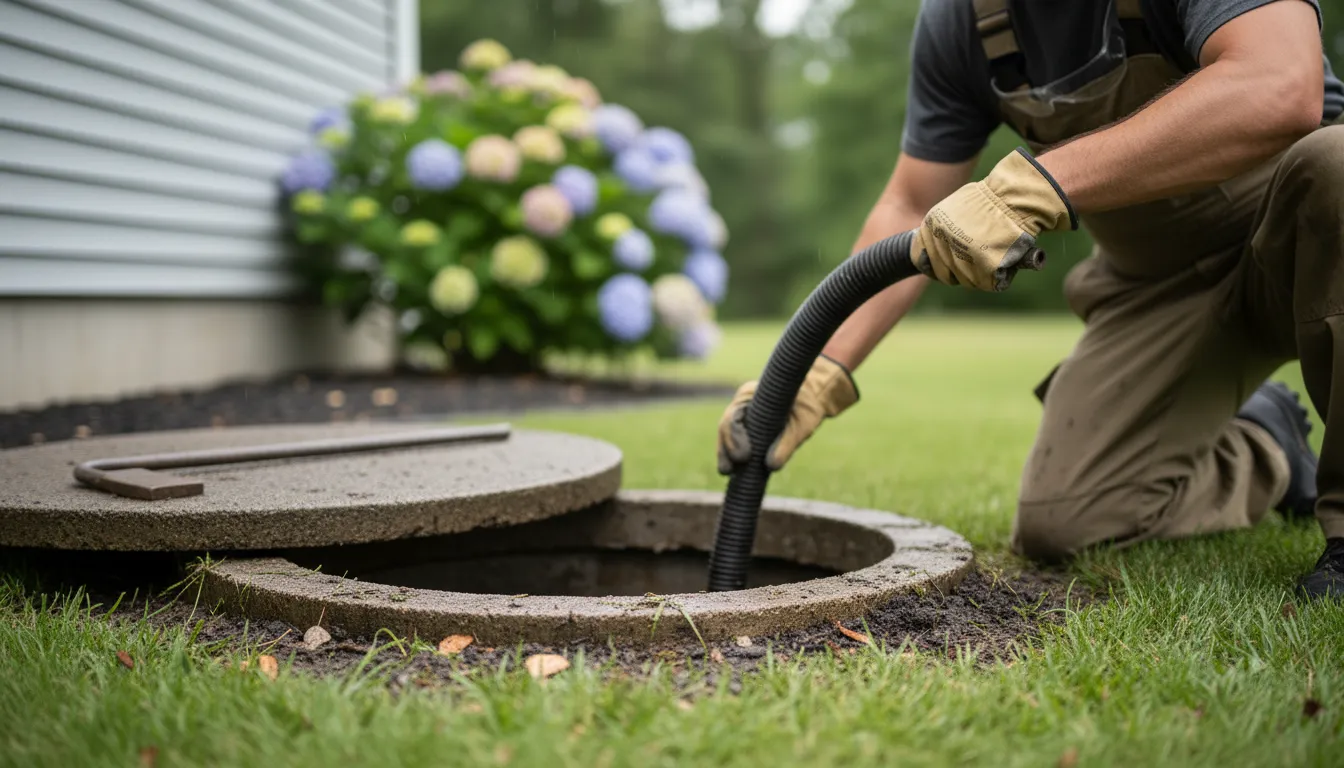
- Locating and Uncovering the Tank: The technician will locate the tank access lids (manholes) and excavate the soil covering them.
- Initial Inspection: Before pumping, they may inspect the inlet and outlet baffles (tees) to ensure they are intact and functioning. Damaged baffles can allow solids to escape.
- Pumping: Using a large tank truck (vacuum truck), all liquid and solid waste is pumped out from the tank.
- Tank Inspection: With the tank empty, the technician can inspect the interior for cracks, leaks, and structural integrity.
- System Evaluation: They should also check the drainfield area for signs of failure, such as overly lush grass or soggy soil, and may run water to check flow from the tank to the field.
- Final Steps: The access lids are securely replaced, and the site is cleaned up. The technician should provide you with a service report detailing what was done and any recommendations for repairs or future maintenance 8.
Never allow a pumper to "break" the crust of the scum layer or stir up the solids before pumping, as this can send solids into your drainfield.
Cost of Septic Tank Pumping in Salinas
The cost for routine septic tank cleaning in Salinas and California generally ranges from $300 to $500, though the national average range is between $290 and $700 9. Several factors influence the final price:
- Tank Size and Accessibility: Larger tanks (1,500+ gallons) cost more to pump than standard 1,000-gallon tanks. Difficult access (e.g., long hose runs, locked gates, limited truck parking) can add to the cost.
- Condition of the Tank: If the tank hasn't been pumped in many years, the accumulated sludge may have hardened, requiring more time and effort to remove, potentially increasing the price to $450-$700 or more.
- Additional Services: The base pumping fee may not include an inspection. Charges for septic tank inspection, repairing baffles, or jetting lines will be additional.
- Emergency Service: A pumping service for a fully clogged and backing-up system, especially on a weekend or holiday, can cost between $450 and $1,200 10.
Always get detailed written estimates from a few licensed providers. The lowest price may not include a thorough inspection, which is a critical part of the service.
Choosing a Qualified Septic Service Provider
Selecting the right professional is key. Look for a company that:
- Is licensed by the Monterey County Environmental Health Department to perform septic system servicing.
- Has positive, verifiable reviews from local customers.
- Provides clear, detailed estimates and explains what their service includes.
- Offers a comprehensive inspection and provides a written report.
- Is insured for liability and property damage.
- Can handle not only septic pumping but also repairs and installations if needed.
A trustworthy provider will be happy to answer your questions and educate you on the proper care of your specific system.
Maintaining Your System Between Pumpings
Professional pumping is the cornerstone of care, but your daily habits greatly impact your system's health. To extend time between pumpings and protect your drainfield:
- Conserve water to avoid overloading the system.
- Never flush anything besides human waste and toilet paper. This means no wipes (even "flushable" ones), feminine hygiene products, dental floss, diapers, or cooking grease.
- Avoid pouring harsh chemicals like bleach, drain cleaners, or paint thinners down the drain, as they can kill the beneficial bacteria in your tank.
- Don't drive or park on your drainfield, and keep large plants and trees with deep roots away from it.
- Divert roof drains and surface water away from the septic tank and drainfield area.
By combining responsible daily use with regular professional septic tank maintenance, you ensure a long-lasting, trouble-free wastewater system for your Salinas home.
Frequently asked questions
Sources
Footnotes
-
Frequent Questions on Septic Systems | US EPA - https://www.epa.gov/septic/frequent-questions-septic-systems ↩ ↩2
-
HOW OFTEN SHOULD YOU BE PUMPING YOUR SEPTIC TANK? - https://www.sandiegocounty.gov/content/dam/sdc/dpw/WATERSHED_PROTECTION_PROGRAM/WatershedRebates/SRP/PDF/Chart-Septic-Large.pdf ↩
-
How Often to Pump a Septic Tank - Clear River Environmental - https://clearriverenvironmental.com/how-often-to-pump-a-septic-tank/ ↩
-
Septic Systems | Department of Environmental Protection - https://www.pa.gov/agencies/dep/residents/my-water/septic-systems ↩
-
Septic-Onsite Wastewater Information (Health Department) - https://www.countyofmonterey.gov/government/departments-a-h/housing-community-development/permit-center/forms-applications/septic-onsite-wastewater-information-health-department ↩
-
California Septic Tank Requirements | Onsite Wastewater ... - https://www.ntotank.com/blog/california-septic-tank-requirements ↩
-
Sustainable Septic System: Protect SoCal's Ecosystem - https://www.lanikseptic.com/sustainable-septic-system/ ↩
-
Pumping & Maintenance Tips - Septic Treatment - https://www.sosonsiteca.net/resources/pumping-maintenance-tips ↩
-
How Often Should My Septic Tank Pumped In California - https://www.lanikseptic.com/how-often-should-my-septic-tank-pumped-in-california/ ↩
-
Septic Pumping Cost by State: 2024 Complete Price Guide - https://wastedoor.com/article/septic-pumping-cost-by-state ↩