Find the Best Septic Tank Pumping Contractors for Your Business
No obligation • Fast responses • Nationwide coverage

Why you can trust Septic Spot
Septic Spot is a leading United States resource for understanding and comparing septic services. Our editors review providers using consistent criteria and verify key business details. Listings and scores are independent, and companies cannot pay to influence our content.
Search providers near you
Top Septic Tank Pumping Contractors in Baldwin Park, California Ranked
Maintaining your septic system is a critical responsibility for any homeowner not connected to a municipal sewer line. Septic tank pumping is the essential service of removing accumulated solids and scum from your tank to prevent system failure, environmental contamination, and costly repairs. For residents of Baldwin Park, understanding local guidelines and connecting with qualified professionals ensures your wastewater system operates safely and efficiently for years to come. This guide provides the key information you need on schedules, costs, and best practices to manage your septic service effectively.

Cisneros Brothers Plumbing, Heating & AC Repair, Water Damage Restoration & Flood Services
6881 Berkshire Ave, Rancho Cucamonga, CA 91701
Cisneros Brothers Plumbing, Heating & AC Repair, Water Damage Restoration & Flood Services provides septic tank pumping and a range of plumbing and restoration services in Fontana, CA. They serve both residential and commercial clients, offering capabilities such as flood damage restoration and septic pumping. With over two decades of experience in the Rancho Cucamonga area, the company emphasizes customer satisfaction and family-oriented service. They also offer 24/7 availability for emergency plumbing and flood restoration needs.
Mr. Rooter Plumbing of Orange County
430 N State College Blvd, Anaheim, CA 92806
Mr. Rooter Plumbing of Orange County is a septic tank pumping company serving Long Beach, CA, and the surrounding Orange County area. They provide a wide range of plumbing services for both residential and commercial customers, including drain cleaning, sewer line repair, and emergency plumbing. One notable capability is their use of HydroScrub Jetting for effective drain cleaning. The company offers 24/7 emergency plumbing services to address urgent issues at any time.
Mr. Rooter Plumbing of The Inland Empire
6101 Cherry Ave Suite 206, Fontana, CA 92336
Mr. Rooter Plumbing of The Inland Empire is a septic tank pumping company based in Fontana, CA. They provide a wide range of plumbing services for both residential and commercial customers, including septic pumping and maintenance, sewer line repair, water heater service, and professional drain cleaning with HydroScrub® jetting. The company uses advanced diagnostic tools such as video camera sewer inspections and thermal imaging for leak detection. They offer 24/7 emergency plumbing services to address urgent issues promptly. Mr. Rooter Plumbing combines local expertise with national brand resources and operates with licensed, insured, and background-checked technicians.
Rooter Man Plumbing of Orange
521 W Katella Ave, Orange, CA 92867
Rooter Man Plumbing of Orange provides septic tank pumping and inspection services in Santa Ana, CA. They offer a wide range of plumbing solutions including emergency repairs, drain cleaning, sewer line replacement, and hydro jetting. The company is equipped to handle both residential and commercial plumbing needs with capabilities such as leak detection and water heater maintenance. Emergency plumbing services are available 24/7 to address urgent issues at any time.

High Speed Rooter & Plumbing
3831 Arden Dr, El Monte, CA 91731
High Speed Rooter & Plumbing is a septic tank pumping and repair company based in Los Angeles, CA. They provide comprehensive septic system services, including routine maintenance and complex repairs, using advanced technology and certified master plumbers. Their fully stocked trucks and state-of-the-art equipment enable efficient service delivery. The company also offers professional gas line installation and repair. High Speed Rooter & Plumbing provides 24/7 emergency services to address urgent plumbing and septic issues promptly.
Why Regular Septic Maintenance is Non-Negotiable
A septic system is a self-contained wastewater treatment plant on your property. When functioning correctly, it safely processes household water and waste. The tank itself holds the wastewater, allowing solids to settle as sludge and fats to float as scum. The clarified liquid then flows out to the drain field for further filtration into the soil. Over time, the sludge and scum layers build up. If they aren't removed via regular septic tank cleaning, they can overflow into the drain field, clogging the soil and causing sewage to back up into your home or pool on your lawn. This creates a serious health hazard and can lead to a drain field replacement costing tens of thousands of dollars. Proactive maintenance is always far less expensive than emergency repairs 1.
Recommended Pumping Frequency for Baldwin Park Homes
How often you need to schedule septic tank pumping service isn't a one-size-fits-all answer. It depends on your tank size, household size, and overall water usage. However, general guidelines provide a reliable starting point.
- Standard Recommendation: For a typical residential system, the widely accepted standard is to pump your septic tank every 3 to 5 years 2. This is a good baseline for an average-sized tank (around 1,000 gallons) serving a family of four with normal water use.
- Local Guidance: The Los Angeles County Department of Public Health suggests a similar schedule, recommending pumping every 3 to 5 years, with more frequent service for smaller tanks or larger households.
- Key Factors Requiring More Frequent Service:
- Smaller Tank Capacity: A 500-750 gallon tank will fill with solids much faster and may require pumping every 1-3 years.
- Large Household: More people generate more wastewater and solids. A family of 6 using a 1,000-gallon tank will need service more often than a couple.
- High Water Usage: Frequent laundry loads, long showers, and use of garbage disposals significantly increase the solid load entering the tank.
- Garbage Disposal Use: Using a garbage disposal regularly can increase the amount of solids in your tank by up to 50%, drastically shortening the time between necessary pump-outs3.
A helpful rule of thumb cited by experts is that a 1,000-gallon tank serving a family of four generally needs pumping every 2.5 to 3 years. The only way to know for sure is through an annual inspection.
The Critical Role of Annual Inspections
Pumping on a set schedule is wise, but pumping only when needed is smarter and more cost-effective. This is where an annual inspection comes in. Professionals like Caccia Home Services recommend having your system inspected each year4. During an inspection, a technician will locate and open the tank's access ports to measure the thickness of the sludge and scum layers. This assessment tells you exactly how full your tank is and provides a data-driven recommendation for when to pump. It also allows for the early detection of issues like baffle failures, cracks, or leaks before they escalate. Keeping detailed records of all inspections and pumpings is also advised for compliance and for future reference if you sell your home5 4.
Understanding Septic Pumping Costs in Baldwin Park
The cost for septic tank emptying is an investment in your property's health. Prices can vary based on several factors:
- Average Cost Range: Most homeowners can expect to pay between $300 and $600 for a standard residential pumping job.
- Tank Size: This is the primary cost driver. Pumping a small to medium tank (up to 1,250 gallons) typically ranges from $250 to $700. Larger tanks (1,500 gallons or more) will cost more6.
- Accessibility: If the tank's access lids are buried deep, under a patio, or behind landscaping, the technician will need extra time and labor to excavate, which increases the price.
- Location & Condition: Hard-to-reach tanks or those requiring extra cleanup can push costs over $7007.
While price is a consideration, the licensure, experience, and reputation of the service provider are paramount. A properly performed pump-out includes inspecting the tank's components and ensuring all waste is hauled to an approved disposal facility.
Find the perfect septic tank pumping contractors for your needs
Get personalized recommendations and expert advice
What to Expect During a Professional Pumping Service
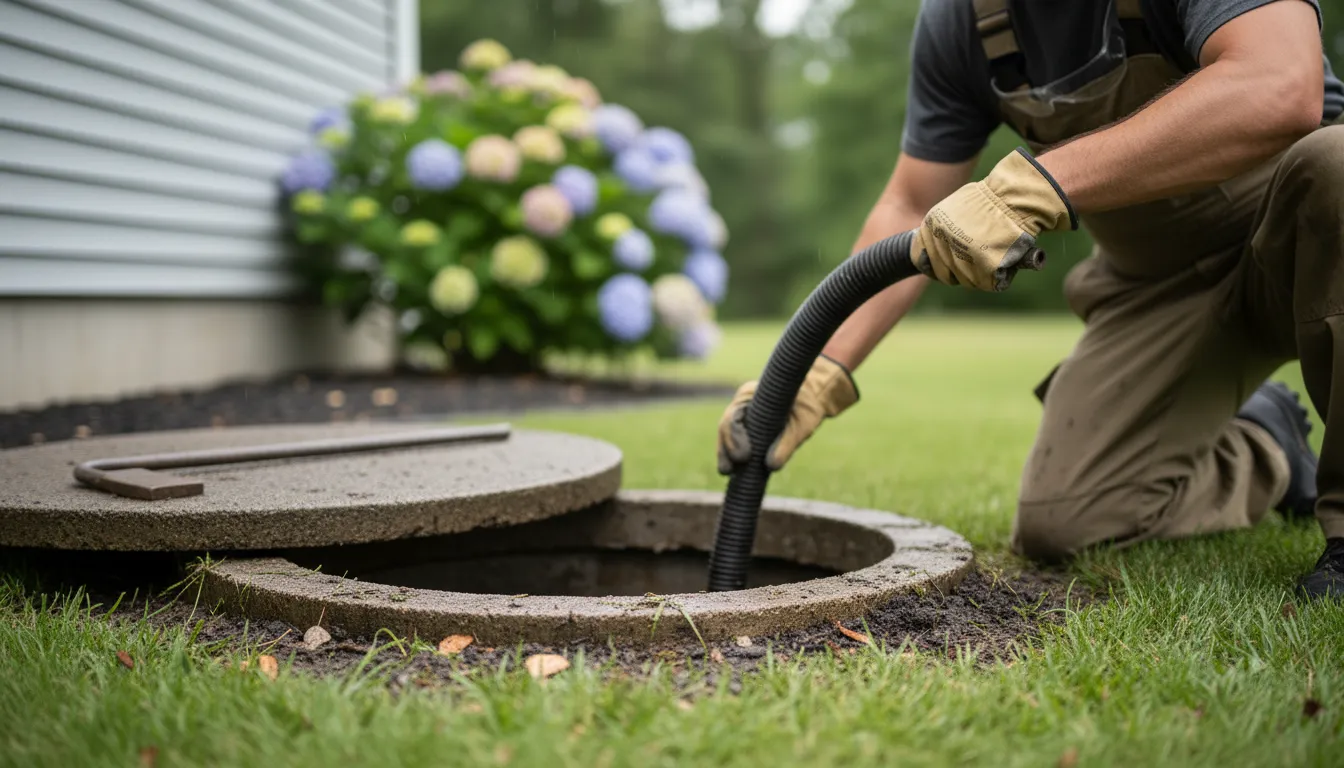
When you hire a licensed professional for septic system pumping, the process is straightforward but crucial. A pump truck with a large tank will arrive. The technician will locate and uncover the tank's manhole cover(s). Using a large hose, they will vacuum all the liquid and solid waste from your tank into their truck. A thorough provider will also briefly inspect the tank's interior (if safe to do so), check the inlet and outlet baffles, and note the overall condition. The job is complete when the tank is emptied, the lids are securely replaced, and the site is tidied. The waste is then transported to a wastewater treatment plant permitted to handle such material.
Protecting Your System Between Services
Your daily habits have a direct impact on your septic system's health and how often it needs pumping. Follow these best practices to avoid overloading the system:
- Conserve Water: Fix leaking toilets and faucets promptly. Spread out laundry loads over the week instead of doing many in one day.
- Mind What You Flush: Only human waste and toilet paper should go down the toilet. Never flush wipes (even "flushable" ones), feminine hygiene products, dental floss, diapers, or paper towels.
- Use Garbage Disposals Sparingly: Compost food scraps instead. If you must use the disposal, limit its use and run plenty of cold water.
- Avoid Harsh Chemicals: Minimize the use of bleach, antibacterial soaps, and strong drain cleaners, as they can kill the beneficial bacteria in your tank that break down solids.
- Protect the Drain Field: Never park or drive heavy vehicles over the drain field. Keep roof drains, sump pumps, and other surface water away from the area.
Regulations and Permits in Los Angeles County
If you are considering a new septic system installation or a major repair, be aware of local regulations. In areas like Baldwin Park, permits for new or replacement septic system installations are generally not issued if a municipal sewer line is available within 200 feet of the property line 8. All repairs and maintenance must comply with Los Angeles County codes. This underscores the importance of using licensed, local professionals who understand and adhere to these regulations. For routine pumping and inspections, a permit is not typically required, but the service must be performed by a licensed pumper 9.
Choosing a Service Provider in Baldwin Park
Selecting the right company for your septic tank maintenance is key. Look for providers who:
- Hold a current license from the Los Angeles County Department of Public Health.
- Have strong local references and reviews.
- Provide clear, upfront estimates.
- Offer both pumping and inspection services.
- Can show proof of proper waste disposal. Taking the time to choose a reputable professional gives you peace of mind that the job will be done correctly, protecting your home, your family, and the environment.
Frequently asked questions
Sources
Footnotes
-
How Often Should My Septic Tank Pumped In California - https://www.lanikseptic.com/how-often-should-my-septic-tank-pumped-in-california/ ↩
-
HOW OFTEN SHOULD YOU BE PUMPING YOUR SEPTIC TANK? - https://www.sandiegocounty.gov/content/dam/sdc/dpw/WATERSHED_PROTECTION_PROGRAM/WatershedRebates/SRP/PDF/Chart-Septic-Large.pdf ↩
-
Septic Systems | Department of Environmental Protection - https://www.pa.gov/agencies/dep/residents/my-water/septic-systems ↩
-
The Californian's Guide To Septic Tanks - https://cacciaplumbing.com/blog/california-septic-tank-guide/ ↩ ↩2
-
California Septic Tank Requirements | Onsite Wastewater ... - https://www.ntotank.com/blog/california-septic-tank-requirements ↩
-
How Much Does Septic Tank Pumping Cost in 2025? - HomeAdvisor - https://www.homeadvisor.com/cost/plumbing/clean-septic-tank/ ↩
-
Understanding the Average Cost to Pump a Septic Tank - https://www.scorpionsepticservices.com/blog/understanding-the-average-cost-to-pump-a-septic-tank ↩
-
requirements-procedures-private-water-wells. ... - DPH - http://ph.lacounty.gov/eh/docs/permit/requirements-procedures-private-water-wells.pdf ↩
-
Septic Tank Cleaning & Pumping Company Riverside - https://frankspumping.com/ ↩