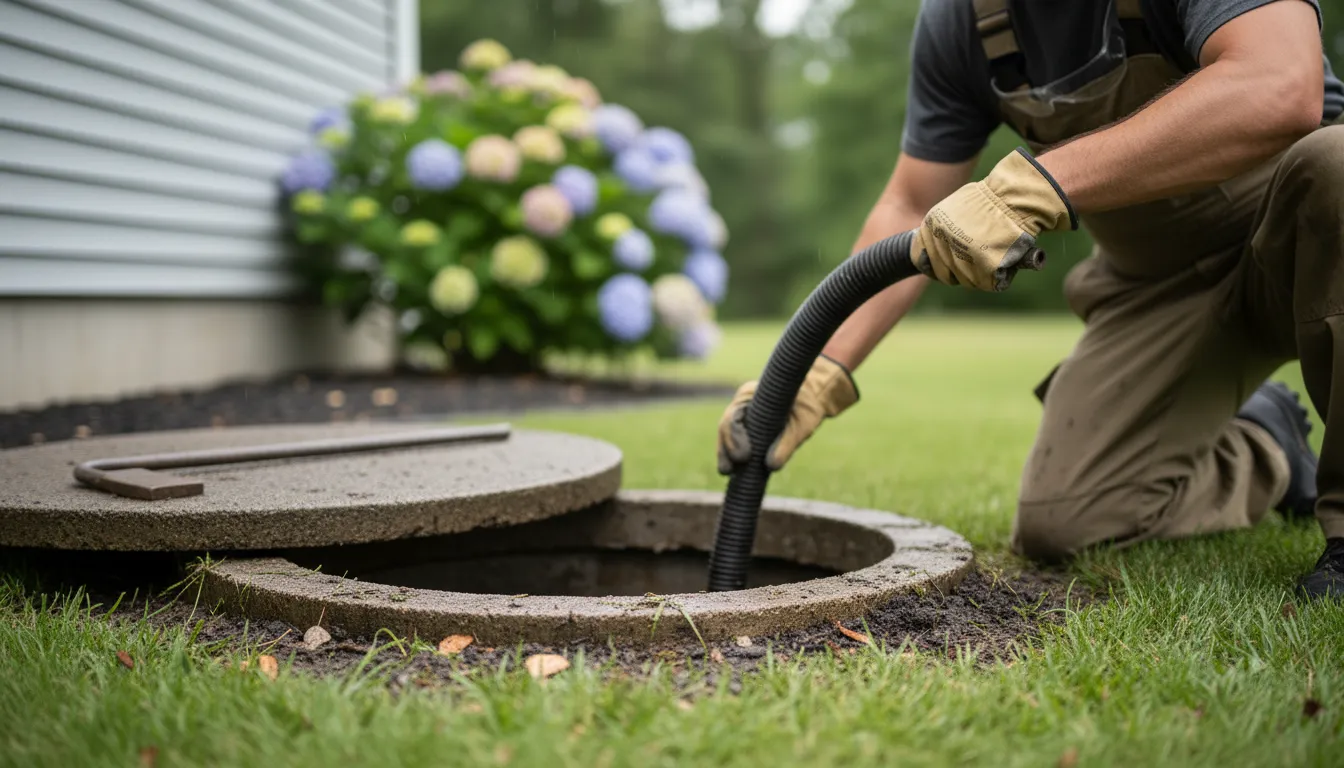
Find the Best Septic Tank Pumping Contractors for Your Business
No obligation • Fast responses • Nationwide coverage

Why you can trust Septic Spot
Septic Spot is a leading United States resource for understanding and comparing septic services. Our editors review providers using consistent criteria and verify key business details. Listings and scores are independent, and companies cannot pay to influence our content.
Search providers near you
Top Septic Tank Pumping Contractors in Costa Mesa, California Ranked
Maintaining a healthy septic system is a crucial responsibility for homeowners in Costa Mesa. Septic tank pumping is the essential process of removing accumulated solids from your tank to prevent system failure, environmental contamination, and costly repairs. This guide explains why regular septic service matters, outlines local guidelines, and helps you understand what to look for when finding a qualified professional to handle your system's maintenance.
Cisneros Brothers Plumbing, Heating & AC Repair, Water Damage Restoration & Flood Services
11335 Wybourn Ave, Riverside, CA 92503
Cisneros Brothers Plumbing, Heating & AC Repair, Water Damage Restoration & Flood Services offers a range of plumbing, septic, restoration, and flood services in Riverside, CA. They provide residential and commercial plumbing, septic tank pumping, flood damage restoration, and HVAC services including installation, maintenance, and repair. With over 20 years of experience, the company emphasizes customer satisfaction and treats clients like family. They also offer 24/7 emergency service to address urgent plumbing and flood-related needs.
Mr. Rooter Plumbing of Orange County
430 N State College Blvd, Anaheim, CA 92806
Mr. Rooter Plumbing of Orange County is a septic tank pumping company serving Long Beach, CA, and the surrounding Orange County area. They provide a wide range of plumbing services for both residential and commercial customers, including drain cleaning, sewer line repair, and emergency plumbing. One notable capability is their use of HydroScrub Jetting for effective drain cleaning. The company offers 24/7 emergency plumbing services to address urgent issues at any time.
Rooter Man Plumbing of Orange
521 W Katella Ave, Orange, CA 92867
Rooter Man Plumbing of Orange provides septic tank pumping and inspection services in Santa Ana, CA. They offer a wide range of plumbing solutions including emergency repairs, drain cleaning, sewer line replacement, and hydro jetting. The company is equipped to handle both residential and commercial plumbing needs with capabilities such as leak detection and water heater maintenance. Emergency plumbing services are available 24/7 to address urgent issues at any time.

High Speed Rooter & Plumbing
3831 Arden Dr, El Monte, CA 91731
High Speed Rooter & Plumbing is a septic tank pumping and repair company based in Los Angeles, CA. They provide comprehensive septic system services, including routine maintenance and complex repairs, using advanced technology and certified master plumbers. Their fully stocked trucks and state-of-the-art equipment enable efficient service delivery. The company also offers professional gas line installation and repair. High Speed Rooter & Plumbing provides 24/7 emergency services to address urgent plumbing and septic issues promptly.
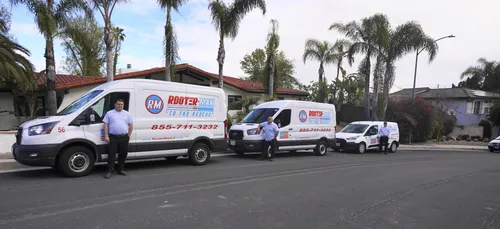
Rooter Man Plumbing of Covina
536 E Rowland St B, Covina, CA 91723
Rooter Man Plumbing of Covina provides residential and commercial plumbing services in Los Angeles, CA. Their offerings include septic tank pumping, drain cleaning, sewer repair, pipe repair, leak detection, water heater services, and hydro jetting. The company uses modern tools and advanced technology to address plumbing issues efficiently. With over 50 years of experience, they also provide 24/7 emergency plumbing services to handle urgent repairs and maintenance needs.
Why Regular Septic Maintenance is Non-Negotiable
Your septic system is an on-site wastewater treatment plant, silently processing everything that goes down your drains. When functioning correctly, it protects your home, your property value, and the local groundwater. Neglecting routine septic pumping, however, can lead to a cascade of problems. Solids that aren't removed will eventually flow into the drain field, clogging the soil and causing sewage to back up into your home or pool on your lawn. These failures are not only unpleasant and unhealthy but also incredibly expensive to fix, often requiring full drain field replacement. Consistent maintenance is far more affordable than emergency repairs.
Understanding California and Costa Mesa Septic Guidelines
California operates under a statewide Onsite Wastewater Treatment Systems (OWTS) policy, which provides a framework for local regulations 1. For Costa Mesa residents, this means adhering to guidelines set in coordination with the Orange County Environmental Health Department. A cornerstone of these guidelines is the recommended pumping frequency.
For a typical residential home in Costa Mesa, septic tanks should be pumped every 3 to 5 years 2 3. This is the standard baseline, but several factors can necessitate more frequent service. Smaller tanks or households with more occupants generate wastewater faster, often requiring pumping every 1 to 3 years 4. The key indicator is the combined volume of sludge (heavy solids at the bottom) and scum (floating fats and greases). Professionals recommend pumping before this combined volume exceeds 25% of the tank's total liquid capacity 5 6.
A Simple Capacity Guide
To visualize this, consider a 1,000-gallon tank serving a family of four. Under average use, this system would typically need pumping about every 2.5 years 7. This is a useful benchmark, but your specific situation-such as garbage disposal use, water conservation habits, and tank size-will determine your ideal schedule.
Recognizing the Signs You Need Service
Don't wait for a disaster. Be proactive by watching for these warning signs that your tank needs attention:
- Pooling Water: Soggy ground or standing water over the drain field, especially when it hasn't rained.
- Sewage Backups: Slow drains, gurgling pipes, or worst-case scenario, sewage backing up into household drains.
- Unpleasant Odors: Foul smells emanating from drains or around the tank and drain field area.
- Unusually Lush Grass: A spot of grass over the drain field that is much greener and grows faster than the rest of the yard can indicate a nutrient-rich leak.
- Nitrate Contamination: If a water well test shows elevated nitrate levels, a failing septic system could be the source.
If you notice any of these signs, it's time to contact a septic professional immediately for an inspection and likely a pump-out.
What to Expect: The Pumping and Inspection Process
A professional septic service involves more than just removing waste. A reputable provider will typically follow a comprehensive process:
- Locate & Access: The technician will locate your tank and risers (access ports) and carefully excavate if necessary.
- Inspect: Before pumping, they should inspect the tank's inlet and outlet baffles (tees) for damage and check for cracks or leaks.
- Pump: Using a large tanker truck, all solids and liquids are vacuumed from the tank.
- Post-Pump Inspection: With the tank empty, a clearer inspection can be done for structural issues.
- System Evaluation: Many companies recommend-and local guidelines often require-a concurrent inspection of the entire system, including the drain field, to assess overall health.
This combined service of pumping and inspection is your best defense against unexpected failures.
Find the perfect septic tank pumping contractors for your needs
Get personalized recommendations and expert advice
Cost Considerations for Septic Services in Costa Mesa
Understanding potential costs helps homeowners budget for this vital maintenance. It's important to view these expenses as an investment in protecting your property.
- Standard Pumping/Cleaning: The typical cost to pump a septic tank in the Costa Mesa area ranges from $300 to $600. The final price can vary based on tank size, accessibility, and how long it's been since the last service.
- Professional Inspections: A thorough inspection, often performed alongside pumping, generally costs between $100 and $250.
- Repairs and Replacement: This is where costs escalate dramatically. Minor repairs like fixing a baffle may start around $1,500, while a complete drain field replacement can easily exceed $10,000 8 9. Regular pumping is the most effective strategy to avoid these catastrophic expenses.
Proactive Maintenance Tips Beyond Pumping
Pumping is the most critical task, but other habits extend your system's life:
- Conserve Water: Spread out laundry loads and fix leaky faucets to avoid overwhelming the system.
- Mind What You Flush: Only human waste and toilet paper should go in. Never flush wipes (even "flushable" ones), feminine hygiene products, grease, or chemicals.
- Protect the Drain Field: Never park or drive heavy vehicles over it, and avoid planting trees with deep roots nearby.
- Keep Records: Maintain a log of all pumping, inspections, and repairs. This is valuable for troubleshooting and is often required if you sell your home.
For questions about specific local requirements, Costa Mesa residents can contact the Orange County Environmental Health Department for authoritative guidance.
Frequently asked questions
Sources
Footnotes
-
California Septic Tank Requirements | Onsite Wastewater Treatment Systems - https://www.ntotank.com/blog/california-septic-tank-requirements ↩
-
Septic Tank Pumping Frequency Guidelines - https://www.beckertwpsherburnecomn.gov/sites/g/files/vyhlif16406/files/media/services/file/426/septic_tank_pumping_frequency_guidelines.pdf ↩
-
How Often Should My Septic Tank Pumped In California - https://www.lanikseptic.com/how-often-should-my-septic-tank-pumped-in-california/ ↩
-
HOW OFTEN SHOULD YOU BE PUMPING YOUR SEPTIC TANK? - https://www.sandiegocounty.gov/content/dam/sdc/dpw/WATERSHED_PROTECTION_PROGRAM/WatershedRebates/SRP/PDF/Chart-Septic-Large.pdf ↩
-
How Often Should a Septic Tank Be Pumped? | Complete Guide - https://callbeeline.com/plumbing/how-often-should-a-septic-tank-be-pumped-a-complete-guide/ ↩
-
Septic Systems | Department of Environmental Protection - https://www.pa.gov/agencies/dep/residents/my-water/septic-systems ↩
-
Discover the Recommended Septic Tank Pumping Frequency: 5 Facts! - https://www.unitedsewerservice.com/recommended-septic-tank-pumping-frequency/ ↩
-
7 Ways to Reduce the Cost for Septic System in California - https://www.lanikseptic.com/reduce-septic-system-costs-california/ ↩
-
Understanding the Average Cost to Pump a Septic Tank - https://www.scorpionsepticservices.com/blog/understanding-the-average-cost-to-pump-a-septic-tank ↩