Find the Best Septic Tank Pumping Contractors for Your Business
No obligation • Fast responses • Nationwide coverage

Why you can trust Septic Spot
Septic Spot is a leading United States resource for understanding and comparing septic services. Our editors review providers using consistent criteria and verify key business details. Listings and scores are independent, and companies cannot pay to influence our content.
Search providers near you
Top Septic Tank Pumping Contractors in Daly City, California Ranked
Maintaining your septic system is a crucial responsibility for any Daly City homeowner not connected to the municipal sewer. Regular septic tank pumping is the cornerstone of this maintenance, preventing backups, protecting your property value, and safeguarding the local environment. This guide explains the importance of septic service, outlines local requirements, and helps you understand what to look for in a qualified professional to keep your system functioning smoothly for years to come.
Trinity Liquid Waste Services
San Jose, CA
Trinity Liquid Waste Services provides septic tank pumping, inspection, repair, and maintenance services for residential and commercial clients in San Jose, CA. The family-owned company offers a wide range of septic system solutions including grease trap pumping, sewage ejector tank maintenance, and water jetting to keep systems functioning properly. They also handle storm drain cleaning and provide 24/7 same-day service for urgent septic issues. Their team is experienced in addressing common septic problems caused by household appliance overuse and sediment buildup, helping customers maintain optimal system performance.
PICHANGA PUMPING SERVICE LLC
901 N Rengstorff Ave, Mountain View, CA 94043
PICHANGA PUMPING SERVICE LLC is a family-owned business with over 10 years of experience, serving San Jose, CA. They provide septic tank pumping, inspection, repair, and installation services. The company uses specialized equipment for camera inspections and locating issues within pipes and sewer lines. They also offer restroom rentals. Pichanga Pumping Service provides after-hours and emergency services for added convenience.

A-1 Septic Tank Service Inc
1111 Industrial Pkwy W, Hayward, CA 94544
A-1 Septic Tank Service Inc is a family-owned septic tank pumping company serving San Jose, CA, and the greater San Francisco Bay Area. They provide septic and non-hazardous pumping services, including grease trap and storm drain cleaning. With over 70 years of experience, A-1 Septic Tank Service Inc has established a long history in the industry.

American Eagle Plumbing & Construction
5441 Victoria Ln, El Sobrante, CA 94803
American Eagle Plumbing & Construction is a licensed, bonded, and insured plumbing and construction company based near Berkeley, CA. Serving the East Bay, Peninsula, North Bay, South Bay, and San Francisco, they provide a full range of plumbing, sewer, septic system inspection, pumping, and repair services for residential, commercial, and municipal clients. With over 26 years of experience since 2001, the company specializes in trenchless sewer repair and works closely with PG&E and local municipalities to ensure code compliance and efficient project approvals. Their licensed plumbers are available 24/7 for emergency plumbing services.
Why Septic System Maintenance is Non-Negotiable
A septic system is an on-site wastewater treatment plant for your home. Everything that goes down your drains-from shower water to toilet waste-ends up in the septic tank. Inside, solids settle as sludge, fats and oils float as scum, and the liquid effluent flows out to the drain field for further treatment in the soil. Without regular septic tank cleaning, the sludge and scum layers build up, eventually flowing into and clogging the drain field. A failed drain field is an expensive disaster, often requiring complete system replacement at a cost of $3,000 to $10,000 or more. Proactive pumping is a minor investment compared to the cost of failure.
How Often Should You Pump Your Septic Tank in Daly City?
The universal answer is: it depends. While the U.S. Environmental Protection Agency (EPA) provides a general guideline of every 3-5 years 1, several local and household factors can significantly alter this schedule for Daly City residents.
- Standard Households: For an average-sized home (3-4 bedrooms) with a standard 1,000-gallon tank and typical water use, the 3-5 year range is a reliable starting point 2.
- Small Tanks or High Usage: Homes with smaller tanks, larger families, or high water usage (e.g., frequent laundry, excessive use of garbage disposals) may require septic tank emptying every 1-3 years 3. More water entering the tank stirs up solids and pushes them out toward the drain field faster.
- System Components: If your system includes electrical pumps, aerators, or other mechanical parts, annual inspections are typically required, and pumping may be needed more frequently 4.
The most accurate way to determine your schedule is through an annual inspection, where a professional measures the sludge and scum layers. A common rule is to pump when the scum layer is within 6 inches of the outlet baffle or the sludge is within 12 inches.
Understanding Local Regulations and Inspections
San Mateo County, which includes Daly City, has specific regulations governed by the Environmental Health Division. Adherence is not just recommended; it's legally required to prevent "public nuisance" conditions.
- Annual Inspections: Many systems, especially those with complex components, require a formal inspection each year. This inspection checks for leaks, measures sludge/scum, and verifies all parts are functional5 6.
- Permit Requirements: A critical California regulation states that a new or replacement septic system cannot be installed if a public sewer line is available within 200 feet of the property7. Always check with the San Mateo County Environmental Health Division before planning any system work.
- Pumping Records: Keep detailed records of all pumping and inspection services. These are often required for property transfers and can be invaluable for troubleshooting future issues.
What to Expect: The Pumping and Inspection Process
Knowing what happens during a service call can help you choose a reliable provider and prepare your property.
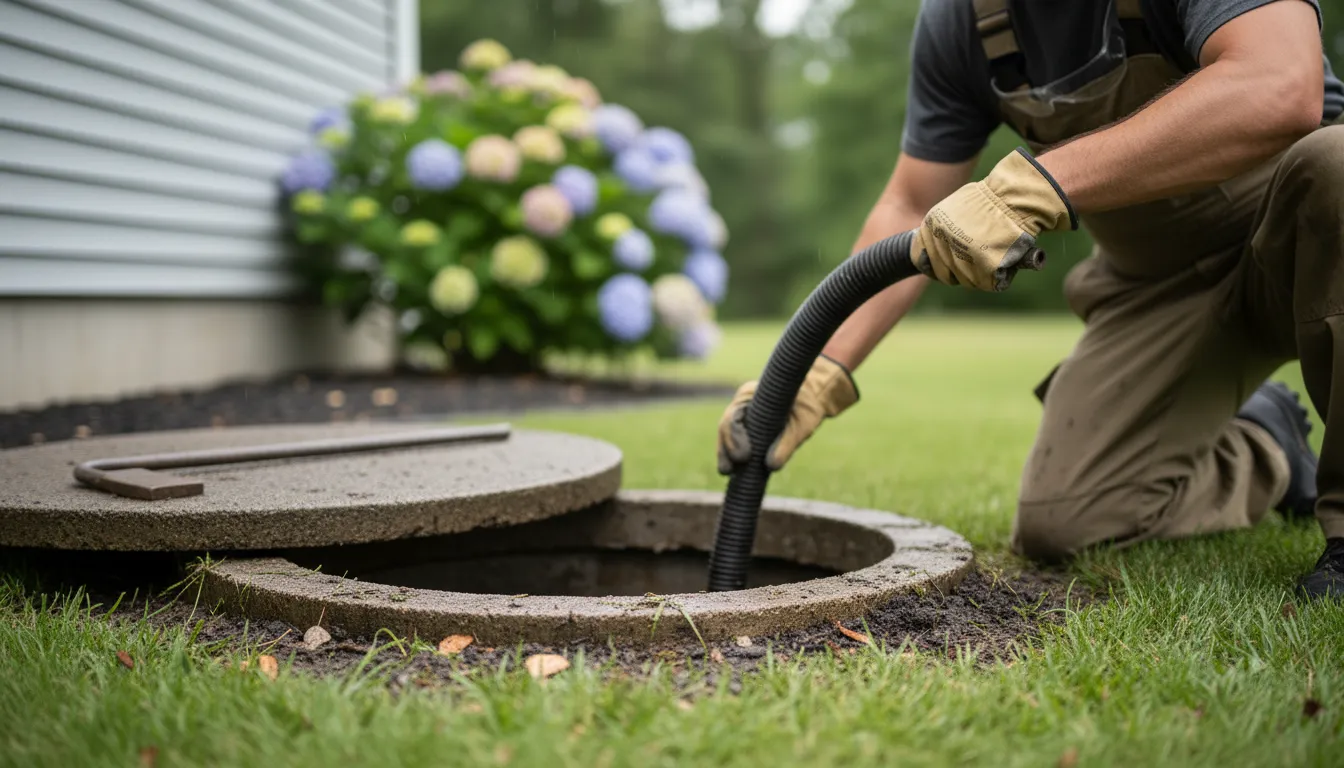
- Locating & Accessing the Tank: The technician will locate the tank's access lids (manholes). It's helpful if you can mark their location beforehand. They may need to excavate a bit if the lids are buried.
- Pumping: Using a large tanker truck, the professional will vacuum out all the contents of the tank-sludge, scum, and liquid. A thorough job ensures the tank is emptied completely.
- Inspection: After pumping, a good technician will inspect the tank's interior for cracks, leaks, and the condition of the inlet and outlet baffles (or tees). They should also briefly assess the drain field for signs of surfacing effluent.
- Reporting & Recommendations: You should receive a report detailing the services performed, the condition of your system, and a recommended date for your next pumping or inspection.
Cost of Septic Services in the Bay Area
The cost of septic tank pumping in Daly City is influenced by tank size, accessibility, and how much sludge needs to be removed. On average, homeowners can expect to pay between $275 and $611 for a standard pumping service8. A routine inspection typically ranges from $50 to $1509. While this may seem like an expense, it pales in comparison to the catastrophic cost of repairing or replacing a failed drain field. View it as essential, preventative home maintenance.
Find the perfect septic tank pumping contractors for your needs
Get personalized recommendations and expert advice
Choosing a Qualified Septic Service Provider
Not all pumpers are created equal. Selecting the right professional is key to your system's longevity.
- Licensing & Insurance: Always verify the company is licensed by the California State Contractors Board and carries adequate liability insurance.
- Local Experience: Choose a provider familiar with San Mateo County's soil types, regulations, and common system designs. They will understand local challenges.
- Full-Service vs. Pump-Only: Some companies only pump, while others offer full septic system services including inspections, repairs, and installation. A full-service company can provide a more comprehensive assessment.
- Ask Questions: Don't hesitate to ask about their process. Do they inspect after pumping? Do they provide a written report? Will they recommend an optimal pumping schedule for your household?
Maintaining Your System Between Pumpings
Your daily habits directly impact how often you'll need to pump. Follow these tips to extend the life of your system:
- Conserve Water: Fix leaky faucets and toilets, and spread out laundry loads to avoid overwhelming the tank.
- Mind What You Flush: Only human waste and toilet paper should go down the toilet. Never flush wipes (even "flushable" ones), feminine hygiene products, dental floss, or chemicals.
- Use the Sink Wisely: Avoid pouring cooking grease, oil, or coffee grounds down the drain. Minimize use of a garbage disposal, as it adds significant solids.
- Protect the Drain Field: Never park or drive heavy vehicles over the drain field. Keep roof drains, sump pumps, and other rainwater systems directed away from it.
Frequently asked questions
Sources
Footnotes
-
How to Care for Your Septic System | US EPA - https://www.epa.gov/septic/how-care-your-septic-system ↩
-
How Often Should You Pump Your Septic Tank? - https://tlsepticpumper.com/septic-system-education/how-often-pump-septic-tank/ ↩
-
How Often Should My Septic Tank Pumped In California - https://www.lanikseptic.com/how-often-should-my-septic-tank-pumped-in-california/ ↩
-
Septic Tank Cleaning and Pumping Sacramento: The Complete Homeowner & Business Guide - https://www.blueribbonseptic.com/blog/septic-tank-cleaning-pumping-sacramento ↩
-
Homeowner's Guide to Septic Systems - El Dorado County - https://www.eldoradocounty.ca.gov/files/assets/county/v/1/documents/government/environmental-management/environmental-management/septic-documents/epa_homeowner_septic_guide.pdf ↩
-
The Californian's Guide To Septic Tanks - https://cacciaplumbing.com/blog/california-septic-tank-guide/ ↩
-
California Septic Tank Requirements | Onsite Wastewater ... - https://www.ntotank.com/blog/california-septic-tank-requirements ↩
-
Septic Tank Pumping Frequency: Crucial Maintenance Guide - https://septic911.com/septic-tank-pumping-frequency/ ↩
-
Maintaining your Septic System A Guide for Homeowners - https://www.ihs.gov/california/tasks/sites/default/assets/File/SFC-MaintainingYourSepticSystemGuide.pdf ↩