Find the Best Septic Tank Pumping Contractors for Your Business
No obligation • Fast responses • Nationwide coverage

Why you can trust Septic Spot
Septic Spot is a leading United States resource for understanding and comparing septic services. Our editors review providers using consistent criteria and verify key business details. Listings and scores are independent, and companies cannot pay to influence our content.
Search providers near you
Top Septic Tank Pumping Contractors in El Monte, California Ranked
Maintaining your septic system through regular pumping is a critical responsibility for homeowners in El Monte. This essential service removes accumulated solids from your tank, preventing system backups, costly drain field failures, and environmental contamination. For residents not connected to the municipal sewer, understanding local regulations and finding a qualified professional is key to protecting your property and public health. This guide provides the information you need to schedule septic maintenance, understand local requirements, and connect with reliable service providers in the El Monte area.
Cisneros Brothers Plumbing, Heating & AC Repair, Water Damage Restoration & Flood Services
6881 Berkshire Ave, Rancho Cucamonga, CA 91701
Cisneros Brothers Plumbing, Heating & AC Repair, Water Damage Restoration & Flood Services provides septic tank pumping and a range of plumbing and restoration services in Fontana, CA. They serve both residential and commercial clients, offering capabilities such as flood damage restoration and septic pumping. With over two decades of experience in the Rancho Cucamonga area, the company emphasizes customer satisfaction and family-oriented service. They also offer 24/7 availability for emergency plumbing and flood restoration needs.
Mr. Rooter Plumbing of Orange County
430 N State College Blvd, Anaheim, CA 92806
Mr. Rooter Plumbing of Orange County is a septic tank pumping company serving Long Beach, CA, and the surrounding Orange County area. They provide a wide range of plumbing services for both residential and commercial customers, including drain cleaning, sewer line repair, and emergency plumbing. One notable capability is their use of HydroScrub Jetting for effective drain cleaning. The company offers 24/7 emergency plumbing services to address urgent issues at any time.
Rooter Man Plumbing of Orange
521 W Katella Ave, Orange, CA 92867
Rooter Man Plumbing of Orange provides septic tank pumping and inspection services in Santa Ana, CA. They offer a wide range of plumbing solutions including emergency repairs, drain cleaning, sewer line replacement, and hydro jetting. The company is equipped to handle both residential and commercial plumbing needs with capabilities such as leak detection and water heater maintenance. Emergency plumbing services are available 24/7 to address urgent issues at any time.

High Speed Rooter & Plumbing
3831 Arden Dr, El Monte, CA 91731
High Speed Rooter & Plumbing is a septic tank pumping and repair company based in Los Angeles, CA. They provide comprehensive septic system services, including routine maintenance and complex repairs, using advanced technology and certified master plumbers. Their fully stocked trucks and state-of-the-art equipment enable efficient service delivery. The company also offers professional gas line installation and repair. High Speed Rooter & Plumbing provides 24/7 emergency services to address urgent plumbing and septic issues promptly.
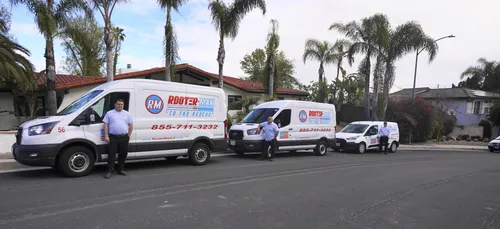
Rooter Man Plumbing of Covina
536 E Rowland St B, Covina, CA 91723
Rooter Man Plumbing of Covina provides residential and commercial plumbing services in Los Angeles, CA. Their offerings include septic tank pumping, drain cleaning, sewer repair, pipe repair, leak detection, water heater services, and hydro jetting. The company uses modern tools and advanced technology to address plumbing issues efficiently. With over 50 years of experience, they also provide 24/7 emergency plumbing services to handle urgent repairs and maintenance needs.
Understanding Your Septic System and Local Regulations
A septic system is an on-site wastewater treatment structure, typically consisting of a tank and a drain field. In El Monte, these systems are regulated under Los Angeles County Environmental Health codes, which are designed to protect groundwater and community health 1. The county's Local Agency Management Program (LAMP) outlines specific requirements for maintenance, inspection, and repair 1. Compliance isn't just a good idea-it's a legal necessity. Before any major work, such as repairs or a new installation, you must ensure it aligns with the LA County Public Health Department's "Professional Guide" and permitting process.
One crucial regulation for El Monte homeowners is the prohibition on installing or maintaining a septic system if a public sewer line is available within 200 feet of your property line, per California law 2. If you are within that distance, connection to the municipal sewer is typically required. For those with an approved system, keeping detailed records of all permits, pumping schedules, and maintenance activities is not only wise for troubleshooting but may also be required for compliance.
Recommended Pumping Frequency for El Monte Homes
How often you need to schedule septic tank cleaning depends on several household-specific factors. The general guideline for an average household in El Monte is every 3 to 5 years. However, this is a starting point. The actual frequency is heavily influenced by tank size and household usage.
- Small Tanks (under 750 gallons): For a household of 1-2 people, pumping every 3-5 years may suffice. However, if 5 or more people live in the home, the tank may require service every 1-2 years due to the increased wastewater load 3.
- Standard/Large Tanks (1,000 - 1,500 gallons): A 1,500-gallon tank serving 1-3 people might only need pumping every 5-7 years. That same tank with a family of 5 or more will likely need attention every 2-3 years 4 5.
- Alternative Systems: If your property uses an advanced treatment system with mechanical components, more frequent inspection-often annually-is usually recommended to ensure all parts are functioning correctly.
The U.S. Environmental Protection Agency (EPA) emphasizes that regular inspection is the best way to determine the exact timing for your septic tank pumping, rather than waiting for a problem to occur.
The Inspection and Pumping Process
A professional septic service involves more than just removing waste. A comprehensive visit should include a thorough inspection to assess the overall health of your entire onsite wastewater system.
Initial Inspection: A licensed professional will first locate and uncover your tank's access lids. They will check the sludge and scum layers to determine if pumping is needed and inspect the inlet and outlet baffles for blockages 6 7. They should also look for any signs of leaks, corrosion, or damage to the tank itself. In many cases, inspecting the drain field for surfacing effluent or soggy ground is also part of a full evaluation.
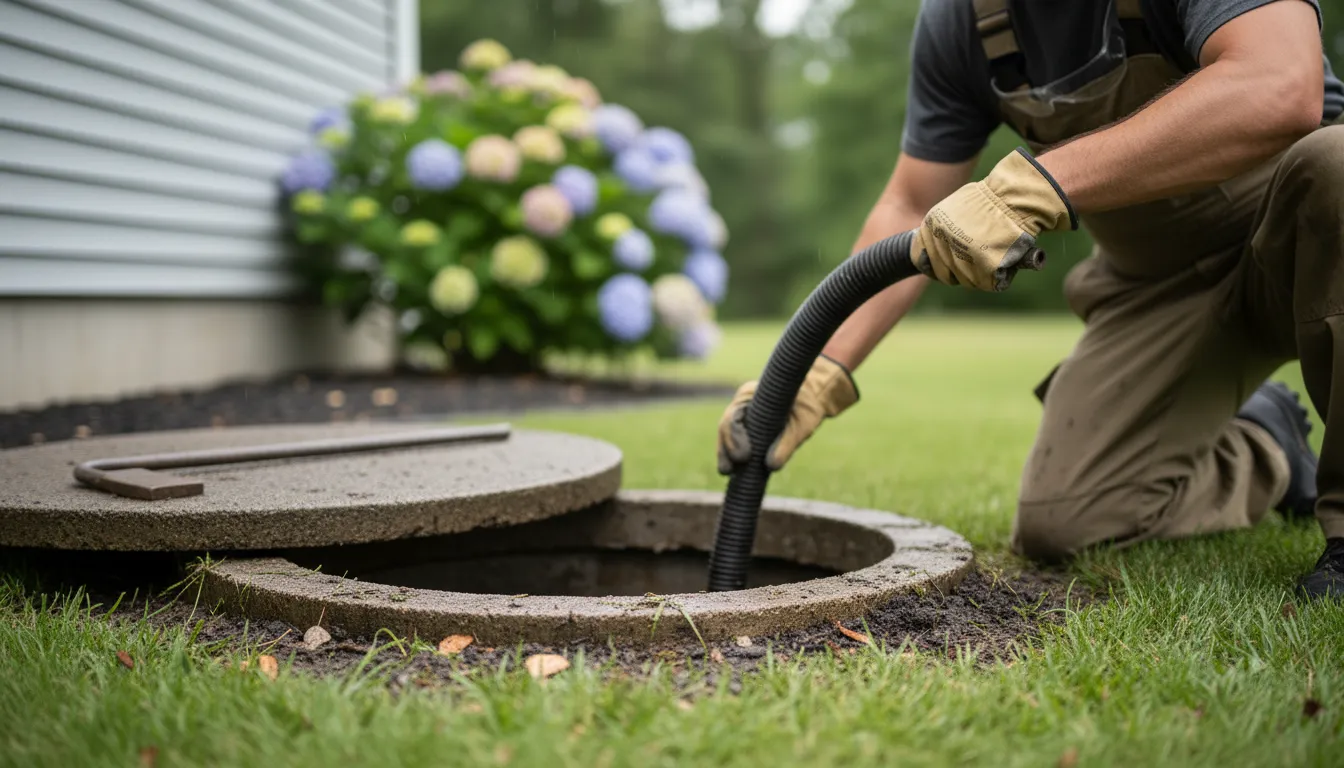
The Pumping Service: Using a vacuum truck, the technician will remove all the contents from the tank-solids, scum, and liquid. It's crucial that they pump from both compartments of a two-compartment tank and ensure all solids are evacuated. After pumping, they may briefly rinse the tank interior to observe for any leaks that were previously hidden by the wastewater. This is also an opportune time for them to note the tank's structural condition.
Post-Service Guidance: A reputable provider will offer advice on maintenance and may note any potential issues observed, such as a failing baffle or signs of drain field stress. They should provide you with a dated service receipt, which is an important part of your maintenance record 8.
Find the perfect septic tank pumping contractors for your needs
Get personalized recommendations and expert advice
Cost Considerations for Septic Services
Understanding the potential costs helps homeowners budget for this necessary maintenance. In the El Monte area, prices can vary based on tank size, accessibility, and the extent of service required.
- Basic Inspection: A standard inspection to check sludge levels and system components typically ranges from $50 to $150.
- Standard Pumping: The core pumping service itself often falls between $150 and $250 for a standard-sized tank.
- Average Total Cost: When combining a routine inspection with pumping, most homeowners can expect a total cost in the range of $300 to $700 per service visit.
- Major Repairs or Replacement: It's important to be aware that costs escalate significantly if problems are found. Replacing a failed drain field or installing a new septic system can range from $3,000 to well over $10,000, underscoring the value of preventative maintenance 9 10.
Always get a detailed estimate before work begins. The lowest price may not include a full inspection or proper disposal practices, so choosing a qualified, licensed professional is paramount.
Maintaining Your System Between Pumpings
Proper day-to-day care can extend the life of your septic system and help you avoid emergencies between scheduled pumpings.
Mind What Goes Down the Drain: Your septic system relies on a balance of bacteria to break down waste. Avoid pouring cooking oils, grease, coffee grounds, or harsh chemicals like paint thinner and bleach down the drain, as they can kill essential bacteria and clog the system. Only human waste and toilet paper should be flushed; items labeled "flushable" (like wipes), feminine hygiene products, and dental floss do not break down and will cause blockages.
Protect Your Drain Field: The drain field is where treated liquid effluent is dispersed into the soil. Never park vehicles or place heavy structures like sheds on it, as compaction can crush pipes. Direct rainwater drainage systems away from the field to prevent saturation. When landscaping, plant only grass over the drain field; tree and shrub roots can seek out moisture and infiltrate and damage the pipes 11.
Conserve Water: Reducing overall water use lessens the load on your septic system. Fix leaky faucets and toilets promptly, install water-efficient fixtures, and spread out laundry loads throughout the week instead of doing many loads in one day 12.
Signs Your Septic Tank Needs Immediate Attention
Don't wait for your scheduled maintenance if you notice any of these warning signs. They indicate your system may be failing or already full.
- Slow Drains: Gurgling pipes, slow-draining sinks, tubs, or toilets throughout the house.
- Sewage Odors: Unpleasant smells inside your home or around the yard near the tank or drain field.
- Wet, Spongy Yard: Soggy ground, standing water, or unusually lush green grass over the drain field area.
- Sewage Backup: The most severe sign-raw sewage backing up into household drains or toilets.
If you observe any of these issues, contact a septic professional in El Monte immediately to diagnose and address the problem before it leads to a complete system failure and a much more expensive repair.
Frequently asked questions
Sources
Footnotes
-
Los Angeles County Local Agency Management Program (LAMP) - http://publichealth.lacounty.gov/eh/docs/about/lac-local-agency-management-program.pdf ↩ ↩2
-
California Septic Tank Requirements | Onsite Wastewater ... - https://www.ntotank.com/blog/california-septic-tank-requirements?srsltid=AfmBOoqfs7pVVNNpQqMauEGomDfUjEU7OoGi0ClWISGQkaGCnzWu6HSC ↩
-
How Often Should My Septic Tank Pumped In California - https://www.lanikseptic.com/how-often-should-my-septic-tank-pumped-in-california/ ↩
-
How Often to Pump a Septic Tank - Clear River Environmental - https://clearriverenvironmental.com/how-often-to-pump-a-septic-tank/ ↩
-
How Often Should You Pump Your Septic Tank? - https://tlsepticpumper.com/septic-system-education/how-often-pump-septic-tank/ ↩
-
How Often Should My Septic Tank Pumped In California - https://www.lanikseptic.com/how-often-should-my-septic-tank-pumped-in-california/ ↩
-
onsite-wastewater-treatment-system-requirements-procedures ... - http://www.publichealth.lacounty.gov/eh/docs/permit/onsite-wastewater-treatment-system-requirements-procedures.pdf ↩
-
Homeowner's Guide to Septic Systems - El Dorado County - https://www.eldoradocounty.ca.gov/files/assets/county/v/1/documents/government/environmental-management/environmental-management/septic-documents/epa_homeowner_septic_guide.pdf ↩
-
Maintaining your Septic System A Guide for Homeowners - https://www.ihs.gov/california/tasks/sites/default/assets/File/SFC-MaintainingYourSepticSystemGuide.pdf ↩
-
How Often to Pump Septic Tank: 2026 Maintenance Guide - https://dandhsepticservices.com/how-often-to-pump-septic-tank/ ↩
-
Does Your Septic Tank Need More Frequent Pumpings? | Atlanta, GA - https://www.metroseptic.com/blog/does-your-septic-tank-need-more-frequent-pumpings/ ↩
-
How to Care for Your Septic System | US EPA - https://www.epa.gov/septic/how-care-your-septic-system ↩