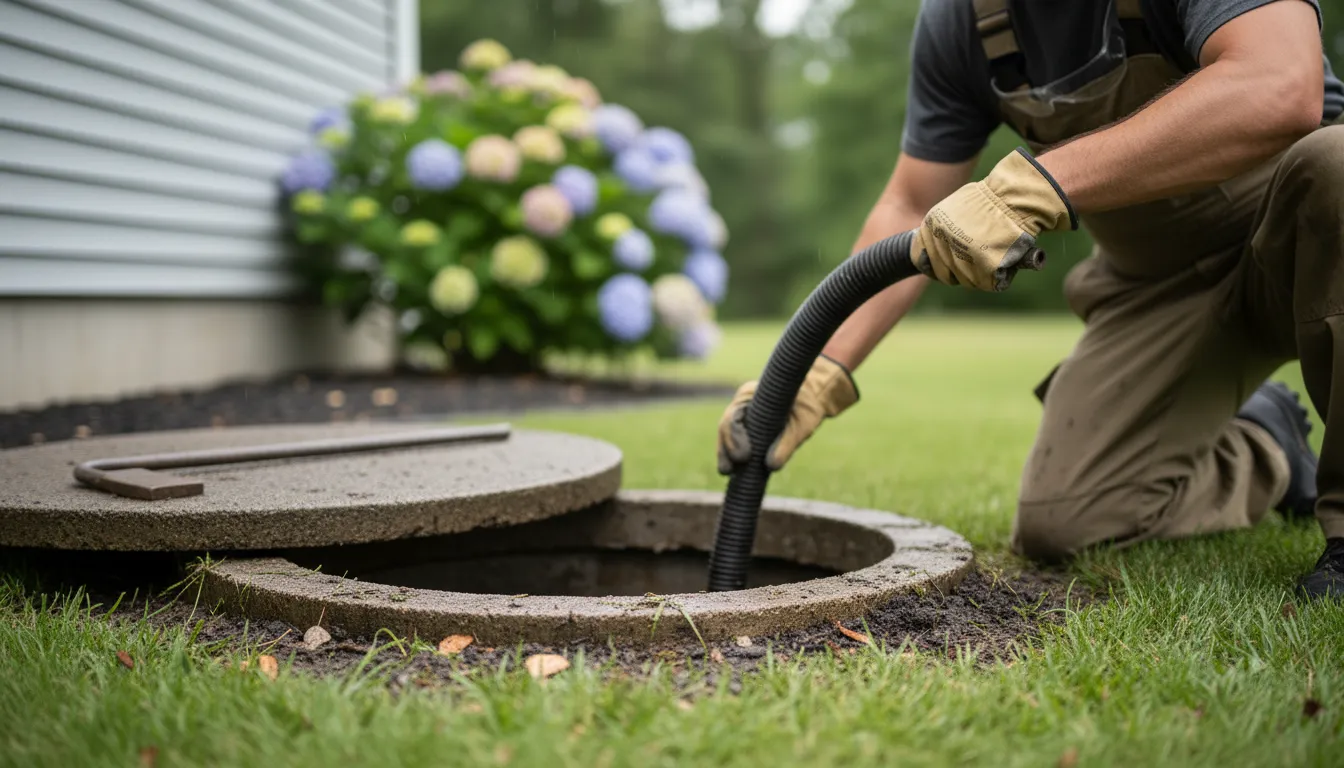
Find the Best Septic Tank Pumping Contractors for Your Business
No obligation • Fast responses • Nationwide coverage

Why you can trust Septic Spot
Septic Spot is a leading United States resource for understanding and comparing septic services. Our editors review providers using consistent criteria and verify key business details. Listings and scores are independent, and companies cannot pay to influence our content.
Search providers near you
Top Septic Tank Pumping Contractors in Garden Grove, California Ranked
Maintaining a healthy septic system is a crucial responsibility for homeowners in Garden Grove. Septic tank pumping is the essential process of removing accumulated solids and sludge from your tank to prevent system failure, environmental contamination, and costly repairs. This guide explains why regular septic maintenance matters, outlines local requirements, and helps you understand how to find qualified professionals to service your system.
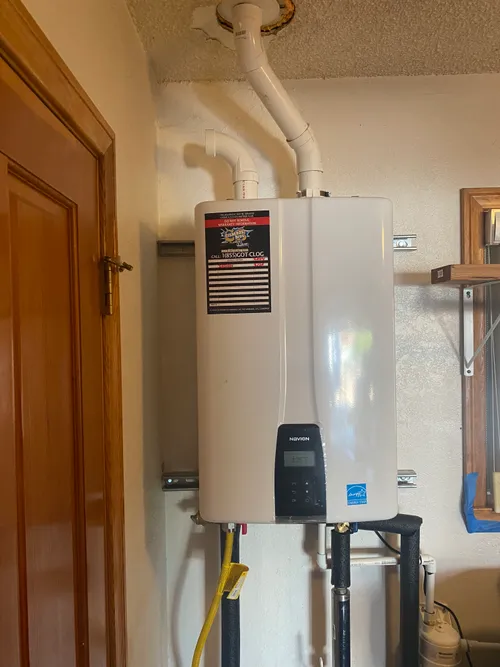
Cisneros Brothers Plumbing, Heating & AC Repair, Water Damage Restoration & Flood Services
11335 Wybourn Ave, Riverside, CA 92503
Cisneros Brothers Plumbing, Heating & AC Repair, Water Damage Restoration & Flood Services offers a range of plumbing, septic, restoration, and flood services in Riverside, CA. They provide residential and commercial plumbing, septic tank pumping, flood damage restoration, and HVAC services including installation, maintenance, and repair. With over 20 years of experience, the company emphasizes customer satisfaction and treats clients like family. They also offer 24/7 emergency service to address urgent plumbing and flood-related needs.
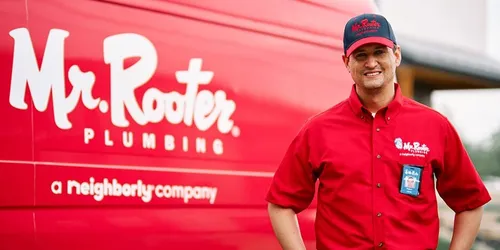
Mr. Rooter Plumbing of Orange County
430 N State College Blvd, Anaheim, CA 92806
Mr. Rooter Plumbing of Orange County is a septic tank pumping company serving Long Beach, CA, and the surrounding Orange County area. They provide a wide range of plumbing services for both residential and commercial customers, including drain cleaning, sewer line repair, and emergency plumbing. One notable capability is their use of HydroScrub Jetting for effective drain cleaning. The company offers 24/7 emergency plumbing services to address urgent issues at any time.
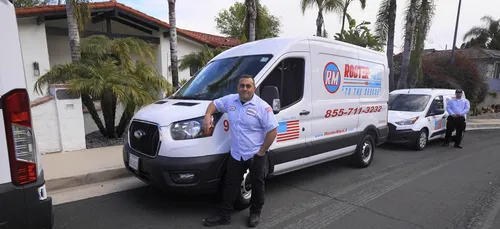
Rooter Man Plumbing of Orange
521 W Katella Ave, Orange, CA 92867
Rooter Man Plumbing of Orange provides septic tank pumping and inspection services in Santa Ana, CA. They offer a wide range of plumbing solutions including emergency repairs, drain cleaning, sewer line replacement, and hydro jetting. The company is equipped to handle both residential and commercial plumbing needs with capabilities such as leak detection and water heater maintenance. Emergency plumbing services are available 24/7 to address urgent issues at any time.

High Speed Rooter & Plumbing
3831 Arden Dr, El Monte, CA 91731
High Speed Rooter & Plumbing is a septic tank pumping and repair company based in Los Angeles, CA. They provide comprehensive septic system services, including routine maintenance and complex repairs, using advanced technology and certified master plumbers. Their fully stocked trucks and state-of-the-art equipment enable efficient service delivery. The company also offers professional gas line installation and repair. High Speed Rooter & Plumbing provides 24/7 emergency services to address urgent plumbing and septic issues promptly.
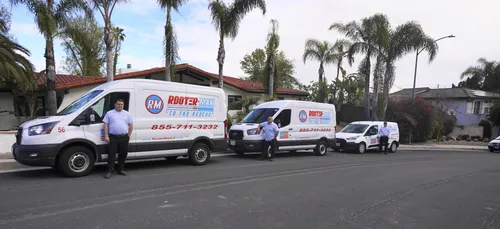
Rooter Man Plumbing of Covina
536 E Rowland St B, Covina, CA 91723
Rooter Man Plumbing of Covina provides residential and commercial plumbing services in Los Angeles, CA. Their offerings include septic tank pumping, drain cleaning, sewer repair, pipe repair, leak detection, water heater services, and hydro jetting. The company uses modern tools and advanced technology to address plumbing issues efficiently. With over 50 years of experience, they also provide 24/7 emergency plumbing services to handle urgent repairs and maintenance needs.
Understanding Your Septic System
A septic system is an on-site wastewater treatment structure, typically used where municipal sewer lines are not available. It consists of two main parts: the septic tank and the drain field (or leach field). All household wastewater flows into the septic tank, where solids settle to the bottom as sludge, and oils and grease float to the top as scum. The liquid effluent in the middle layer then exits the tank and is dispersed into the drain field for further treatment by the soil. Regular septic system pumping is necessary to remove the built-up sludge and scum before they can overflow and clog the drain field, leading to system failure.
Recommended Pumping Frequency in Garden Grove
How often you need to schedule septic tank cleaning depends on several key factors. For the average household in Garden Grove with 3-4 people, the general guideline is to pump the tank every 3 to 5 years. However, this is just a starting point. Your specific schedule can vary significantly based on:
- Tank Size: A standard 1,000-gallon tank will fill up faster than a 1,500-gallon tank.
- Household Size: More people generate more wastewater and solids. A 1,000-gallon tank serving a family of 4 or more may require pumping every 2 to 3 years 1.
- Water Usage: High water consumption from frequent laundry, long showers, or many house guests accelerates the accumulation of solids.
- Garbage Disposal Use: Using a garbage disposal regularly introduces additional organic solids into the tank, increasing the sludge layer much faster and necessitating more frequent pumping intervals 2.
Ultimately, the most reliable way to determine your needed pumping schedule is through a professional inspection that measures the sludge and scum layers.
The Importance of Professional Inspection
Routine inspection is just as critical as the pumping service itself. In California, it is recommended that systems be inspected by a licensed professional at least every three years, which often coincides with a pumping service 3. A comprehensive septic system inspection goes beyond just checking levels. A qualified technician will:
- Measure the sludge and scum layers to determine if pumping is needed.
- Inspect the tank's structural integrity, including the inlet and outlet baffles.
- Check all components, including pumps, electrical switches, and alarms.
- Examine the drain field for signs of failure, such as surfacing effluent or overly lush vegetation 4.
These inspections are vital for catching small problems before they become expensive emergencies and for ensuring your system complies with California State Water Resources Control Board guidelines 5.
Signs Your System Needs Attention
Don't wait for a scheduled inspection if you notice any of these warning signs. Contact a septic service professional immediately if you experience:
- Slow Drains: Sinks, showers, and especially toilets that drain slowly or back up.
- Unpleasant Odors: Sewage smells in your house, yard, or near the tank/drain field area.
- Gurgling Sounds: Strange gurgling noises coming from your plumbing.
- Pooling Water or Lush Grass: Soggy ground, standing water, or patches of grass that are noticeably greener and faster-growing than the rest of your yard over the drain field.
- Sewage Backup: The most severe sign, indicating a serious blockage or system failure.
Find the perfect septic tank pumping contractors for your needs
Get personalized recommendations and expert advice
What to Expect During a Pumping Service
When you hire a professional for septic tank pumping in Garden Grove, here's a general overview of the process:
- Locating & Accessing the Tank: The technician will locate the tank's access lids, which may require some digging.
- Initial Inspection: The lids are opened to visually inspect the tank's interior and inlet/outlet structures.
- Pumping: A large vacuum truck is used to pump out all the contents of the tank-sludge, scum, and liquid.
- System Check: After pumping, the technician may rinse the tank lightly with water to observe for leaks and check the baffles and tees.
- Final Inspection & Closure: The access lids are securely replaced, and the site is cleaned up. The technician should provide you with a report on the tank's condition and any recommendations.
Costs and Considerations
The cost for combined septic tank inspection and pumping in the Garden Grove area typically ranges from $300 to $600, though the final price can vary based on tank size, accessibility, and the scope of the inspection 6. When selecting a provider, always verify they are licensed, insured, and experienced with local Orange County and California regulations. It's also a good practice to ask what is included in their service quote. For site-specific requirements or to confirm if your property is connected to a municipal sewer, you can contact the Orange County Environmental Health Division7.
Maintaining Your System Between Services
Proper care extends the life of your system and helps avoid problems between pumpings:
- Conserve Water: Fix leaky faucets and toilets, and spread out laundry loads.
- Dispose Wisely: Never flush anything besides human waste and toilet paper. Avoid pouring grease, chemicals, paints, or medications down the drain.
- Protect the Drain Field: Never park vehicles or place heavy structures on the drain field. Keep roof drains and sump pumps directed away from it.
- Keep Records: Maintain a log of all pumping, inspections, repairs, and the layout of your system.
Frequently asked questions
Sources
Footnotes
-
How Often Should My Septic Tank Pumped In California - https://www.lanikseptic.com/how-often-should-my-septic-tank-pumped-in-california/ ↩
-
Discover the Recommended Septic Tank Pumping Frequency: 5 Facts! - https://www.unitedsewerservice.com/recommended-septic-tank-pumping-frequency/ ↩
-
How to Care for Your Septic System | US EPA - https://www.epa.gov/septic/how-care-your-septic-system ↩
-
Septic Systems: - https://www.mmdhd.org/wp-content/uploads/2018/09/Septic-Systems.pdf ↩
-
California Septic System Regulations: A Guide to Compliance - West Coast Sanitation - https://westcoastsanitationinc.com/california-septic-system-regulations/ ↩
-
Septic System Inspections: A Step-by-Step How-To Guide - https://westcoastsanitationinc.com/septic-inspection-service/ ↩
-
Septic tank pumping schedule recommended - Facebook - https://www.facebook.com/groups/6986114431512803/posts/8551557948301769/ ↩