Find the Best Septic Tank Pumping Contractors for Your Business
No obligation • Fast responses • Nationwide coverage

Why you can trust Septic Spot
Septic Spot is a leading United States resource for understanding and comparing septic services. Our editors review providers using consistent criteria and verify key business details. Listings and scores are independent, and companies cannot pay to influence our content.
Search providers near you
Top Septic Tank Pumping Contractors in Hanford, California Ranked
Maintaining a healthy septic system is a crucial responsibility for homeowners in Hanford and throughout Kings County. Regular septic tank pumping is the cornerstone of this maintenance, preventing costly backups, environmental contamination, and system failure. This guide explains what septic system pumping entails, why it's vital for your property, and how you can find qualified local professionals to ensure your system operates smoothly for years to come.
Sequoia Pumping
1555 N McCall Ave, Sanger, CA 93657
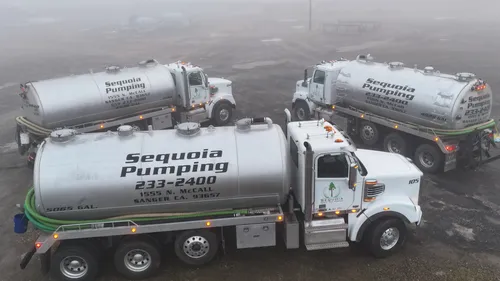
Sequoia Pumping is a septic tank pumping company based in Fresno, CA. With roots in the septic industry dating back to the 1950s, they bring decades of experience to their services. The company operates some of the largest trucks in the Central Valley, allowing them to pump more efficiently and handle septic system issues quickly. Their extensive records help locate and service septic systems promptly, supporting effective troubleshooting and problem-solving.
PRS Plumber Tulare
Visalia, CA
PRS Plumber Tulare provides septic tank pumping, inspection, installation, and repair services in Visalia, CA. They serve residential, commercial, and industrial clients throughout the Central Valley. The company offers specialized capabilities such as trenchless sewer line installation and sewer video inspection to efficiently diagnose and repair plumbing and septic issues. With over 40 years of experience, PRS Plumber Tulare is a family-owned business known for its licensed, bonded, and insured crews. They also provide 24/7 emergency plumbing services to address urgent needs at any time.
Pro Rooter & Septic - Visalia Plumbing
12148 Ave 272, Visalia, CA 93277
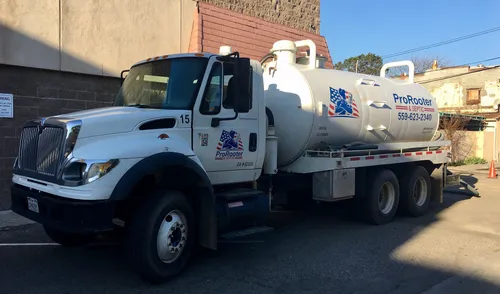
Pro Rooter & Septic - Visalia Plumbing provides septic tank pumping, inspection, repair, and installation services in Visalia, CA. They also handle drain field repair and sewer line services, including trenchless sewer line installation and sewer video inspection. With over 40 years of experience serving the Central Valley, the company is family owned and operated, offering 24/7 availability for plumbing and septic emergencies.
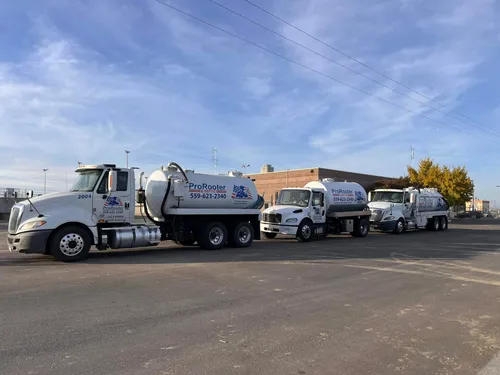
Pro Rooter & Septic
Fresno, CA
Pro Rooter & Septic is a family-owned plumbing and septic service provider based in Fresno, CA. Serving the Central Valley, they offer septic tank pumping, inspection, installation, and repair services, as well as drain field and sewer line repairs. The company uses modern equipment, including sewer video inspection and trenchless sewer line installation, to address plumbing and septic system needs efficiently. With over 40 years of experience, Pro Rooter & Septic is licensed, bonded, and insured, and provides 24/7 availability for emergencies.
Understanding Your Septic System and Its Needs
A septic system is an on-site wastewater treatment structure, typically consisting of a tank and a drain field. When wastewater from your home enters the septic tank, solids settle to the bottom as sludge, and fats and oils float to the top as scum. The liquid effluent in the middle layer then flows out to the drain field for further treatment by the soil. Over time, the sludge and scum layers accumulate. If these layers become too thick, they can flow into and clog the drain field, leading to system failure, sewage backups into your home, and groundwater pollution.
This is where septic tank cleaning or pumping becomes essential. During this service, a professional uses a large vacuum truck to remove all the accumulated solids and scum from the tank. This restores the tank's proper volume and function, protecting the delicate balance of the entire system.
Recommended Pumping Frequency for Hanford Homes
A common question homeowners have is, "How often should I pump my septic tank?" While the general guideline for California is every 3 to 5 years, the exact frequency for your Hanford home depends on several factors 1.
- Tank Size and Household Size: A smaller tank serving a large family will fill with solids much faster than a large tank serving one or two people.
- Water Usage: High water consumption from frequent laundry, long showers, or many guests can push solids through the tank more quickly.
- Waste Habits: What goes down your drains matters. Systems that receive a lot of garbage disposal waste, grease, coffee grounds, or non-biodegradable materials will require more frequent septic system maintenance.
The most reliable way to determine your specific schedule is through a professional inspection. Experts recommend having your system inspected every 1 to 3 years 2. During an inspection, a technician will measure the depth of the sludge and scum layers. A standard rule is that a tank should be pumped when the sludge layer is within 12 inches of the outlet baffle or when the scum layer is within 6 inches of the bottom of the outlet 3. Waiting too long between services can lead to hardened solids, which are more difficult and expensive to remove.
The Importance of Professional Inspection & Maintenance
Routine inspection is about more than just measuring sludge. A comprehensive septic service should include:
- Checking the tank, lids, and baffles for cracks or leaks.
- Assessing the integrity of the inlet and outlet pipes.
- Evaluating the drain field for signs of surfacing effluent or soggy ground.
- Checking any pumps, alarms, or other mechanical components.
Keeping detailed records of all inspections, pumping, and repairs is not only good practice but may be required for compliance with local regulations. For specific rules in Kings County, contacting the Kings County Community Development Agency - Environmental Health Services department is recommended for the latest on permits and requirements.
Find the perfect septic tank pumping contractors for your needs
Get personalized recommendations and expert advice
What to Expect During a Pumping Service
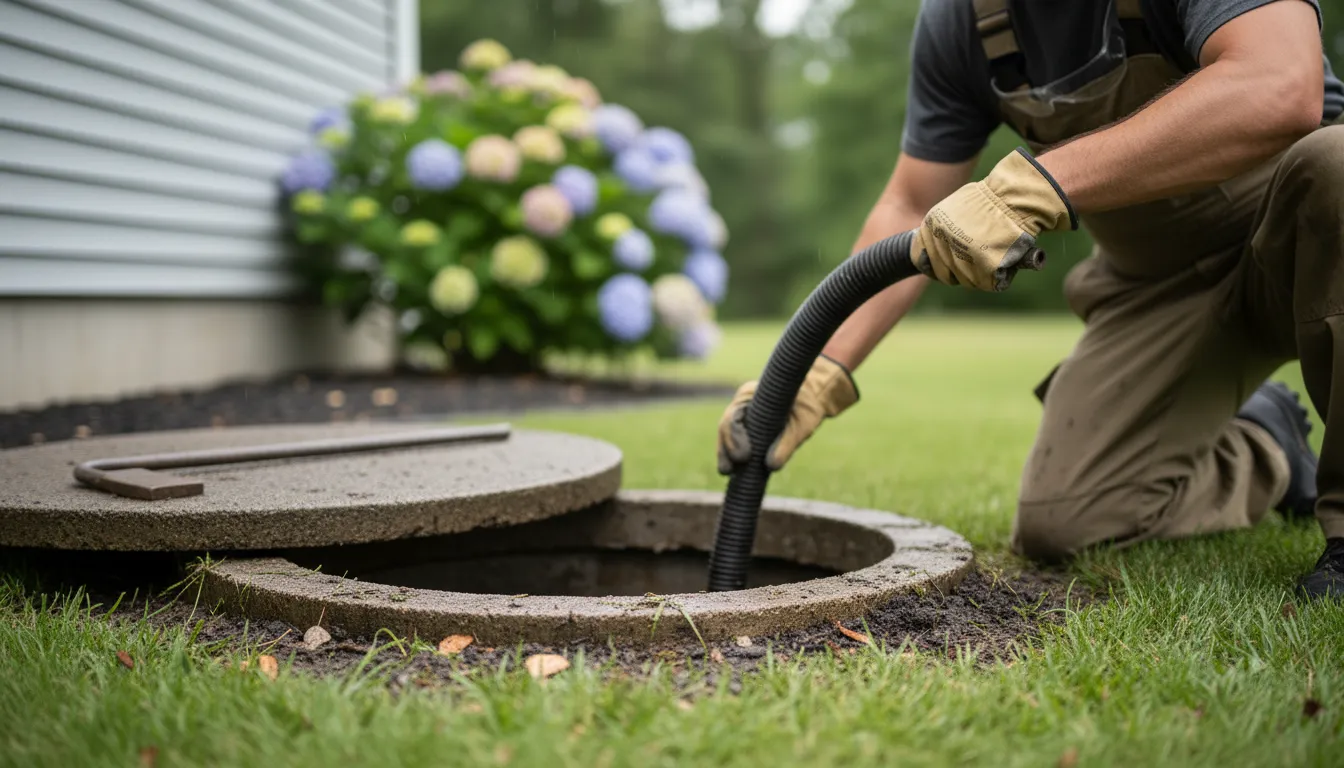
When you schedule a septic tank emptying service, a licensed professional will arrive with a vacuum truck. They will locate and uncover your tank's access lids. After a preliminary inspection, they will insert a large hose into the tank to vacuum out all the liquid and solid waste. A thorough provider will also rinse the tank walls with water to help break up residual solids and inspect the tank's interior and components once empty. The waste is then transported to an approved treatment facility for disposal. The entire process typically takes one to three hours, depending on tank size and accessibility.
Cost of Septic Pumping in California
The cost for standard septic tank pumping in California typically ranges from $300 to $700, with an average around $400-$500. In Hanford, several factors can influence the final price:
- Tank Size and Capacity: Larger tanks cost more to pump.
- Tank Accessibility: If the tank is buried deep, under landscaping, or far from where the truck can park, additional labor fees may apply.
- Condition of the Tank: If pumping has been neglected for many years (e.g., 7+ years), the sludge may have hardened. Breaking up these solids can add $100 to $200 to the total cost 4.
- Additional Services: Costs will be higher if the service includes a full inspection, filter cleaning, or minor repairs.
While price is a consideration, choosing a provider based on licensing, experience, and reputation is crucial for a job done correctly.
How to Maintain Your System Between Pumpings
Proper care extends the time between necessary pumpings and protects your investment. Key maintenance tips include:
- Conserve Water: Fix leaks and spread out laundry loads to avoid overwhelming the system.
- Mind What You Flush: Only human waste and toilet paper should go down the toilet. Never flush wipes (even "flushable" ones), feminine hygiene products, dental floss, or chemicals.
- Use the Sink and Drain Wisely: Avoid pouring cooking oils, grease, coffee grounds, or harsh chemicals like paint thinner down the drain. Use a strainer in sink drains to catch food scraps.
- Protect Your Drain Field: Never park vehicles or build structures over the drain field. Keep roof drains and sump pumps directed away from the area.
By following these guidelines, you actively participate in onsite wastewater treatment and help prevent premature system failure 5 6 7.
Signs Your Septic Tank Needs Immediate Attention
Don't wait for a full-blown disaster. Be alert for these warning signs that your system may need pumping or repair:
- Slow Drains: Sinks, showers, and toilets that drain slowly, especially if multiple fixtures are affected.
- Unpleasant Odors: Sewage smells inside your home or in the yard near the tank or drain field.
- Gurgling Sounds: Strange gurgling noises coming from your plumbing.
- Lush, Wet Lawn: An unusually green, soggy, or spongy patch of grass over the drain field, especially when it hasn't rained.
- Sewage Backup: The most severe sign-wastewater backing up into household drains.
If you notice any of these issues, contact a septic system professional immediately to assess the situation.
Frequently asked questions
Sources
Footnotes
-
How Often Should My Septic Tank Pumped In California - https://www.lanikseptic.com/how-often-should-my-septic-tank-pumped-in-california/ ↩
-
How Often to Pump Septic Tank: 2026 Maintenance Guide - https://dandhsepticservices.com/how-often-to-pump-septic-tank/ ↩
-
How Often to Pump a Septic Tank - Clear River Environmental - https://clearriverenvironmental.com/how-often-to-pump-a-septic-tank/ ↩
-
Septic Pumping Cost by State: 2024 Complete Price Guide - https://wastedoor.com/article/septic-pumping-cost-by-state ↩
-
Homeowner's Guide to Septic Systems - El Dorado County - https://www.eldoradocounty.ca.gov/files/assets/county/v/1/documents/government/environmental-management/environmental-management/septic-documents/epa_homeowner_septic_guide.pdf ↩
-
The Californian's Guide To Septic Tanks - https://cacciaplumbing.com/blog/california-septic-tank-guide/ ↩
-
Septic Tanks - Preventative Routine Maintenance - https://des.sc.gov/permits-regulations/septic-tanks/homeowner-resources/septic-tanks-preventative-routine-maintenance ↩