Find the Best Septic Tank Pumping Contractors for Your Business
No obligation • Fast responses • Nationwide coverage

Why you can trust Septic Spot
Septic Spot is a leading United States resource for understanding and comparing septic services. Our editors review providers using consistent criteria and verify key business details. Listings and scores are independent, and companies cannot pay to influence our content.
Search providers near you
Top Septic Tank Pumping Contractors in Lake Elsinore, California Ranked
Maintaining a healthy septic system is a critical responsibility for homeowners in Lake Elsinore. Regular septic tank pumping is the cornerstone of this maintenance, preventing costly failures and ensuring your household wastewater is processed safely. This essential service removes accumulated solids from your tank, protecting your drain field and keeping your system compliant with local health regulations. For Lake Elsinore residents, understanding the local requirements, typical costs, and best practices for septic maintenance is key to protecting your property and investment.
Cisneros Brothers Plumbing, Heating & AC Repair, Water Damage Restoration & Flood Services
11335 Wybourn Ave, Riverside, CA 92503
Cisneros Brothers Plumbing, Heating & AC Repair, Water Damage Restoration & Flood Services offers a range of plumbing, septic, restoration, and flood services in Riverside, CA. They provide residential and commercial plumbing, septic tank pumping, flood damage restoration, and HVAC services including installation, maintenance, and repair. With over 20 years of experience, the company emphasizes customer satisfaction and treats clients like family. They also offer 24/7 emergency service to address urgent plumbing and flood-related needs.

Thompson Family Plumbing & Drain
Long Beach, CA
Thompson Family Plumbing & Drain is a women-owned plumbing company serving Long Beach, CA, with locations in Hesperia, CA and Lake Havasu City, AZ. They offer a range of plumbing services including septic tank pumping and emergency repairs. The company is fully licensed, insured, and certified, providing 24/7 emergency service to address urgent plumbing needs. Their technicians are trained to deliver efficient and lasting solutions, supported by fully stocked trucks for same-day repairs. Thompson Family Plumbing & Drain has been serving customers for over 10 years, emphasizing transparent pricing and customer peace of mind.
Benjamin's Plumbing & Drain Cleaning
5639 Durango Rd, Riverside, CA 92506
Benjamin's Plumbing & Drain Cleaning is a plumbing and septic service provider based in Riverside, CA. They offer a wide range of services including septic tank pumping and repair, sewer and drain cleaning, hydro jetting, trenchless sewer line repair, and commercial plumbing solutions. Their expertise includes sewer and drain video inspections to accurately diagnose issues and trenchless technology to minimize property disruption during repairs. Serving Riverside and surrounding Inland Empire areas, they provide services for residential, commercial, and industrial clients.
Mr. Rooter Plumbing of San Bernardino
410 W Valley Blvd, Colton, CA 92324
Mr. Rooter Plumbing of San Bernardino offers a wide range of plumbing services including septic tank pumping, repair, and installation in Riverside, CA. The company serves San Bernardino and surrounding areas with expertise in plumbing repairs, drain cleaning, sewer line services, and septic system solutions. They use advanced tools such as trenchless technology and video camera inspections to address plumbing issues efficiently. Mr. Rooter Plumbing provides 24/7 emergency plumbing services backed by the Neighborly Done Right Promise®, ensuring quality workmanship and customer satisfaction.

Zoom Drain
27570 Commerce Center Dr STE 128 128, Temecula, CA 92590
Zoom Drain is a septic tank pumping company based in Murrieta, CA, serving Temecula and surrounding areas. They provide residential and commercial drain and sewer services, including emergency repairs, routine maintenance, and specialized solutions like grease trap maintenance. The company uses advanced tools such as hydro jetting and camera inspections to diagnose and clear blockages efficiently. Customers appreciate their flat-rate pricing and thorough service approach. Zoom Drain also offers maintenance plans to help keep drainage systems functioning properly. Their team is known for professionalism and clear communication, with a focus on minimizing disruption during service.
Understanding Your Septic System and Local Regulations
A septic system is an on-site wastewater treatment structure, common in areas not served by centralized municipal sewer lines. In Lake Elsinore, these systems are regulated by the Riverside County Department of Environmental Health under Ordinance 650 1 2. This ordinance mandates proper maintenance to prevent public health hazards, such as sewage surfacing on the ground, which can result in fines of up to $500 per day 3 4. The septic tank itself is a watertight container where solids settle and begin to decompose. Over time, a layer of sludge (heavy solids) builds up at the bottom and a layer of scum (grease and light materials) floats to the top. The clarified liquid in the middle flows out to the drain field for further treatment. Pumping, or septic tank cleaning, is the process of using a vacuum truck to remove these accumulated solids, preventing them from clogging and destroying the drain field.
How Often Should You Pump Your Septic Tank in Lake Elsinore?
The standard recommendation for septic tank maintenance is to have the tank pumped every 3 to 5 years. However, this is a general guideline. The actual frequency for your home depends on several key factors:
- Household Size: More people generate more wastewater and solids.
- 1-2 people: Every 4-5 years.
- 3-4 people: Every 3-4 years.
- 5+ people: Every 2-3 years 5 6.
- Tank Capacity: A smaller tank (e.g., 1,000 gallons) will fill with solids faster than a larger one under the same usage.
- Total Wastewater Volume: The amount of water used daily by appliances, showers, and toilets directly impacts how quickly the tank fills.
- Solid Waste Input: What goes down your drains matters. Systems that receive a lot of garbage disposal waste, grease, or non-biodegradable materials will require more frequent pumping.
A more precise method is to have the sludge and scum layers measured during an inspection. Pumping is required if the bottom of the scum layer is within 6 inches of the outlet baffle, or if the top of the sludge layer is within 12 inches of the outlet 7 8. For systems with mechanical components like pumps or float switches, annual inspections are recommended.
The Importance of Regular Septic Inspections
While pumping removes solids, a professional inspection assesses the overall health of your entire onsite wastewater system. It's recommended to inspect your system at least every 3 years. A licensed contractor will check for leaks, measure sludge/scum levels, and inspect the condition of baffles and tees. Inspections are particularly crucial during a property transfer or if the home has been vacant, as the system's condition is difficult to verify without being pumped first 9 10. Think of an inspection as a diagnostic check-up that can identify small issues-like a damaged baffle or early signs of drain field problems-before they become catastrophic, expensive repairs.
What to Expect: The Septic Pumping Process
When you schedule a septic service, a professional will arrive with a large vacuum truck. Here's a typical process:
- Locating and Uncovering: The technician will locate the tank's access lids. If "risers" (concrete or plastic pipes extending to the surface) are not installed, this may require digging, which can incur an additional fee.
- Initial Inspection: The lids are removed, and the technician may visually check the scum and sludge layers.
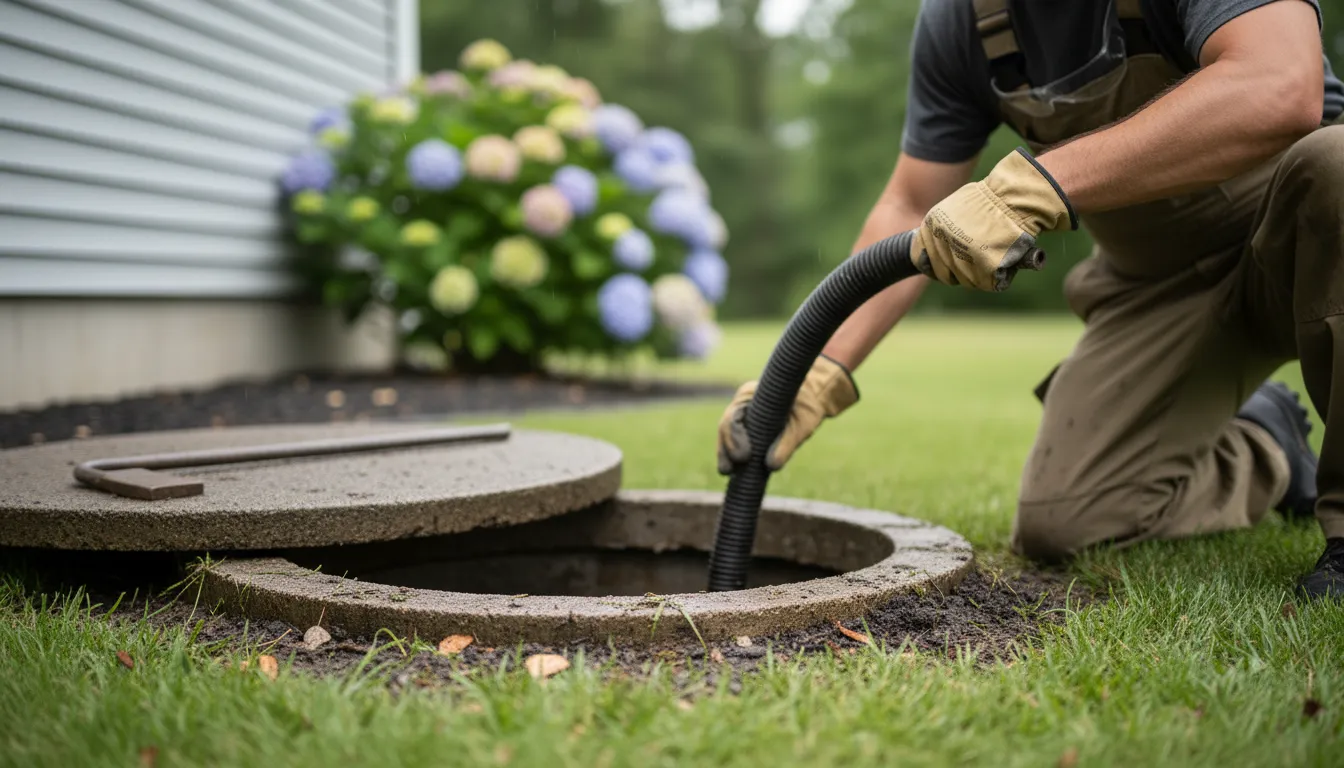
- Pumping: A large hose is inserted into the tank, and the vacuum truck removes all liquid and solid waste.
- System Flushing & Final Check: The technician may back-flush the lines to ensure they are clear and perform a final check of tank components before securely replacing the lids.
Proper disposal of the septage is handled by the service provider at a licensed treatment facility.
Find the perfect septic tank pumping contractors for your needs
Get personalized recommendations and expert advice
Cost of Septic Tank Pumping in Lake Elsinore
In the Riverside County area, costs for septic tank emptying vary based on tank size and accessibility, generally ranging from $250 to over $700 for a standard service 11. Here's a more detailed breakdown:
- 1,000 Gallon Tank: Typically $350-$650.
- 1,500 Gallon Tank: Typically $450-$850 12.
- Inspection Fee: Often around $125 or may be included with a pumping service.
- Additional Charges: Locating and uncovering buried lids can add $50 or more per lid if risers are not installed 13 14. Other factors like extreme distance from the road or difficult terrain can also affect the final price.
While cost is a consideration, choosing a licensed, experienced, and insured provider is paramount for a job done correctly and in compliance with county regulations.
Best Practices for Septic System Care
Pumping is essential, but day-to-day habits determine how well your system functions between services. Follow these guidelines to extend the life of your septic system:
- Mind What You Flush: Only human waste and toilet paper should go down the toilet. Never flush wipes (even "flushable" ones), feminine hygiene products, dental floss, diapers, or cat litter.
- Use the Trash Can: Avoid using your garbage disposal excessively, as it adds significant solids to the tank. Dispose of cooking oils, grease, and food scraps in the trash.
- Chemical Caution: Do not pour harsh chemicals like paint thinners, pesticides, or large amounts of bleach down the drain, as they can kill the beneficial bacteria in your tank that break down waste.
- Conserve Water: Spread out laundry loads, fix leaky faucets, and install high-efficiency fixtures to avoid hydraulically overloading the system.
- Protect the Drain Field: Never drive or park vehicles on any part of the septic system, as this compacts the soil and can crush pipes. Also, avoid planting trees or large shrubs near the drain field, as roots can infiltrate and damage lines.
- Keep Records: Maintain a file of all inspection reports, pumping receipts, and repair documents. This proves compliance with regulations and is invaluable for home sales.
Signs Your Septic Tank Needs Immediate Attention
Don't wait for a scheduled maintenance date if you notice these warning signs:
- Slow Drains: Gurgling pipes or slow-draining sinks and toilets throughout the house.
- Sewage Odors: Unpleasant smells indoors or near the tank/drain field area.
- Wet Spots: Soggy, bright green grass, or standing water over the drain field.
- Sewage Backup: The most severe sign, where wastewater backs up into household drains.
If you observe any of these, contact a septic professional immediately to prevent further damage and potential health code violations.
Frequently asked questions
Sources
Footnotes
-
How to Care for Your Septic System | US EPA - https://www.epa.gov/septic/how-care-your-septic-system ↩
-
Onsite Wastewater Treatment Systems - Rivcoeh.org - https://rivcoeh.org/sites/g/files/aldnop361/files/2024-03/163-24-EPO%20Onsite%20Wastewater%20Treatment%20Systems.pdf ↩
-
How often should I pump? On Site - https://www.onsiteca.com/general-info-1 ↩
-
Homeowner's Guide to Septic Systems - El Dorado County - https://www.eldoradocounty.ca.gov/files/assets/county/v/1/documents/government/environmental-management/environmental-management/septic-documents/epa_homeowner_septic_guide.pdf ↩
-
How Often Should You Pump Your Septic Tank: 3 Factors Solved - https://www.frasiers.com/blog/sewage-tank-pump-frequency/ ↩
-
HOW OFTEN SHOULD YOU BE PUMPING YOUR SEPTIC TANK? - https://www.sandiegocounty.gov/content/dam/sdc/dpw/WATERSHED_PROTECTION_PROGRAM/WatershedRebates/SRP/PDF/Chart-Septic-Large.pdf ↩
-
Building a New Home in Riverside County? Septic System ... - https://www.lanikseptic.com/septic-system-installation-guide/ ↩
-
How to Keep Your Septic System Healthy in Riverside County ... - https://www.lanikseptic.com/how-to-keep-your-septic-system-healthy/ ↩
-
How Often Should My Septic Tank Pumped In California - https://www.lanikseptic.com/how-often-should-my-septic-tank-pumped-in-california/ ↩
-
Septic Tank Pumping: Wait Until You Have a Buyer - https://www.vdwws.com/blog/selling-your-house-dont-pump-your-tank-yet ↩
-
Septic Repair Cost in California: Complete Breakdown of Pricing ... - https://www.lanikseptic.com/septic-repair-cost/ ↩
-
Septic Tank Service Rates - https://www.perkinsseptic.biz/septic-tank-service-rates/ ↩
-
How Much Does It Cost to Pump a Septic Tank? - https://dillonseptic.com/how-much-does-it-cost-to-pump-a-septic-tank/ ↩
-
Septic Pumping: A Guide To Costs, How Often And Signs You Need It - https://www.alltoconstruction.com/blog/septic-pumping-ontario ↩