Find the Best Septic Tank Pumping Contractors for Your Business
No obligation • Fast responses • Nationwide coverage

Why you can trust Septic Spot
Septic Spot is a leading United States resource for understanding and comparing septic services. Our editors review providers using consistent criteria and verify key business details. Listings and scores are independent, and companies cannot pay to influence our content.
Search providers near you
Top Septic Tank Pumping Contractors in Lakewood, California Ranked
Maintaining your septic system is a critical responsibility for California homeowners. Regular septic tank pumping is the cornerstone of this maintenance, preventing system failures, protecting public health, and ensuring compliance with state and local regulations. This guide provides clear, practical information on how septic pumping works, when you need it, what it costs, and how to find qualified local professionals to perform this essential service.
Mr. Rooter Plumbing of Orange County
430 N State College Blvd, Anaheim, CA 92806
Mr. Rooter Plumbing of Orange County is a septic tank pumping company serving Long Beach, CA, and the surrounding Orange County area. They provide a wide range of plumbing services for both residential and commercial customers, including drain cleaning, sewer line repair, and emergency plumbing. One notable capability is their use of HydroScrub Jetting for effective drain cleaning. The company offers 24/7 emergency plumbing services to address urgent issues at any time.
Rooter Man Plumbing of Orange
521 W Katella Ave, Orange, CA 92867
Rooter Man Plumbing of Orange provides septic tank pumping and inspection services in Santa Ana, CA. They offer a wide range of plumbing solutions including emergency repairs, drain cleaning, sewer line replacement, and hydro jetting. The company is equipped to handle both residential and commercial plumbing needs with capabilities such as leak detection and water heater maintenance. Emergency plumbing services are available 24/7 to address urgent issues at any time.

High Speed Rooter & Plumbing
3831 Arden Dr, El Monte, CA 91731
High Speed Rooter & Plumbing is a septic tank pumping and repair company based in Los Angeles, CA. They provide comprehensive septic system services, including routine maintenance and complex repairs, using advanced technology and certified master plumbers. Their fully stocked trucks and state-of-the-art equipment enable efficient service delivery. The company also offers professional gas line installation and repair. High Speed Rooter & Plumbing provides 24/7 emergency services to address urgent plumbing and septic issues promptly.
Rooter Man Plumbing of Covina
536 E Rowland St B, Covina, CA 91723
Rooter Man Plumbing of Covina provides residential and commercial plumbing services in Los Angeles, CA. Their offerings include septic tank pumping, drain cleaning, sewer repair, pipe repair, leak detection, water heater services, and hydro jetting. The company uses modern tools and advanced technology to address plumbing issues efficiently. With over 50 years of experience, they also provide 24/7 emergency plumbing services to handle urgent repairs and maintenance needs.
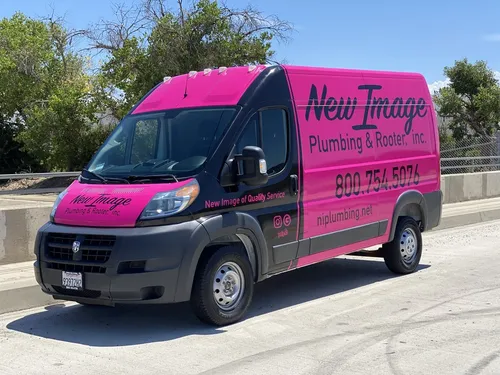
New Image Plumbing & Rooter
1527 E Washington Blvd, Pasadena, CA 91104
New Image Plumbing & Rooter is a septic tank pumping company serving Los Angeles, CA, and nearby communities including Pasadena, La Cañada Flintridge, and Arcadia. They provide a wide range of plumbing services such as drain cleaning, sewer line repair, water heater installation, gas line plumbing, and septic tank maintenance. The company emphasizes eco-friendly solutions, including water conservation fixtures and energy-efficient plumbing systems. Their team is licensed and insured, offering 24/7 emergency plumbing services to address urgent needs promptly. With a family-oriented approach and partnerships with manufacturers like A.O. Smith and Raypak, New Image Plumbing & Rooter combines expertise with community care to deliver tailored plumbing solutions.
Why Septic Tank Pumping is Essential in California
A septic system is an on-site wastewater treatment plant for your property. When functioning correctly, it safely processes household waste. Solids settle in the tank, forming sludge and scum layers, while treated liquid effluent flows out to the drain field. Over time, these solids accumulate. If not removed through pumping, they can flow into and clog the drain field, leading to a complete and very costly system failure.
In California, homeowners are legally responsible for maintaining their systems to prevent the discharge of untreated waste, which is considered a public nuisance. Regular pumping is not just a recommendation; it's a key part of fulfilling this obligation and protecting California's groundwater and environment.
How Often Should You Pump Your Septic Tank in California?
The standard guideline for California is to pump your septic tank every 3 to 5 years. However, this is a general rule, and the ideal frequency for your home depends on several factors:
- Household Size: More people generate more wastewater and solids.
- Tank Size: A larger tank holds more solids and may not need pumping as often.
- Wastewater Volume: Garbage disposals, frequent laundry loads, and high water usage can fill the tank faster.
- System Type: Systems with electrical pumps or other mechanical components often require more frequent inspection and potentially more frequent pumping.
Annual inspections are recommended, especially for systems with mechanical parts, to assess the sludge and scum levels 1. A professional will check if the sludge layer is within 12 inches of the outlet baffle or if the scum layer is within 6 inches-technical thresholds that indicate pumping is needed 2 3.
Signs You Need to Pump Immediately
Don't wait for a scheduled service if you notice these warning signs:
- Slow drains or sewage backups in toilets, sinks, or tubs.
- Foul odors around the septic tank or drain field.
- Unusually lush, green grass or standing water over the drain field.
- Gurgling sounds in your plumbing.
Understanding the Costs of Septic Pumping in California
The cost to pump a septic tank in California typically ranges from $350 to $700+, with the final price depending on your specific situation. Here's a more detailed breakdown:
- Average Cost: $350 - $700
- 1,000-Gallon Tank: $225 - $700
- 1,250-Gallon Tank: $275 - $750
- 1,500-Gallon Tank: $345 - $800 4
An inspection typically costs an additional $200 to $5005. Factors influencing price include:
- Tank Size and Accessibility: Larger tanks cost more. Hard-to-reach tanks may incur extra fees.
- Location: Prices can be higher in remote areas or major metropolitan regions like Los Angeles or the Bay Area.
- Condition: Severely clogged tanks or those requiring extra labor will be more expensive.
While budgeting is important, choosing a provider based solely on the lowest bid can be risky. Proper pumping and inspection require expertise and proper equipment.
Find the perfect septic tank pumping contractors for your needs
Get personalized recommendations and expert advice
The Septic Pumping Process: What to Expect
A professional septic service will follow a standard process:
- Locate & Uncover: The technician will locate your tank and access ports, which may require digging.
- Inspect: Before pumping, they should inspect inlet/outlet baffles and look for signs of damage or leaks.
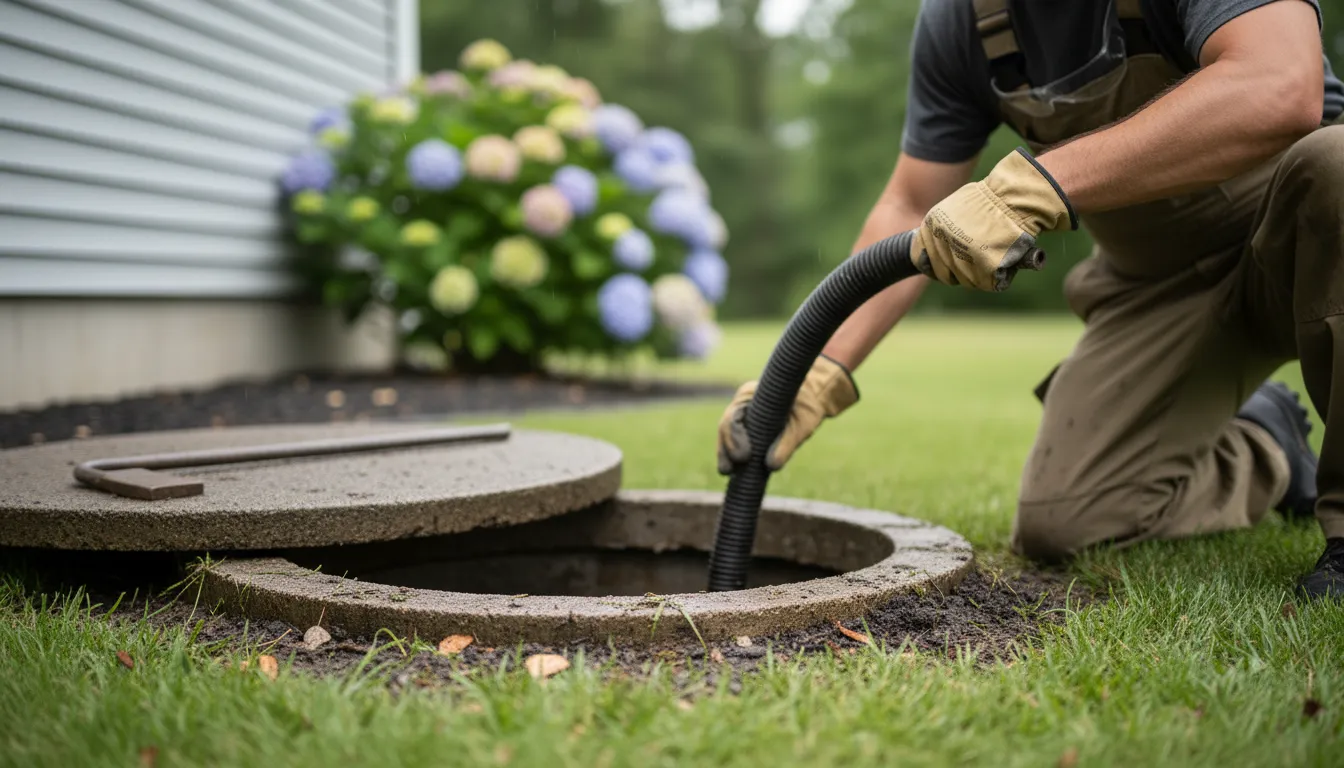
- Pump: Using a large vacuum truck, all solids and liquids are pumped from the tank.
- Clean & Re-inspect: The tank may be rinsed, and a post-pumping inspection is conducted.
- Record Keeping: You should receive a report detailing the work done, tank condition, and any recommendations. Keep these records for compliance and future reference.
California Regulations and Homeowner Responsibilities
California has specific rules governing septic systems (also known as Onsite Wastewater Treatment Systems or OWTS). Key responsibilities include:
- Maintenance: You must ensure your system does not fail or create a nuisance.
- Inspections: Regular professional inspections (annually or every 1-3 years) are strongly advised to catch issues early 6.
- Proper Use: Avoid flushing fats, oils, grease, cat litter, paper towels, feminine hygiene products, and harsh chemicals like bleach or drain cleaners. These can kill the essential bacteria in your tank and clog the system 7.
- Sewer Availability: In many areas, installing a new septic system is prohibited if a public sewer connection is available, typically within 200 feet of your property 8 9.
Best Practices for Septic System Health
Beyond regular pumping, you can extend your system's life with good habits:
- Conserve Water: Fix leaks and spread out laundry loads to avoid overwhelming the system.
- Landscape Carefully: Don't drive or build over the tank or drain field. Plant only grass over the drain field; tree roots can cause major damage.
- Use Septic-Safe Products: Choose toilet paper and cleaners labeled as septic-safe.
- Pump, Don't Over-Pump: While essential, pumping more frequently than every 3 years is often unnecessary and can disrupt the bacterial balance in the tank 10. Follow inspection-based recommendations.
Finding a Qualified Septic Service Provider in California
When searching for a septic pumper, look for:
- State and Local Licensing: Ensure the company is licensed by the California State Contractors Board (CSLB) and holds any required local environmental health permits.
- Experience & Reputation: Check online reviews and ask for references from neighbors.
- Full Service: Choose a provider that offers both pumping and detailed inspections.
- Clear Communication: They should explain the process, answer your questions, and provide a written report.
Frequently asked questions
Sources
Footnotes
-
Homeowner's Guide to Septic Systems - El Dorado County - https://www.eldoradocounty.ca.gov/files/assets/county/v/1/documents/government/environmental-management/environmental-management/septic-documents/epa_homeowner_septic_guide.pdf ↩
-
How Often to Pump Your Septic Tank? Splash Plumbing's Guide - https://www.splashplumbing.com/how-often-should-septic-tank-be-pumped-for-optimal-maintenance-and-longevity/ ↩
-
How Often Should My Septic Tank Pumped In California - https://www.lanikseptic.com/how-often-should-my-septic-tank-pumped-in-california/ ↩
-
Septic Tank Pumping Cost in California (2026) - https://callseptic.com/costs/california ↩
-
How Much Does It Cost to Pump a Septic Tank in Los Angeles, CA? - https://www.angi.com/articles/how-much-does-septic-tank-pumping-cost/ca/los-angeles ↩
-
The Californian's Guide To Septic Tanks - https://cacciaplumbing.com/blog/california-septic-tank-guide/ ↩
-
Homeowner's Guide to Septic Systems - Tuolumne County - https://www.tuolumnecounty.ca.gov/DocumentCenter/View/21759/Onsite-System-Care-and-Maintenance ↩
-
California Septic Tank Requirements | Onsite Wastewater ... - https://www.ntotank.com/blog/california-septic-tank-requirements ↩
-
Top Septic Tank Rules to Avoid Costly Repairs - https://septictankbusiness.com/blog/septic-tank-rules/ ↩
-
How Often Should You Pump Your Septic Tank - https://grantsseptictechs.com/how-often-should-you-pump-your-septic-tank/ ↩