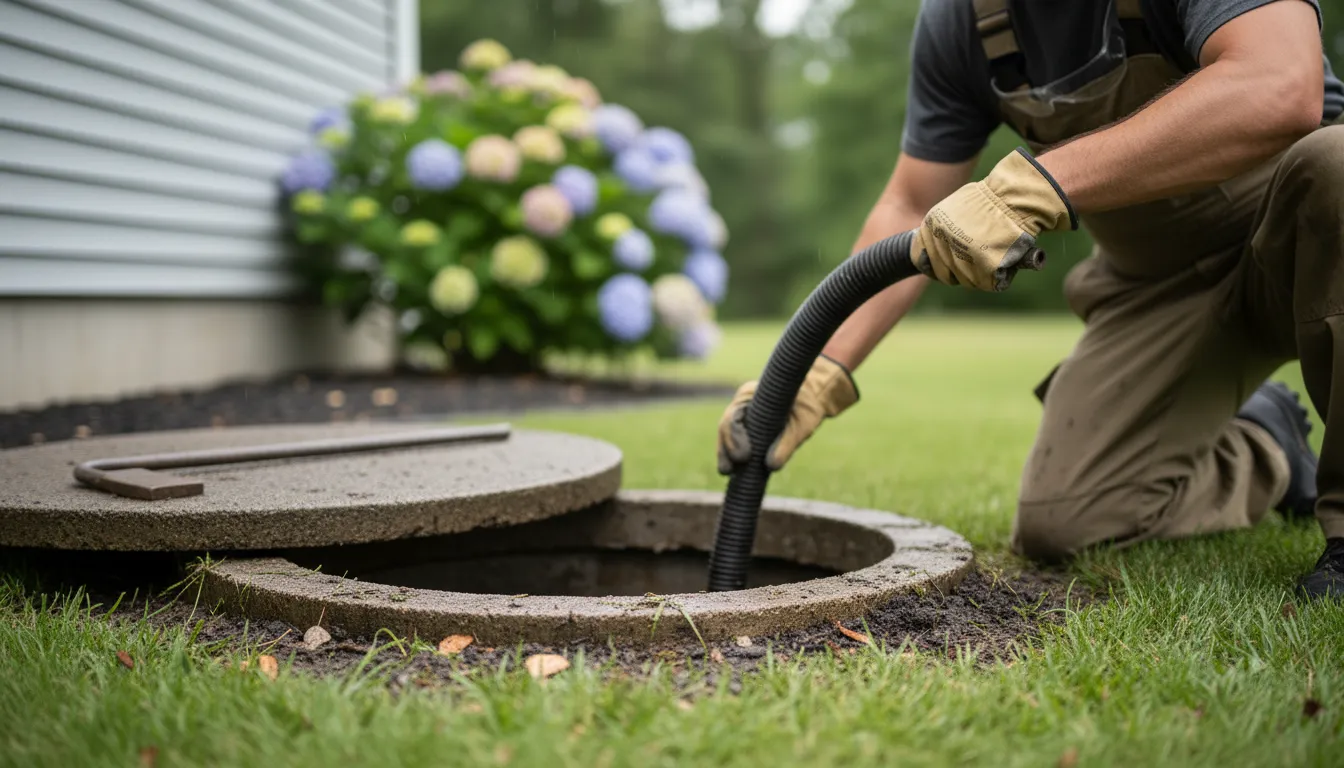
Find the Best Septic Tank Pumping Contractors for Your Business
No obligation • Fast responses • Nationwide coverage

Why you can trust Septic Spot
Septic Spot is a leading United States resource for understanding and comparing septic services. Our editors review providers using consistent criteria and verify key business details. Listings and scores are independent, and companies cannot pay to influence our content.
Search providers near you
Top Septic Tank Pumping Contractors in Monterey Park, California Ranked
Maintaining a healthy septic system is a crucial, yet often overlooked, responsibility for homeowners. Regular septic tank pumping is the most essential service to prevent costly backups, system failures, and environmental contamination. This guide provides Monterey Park residents with clear, actionable information on septic system maintenance, including recommended pumping schedules, inspection protocols, and local cost considerations, to help you find qualified professionals for this vital home service.
Mr. Rooter Plumbing of Orange County
430 N State College Blvd, Anaheim, CA 92806
Mr. Rooter Plumbing of Orange County is a septic tank pumping company serving Long Beach, CA, and the surrounding Orange County area. They provide a wide range of plumbing services for both residential and commercial customers, including drain cleaning, sewer line repair, and emergency plumbing. One notable capability is their use of HydroScrub Jetting for effective drain cleaning. The company offers 24/7 emergency plumbing services to address urgent issues at any time.
Rooter Man Plumbing of Orange
521 W Katella Ave, Orange, CA 92867
Rooter Man Plumbing of Orange provides septic tank pumping and inspection services in Santa Ana, CA. They offer a wide range of plumbing solutions including emergency repairs, drain cleaning, sewer line replacement, and hydro jetting. The company is equipped to handle both residential and commercial plumbing needs with capabilities such as leak detection and water heater maintenance. Emergency plumbing services are available 24/7 to address urgent issues at any time.

High Speed Rooter & Plumbing
3831 Arden Dr, El Monte, CA 91731
High Speed Rooter & Plumbing is a septic tank pumping and repair company based in Los Angeles, CA. They provide comprehensive septic system services, including routine maintenance and complex repairs, using advanced technology and certified master plumbers. Their fully stocked trucks and state-of-the-art equipment enable efficient service delivery. The company also offers professional gas line installation and repair. High Speed Rooter & Plumbing provides 24/7 emergency services to address urgent plumbing and septic issues promptly.
Sewer Man Septic Tank Pumping
16065 Foothill Blvd # B, Sylmar, CA 91342
Sewer Man Septic Tank Pumping provides septic tank pumping, cleaning, inspection, repair, and installation services in Los Angeles, CA. They use specialized equipment such as vacuum trucks and high-pressure water jets to maintain and clean septic systems, helping prevent backups and slow drainage. The company offers emergency septic pumping services for urgent needs and serves a wide range of nearby communities. Sewer Man Septic Tank Pumping is experienced in handling various septic system maintenance tasks to support property owners in the Los Angeles area.
Rooter Man Plumbing of Covina
536 E Rowland St B, Covina, CA 91723
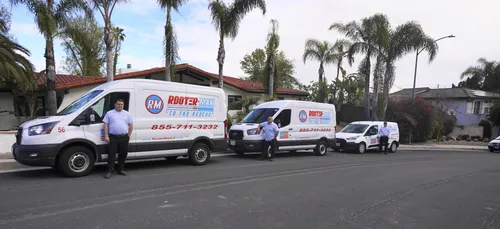
Rooter Man Plumbing of Covina provides residential and commercial plumbing services in Los Angeles, CA. Their offerings include septic tank pumping, drain cleaning, sewer repair, pipe repair, leak detection, water heater services, and hydro jetting. The company uses modern tools and advanced technology to address plumbing issues efficiently. With over 50 years of experience, they also provide 24/7 emergency plumbing services to handle urgent repairs and maintenance needs.
A properly functioning septic system is a silent workhorse, treating household wastewater safely and efficiently. For homes not connected to a municipal sewer line, this onsite wastewater treatment system is a private utility. At its heart is the septic tank, where solids settle and begin to decompose. Over time, however, sludge and scum accumulate, and if not removed, can clog the system, leading to sewage backups into your home or contamination of your drain field. Proactive maintenance, primarily through scheduled septic tank cleaning, is the key to avoiding these unpleasant and expensive problems.
Understanding Your Septic System and Maintenance Needs
A typical septic system consists of a tank and a soil-based drain field (or leach field). All water from your home-from toilets, showers, sinks, and washing machines-flows into the tank. Heavy solids (sludge) settle to the bottom, while lighter fats and greases (scum) float to the top. The relatively clear liquid in the middle (effluent) then exits the tank into the drain field, where it is further treated by the soil. The sludge and scum layers must be pumped out periodically; otherwise, they build up until solids overflow into the drain field, causing irreversible clogging and system failure 1.
The goal of routine maintenance is to remove these accumulated solids before they cause damage. This involves two key services: regular inspections and periodic pumping.
How Often Should You Pump Your Septic Tank in Monterey Park?
There is no one-size-fits-all answer, but a general rule for most households is to schedule septic tank pumping every 3 to 5 years 2. This frequency can vary significantly based on several factors specific to your home:
- Household Size and Water Usage: The more people living in your home, the more wastewater is generated, filling the tank faster. High water usage from frequent laundry, long showers, or leaky fixtures accelerates sludge accumulation.
- Tank Size: Older homes may have smaller tanks (under 1,000 gallons) that require more frequent pumping, potentially every 1-2 years.
- Use of a Garbage Disposal: Disposals grind food waste into fine particles that do not decompose easily in a septic tank. This significantly increases the rate of sludge buildup. If you use a garbage disposal regularly, you should plan for septic cleaning every 1-2 years.
- What You Flush: Systems are designed for human waste and toilet paper. Flushing items like wipes, feminine hygiene products, cooking grease, or chemicals can disrupt bacterial balance and cause rapid clogging.
The most reliable method to determine your specific pumping schedule is through a professional inspection, which measures the depth of sludge and scum layers inside your tank. Pumping is necessary when the sludge fills more than one-third of the tank's volume or when the scum layer is within 3 inches of the bottom of the outlet baffle 3 4.
The Importance of Regular Septic System Inspections
While pumping removes accumulated waste, inspections are the diagnostic tool that tells you when pumping is needed and identifies other potential issues. It's recommended to have your system inspected by a qualified professional every 1 to 3 years 5.
A thorough inspection includes:
- Measuring Sludge and Scum Levels: This is the primary way to assess if pumping is needed.
- Checking Tank Integrity: Looking for cracks, leaks, or corrosion in the tank itself.
- Inspecting Inlet and Outlet Baffles: Ensuring these components are intact to prevent solids from escaping into the drain field.
- Assessing the Drain Field: Looking for signs of failure, such as soggy soil, foul odors, or unusually lush grass over the field.
- Verifying Local Compliance: Ensuring your system meets the requirements of the California State Water Resources Control Board (SWRCB) Onsite Wastewater Treatment Systems (OWTS) policy 6 7.
An inspection fee typically ranges from $100 to $250 but can save thousands by catching small problems before they become major failures.
Find the perfect septic tank pumping contractors for your needs
Get personalized recommendations and expert advice
What to Expect: Septic Service Costs in Monterey Park
Understanding the cost structure for septic maintenance helps homeowners budget effectively. The primary cost is for the pumping service itself, which is influenced by tank size, accessibility, and the amount of waste to be removed.
- Standard Pumping Cost: For a typical residential tank, you can expect to pay between $300 and $600 for pumping in the Monterey Park area 8.
- Cost by Tank Size:
- Additional Costs: The inspection fee ($100-$250) is often separate. If the tank lid is buried or the access port is difficult to reach, there may be additional charges for excavation. Emergency service calls for backups will also be significantly more expensive than scheduled maintenance.
Investing in regular pumping is far more economical than the cost of repairing or replacing a failed drain field, which can run into the tens of thousands of dollars.
Best Practices for Septic System Care Between Services
You play a direct role in the health of your system between professional visits. Follow these tips to extend its lifespan and improve efficiency:
- Conserve Water: Spread out laundry loads, fix leaky faucets and toilets, and install high-efficiency fixtures to reduce the flow into the tank.
- Mind What Goes Down the Drain: Avoid pouring cooking oils, grease, coffee grounds, or harsh chemicals like paint thinner or bleach down any drain. These can kill the beneficial bacteria in your tank and clog pipes 11 12.
- Use Toilet Paper Wisely: Only flush toilet paper and human waste. Even products labeled "flushable" (like wipes) do not break down quickly and are a leading cause of clogs.
- Limit Garbage Disposal Use: Compost food scraps when possible to reduce the solid load on your system.
- Protect Your Drain Field: Never drive or park vehicles on the drain field, as this compacts the soil. Keep roof drains, sump pumps, and other surface water away from the area. Plant only grass over the field; tree and shrub roots can damage pipes 13.
- Keep Records: Maintain a map of your system's components (tank, lids, drain field) and a log of all pumping, inspections, and repairs. This is invaluable for future service and if you sell your home.
Finding a Qualified Septic Service Provider
When it's time for maintenance, choosing a reliable, licensed professional is critical. Look for providers who are familiar with local Monterey Park and Los Angeles County regulations. They should be willing to explain their inspection process, provide a detailed written estimate, and answer your questions clearly. A reputable service technician will not only pump the tank but also perform a basic inspection and note any concerns.
Frequently asked questions
Sources
Footnotes
-
Frequent Questions on Septic Systems | US EPA - https://www.epa.gov/septic/frequent-questions-septic-systems ↩
-
Septic Systems | Department of Environmental Protection - https://www.pa.gov/agencies/dep/residents/my-water/septic-systems ↩
-
Maintaining your Septic System A Guide for Homeowners - https://www.ihs.gov/california/tasks/sites/default/assets/File/SFC-MaintainingYourSepticSystemGuide.pdf ↩
-
How Often Should You Pump Your Septic Tank in Seattle? - https://gogreenlatrine.com/how-often-pump-septic-tank/ ↩
-
Septic Tank Pumping Frequency Guidelines - https://www.beckertwpsherburnecomn.gov/sites/g/files/vyhlif16406/files/media/services/file/426/septic_tank_pumping_frequency_guidelines.pdf ↩
-
California Septic Tank Requirements | Onsite Wastewater Treatment Systems - https://www.ntotank.com/blog/california-septic-tank-requirements ↩
-
How Often to Pump Your Septic Tank - https://www.splashplumbing.com/how-often-should-septic-tank-be-pumped-for-optimal-maintenance-and-longevity/ ↩
-
Septic Service in Monterey Park, CA - Costs 11 / 2025 - Homeyou - https://www.homeyou.com/ca/septic-service-monterey-park-costs ↩
-
7 Ways to Reduce the Cost for Septic System in California - https://www.lanikseptic.com/reduce-septic-system-costs-california/ ↩
-
Cost to Pump Septic Tank: Tips to Save on Cleaning Fees - https://ivanssiteservices.com/blog/cost-to-pump-septic-tank-what-to-expect-and-how-to-save/ ↩
-
Pumping & Maintenance Tips - Septic Treatment - https://www.sosonsiteca.net/resources/pumping-maintenance-tips ↩
-
Frequent Questions on Septic Systems | US EPA - https://www.epa.gov/septic/frequent-questions-septic-systems ↩
-
When Should YOU Pump Out Your Septic Tank? - https://www.youtube.com/watch?v=5RXcevkvLaU ↩