Find the Best Septic Tank Pumping Contractors for Your Business
No obligation • Fast responses • Nationwide coverage

Why you can trust Septic Spot
Septic Spot is a leading United States resource for understanding and comparing septic services. Our editors review providers using consistent criteria and verify key business details. Listings and scores are independent, and companies cannot pay to influence our content.
Search providers near you
Top Septic Tank Pumping Contractors in Whittier, California Ranked
Maintaining a healthy septic system is a crucial responsibility for homeowners not connected to a municipal sewer line. Regular septic tank pumping is the most essential maintenance task to prevent backups, costly repairs, and environmental contamination. This guide provides Whittier residents with clear, actionable information on septic system maintenance, including how often to schedule service, what to expect during the process, and how to find qualified local professionals for your pumping and inspection needs.

Cisneros Brothers Plumbing, Heating & AC Repair, Water Damage Restoration & Flood Services
6881 Berkshire Ave, Rancho Cucamonga, CA 91701
Cisneros Brothers Plumbing, Heating & AC Repair, Water Damage Restoration & Flood Services provides septic tank pumping and a range of plumbing and restoration services in Fontana, CA. They serve both residential and commercial clients, offering capabilities such as flood damage restoration and septic pumping. With over two decades of experience in the Rancho Cucamonga area, the company emphasizes customer satisfaction and family-oriented service. They also offer 24/7 availability for emergency plumbing and flood restoration needs.
Mr. Rooter Plumbing of Orange County
430 N State College Blvd, Anaheim, CA 92806
Mr. Rooter Plumbing of Orange County is a septic tank pumping company serving Long Beach, CA, and the surrounding Orange County area. They provide a wide range of plumbing services for both residential and commercial customers, including drain cleaning, sewer line repair, and emergency plumbing. One notable capability is their use of HydroScrub Jetting for effective drain cleaning. The company offers 24/7 emergency plumbing services to address urgent issues at any time.
Rooter Man Plumbing of Orange
521 W Katella Ave, Orange, CA 92867
Rooter Man Plumbing of Orange provides septic tank pumping and inspection services in Santa Ana, CA. They offer a wide range of plumbing solutions including emergency repairs, drain cleaning, sewer line replacement, and hydro jetting. The company is equipped to handle both residential and commercial plumbing needs with capabilities such as leak detection and water heater maintenance. Emergency plumbing services are available 24/7 to address urgent issues at any time.

High Speed Rooter & Plumbing
3831 Arden Dr, El Monte, CA 91731
High Speed Rooter & Plumbing is a septic tank pumping and repair company based in Los Angeles, CA. They provide comprehensive septic system services, including routine maintenance and complex repairs, using advanced technology and certified master plumbers. Their fully stocked trucks and state-of-the-art equipment enable efficient service delivery. The company also offers professional gas line installation and repair. High Speed Rooter & Plumbing provides 24/7 emergency services to address urgent plumbing and septic issues promptly.
Rooter Man Plumbing of Covina
536 E Rowland St B, Covina, CA 91723
Rooter Man Plumbing of Covina provides residential and commercial plumbing services in Los Angeles, CA. Their offerings include septic tank pumping, drain cleaning, sewer repair, pipe repair, leak detection, water heater services, and hydro jetting. The company uses modern tools and advanced technology to address plumbing issues efficiently. With over 50 years of experience, they also provide 24/7 emergency plumbing services to handle urgent repairs and maintenance needs.
Understanding Your Septic System
A septic system is an on-site wastewater treatment structure, typically consisting of a tank and a drain field. All household wastewater flows into the septic tank, where solids settle to the bottom as sludge, and fats and oils float to the top as scum. The liquid effluent in the middle layer then exits the tank into the drain field for further filtration into the soil. The tank itself does not treat waste; it simply holds it, allowing for separation. Over time, the accumulated sludge and scum layers must be physically removed through pumping to prevent them from flowing into and clogging the drain field, which can lead to system failure.
For Whittier homeowners, understanding this basic function underscores why routine septic maintenance is non-negotiable. A failing system can create unsanitary conditions, pollute local groundwater, and result in repair bills that far exceed the cost of regular pumping.
Recommended Pumping Frequency for Whittier Homes
How often you need to pump your septic tank isn't a one-size-fits-all answer; it depends on several key household factors. General guidelines suggest septic tanks require pumping every 3 to 5 years for a standard household. However, your specific schedule can vary significantly.
The primary factor is tank size relative to the number of people in your home and your water usage. Here's a more detailed breakdown:
- 1-2 People: With a standard 500-750 gallon tank, pumping may be needed every 5-7 years 1.
- 3-4 People: For a 1,000-1,250 gallon tank, the recommended interval shortens to every 3-5 years.
- 5+ People: Larger households or those with a 1,500+ gallon tank should plan for service every 1-3 years 2.
Other important considerations include:
- Garbage Disposal Use: Using a garbage disposal significantly increases the amount of solids entering the tank. If you use one regularly, plan to pump your tank every 1-2 years to prevent rapid sludge buildup 3.
- Water Habits: Excessive water use from long showers, frequent laundry loads, or leaking fixtures can overwhelm the tank, reducing treatment time and requiring more frequent pumping.
- Tank Condition: Older tanks or those with minor leaks may need more attention.
The most reliable method to determine your needed pumping schedule is through a professional inspection, which can measure the actual sludge and scum levels inside your tank.
Signs Your Septic Tank Needs Immediate Attention
Waiting for a scheduled maintenance date can be risky. Be alert for these warning signs that your tank may be full or your system is failing:
- Slow Drains: Sinks, showers, and tubs that drain slowly, especially if gurgling sounds accompany them.
- Sewage Backups: Wastewater backing up into household drains is a severe red flag.
- Unpleasant Odors: Foul smells emanating from drains, the yard near the tank, or the drain field area.
- Lush, Green Grass: While the rest of your lawn is dry, an unusually green and soggy patch over the drain field indicates effluent is surfacing.
- Standing Water: Puddles or soggy soil around the septic tank or drain field.
If you notice any of these signs, contact a septic service professional in Whittier immediately to assess the situation.
What to Expect: The Septic Pumping Process
A standard septic tank pumping service involves several key steps performed by licensed technicians:
- Locating and Uncovering: The technician will locate your tank and risers (access ports). If risers are not installed, they may need to excavate to access the tank lids.
- Initial Inspection: The lids are removed to visually inspect the inlet and outlet baffles (which prevent scum and sludge from exiting the tank) and check for structural damage.
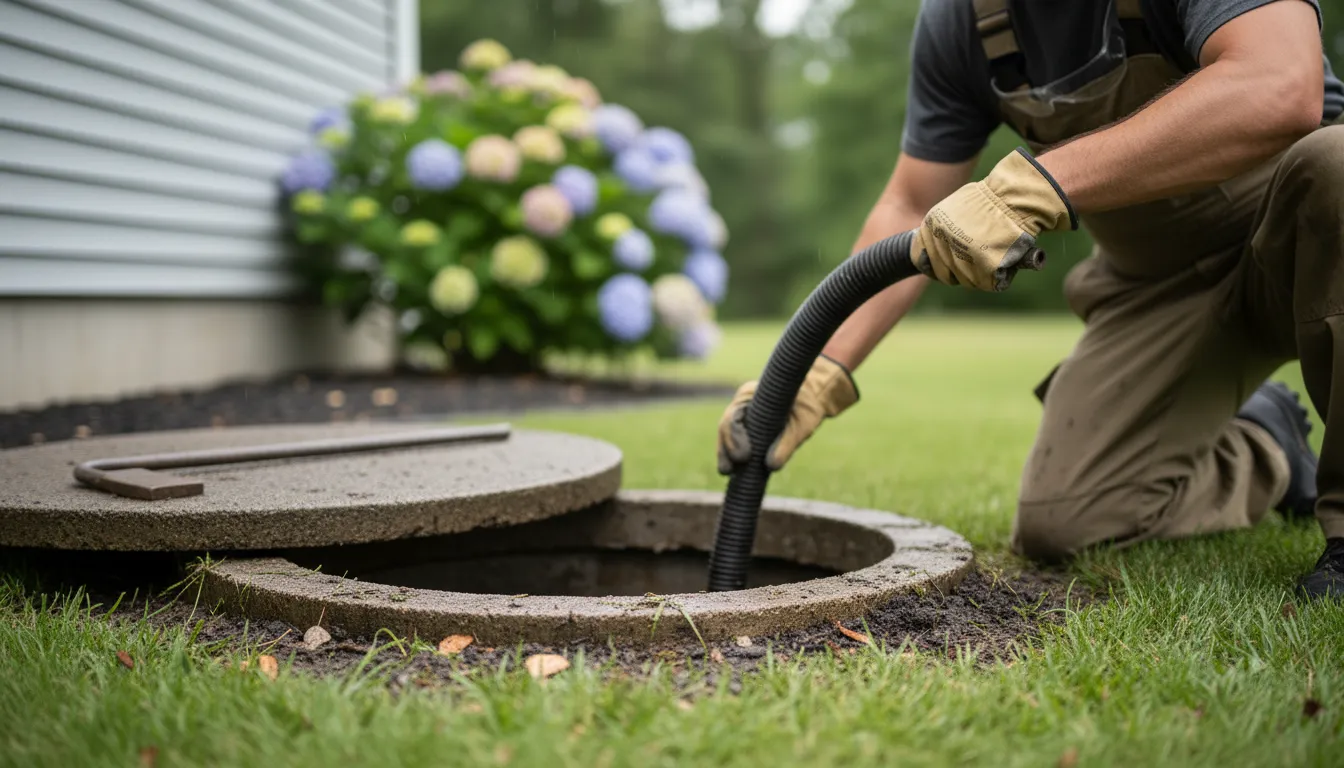
- Agitation and Pumping: A large hose is inserted into the tank. The technician will often agitate the contents to break up solids before using a powerful vacuum truck to pump out all sludge, scum, and liquid.
- Final Inspection & Cleanup: After pumping, the tank interior is inspected for cracks, leaks, or baffle damage. The lids are securely replaced, and the area is cleaned up. The technician will then properly dispose of the waste at an approved treatment facility.
A thorough service should always include an inspection of critical system components to check for leaks and structural integrity.
Find the perfect septic tank pumping contractors for your needs
Get personalized recommendations and expert advice
Cost of Septic Tank Pumping in Whittier
The cost for septic tank pumping can vary based on tank size, accessibility, and the specific provider. For Whittier and the greater Los Angeles area, homeowners can expect an average cost range. Research indicates the average price is approximately $289 to $1,237, with a typical range often falling between $350 and $1,000 4 5 6.
Factors influencing the price include:
- Tank Size and Capacity: Larger tanks cost more to pump.
- Tank Accessibility: Tanks without installed risers that require excavation will incur higher labor costs.
- Condition of Tank: Excessively clogged or problematic tanks may require additional time or equipment.
- Local Regulations: Compliance with Los Angeles County and California Regional Water Quality Control Board requirements is mandatory.
While price is a consideration, the expertise and licensing of the provider are paramount. A properly executed pumping and inspection can identify small issues before they become expensive repairs.
The Critical Role of Professional Inspections
Pumping is just one part of septic system stewardship. Regular inspections are equally vital. It is recommended that systems be inspected at least every 3 years. During an inspection, a professional will:
- Measure the sludge and scum layers to determine if pumping is needed. A common rule is to pump when the sludge layer is within 15 inches of the tank outlet or the scum layer is within 3 inches of the inlet baffle 7 8.
- Check the integrity of the tank, baffles, and pipes for leaks or damage.
- Assess the drain field for signs of failure.
- Ensure the system complies with the California Regional Water Quality Control Board's Onsite Wastewater Treatment Systems (OWTS) Policy 9 10.
These inspections provide peace of mind and form the basis for a proactive maintenance plan, helping you avoid the high cost and hassle of emergency repairs.
Choosing a Licensed Septic Professional in Whittier
For any septic work, hiring a licensed professional is non-negotiable. In Los Angeles County, this ensures the technician has the required training, follows health and safety protocols, and disposes of waste according to environmental regulations 11 12. When evaluating providers, look for:
- Valid State and County Licenses: Verify their contractor's license and any specific septic service certifications.
- Insurance: Ensure they carry liability and workers' compensation insurance.
- Local Experience: Providers familiar with Whittier's soil conditions and local codes can offer better service.
- Detailed Service Reports: A reputable company will provide a written report detailing the work performed, measurements taken, and any recommendations.
- Clear Pricing: Get detailed, written estimates before work begins.
Regular maintenance by a qualified professional is the most effective way to protect your investment, your health, and the local environment.
Maintaining Your System Between Pumpings
You can extend the time between pumpings and protect your system's longevity with good habits:
- Conserve Water: Fix leaks and spread out high-water-use activities.
- Mind What You Flush: Only human waste and toilet paper should go down the toilet. Avoid flushing wipes (even "flushable" ones), feminine hygiene products, diapers, and paper towels.
- Be Careful with Chemicals: Limit the use of harsh drain cleaners, antibacterial soaps, and excessive bleach, which can kill the beneficial bacteria in your tank.
- Protect Your Drain Field: Never park vehicles or build structures over the tank or drain field. Keep roof drains and sump pumps directed away from the area.
Frequently asked questions
Sources
Footnotes
-
How Often Should I Pump Out My Septic Tank? - https://cms2.revize.com/revize/westportma/Documents/Departments/Health/Forms%20And%20Resources/how_often_should_i_pump_out_my_septic_tank_2.pdf?t=202508080914340&t=202508080914340 ↩
-
Septic Systems | Department of Environmental Protection - https://www.pa.gov/agencies/dep/residents/my-water/septic-systems ↩
-
Septic Tank Pumping Frequency: Crucial Maintenance Guide - https://septic911.com/septic-tank-pumping-frequency/ ↩
-
Septic Tank Pumping Frequency Guidelines - https://www.beckertwpsherburnecomn.gov/sites/g/files/vyhlif16406/files/media/services/file/426/septic_tank_pumping_frequency_guidelines.pdf ↩
-
Septic Tank Pumping Cost: Guide & Pricing in 2025 - Splash Plumbing - https://www.splashplumbing.com/how-much-does-it-cost-to-pump-septic-tank-understanding-pricing-and-factors-involved/ ↩
-
Common Septic Tank Repairs In California (& What They Cost) - https://cacciaplumbing.com/blog/common-septic-tank-repairs-in-california/ ↩
-
Pumping & Maintenance Tips - Septic Treatment - https://www.sosonsiteca.net/resources/pumping-maintenance-tips ↩
-
Septic Inspections - https://www.wrenvironmental.com/residential/septic-inspections/ ↩
-
Maintaining your Septic System A Guide for Homeowners - https://www.ihs.gov/california/tasks/sites/default/assets/File/SFC-MaintainingYourSepticSystemGuide.pdf ↩
-
California Septic Tank Requirements | Onsite Wastewater Treatment Systems - https://www.ntotank.com/blog/california-septic-tank-requirements ↩
-
HOW OFTEN SHOULD YOU BE PUMPING YOUR SEPTIC TANK? - https://www.sandiegocounty.gov/content/dam/sdc/dpw/WATERSHED_PROTECTION_PROGRAM/WatershedRebates/SRP/PDF/Chart-Septic-Large.pdf ↩
-
How Often Should My Septic Tank Pumped In California - https://www.lanikseptic.com/how-often-should-my-septic-tank-pumped-in-california/ ↩