Find the Best Drain Field Repair Companies for Your Business
No obligation • Fast responses • Nationwide coverage

Why you can trust Septic Spot
Septic Spot is a leading United States resource for understanding and comparing septic services. Our editors review providers using consistent criteria and verify key business details. Listings and scores are independent, and companies cannot pay to influence our content.
Search providers near you
Top Drain Field Repair Companies in Aliso Viejo, California Ranked
A failing drain field, also known as a leach field or absorption field, is a serious issue for any home with a septic system. It's the final, critical stage where treated wastewater is dispersed into the soil. When it fails, it can lead to sewage backups, soggy yards, and environmental contamination. This guide explains what drain field repair and replacement entails in Aliso Viejo, why local regulations are crucial, and how to find qualified professionals to assess and resolve your system issues.
Aztec Excavation Inc. & Septic
37801 Oxford Dr, Murrieta, CA 92562
Aztec Excavation Inc. & Septic is a licensed sanitation system contractor based near Los Angeles, CA, specializing in septic system installation, repair, and excavation services. Serving Riverside and San Diego counties, the company handles septic tank installation, drain field repair, trench building, lot preparation, and utility line installation. With over a decade of experience, Aztec Excavation offers capabilities such as advanced treatment unit installation and septic system component repairs. The business operates 24/7 to support residential septic and excavation needs in areas including Murrieta, Temecula, and Wildomar.

AMC Contractors
21657 Temescal Canyon Rd, Corona, CA 92883
AMC Contractors is a family-owned septic system contractor serving Los Angeles, CA, and surrounding areas. With over 30 years of experience since 1981, they provide a full range of septic services including installation, repair of leach lines and seepage pits, septic tank pumping, and inspections for real estate transactions or building permits. AMC Contractors combines extensive industry knowledge with the latest technology to address various septic system needs. Their team is available to assist with questions and provide reliable service.
Understanding Your Septic System's Drain Field
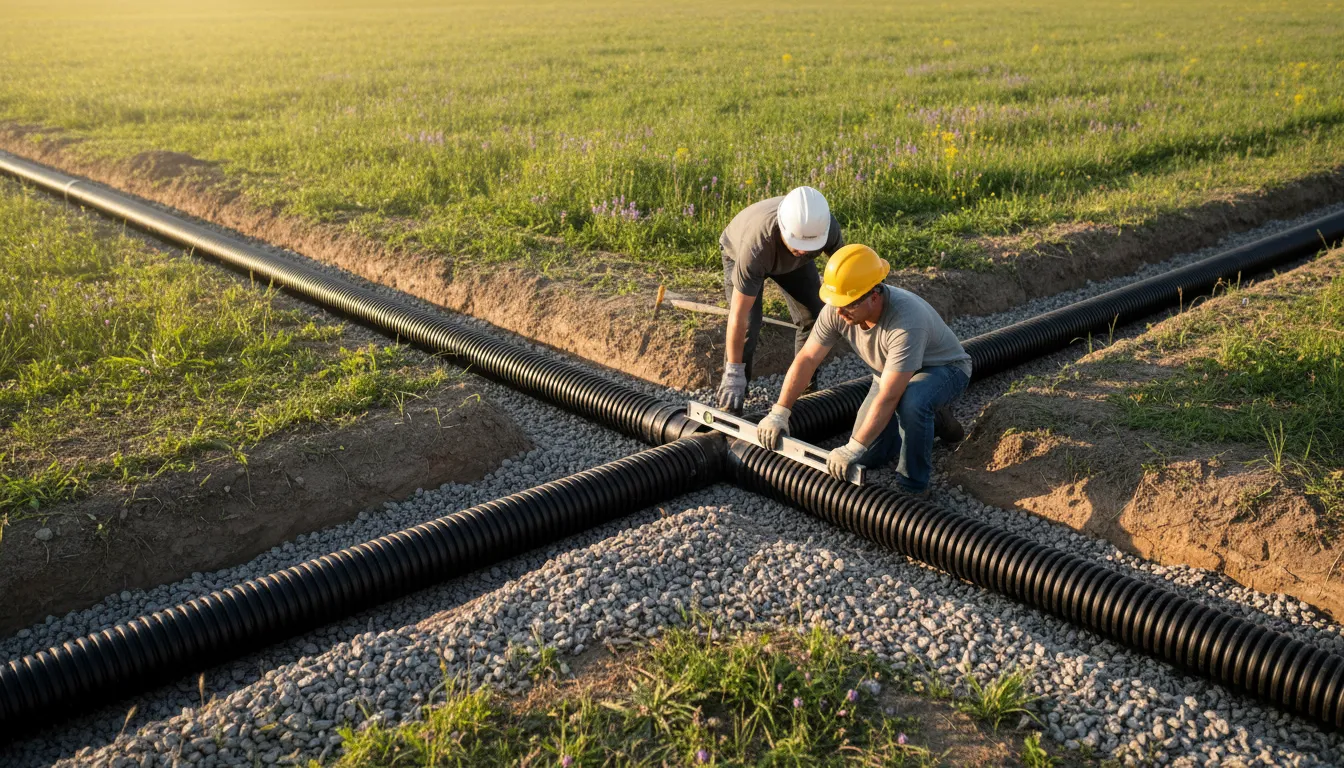
The drain field is the unsung hero of your onsite wastewater treatment system. After solids settle in the septic tank, the liquid effluent flows into a network of perforated pipes buried in trenches filled with gravel. This effluent slowly percolates into the surrounding soil, where natural processes provide final treatment. A functioning leach field is essential for protecting both your property and the local groundwater.
In Aliso Viejo, many homes rely on these private sewage systems. Over time, drain fields can fail due to age, soil compaction, root intrusion, or a buildup of biomat-a layer that forms naturally but can become too thick, preventing proper drainage. Recognizing early signs like slow drains, sewage odors in the yard, or unusually lush, wet patches of grass above the field is key to addressing problems before they become an emergency.
Why Aliso Viejo Regulations are Strict
All work on septic systems in Aliso Viejo falls under the jurisdiction of the Orange County Health Care Agency (OCHCA), Environmental Health division. The state of California and the Regional Water Quality Control Board set stringent standards to prevent groundwater pollution, which Orange County enforces locally 1. This regulatory framework means you cannot simply hire someone to dig up and replace a drain field; every step requires permits and professional oversight.
The primary goal is to safeguard public health and water quality. A malfunctioning absorption field can release pathogens and nitrates into the groundwater, posing a risk to the community. Consequently, the county requires a professional evaluation and a permitted solution for any significant repair or full replacement of the leaching area.
Common Causes of Drain Field Failure
Knowing what leads to a failing leach field can help with prevention and diagnosis.
- Biomat Buildup: A natural, gelatinous layer that forms where effluent meets soil. When it becomes too impermeable, it halts drainage.
- Soil Saturation: This can be caused by excessive water use in the home, poor soil percolation, or a high groundwater table, especially during rainy periods.
- Physical Damage: Crushed pipes from vehicle traffic over the field, or root intrusion from nearby trees and shrubs.
- Lack of Maintenance: Failure to pump the septic tank regularly allows solids to wash out into the drain field, clogging the pipes and soil pores.
- Design Limitations: Older systems may have been designed for a smaller home or different soil conditions than exist today.
The Repair vs. Replacement Decision
Not all drain field problems require a full, costly replacement. A licensed septic contractor must perform a thorough inspection to determine the best course of action.
Potential Repair Options:
- Jet Cleaning: High-pressure water jets can sometimes clear minor blockages in the distribution pipes.
- Biomat Remediation: Specialized treatments can temporarily reduce the biomat layer to restore flow.
- Adding New Trenches: If space allows, expanding the existing leaching area can be a solution.
However, many significant failures, especially those involving surfacing sewage or complete hydraulic failure, necessitate a full replacement 2. The cost for repairs in the area typically ranges from $1,000 to $5,000, while a complete drain field replacement can cost between $5,000 and $15,000 or more 3.
The Drain Field Replacement Process in Aliso Viejo
Replacing a leach field is a multi-step, regulated process. Here's what homeowners can expect:
- Professional Inspection & Evaluation: A licensed contractor assesses the entire system-tank and field-to confirm the failure's cause and extent.
- Percolation Test & Site Evaluation: This is a critical step. A qualified professional performs a soil percolation (perc) test to measure how quickly water absorbs into the soil. In Orange County, suitable soil must have a percolation rate between 1 and 12 inches per hour. This test also determines the depth to groundwater; a minimum 5-foot vertical separation is required between the trench bottom and the highest groundwater level.
- System Design & Permitting: Based on the site evaluation, a new system is designed. This plan must account for key constraints:
- Slope: The maximum allowable slope is 35%. Slopes over 20% require a geotechnical report 4.
- Setbacks: The system must be set back from wells, property lines, and structures.
- Soil: Drain fields generally cannot be placed in imported or "fill" soils. The design is submitted to Orange County Environmental Health for review and permit approval.
- Installation & Final Inspection: Once permitted, a licensed contractor installs the new leaching area. After installation, a county official conducts a final inspection to ensure it meets all code requirements before the system is covered and put into use 5.
Find the perfect drain field repair companies for your needs
Get personalized recommendations and expert advice
Key Local Requirements and Constraints
Navigating the technical requirements is essential for a successful project. Key regulations for Aliso Viejo include:
- Percolation Rate: Soil must pass a perc test, showing an absorption rate of 1 to 12 inches per hour. Clay-heavy soils or sites with a high water table may require an advanced, engineered treatment system instead of a conventional leach field 6.
- Groundwater Separation: A minimum 5-foot vertical separation is mandatory between the bottom of the drain field trenches and the seasonal high groundwater table 7.
- Slope Limitations: The maximum site slope for a conventional system is 35%. Properties with slopes between 20% and 35% face additional scrutiny and reporting requirements 8.
- No Fill Soils: The leaching area must be in native, undisturbed soil. Building it in imported fill dirt is typically not allowed.
Cost Factors for Leach Field Work
The wide price range for drain field replacement reflects several variables:
- Soil and Site Conditions: Difficult soil, a high water table, or a steep slope can significantly increase costs due to the need for more complex engineering.
- System Size: Larger homes require larger drain fields with more trench lines.
- Permitting and Design Fees: These are separate from construction costs and cover the county's review and the professional design work.
- Access: Limited access for heavy machinery can increase labor time and cost.
- Type of System: A conventional trench system is usually less expensive than an advanced aerobic treatment unit (ATU) or mound system, which might be mandated for difficult sites.
A perc test alone can cost between $300 and $3,000, depending on its complexity 9. A routine septic inspection or pumping typically costs between $50 and $250 10 11.
Maintaining a New or Repaired Drain Field
Protecting your investment is crucial. Proper maintenance includes:
- Regular Septic Tank Pumping: Every 3-5 years, depending on usage, to prevent solids from escaping into the field.
- Water Conservation: Spread out laundry loads, fix leaks, and use water-efficient fixtures to avoid hydraulically overloading the soil.
- Protect the Area: Never drive or park over the drain field. Avoid planting trees or deep-rooted shrubs nearby. Keep roof drains and sump pumps directed away from the leaching area.
Frequently asked questions
Sources
Footnotes
-
Chapter 4 Implementation - California Water Boards - https://www.waterboards.ca.gov/sandiego/water_issues/programs/basin_plan/docs/chapter_4.pdf ↩
-
Septic System Regulations in Southern California: What You ... - https://www.lanikseptic.com/socal-septic-regulations/ ↩
-
How Much Does Septic System Repair Really Cost in California - https://www.lanikseptic.com/septic-repair-cost/ ↩
-
Complete Septic System Installation: Process, Permits, And Pitfalls - Septic Tank Man - https://www.theseptictankman.com/blog/complete-septic-system-installation-process-permits-and-pitfalls ↩
-
California Septic Tank Requirements | Onsite Wastewater ... - https://www.ntotank.com/blog/california-septic-tank-requirements ↩
-
What is the best septic system if your land fails a perc test? - https://www.premiertechaqua.com/en-us/blog/best-septic-system-failed-perc-test ↩
-
Florida Septic System Requirements & Drainfield Regulations (2025 Guide) - https://www.acesepticandwaste.com/ace-guide-to-floridas-onsite-septic-system-regulations/ ↩
-
The Californian's Guide To Septic Tanks - https://cacciaplumbing.com/blog/california-septic-tank-guide/ ↩
-
How Much Does a Septic Soil Test Cost in 2026? - Land Perc - https://landperc.com/septic-soil-test-cost/ ↩
-
Septic Tank Replacement and Drain Field Cost in California - https://www.lanikseptic.com/how-much-does-it-cost-to-replace-a-septic-tank-and-drain-field-in-california/ ↩
-
Maintaining your Septic System A Guide for Homeowners - https://www.ihs.gov/california/tasks/sites/default/assets/File/SFC-MaintainingYourSepticSystemGuide.pdf ↩