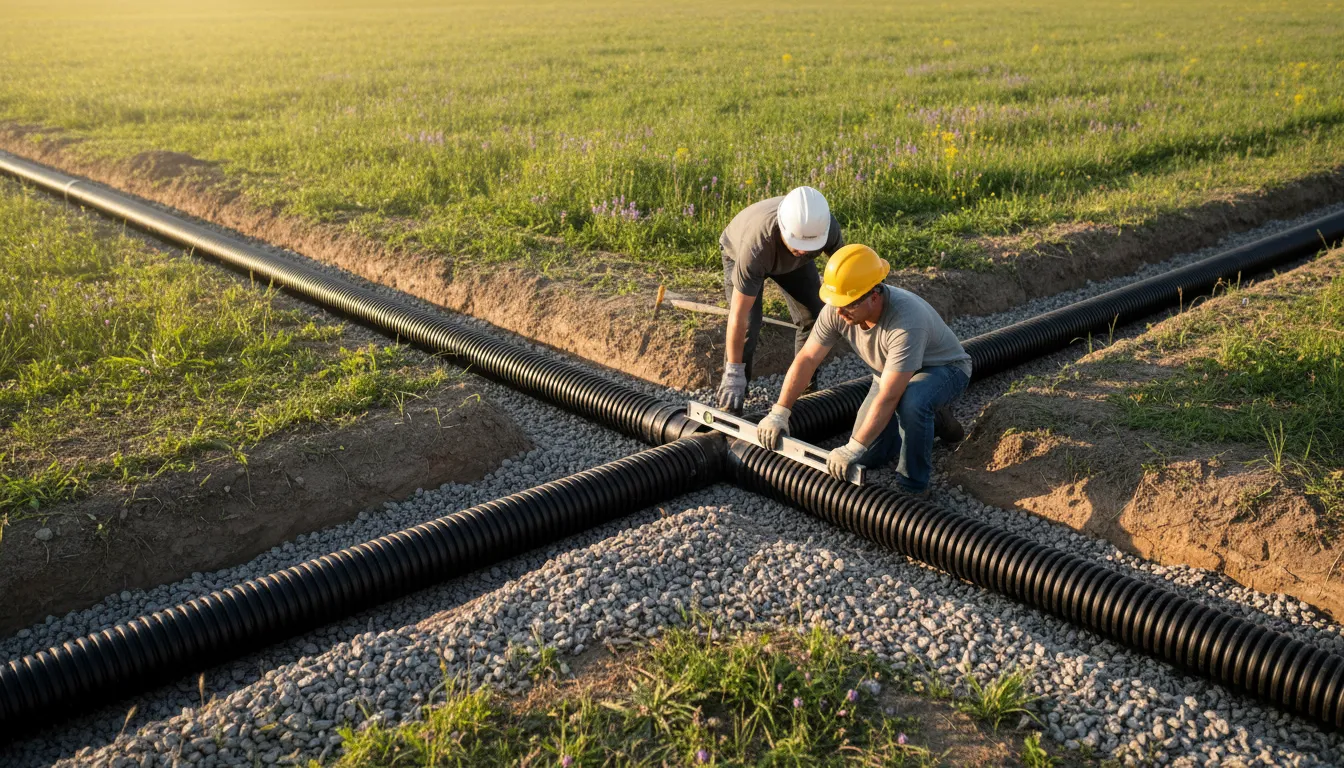
Find the Best Drain Field Repair Companies for Your Business
No obligation • Fast responses • Nationwide coverage

Why you can trust Septic Spot
Septic Spot is a leading United States resource for understanding and comparing septic services. Our editors review providers using consistent criteria and verify key business details. Listings and scores are independent, and companies cannot pay to influence our content.
Search providers near you
Top Drain Field Repair Companies in Irvine, California Ranked
A failing drain field is a serious issue for any Irvine homeowner with a septic system. This critical component, also known as a leach field or absorption field, is responsible for safely filtering and dispersing treated wastewater into the soil. When it malfunctions, it can lead to sewage backups, soggy yards, and environmental contamination. Understanding the local regulations, repair options, and costs is essential for maintaining your property and protecting public health. This guide provides the information you need to navigate the process of drain field restoration in Irvine, from initial diagnosis to final inspection.
Lanik Septic Services
Irvine, CA
Lanik Septic Services is a fourth-generation septic company based in Irvine, CA, offering a wide range of septic services including tank pumping, inspection, repair, installation, and certification. They serve southwest Riverside County and north San Diego County, covering areas such as Anza, Temecula, Murrieta, and Wildomar. The company installs over 200 septic systems annually and performs more than 1,000 system certifications each year. Their experienced team includes a technician with nearly two decades of service who handles hundreds of septic tank pumpings annually. Lanik Septic Services also has an in-house permit processor to expedite installation and repair permits.

AMC Contractors
21657 Temescal Canyon Rd, Corona, CA 92883
AMC Contractors is a family-owned septic system contractor serving Los Angeles, CA, and surrounding areas. With over 30 years of experience since 1981, they provide a full range of septic services including installation, repair of leach lines and seepage pits, septic tank pumping, and inspections for real estate transactions or building permits. AMC Contractors combines extensive industry knowledge with the latest technology to address various septic system needs. Their team is available to assist with questions and provide reliable service.
Understanding Your Septic Drain Field
The drain field is the final stage of your onsite wastewater treatment system. After solids settle in the septic tank, the liquid effluent flows through a network of perforated pipes buried in trenches filled with gravel. This effluent slowly percolates through the soil, where natural processes remove harmful bacteria, viruses, and nutrients before the water reaches groundwater. A healthy leach field is vital for preventing groundwater pollution, which is a significant concern in California's water-conscious environment.
Common signs of a failing absorption field include:
- Persistently soggy or spongy soil over the field area, even in dry weather.
- Sewage odors emanating from the yard.
- Unusually lush, green grass growing over the field.
- Slow-draining household fixtures or sewage backing up into the home.
- Standing water or surfacing effluent.
If you notice any of these symptoms, it's crucial to act quickly to prevent further damage and potential regulatory action.
Irvine and Orange County Regulations You Must Know
Septic system work in Irvine is strictly regulated to protect public health and water quality. All drain field repair or replacement requires permits and must adhere to California's Onsite Wastewater Treatment Systems (OWTS) policy and local amendments 1. The Orange County Health Care Agency (OCHCA) is typically the permitting authority, though the Irvine Ranch Water District (IRWD) may also require inspections for systems that interface with their district.
Key regulatory requirements for a new or repaired leach field in Irvine include:
- Soil Percolation Test: A licensed professional must perform a test to confirm the soil's ability to absorb water. The acceptable rate is typically between 1 and 12 inches per hour.
- Groundwater Separation: There must be at least 5 feet of vertical separation between the bottom of the drain trench and the highest seasonal groundwater level 2.
- Setback Distances: Systems must maintain strict minimum distances from property lines, wells, streams, buildings, and other sensitive sites.
- Slope Restrictions: Properties with slopes exceeding 35% are generally prohibited from using conventional systems, and slopes over 20% often require a geotechnical report 3.
Navigating these regulations is complex. Working with a licensed septic professional who is familiar with Orange County's procedural guidelines is not just recommended-it's necessary for a compliant installation 4.
The Diagnostic Process: From Symptoms to Solution
Before any repair can be planned, a thorough professional inspection is required to diagnose the exact cause of failure. This process typically involves several key steps 5 6:
- System Location & Tank Inspection: The technician will locate the septic tank and distribution box, open inspection ports, and check for structural damage, root intrusion, or blockages.
- Tank Pumping & Measurement: The tank is pumped to assess sludge and scum levels. This also allows the inspector to check for backflow from the drain field into the tank, a clear sign of field failure.
- Soil and Field Assessment: A percolation test is performed to evaluate soil absorption. The drain field area is probed and inspected for signs of saturation, biomat formation (a clogged layer), or broken pipes.
This comprehensive evaluation determines whether the issue can be resolved with a repair or if a full drain field replacement is necessary.
Find the perfect drain field repair companies for your needs
Get personalized recommendations and expert advice
Repair vs. Replacement: Options and Associated Costs
The course of action and cost depend entirely on the diagnosis. Irvine's soil conditions, which can include areas with high clay content or variable water tables, significantly influence both the feasibility of repairs and the final price.
Minor to Major Repairs
If the problem is localized, repairs may be possible.
- Minor Repairs ($250 - $1,500): This includes replacing tank baffles or effluent filters, clearing a blocked distribution line, or sealing minor tank cracks.
- Major Repairs ($1,000 - $4,000): This cost range covers repairing or replacing sections of collapsed drain field piping, installing a new effluent pump, or rehabilitating a portion of the leach field.
Complete Drain Field Replacement
When the soil is permanently saturated or the entire field has failed, replacement is the only option. This is a major construction project.
- Replacement Cost ($6,000 - $15,000+): The wide range depends on the size of the home, soil conditions, accessibility, and the type of system required. In difficult soils, advanced treatment systems (like aerobic treatment units or mound systems) may be needed, which can drive costs toward the higher end or beyond 7 8 9.
- Additional Fees: Remember to budget for permit fees ($200 - $900), soil testing, and potential engineering design fees, which can range from $125 to $200 per hour 10 11.
The Replacement Process: What to Expect
Replacing a leach field is a multi-step process that requires careful planning and execution.
- Permitting and Design: Your contractor will submit a site evaluation and system design to the OCHCA for permit approval. This includes the results of the perc test and a detailed plan.
- Excavation: The old, failed drain field is excavated. In some cases, the old pipes may be left in place, and a new field is constructed in a different area of the property (a "repair area").
- New Field Installation: New perforated pipes are laid in gravel-filled trenches according to the approved design. A distribution box ensures even flow to all pipes.
- Inspection and Backfill: The installed system is inspected by the health agency before the trenches are covered with soil and the landscape is restored.
- System Care: After replacement, proper maintenance-including regular tank pumping and water conservation-is critical to protect your new investment.
Maintaining Your New or Repaired Drain Field
Protecting a drain field is easier and far less expensive than repairing it. Key maintenance tips include:
- Pump Regularly: Have your septic tank pumped every 3-5 years by a licensed professional.
- Conserve Water: Spread out laundry loads, fix leaks, and use high-efficiency fixtures to avoid hydraulically overloading the field.
- Mind What You Flush: Only human waste and toilet paper should go down the drain. Avoid chemicals, grease, wipes, and medications.
- Protect the Area: Never drive or park over the drain field, and avoid planting trees with deep roots nearby.
Frequently asked questions
Sources
Footnotes
-
Southern California Septic System Regulations: What You Need to ... - https://www.lanikseptic.com/socal-septic-regulations/ ↩
-
The Californian's Guide To Septic Tanks - https://cacciaplumbing.com/blog/california-septic-tank-guide/ ↩
-
Septic Systems Reports, Regulations, Guidance, and Manuals - https://www.epa.gov/septic/septic-systems-reports-regulations-guidance-and-manuals ↩
-
Procedural Guidelines and General Design Requirements ... - https://www.irwd.com/assets/files/Development%20Services/Procedural%20Guidelines%20and%20General%20Design%20Requirements%20%20Nov%202011.pdf ↩
-
California Septic Tank Requirements | Onsite Wastewater ... - https://www.ntotank.com/blog/california-septic-tank-requirements ↩
-
Preparing for Septic Tank Inspection: 7 Key Steps - https://septic911.com/preparing-for-septic-tank-inspection/ ↩
-
How Much Does Septic System Repair Really Cost in California - https://www.lanikseptic.com/septic-repair-cost/ ↩
-
Septic Tank Replacement and Drain Field Cost in California - https://www.lanikseptic.com/how-much-does-it-cost-to-replace-a-septic-tank-and-drain-field-in-california/ ↩
-
What is the best septic system if your land fails a perc test? - https://www.premiertechaqua.com/en-us/blog/best-septic-system-failed-perc-test ↩
-
Cost to Replace Septic Tank and Drain Field [2026 Data] | Angi - https://www.angi.com/articles/how-much-new-drain-fields-foot.htm ↩
-
Septic Repair Cost in California: Complete Breakdown of Pricing Factors and Variations - https://www.lanikseptic.com/septic-repair-cost/ ↩