Find the Best Drain Field Repair Companies for Your Business
No obligation • Fast responses • Nationwide coverage

Why you can trust Septic Spot
Septic Spot is a leading United States resource for understanding and comparing septic services. Our editors review providers using consistent criteria and verify key business details. Listings and scores are independent, and companies cannot pay to influence our content.
Search providers near you
Top Drain Field Repair Companies in San Diego, California Ranked
A failing drain field, also known as a leach field or absorption field, is a serious issue for any property with a septic system. This critical component is responsible for safely dispersing and filtering treated wastewater into the soil. When it malfunctions, it can lead to sewage backups, soggy yards, and environmental contamination. In San Diego, addressing drain field problems requires navigating specific local regulations and challenging soil conditions. This guide provides essential information to help you understand the process, costs, and key considerations for leach field repair or replacement in San Diego County.
Dr. Septic
San Diego, CA
Dr. Septic is a septic tank pumping, inspection, and repair company based in San Diego, CA. They provide services including septic tank pumping, certification, and drain field repair or replacement. Known for attention to detail, Dr. Septic handles complex issues such as clogged septic systems and leach field replacements. Customers have noted their thorough approach and willingness to accommodate urgent needs, including weekend work.

Center Septic
San Diego, CA
Center Septic is a family-owned septic service provider based in San Diego, CA, serving North San Diego County including Valley Center and surrounding areas. The company offers septic tank pumping, cleaning, inspections, repairs, new system installations, and drain field diagnosis and repairs. Center Septic holds a C42 license through the California State Contractor License Board and has been operating since 1995, providing a range of septic system services with trained and knowledgeable staff.
USA Septic
1317 Simpson Way Suite B, Escondido, CA 92029
USA Septic is a septic tank pumping, inspection, repair, and installation company serving San Diego, CA. They provide services including septic system construction, pumping, drain cleaning, and certifications. Their expertise covers drain field repair and replacement, helping maintain and protect septic systems. USA Septic offers guidance on septic system ownership to help customers care for their systems properly.
Abbott Septic Service
3833 Linda Vista Dr, San Marcos, CA 92078
Abbott Septic Service is a septic tank company serving Los Angeles, CA, and the surrounding San Diego County area. They provide septic tank pumping, cleaning, repair, installation, and locating services. Abbott Septic Service is a licensed Class A general engineering contractor capable of major septic system construction work, including excavation, grading, trenching, and drain field installation. Established in 1948, the company has decades of experience and offers 24/7 phone availability for septic system needs.
Understanding Your Septic System's Drain Field
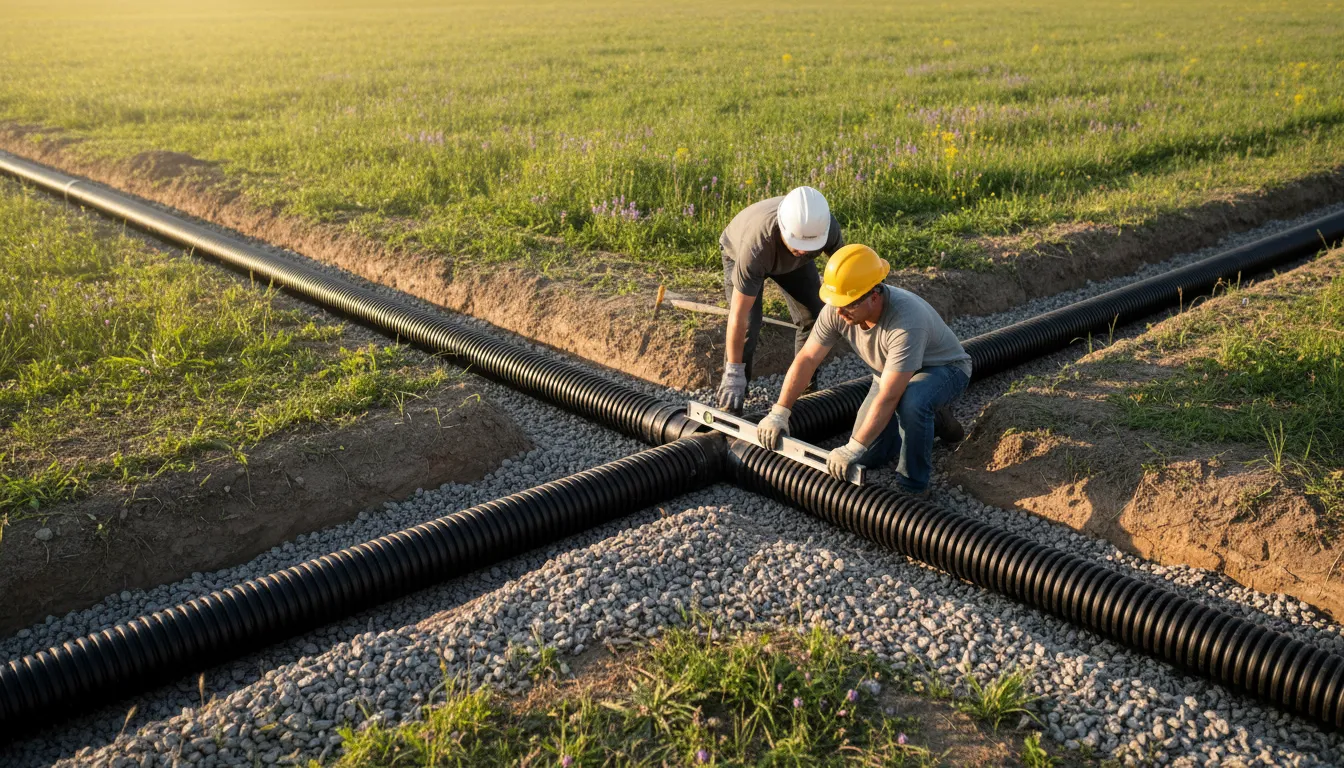
The drain field is the final stage of your onsite wastewater treatment system. After solids settle in the septic tank, the liquid effluent flows into a network of perforated pipes buried in trenches filled with gravel. This effluent slowly percolates into the soil, where natural processes provide final treatment. A failure here means the soil can no longer absorb the water, causing system backups or surfacing wastewater. Common signs of a failing leach field include:
- Sewage odors in the yard or home.
- Slow-draining toilets and sinks.
- Standing water or unusually lush, green grass over the drain field area.
- Gurgling sounds in plumbing fixtures.
San Diego County's Regulatory Landscape
Any work on a septic system in San Diego County is strictly regulated by the Department of Environmental Health and Quality (DEHQ). You cannot begin any repair, modification, or replacement without first obtaining the proper permit from this agency. The permit is valid for one year; if work is not completed within that time, you must apply for a new permit 1.
Key Permit and Design Requirements
- Professional Engineering Plans: For most drain field replacements, especially those on challenging sites, the DEHQ requires professional engineering plans to be submitted for approval. This is not a DIY project.
- Licensed Contractors: Installation must be performed by a contractor holding the appropriate California license, typically a C-36 (plumbing), C-42 (sanitation system), or a Class A or B general engineering contractor.
- Setback Compliance: Your system must adhere to strict minimum distances from wells, water lines, property lines, and structures. These setbacks can significantly impact where a new leach field can be placed on your property 2 3.
- Soil Evaluation: A Certified Soil Percolation Tester must conduct a percolation (perc) test to determine the soil's absorption rate. This test is fundamental to designing a properly sized system.
Navigating San Diego's Unique Site Challenges
The local environment presents specific hurdles for septic system work that influence both design and cost.
- Soil Composition: San Diego often has clay-heavy soils, which have very slow percolation rates. This may require a larger drain field area, specialized excavation techniques, or the installation of an advanced treatment system to adequately treat wastewater before it reaches the soil.
- High Groundwater: Properties, especially those near the coast or in valleys, may have a high water table. Drain fields require a specific separation distance from groundwater to function properly and prevent contamination, which can limit design options 4.
- Sloping Land: If your property has a slope greater than 20%, the site will require a detailed stability analysis to ensure the system and any excavation are secure 5.
- System Sizing: County guidelines mandate a minimum septic tank size of 1,000 gallons for a 1-3 bedroom home, with increases for more bedrooms. Experts often recommend designing with additional capacity for future home expansion.
The Step-by-Step Process for Repair or Replacement
Engaging in a drain field project follows a structured sequence from evaluation to final inspection.
- Site Evaluation: A qualified septic professional assesses your property, the existing system, and the signs of failure. They will identify potential locations for a replacement absorption field.
- Soil Percolation Test: A certified tester performs the official perc test to gather the data required for the system design 6 7.
- Design & Permit Submission: Based on the evaluation and soil data, engineering plans are drawn up. These plans, along with the permit application, are submitted to the DEHQ for review and approval.
- Construction: Once permitted, the licensed contractor executes the work. This involves careful excavation, installation of new distribution lines and gravel, and connection to the existing or new septic tank.
- DEHQ Inspection: A critical step. A DEHQ inspector must visit the site during installation-typically before the new drain field is backfilled-to verify that all work matches the approved plans and meets code 8.
- Final Approval: After passing inspection and completing the work, the contractor will ensure you receive final approval from the county, closing out the permit.
Find the perfect drain field repair companies for your needs
Get personalized recommendations and expert advice
Cost Considerations for Drain Field Work
Costs for septic work in San Diego can vary widely based on system size, site difficulty, and the extent of the problem. It's important to get multiple site-specific estimates from licensed contractors.
- Full System Replacement: Replacing both the septic tank and the entire drain field is a major undertaking. In San Diego County, costs typically range from $8,000 to over $20,000 for a complete system 9.
- Drain Field-Only Work: While sometimes possible, partial leach field repair (like fixing a distribution box or a single line) is less common in San Diego because soil failure often necessitates a full replacement 10. Costs for a new drain field alone would be a significant portion of the full system price.
- Engineering & Testing: Before shovel hits dirt, budget for professional services. Engineering plans and soil testing can add $1,500 to $3,000 to your total project cost 11.
- Septic Tank Component: If your tank also needs replacement, installing a standard 1,000-gallon tank in San Diego can range from approximately $1,630 to $11,475+, with average costs often falling between $4,500 and $6,500 12.
Disclaimer: The costs and requirements outlined are general estimates and guidelines. Individual property conditions in San Diego vary significantly. You must consult with a licensed local septic contractor for a definitive evaluation and quote for your specific situation.
Maintaining Your New Drain Field
Protecting your investment is crucial. Proper maintenance extends the life of your new leach field for decades. Key practices include:
- Regular Pumping: Have your septic tank pumped every 3-5 years by a professional to prevent solids from clogging the drain field.
- Water Conservation: Spread out water use and fix leaks to avoid hydraulically overloading the system.
- Mind What You Flush: Only human waste and toilet paper should go down the drain. Avoid chemicals, grease, and non-biodegradable items.
- Protect the Area: Never drive or park vehicles over the drain field, and avoid planting trees with deep roots nearby.
Frequently asked questions
Sources
Footnotes
-
California Septic Tank Requirements | Onsite Wastewater ... - https://www.ntotank.com/blog/california-septic-tank-requirements ↩
-
Septic Systems - County of San Diego - https://www.sandiegocounty.gov/content/sdc/deh/lwqd/lu_septic_systems.html ↩
-
ordinance no. 10136 (ns) - County of San Diego - https://www.sandiegocounty.gov/content/dam/sdc/pds/ceqa/JVR/AdminRecord/IncorporatedByReference/Section-2-5---Geology--Soils-and-Seismicity-References/County%20of%20San%20Diego%202011d_Ord10136.pdf ↩
-
Septic Installation in San Diego vs Other Regions: Key Differences - https://www.mineobrosseptic.com/news/septic-installation-in-san-diego-vs-other-regions-key-differences/ ↩
-
Septic System Design Criteria - County of San Diego - https://www.sandiegocounty.gov/content/dam/sdc/deh/lwqd/Septic_System_Design_Criteria_3-22-10.pdf ↩
-
The Californian's Guide To Septic Tanks - https://cacciaplumbing.com/blog/california-septic-tank-guide/ ↩
-
standard septic system operation and maintenance plan - https://www.sandiegocounty.gov/content/dam/sdc/deh/lwqd/Standard_Operation_and_Maintenance_Plan_Template_FILLABLE.pdf ↩
-
Septic System Installation and Replacement - Center Septic - https://centerseptic.com/septic-system-installation/ ↩
-
Septic Repair Cost in California: Complete Breakdown of Pricing ... - https://www.lanikseptic.com/septic-repair-cost/ ↩
-
Drain Field Restoration & Installation San Diego County - https://www.mineobrosseptic.com/septic-drain-field-restoration-installation/ ↩
-
What Makes San Diego Septic Tank Replacement Different ... - https://www.mineobrosseptic.com/news/what-makes-san-diego-septic-tank-replacement-different-from-other-locations/ ↩
-
Septic Tank Installation in San Diego, CA - Costs 03 / 2026 - Homeyou - https://www.homeyou.com/ca/septic-tank-installation-san-diego-costs ↩