Find the Best Drain Field Repair Companies for Your Business
No obligation • Fast responses • Nationwide coverage

Why you can trust Septic Spot
Septic Spot is a leading United States resource for understanding and comparing septic services. Our editors review providers using consistent criteria and verify key business details. Listings and scores are independent, and companies cannot pay to influence our content.
Search providers near you
Top Drain Field Repair Companies in Fairfield, California Ranked
A failing septic system drain field is a serious issue that requires prompt, professional attention. In Fairfield, Connecticut, repairing or replacing a leach field is a regulated process overseen by local health authorities to protect public health and the environment. This guide explains the local requirements, the step-by-step process for septic system restoration, and how to connect with qualified, licensed professionals in the Fairfield area who can assess your situation and ensure the work meets all state and town codes.
Understanding Your Septic System's Drain Field
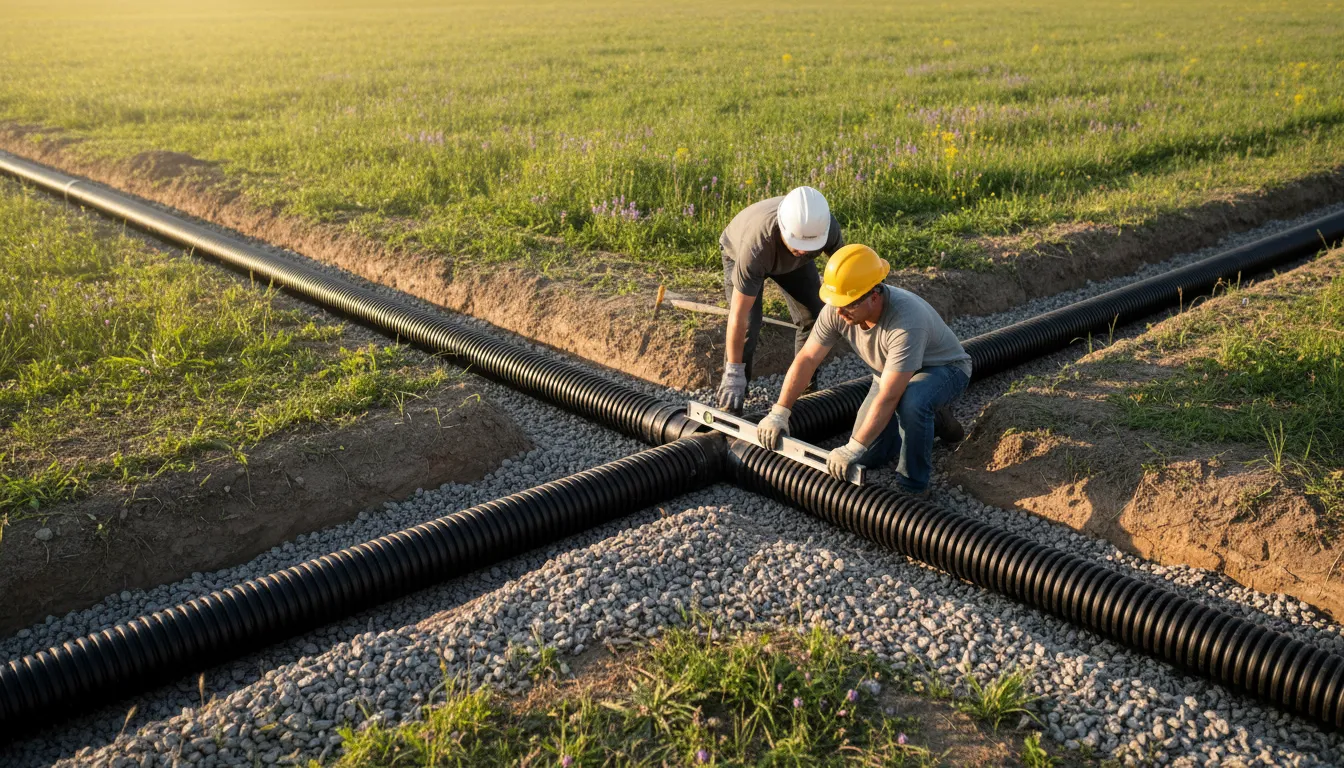
The drain field, also known as a leach field or absorption area, is the final and most critical stage of a residential wastewater treatment system. After solids settle in the septic tank, the liquid effluent flows into a network of perforated pipes buried in trenches filled with gravel. This effluent slowly percolates down through the soil, where natural processes filter and treat it before it rejoins the groundwater. When this area fails, untreated sewage can surface, creating health hazards and environmental contamination. Recognizing the signs of a failing leaching system early can save significant time and expense.
Fairfield's Regulatory Landscape for Septic Work
All repair and replacement work on residential septic systems in Fairfield is governed by the Fairfield Health Department (FDH), which enforces the Connecticut Public Health Code (PHC) and its Technical Standards 1. The FDH has jurisdiction over systems with a design flow of 7,500 gallons per day or less, which covers virtually all single-family homes. A key rule is that any failure, such as surfacing sewage, mandates a professional assessment and compliance with permitting and inspection protocols before any backfilling occurs 2. Crucially, only installers who are licensed and registered with the Fairfield Health Department are legally permitted to perform this work.
The Permit Process
Before any shovel hits the ground, you must secure a "Permit to Construct" from the FDH for any repair, alteration, or replacement of a drain field 3 4. The process typically begins with a site evaluation and soil testing. An engineer then submits a system plan to the FDH for an "Approval to Construct". Permit fees can range from approximately $450 to $2,000, depending on the project's scope and complexity.
The Importance of a Reserve Area
Connecticut law requires that a property with a septic system must have a designated, code-complying reserve area for a future leaching system 5. If your primary drain field fails, you cannot simply repair it in the same spot if the soil is spent. You must have a suitable reserve area available. If one doesn't exist, soil testing (like deep test pits and percolation tests) will be required to determine if a portion of your property can be designated as this backup area.
Signs You May Need Drain Field Repairs
Identifying a failing absorption field early is critical. Common indicators include:
- Soggy Ground or Surfacing Effluent: The most obvious sign is persistently wet, spongy, or foul-smelling ground over the drain field area, especially when it hasn't rained.
- Slow Drains and Sewage Backups: If drains throughout your home are gurgling or backing up, and your septic tank has recently been pumped, the problem likely lies in the distribution box or the drain field itself.
- Unusually Lush Grass: While sometimes a sign of fertilizer, patches of grass that are significantly greener and grow faster over the leach field can indicate a nutrient overload from surfacing effluent.
- Nitrate Contamination in Wells: Regular well water testing that shows elevated nitrate levels can be a sign of septic system failure and groundwater contamination 6.
Find the perfect drain field repair companies for your needs
Get personalized recommendations and expert advice
The Step-by-Step Process for Repair or Replacement
Addressing a failed septic system is a multi-stage process involving several professionals.
1. Professional Inspection and Diagnosis
The first step is always a thorough inspection by a licensed professional. They will locate all system components (using old maps or tracer dye), uncover the septic tank and distribution box, and assess their condition 7. They will look for tank cracks, failing baffles, and use a camera to check for blockages in the distribution lines 8. This inspection determines if the issue is a simple clog, a failed component, or a complete drain field failure.
2. Soil Evaluation and System Design
If a full replacement is necessary, the next phase involves detailed soil science. A soil scientist and professional engineer must perform deep test pits to evaluate the soil profile and percolation tests ("perc tests") to measure the soil's water absorption rate 9 10 11. These tests, which cost around $1,300 on average, determine the soil's suitability and dictate the design of the new leaching system. The design must account for critical factors like maintaining at least 18 inches of separation between the bottom of the leach field and the seasonal high groundwater table 12. It must also conform to strict setbacks from wells (often 75-100 feet), property lines, and watercourses 10.
3. Permitting, Installation, and Final Approval
With a design in hand, your engineer submits the plan to the FDH for the necessary permits. Once approved, your licensed installer will excavate and install the new drain field. After installation but before backfilling, a Registered Sanitarian from the Fairfield Health Department must perform a final inspection. Only after they approve the work can the system be covered. Finally, an "as-built" drawing of the new system must be filed to receive a "Permit to Discharge," officially closing the project 13.
Costs Associated with Drain Field Work in Fairfield
Costs can vary widely based on soil conditions, property layout, system type, and local regulations. However, some average figures provide a baseline:
- Soil Percolation Testing: Approximately $1,300.
- Permit Fees: Typically between $450 and $2,000.
- Complete Drain Field Replacement: The average cost is around $7,000, but complex projects with poor soil, limited space, or the need for advanced treatment systems can cost $15,000 to $30,000 or more 14.
Important Update: Be aware that the Connecticut Department of Public Health is planning to update its Technical Standards for subsurface sewage disposal on July 1, 2026. These changes may affect design requirements for new systems installed after that date.
Maintaining Your New or Repaired System
Protecting your investment is key. Proper operation and maintenance include:
- Regular Pumping: Have your septic tank pumped every 3-5 years by a licensed professional.
- Water Conservation: Spread out laundry loads and fix leaky fixtures to avoid hydraulically overloading the drain field.
- Mind What You Flush: Never flush chemicals, grease, diapers, wipes (even "flushable" ones), or other non-biodegradable items.
- Protect the Area: Never drive or park vehicles over the drain field, and avoid planting trees with deep roots nearby.
Frequently asked questions
Sources
Footnotes
-
State of Connecticut Regulation of Department of Public Health ... - https://eregulations.ct.gov/eRegsPortal/Search/getDocument?guid=%7B70603D95-0000-C454-B302-90D8CF431A50%7D ↩
-
Septic System Condition and House Sales - Madison, CT - https://www.madisonct.org/1206/Septic-System-Condition-and-House-Sales ↩
-
Sewage Treatment Systems | Fairfield County Health ... - https://www.fairfieldhealth.org/Environmental-Division/FDH-Household-Sewage-Treatment-Systems.html ↩
-
Environmental Engineering - Subsurface Sewage - CT.gov - https://portal.ct.gov/dph/environmental-health/environmental-engineering/environmental-engineering----subsurface-sewage ↩
-
CONNECTICUT PUBLIC HEALTH CODE On-site Sewage Disposal ... - https://portal.ct.gov/-/media/Departments-and-Agencies/DPH/dph/environmental_health/environmental_engineering/2023-uploads/TS-Master-2023-1242023A.pdf ↩
-
Operation and Maintenance - CT.gov - https://portal.ct.gov/dph/environmental-health/environmental-engineering/operation-and-maintenance ↩
-
Septic Inspection | Connecticut - https://sherwoodinspection.com/septic-inspection/ ↩
-
SUPPLEMENT EXISTING SEPTIC SYSTEM INSPECTION REPORT - https://portal.ct.gov/dph/-/media/departments-and-agencies/dph/dph/environmental_health/environmental_engineering/pdf/supplementpdf.pdf?rev=de19ca52ec45499aa7352711c1e504bf&hash=0E519F09C29CDB915E825AA57D2F9833 ↩
-
Septic Inspection Process: What Homeowners Should Know ... - https://www.lunspro.com/vlog/the-septic-system-inspection-process-what-homeowners-should-know ↩
-
Septic System Design: What CT Homeowners Need to Know - https://andersonseptic.com/septic-system-design-guide/ ↩ ↩2
-
Septic Developers - North Central Distict Health Department - https://www.ncdhd.org/septic-developers ↩
-
Connecticut Department of Public Health - CT.gov - https://portal.ct.gov/-/media/Departments-and-Agencies/DPH/dph/environmental_health/environmental_engineering/pdf/071116EEPMLSSTraining2016pdf.pdf ↩
-
Sewage Treatment Systems | Fairfield County Health ... - https://www.fairfieldhealth.org/Environmental-Division/FDH-Household-Sewage-Treatment-Systems.html ↩
-
Cost to Replace Septic Tank and Drain Field [2026 Data] | Angi - https://www.angi.com/articles/how-much-new-drain-fields-foot.htm ↩