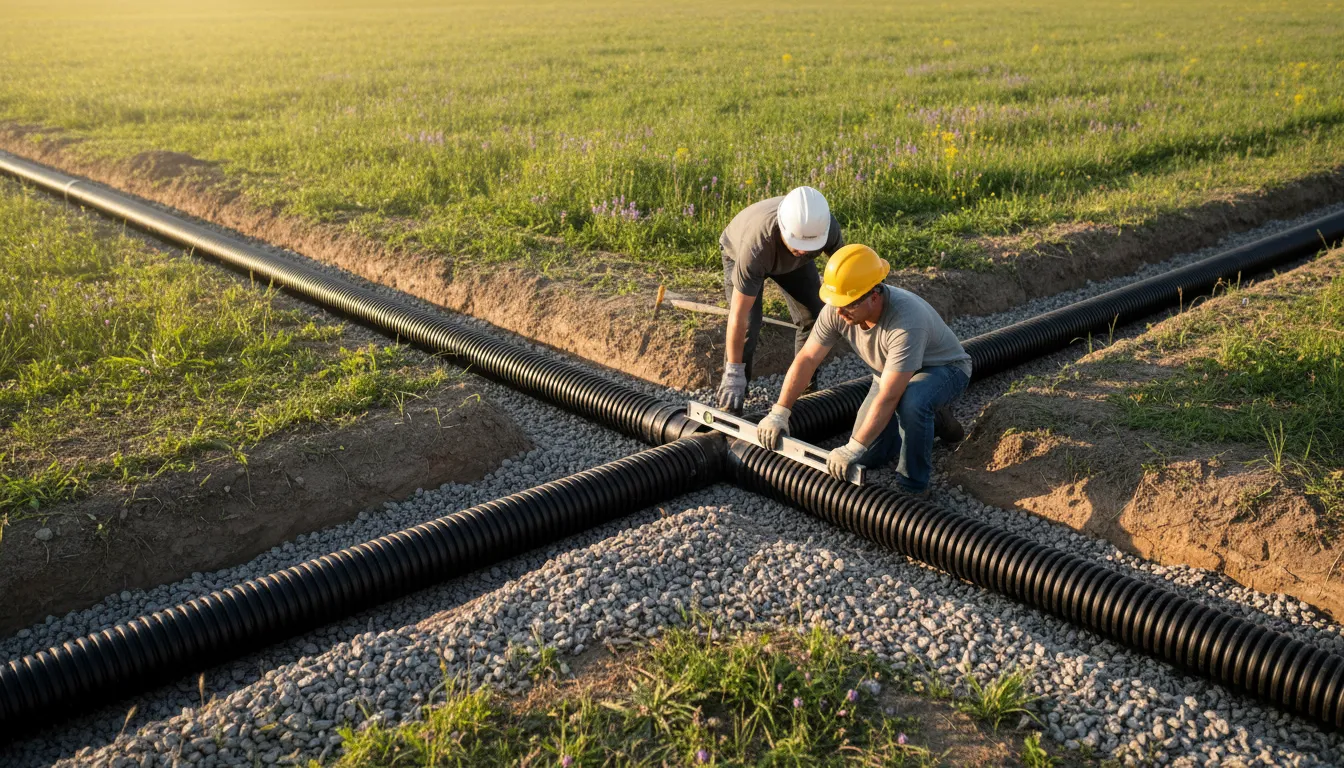
Find the Best Drain Field Repair Companies for Your Business
No obligation • Fast responses • Nationwide coverage

Why you can trust Septic Spot
Septic Spot is a leading United States resource for understanding and comparing septic services. Our editors review providers using consistent criteria and verify key business details. Listings and scores are independent, and companies cannot pay to influence our content.
Search providers near you
Top Drain Field Repair Companies in Azusa, California Ranked
A failing septic drain field is a serious issue that can lead to sewage backups, soggy lawns, and environmental contamination. Drain field repair or replacement is a major project that requires navigating strict local regulations and complex site engineering. This guide explains the process, costs, and key considerations for homeowners in Azusa, helping you understand what to expect and how to find qualified local professionals for your leach field or soil absorption system needs.
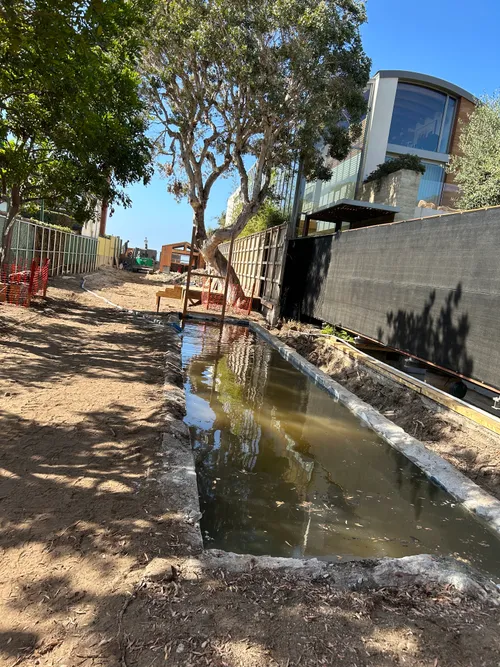
Understanding Your Azusa Drain Field
The drain field, also known as a leach field or soil absorption system, is the final and most critical stage of your onsite wastewater treatment. After solids settle in the septic tank, liquid effluent flows into a network of perforated pipes buried in gravel-filled trenches. This effluent slowly percolates through the soil, where natural processes provide final treatment before it rejoins the groundwater.
In Azusa, these systems are governed by regulations from the Los Angeles County Department of Public Health and the California Regional Water Quality Control Board. These rules are designed to protect public health and local water quality, especially given the varied terrain and geology of the area. A system failure isn't just an inconvenience; it's a violation that requires immediate attention from a licensed specialist.
Signs You Need Drain Field Service
Recognizing early warning signs can prevent a minor issue from becoming a catastrophic failure. Look for these indicators:
- Soggy Ground or Surfacing Effluent: Persistent wet, spongy, or foul-smelling areas over the drain field, especially when it hasn't rained.
- Slow Drains and Backups: Gurgling pipes, slow-draining sinks and toilets, or sewage backups in the home.
- Unusually Green Grass: Patches of grass over the drain field that are much lusher and greener than the rest of the lawn.
- Presence of Sewage Odors: Noticeable odors near the septic tank or drain field area.
If you observe any of these signs, contact a licensed septic contractor for an inspection. Ignoring them will lead to more extensive and costly damage.
The Azusa Permit and Planning Process
Any significant repair or full replacement of a drain field in Azusa requires permits. This process ensures the work meets all health and environmental standards.
- Site Evaluation and Soil Testing: This is the mandatory first step. A qualified professional must conduct a comprehensive site evaluation. This includes a soil percolation test (or "perc test") to determine the soil's absorption rate, which must fall between 5 and 60 minutes per inch for a conventional system. The evaluation also assesses slope, depth to groundwater, and depth to bedrock. Los Angeles County requires a minimum of 5 feet of suitable soil between the bottom of the drain field trenches and the seasonal high groundwater table or bedrock 1.
- Design Plan Submission: A licensed engineer or C-42 licensed septic contractor will create a detailed design plan based on the site evaluation 2. This plan must account for strict setbacks from property lines, wells, structures, and waterways. Crucially, the county generally requires a designated 100% replacement area-an undisturbed space equal in size to the new drain field-to be reserved for future repairs 3.
- Permit Application: The design plan is submitted to the Los Angeles County Department of Public Health (or local building authority) for review and approval. Permit fees typically range from $200 to $600, though this can vary.
- Final Inspection: Once installation is complete but before the trenches are backfilled, a county inspector must approve the work.
Key Installation and Site Requirements
Azusa's landscape can present challenges. Your system design must account for the following:
- Soil Type: Only suitable soils like loam, sandy loam, or silty loam are approved for conventional drain fields 4.
- Slope: Properties with slopes greater than 30% often require special engineering, such as a mound system or stepped trenches, to prevent effluent from surfacing downhill 5.
- Space: You must have adequate space not only for the new drain field but also for the legally mandated 100% replacement area. This can be a significant constraint on smaller lots.
The Repair and Replacement Process
The scope of work depends entirely on the diagnosis. A contractor might recommend a partial repair or a full replacement.
- Minor Repairs: Addressing a single clogged line or a localized failure may involve jetting the pipes or excavating and replacing a small section. Costs for this can range from $3,000 to $10,000.
- Full Replacement: This is a major excavation project. The old drain field is decommissioned, and a new one is built in the designated replacement area. The process involves:
- Excavating trenches to precise specifications.
- Laying a gravel bed and new perforated distribution pipes.
- Connecting the new field to the septic tank via a distribution box.
- Covering the system with soil and restoring the landscape.
Find the perfect drain field repair companies for your needs
Get personalized recommendations and expert advice
Cost Factors for Drain Field Work in Azusa
The cost for drain field work is highly variable and site-specific. The figures below are estimates to help you budget.
- Soil Evaluation & Permit Fees: The initial site evaluation and perc test can cost between $280 and $500 or more. Permit fees add another $200-$600 to the project 6 7.
- Drain Field Repair: For localized issues, repairs typically fall between $3,000 and $10,000.
- Complete Drain Field Replacement: This is the most significant expense, generally ranging from $5,000 to over $20,000 8 9. The final price is driven by:
- Size of the System: Determined by the home's bedroom count and soil percolation rate.
- Site Accessibility: Difficult access for heavy machinery increases labor costs.
- Soil Conditions and Slope: Poor soil or steep slopes requiring engineered solutions (like a mound system) can double or triple the cost.
- Extent of Excavation: Rocky soil or the need for deep trenches increases excavation time and expense.
- Landscaping Restoration: Reseeding lawns, replanting, or repairing hardscapes after excavation.
Always get detailed, written estimates from multiple licensed contractors that break down all costs, including permits, engineering, materials, labor, and restoration.
Choosing a Licensed Professional in Azusa
This is not a DIY project. California law requires that septic system construction, repair, and alteration be performed by a contractor holding a C-42 (Sanitation System) license. Here's how to vet potential contractors:
- Verify License: Confirm their C-42 license is active and in good standing with the California Contractors State License Board (CSLB).
- Check Experience: Ask for references from recent projects in the Azusa or San Gabriel Valley area and, if possible, visit a completed site.
- Review the Plan: A reputable contractor will provide a clear, detailed plan and explain the permit process, timeline, and all associated costs.
- Get Everything in Writing: The contract should specify all work to be done, materials used, total cost, payment schedule, and warranty information.
Maintaining Your New or Repaired System
Protect your investment with proper care. Pump your septic tank every 3-5 years to prevent solids from clogging the drain field. Avoid pouring grease, chemicals, or non-biodegradable items down the drain. Most importantly, never drive, build, or plant trees and deep-rooted shrubs over the drain field. The roots can infiltrate and destroy the pipes, leading to another costly failure.
Frequently asked questions
Sources
Footnotes
-
California Septic Tank Requirements | Onsite Wastewater ... - https://www.ntotank.com/blog/california-septic-tank-requirements ↩
-
What Is a C-42 Licensed Septic Tank Contractor? (California Homeowner Guide) - https://www.lanikseptic.com/what-is-a-c42-licensed-septic-tank-contractor/ ↩
-
Chapter 13.08 - SEWAGE DISPOSAL SYSTEM REGULATION | ... - https://library.municode.com/ca/scotts_valley/codes/code_of_ordinances?nodeId=TIT13PUSE_CH13.08SEDISYRE ↩
-
Septic Systems Reports, Regulations, Guidance, and Manuals - https://www.epa.gov/septic/septic-systems-reports-regulations-guidance-and-manuals ↩
-
Construction Guide for On-Site Sewage Disposal Systems - https://monohealth.com/sites/default/files/fileattachments/environmental_health/page/29328/constr_guide_conv08-2.pdf ↩
-
Maintaining your Septic System A Guide for Homeowners - https://www.ihs.gov/california/tasks/sites/default/assets/File/SFC-MaintainingYourSepticSystemGuide.pdf ↩
-
Septic | Colusa County, CA - Official Website - https://www.countyofcolusaca.gov/730/Septic ↩
-
How Much Does a Septic Tank or Leach Field Replacement Cost? - https://www.elocal.com/resources/home-improvement/plumbing/cost-guide/leach-field-replacement-cost/ ↩
-
Leach Field Replacement: Cost Breakdown - Aqua Pro Solutions - https://www.aquaprosolutions.com/resources/leach-field-replacement-cost-breakdown/ ↩