Find the Best Drain Field Repair Companies for Your Business
No obligation • Fast responses • Nationwide coverage

Why you can trust Septic Spot
Septic Spot is a leading United States resource for understanding and comparing septic services. Our editors review providers using consistent criteria and verify key business details. Listings and scores are independent, and companies cannot pay to influence our content.
Search providers near you
Top Drain Field Repair Companies in Bellflower, California Ranked
A failing septic drain field is a serious issue that can lead to sewage backups, foul odors, and environmental contamination. Drain field repair or replacement is a critical service to restore your home's wastewater treatment system to safe, working order. This guide explains the process, local regulations, and costs for Bellflower homeowners, helping you understand what to expect and how to connect with qualified local professionals for an assessment.
Septic Tank Pumping Guys
6360 Van Nuys Blvd ste 113, Van Nuys, CA 91401
Septic Tank Pumping Guys provides a full range of septic services in Los Angeles, CA, including pumping, inspections, repairs, and installations for residential and commercial properties. They offer 24/7 emergency septic services and specialize in maintaining system health through regular pump-outs, cleaning, and drain field repairs. Their capabilities include septic tank installation, effluent filter replacement, and grease trap pumping. The company is family owned and operated, serving multiple communities within Los Angeles County.
Septic Tank Pumping USA
1367 Foothill Blvd, La Cañada Flintridge, CA 91011
Septic Tank Pumping USA provides septic tank pumping, inspection, and repair services in Los Angeles, CA. They handle routine maintenance and emergency repairs, including drain field repair or replacement. The company emphasizes regular pumping every 3-5 years to prevent system failures and environmental risks. They also offer thorough inspections to assess tank and drain field conditions. Septic Tank Pumping USA serves the local area with expertise in managing septic system health and compliance with local regulations.
Understanding Your Septic System's Leach Field
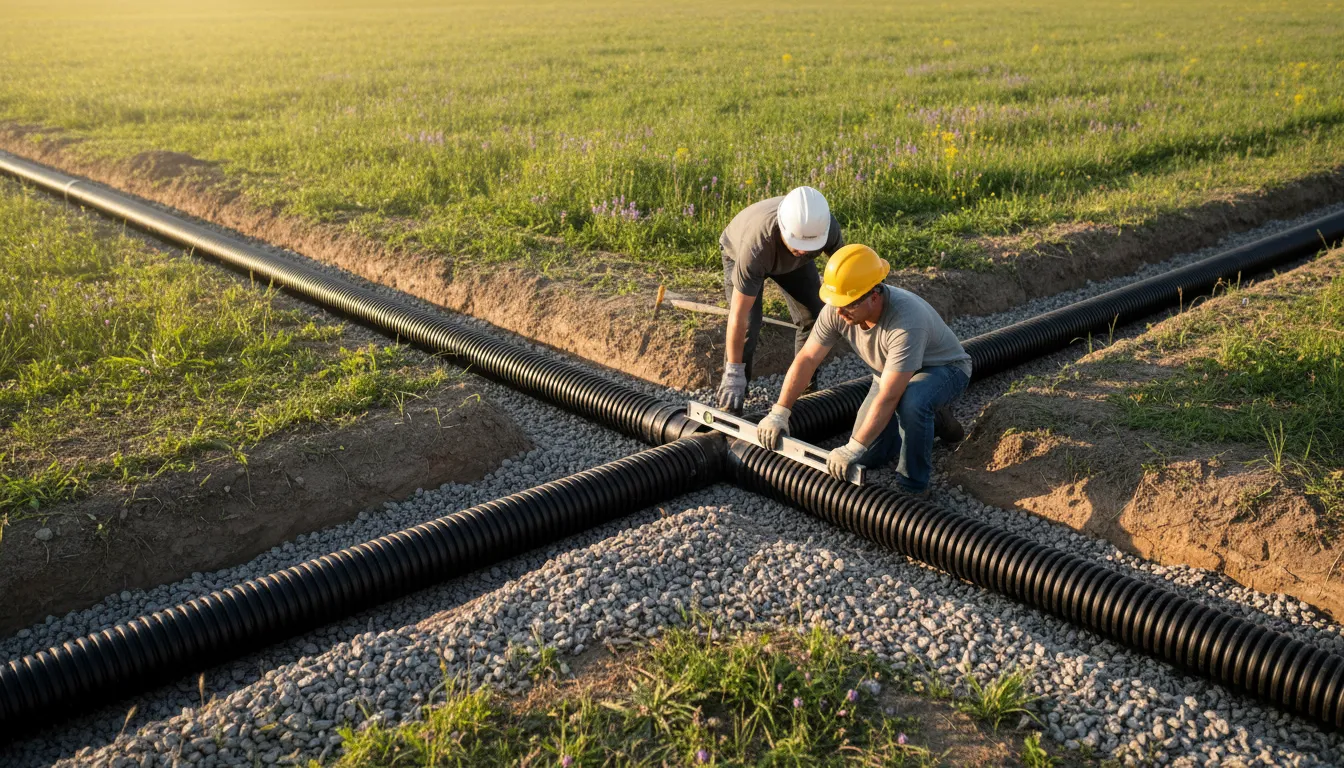
Often called a leach field or absorption field, the drain field is the final and most crucial stage of a septic system. After solids settle in the tank, liquid effluent flows into a network of perforated pipes buried in trenches filled with gravel. This effluent slowly percolates down through the soil, where natural processes filter and purify it before it rejoins the groundwater. When this area fails, the entire system stops working properly. Common signs of leach field failure include soggy ground or standing water over the field, sewage odors, unusually lush grass over the drain lines, and slow-draining fixtures throughout your home 1.
Bellflower's Regulatory Landscape: Permits and Standards
All septic system work in Bellflower falls under the jurisdiction of Los Angeles County and must adhere to standards set by the California Regional Water Quality Control Board, specifically the Santa Ana region 2. These regulations are part of a Local Agency Management Program (LAMP) designed to protect water quality. You cannot simply dig up and replace a drain field; a qualified professional must manage a multi-step permitting process. This ensures any new or repaired system meets current environmental and public health standards, which are often more stringent than when older systems were installed.
The permit process typically requires a site evaluation, detailed design plans, and payment of associated fees before any construction begins. The county will conduct a final inspection before the new system is covered, making professional guidance essential 3.
The Site Evaluation: Soil, Slope, and Setbacks
The feasibility and design of your new drain field are entirely dependent on your property's specific conditions. A professional begins with a comprehensive site evaluation, which includes several critical assessments:
- Soil Percolation Test: This test measures how quickly water absorbs into your soil, known as the percolation rate. For a conventional system in California, soil must percolate between 1 and 12 inches per hour. Rates outside this range will require an engineered alternative system.
- Groundwater Depth: A minimum of 5 feet of vertical separation is required between the bottom of the drain trench and the highest seasonal groundwater level. A high water table can limit options and increase costs.
- Soil Composition: Heavy clay soils absorb water poorly, while sandy soils may drain too quickly. Sites with high rock content or impermeable layers may need specialized designs.
- Slope: The maximum slope for a conventional drain field is 35%. Slopes exceeding 20% generally require a detailed geotechnical report.
- Setback Distances: Current codes mandate specific distances from property lines, wells, waterways, and structures. For example, systems often must be 100 feet or more from wells and waterways 4. Your existing system may not meet these updated setbacks, which can complicate a like-for-like replacement.
The Process of Drain Field Repair or Replacement
Once a site evaluation is complete, your contractor will outline a clear process. While every job is unique, most follow these general steps:
- Comprehensive Inspection: A technician will inspect the entire system, including the septic tank and distribution box, to confirm the drain field is the source of failure and to check the condition of other components 5.
- Design and Engineering: Based on the site evaluation, an engineered plan is created. This specifies the type, size, and layout of the new leach field. For challenging sites, this may involve designs for mound systems, drip irrigation fields, or other advanced treatment technologies.
- Permit Submission: The engineered plans are submitted to Los Angeles County for review and approval. This step includes paying all required permit and plan check fees.
- Construction: The old drain field area is carefully excavated. The new system is installed, which may involve laying new perforated pipe in gravel-filled trenches or installing modern plastic leaching chambers. In some repair scenarios, only a portion of the field may need to be replaced or rehabilitated.
- Final Inspection and Backfill: A county inspector must approve the installation before the trenches are covered with soil. Once approved, the area is backfilled and can be landscaped.
Find the perfect drain field repair companies for your needs
Get personalized recommendations and expert advice
Cost Factors for Leach Field Work in Bellflower
The cost for drain field work is highly variable, but understanding the key factors can help you interpret estimates. A complete conventional drain field replacement in Bellflower typically ranges from $5,000 to over $20,000 6. Several elements drive this cost:
- System Size and Design: Larger homes requiring larger drain fields cost more. Engineered alternative systems (like mounds or drip systems) are significantly more expensive than conventional gravel-and-pipe fields.
- Soil and Site Conditions: Poor percolation, high groundwater, rocky soil, or steep slopes add engineering complexity and construction cost.
- Access and Excavation: Difficult site access for heavy machinery can increase labor time. The need to remove old septic tank components or existing leach field material also adds to the cost.
- Permits and Fees: Budget an additional $500 to $2,000 for required county permits, plan checks, and inspection fees 7.
- Related Repairs: Often, a failing drain field has stressed other components. You may also need septic tank repairs ($1,000-$5,000) or a new distribution box, which will be separate line items in a quote 8 9.
Maintaining Your New Drain Field
Protecting your investment is key. Proper maintenance extends the life of your new leach field dramatically. Practice water conservation to avoid overloading the system, avoid pouring grease or harsh chemicals down drains, and never drive or park vehicles over the drain field area. Have your septic tank pumped regularly (every 3-5 years, typically) to prevent solids from escaping into and clogging the new field. A well-maintained conventional drain field can last 20 to 30 years or more.
Choosing a Professional in Bellflower
Given the technical and regulatory complexity, selecting the right contractor is paramount. Look for a licensed, insured professional with extensive experience specifically in septic systems and a strong familiarity with Los Angeles County and Santa Ana Regional Water Board requirements. They should be willing to conduct a thorough site evaluation, explain all permit responsibilities, and provide a detailed, written estimate that breaks down design, permitting, construction, and material costs. A reputable provider will guide you through the entire process from diagnosis to final inspection.
Frequently asked questions
Sources
Footnotes
-
Leach Field 101: The Ultimate Guide to Understanding and Managing Your Septic System - https://www.nexgenseptics.com/leach-field-101-the-ultimate-guide-to-understanding-and-managing-your-septic-system/ ↩
-
Order No. R8-2024-0001 Santa Ana Regional MS4 Permit - https://www.waterboards.ca.gov/santaana/board_info/agendas/2024/3-15-2024/item_10_ms4_permit_r8-2024-0001.pdf ↩
-
California Septic Tank Requirements | Onsite Wastewater ... - https://www.ntotank.com/blog/california-septic-tank-requirements ↩
-
Untitled - California State Water Resources Control Board - https://www.waterboards.ca.gov/rwqcb6/water_issues/programs/owts/docs/lamp_tracking/applevalley_draft_lampII.pdf ↩
-
Septic System Inspections: What to Expect for Florida Drain Field - https://qualitysepticincorporated.com/septic-system-inspections-what-to-expect-for-your-florida-drain-field/ ↩
-
Septic Drain Field Replacement Cost - https://dillonseptic.com/septic-drain-field-replacement-cost/ ↩
-
Septic Tank Replacement and Drain Field Cost in California - https://www.lanikseptic.com/how-much-does-it-cost-to-replace-a-septic-tank-and-drain-field-in-california/ ↩
-
The Californian's Guide To Septic Tanks - https://cacciaplumbing.com/blog/california-septic-tank-guide/ ↩
-
How Much Does Septic System Repair Really Cost in California - https://www.lanikseptic.com/septic-repair-cost/ ↩