Find the Best Drain Field Repair Companies for Your Business
No obligation • Fast responses • Nationwide coverage

Why you can trust Septic Spot
Septic Spot is a leading United States resource for understanding and comparing septic services. Our editors review providers using consistent criteria and verify key business details. Listings and scores are independent, and companies cannot pay to influence our content.
Search providers near you
Top Drain Field Repair Companies in Brea, California Ranked
A failing septic drain field is a serious issue that requires prompt and professional attention. This component, also known as a leach field or soil absorption system, is where the final treatment and dispersal of wastewater occurs. When it malfunctions, it can lead to soggy yards, foul odors, and environmental contamination. For homeowners in Brea, navigating the repair or replacement of a septic system's dispersal area involves understanding local regulations, site-specific challenges, and the associated costs. This guide provides the essential information you need to evaluate your situation and connect with qualified local professionals who can assess, design, and execute the necessary work.
Septic Tank Pumping USA
1367 Foothill Blvd, La Cañada Flintridge, CA 91011
Septic Tank Pumping USA provides septic tank pumping, inspection, and repair services in Los Angeles, CA. They handle routine maintenance and emergency repairs, including drain field repair or replacement. The company emphasizes regular pumping every 3-5 years to prevent system failures and environmental risks. They also offer thorough inspections to assess tank and drain field conditions. Septic Tank Pumping USA serves the local area with expertise in managing septic system health and compliance with local regulations.

AMC Contractors
21657 Temescal Canyon Rd, Corona, CA 92883
AMC Contractors is a family-owned septic system contractor serving Los Angeles, CA, and surrounding areas. With over 30 years of experience since 1981, they provide a full range of septic services including installation, repair of leach lines and seepage pits, septic tank pumping, and inspections for real estate transactions or building permits. AMC Contractors combines extensive industry knowledge with the latest technology to address various septic system needs. Their team is available to assist with questions and provide reliable service.
Understanding Your Septic Drain Field
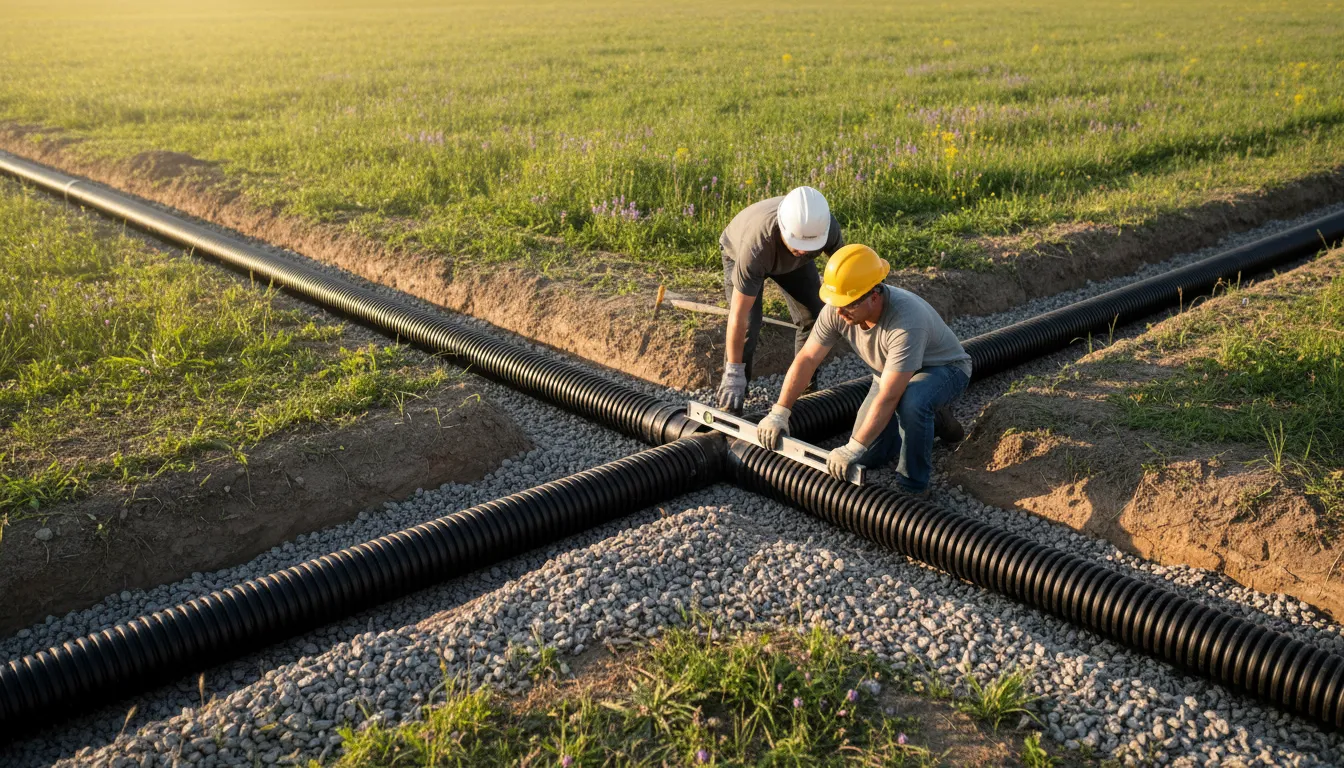
The drain field is the final and most critical stage of a conventional septic system. After solids settle in the tank, the liquid effluent flows into a network of perforated pipes buried in trenches filled with gravel. This effluent slowly percolates down through the soil, where natural processes provide final treatment before it rejoins the groundwater. A healthy leach field is essential for protecting both your property and public health. When this soil absorption system fails, it's often due to a clogged biomat (a layer that forms at the soil-gravel interface), soil compaction, root intrusion, or hydraulic overloading from excessive water use.
Brea & Orange County Regulations and Permits
Any major repair or full replacement of a septic dispersal system in Brea requires permits and oversight from Orange County Environmental Health (OCEH). The work must comply with standards set by the California Regional Water Quality Control Board. You cannot simply dig up and replace pipes; a formal process ensures the new system protects groundwater and public safety.
Key regulatory requirements include:
- Permit Submission: A detailed design plan, often prepared by a licensed engineer or qualified contractor, must be submitted and approved before any work begins.
- Setback Distances: The new system must meet minimum distances from property lines, wells, buildings, and waterways. These setbacks are strictly enforced to prevent contamination 1.
- Groundwater Separation: State and county regulations mandate at least 5 feet of vertical separation between the bottom of the drain field trenches and the seasonal high groundwater table. This is a crucial factor in site evaluation.
The Site Evaluation: Perc Tests and Soil Analysis
The feasibility and design of a new leach field depend entirely on your property's soil conditions. A professional site evaluation is the indispensable first step.
- Percolation Test: Commonly called a "perc test," this measures how quickly water drains through your soil. Acceptable rates in California typically fall between 1 and 12 inches per hour 2. Slow-draining soils like clay can cause premature failure, while very fast-draining soils may not provide adequate treatment.
- Soil Analysis: A deep soil profile analysis determines texture, structure, and the presence of limiting layers like hardpan or bedrock. This analysis also confirms the critical depth to groundwater 3.
- Site Constraints: The evaluator will also map the slope, available space, and location of obstacles. Slopes greater than 20% may require a specialized geotechnical report 4. The site must have sufficient unobstructed area for the new, often larger, absorption system and a designated repair area for future needs.
The cost for a professional system inspection and perc test in the Brea area typically ranges from $300 to $3,000, depending on the depth of testing and reporting required 5.
The Process: From Failure to a New System
Replacing a drain field is a multi-stage project that follows a logical sequence.
- Professional Assessment: A qualified septic contractor or engineer identifies the cause of failure and determines if repair or full replacement is needed.
- Site Evaluation & Design: As described above, a perc test and soil analysis are conducted. Using this data, a licensed professional creates an engineered design plan for a system that meets your home's needs and all regulatory standards 6.
- Permit Acquisition: The design plan is submitted to Orange County Environmental Health for review and permitting. No work can legally start until permits are issued 7.
- Installation: The old drain field is properly abandoned (often left in place but taken out of service). The new area is excavated. Trenches are dug, gravel is laid, perforated pipes are installed, and the system is covered with soil and a protective barrier.
- Final Inspection: A county inspector visits the site to verify the installation matches the approved plan before the trenches are fully backfilled. Once approved, the system can be put into service.
Find the perfect drain field repair companies for your needs
Get personalized recommendations and expert advice
Costs for Drain Field Work in Brea
Costs can vary widely based on soil conditions, system size, and site accessibility. The figures below are based on regional data for Southern California.
- Minor Repairs: Addressing a single clogged line or a small section of the field may cost between $300 and $900.
- Drain Field Replacement: This is the most common major expense. For a full leach field replacement in Brea, homeowners can expect to pay between $5,000 and $15,000 on average. This includes the new absorption trenches, gravel, pipes, and labor.
- Full System Replacement: If the septic tank also needs replacement, total costs generally range from $7,000 to over $20,000 8 9. The drain field is often the most expensive single component of a septic system 10.
- Cost Breakdown: For a typical replacement project, material and site preparation (gravel, pipe, excavation) might account for $1,000-$3,000, while skilled labor and installation can range from $2,000-$6,000 11 12.
When Replacement Isn't Straightforward: Site Limitations
Not every property in Brea is suitable for a conventional leach field replacement. Certain site conditions can pose significant challenges or even prohibit a standard system.
- Poor Soil: Heavy clay or impermeable soil that fails the perc test will not support a standard trench system.
- High Groundwater: If the seasonal high water table is within 5 feet of the surface, a conventional trench cannot be installed without creating a contamination risk.
- Limited Space: Older homes on small lots may not have the required space for a new, modern-sized drain field and the mandatory repair area.
- Unsuitable Fill: Properties where the native soil has been covered with imported "fill dirt" may not be permitted for a standard dispersal system, as the fill's composition is unknown and often compacted 13.
- Slope and Obstructions: Steep slopes, large trees, utility lines, or existing structures over the proposed area can make installation impossible or prohibitively expensive.
In these cases, alternative or "engineered" septic systems may be required. These systems use pumps, sand filters, or advanced treatment technologies to overcome site limitations, though they come at a higher installation cost.
Protecting Your New Investment
Once you have a new drain field installed, proper maintenance is key to its longevity. This includes regular septic tank pumping (every 3-5 years), conserving water to avoid overloading the system, and never driving or parking vehicles over the absorption area. You should also avoid planting trees or deep-rooted shrubs near the field and divert surface water (like roof runoff) away from it 14 15.
Frequently asked questions
Sources
Footnotes
-
New Jersey Septic System Rules - 2026 Guide - https://thesewerkings.com/blog/new-jersey-septic-system-rules/ ↩
-
What is the best septic system if your land fails a perc test? - https://www.premiertechaqua.com/en-us/blog/best-septic-system-failed-perc-test ↩
-
The Complete Guide to Soil Testing for Septic System Design: Ensuring Regulatory Compliance and System Longevity - https://www.mapengineering.net/the-complete-guide-to-soil-testing-for-septic-system-design/ ↩
-
The Californian's Guide To Septic Tanks - https://cacciaplumbing.com/blog/california-septic-tank-guide/ ↩
-
How Much Does a Septic Soil Test Cost in 2026? - Land Perc - https://landperc.com/septic-soil-test-cost/ ↩
-
California Septic Tank Requirements | Onsite Wastewater ... - https://www.ntotank.com/blog/california-septic-tank-requirements ↩
-
ENVIRONMENTAL HEALTH - https://www.waterboards.ca.gov/lahontan/water_issues/programs/owts/docs/lamp_tracking/la_lamp_20180517.pdf ↩
-
Septic Repair Cost in California: Complete Breakdown of Pricing ... - https://www.lanikseptic.com/septic-repair-cost/ ↩
-
Septic Tank Replacement and Drain Field Cost in California - https://www.lanikseptic.com/how-much-does-it-cost-to-replace-a-septic-tank-and-drain-field-in-california/ ↩
-
What Is the Most Expensive Part of a Septic System? - https://www.headwatersconstruction.ca/blogs/most-expensive-part-of-septic-system ↩
-
Cost to Replace Septic Tank and Drain Field [2026 Data] | Angi - https://www.angi.com/articles/how-much-new-drain-fields-foot.htm ↩
-
Get Drain Field Installation in Brea, CA - Claremont Septic - https://claremontseptic.com/drain-field-installation-brea-ca ↩
-
Fill Dirt Types for Safe Septic Installation - https://www.soilconnect.com/blog/comparing-fill-dirt-types-for-safe-septic-system-installation ↩
-
Guide to Preventing Drain Field Problems | Wisconsin Septic - https://sunsetseptic.com/preventing-drain-field-problems-in-wisconsin/ ↩
-
Frequent Questions on Septic Systems | US EPA - https://www.epa.gov/septic/frequent-questions-septic-systems ↩