Find the Best Drain Field Repair Companies for Your Business
No obligation • Fast responses • Nationwide coverage

Why you can trust Septic Spot
Septic Spot is a leading United States resource for understanding and comparing septic services. Our editors review providers using consistent criteria and verify key business details. Listings and scores are independent, and companies cannot pay to influence our content.
Search providers near you
Top Drain Field Repair Companies in Ceres, California Ranked
A failing drain field is a serious issue for any property with a septic system. This critical component, also known as a leach field or absorption field, is responsible for safely filtering and dispersing treated wastewater into the soil. When it malfunctions, it can lead to sewage backups, soggy yards, and environmental contamination. For homeowners in Ceres, navigating the repair or replacement of a septic drain field involves understanding local regulations, soil conditions, and the scope of work required. This guide provides essential information to help you understand the process, costs, and key considerations for restoring your onsite wastewater system to proper function.
Understanding Your Septic Drain Field
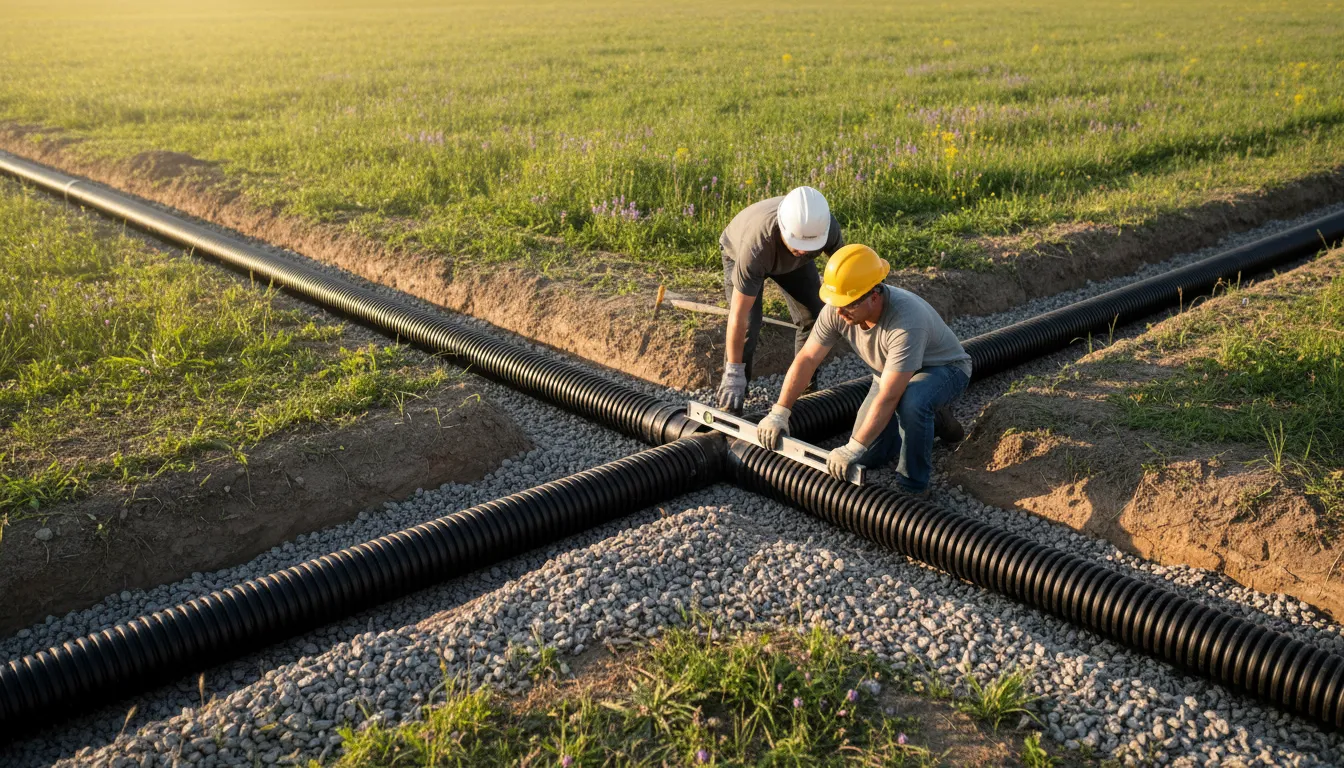
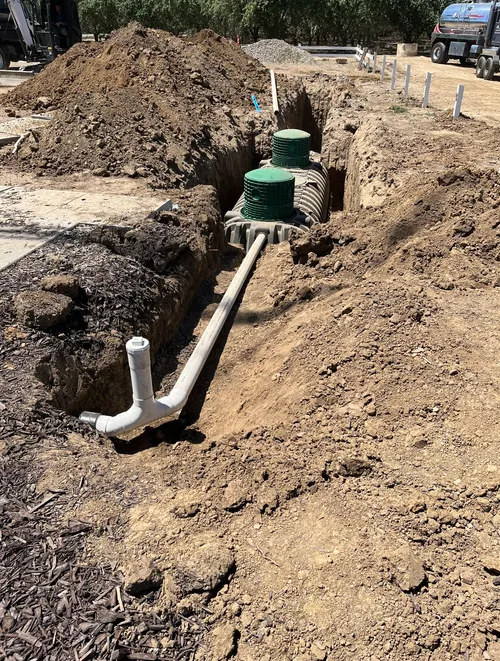
The drain field is the final stage of a conventional septic system. After solids settle in the tank, liquid effluent flows through a network of perforated pipes buried in gravel-filled trenches. This effluent slowly percolates into the soil, where natural processes provide final treatment. A failure occurs when the soil can no longer absorb the liquid, often due to clogging, compaction, or high groundwater.
Common signs of a failing leach field include:
- Sewage odors in the yard or home.
- Soggy, spongy, or overly green grass directly over the field.
- Slow drains or sewage backups in household fixtures.
- Standing water or surfacing effluent.
If you notice these signs, it's crucial to act quickly to prevent health hazards and further damage to your property and the local groundwater.
Ceres and Stanislaus County Regulations
Any significant repair or full replacement of a septic drain field in Ceres requires adherence to regulations enforced by the Stanislaus County Environmental Resources Department and the California State Water Resources Control Board's Onsite Wastewater Treatment System (OWTS) policies 1. A permit is mandatory for repairing a failed system 2.
The regulatory framework is designed to protect public health and water quality. Key standards include maintaining a minimum of 5 feet of soil separation between the bottom of the drain field trench and the seasonal high groundwater table 3. The soil's percolation rate, a measure of how quickly water moves through it, must also be favorable-generally between 1 and 12 inches per hour.
Given the Central Valley's geology, properties in Ceres may have challenging conditions like clay-heavy soil or a high water table, which can complicate standard repairs and sometimes necessitate an alternative or engineered system.
The Repair and Replacement Process
Restoring a drain field is a multi-step process that involves professional assessment, planning, and execution.
- System Inspection & Evaluation: A qualified septic contractor will first locate and expose key components of your system to diagnose the exact cause of failure. This evaluation determines whether a partial repair is possible or if a full leach field replacement is necessary.
- Site Evaluation & Design: For a replacement, a new site evaluation is often required. This includes soil testing (perc tests) and assessing the property's slope. Land with a slope over 20% may require a geotechnical report 4. Based on this data, a design plan is created. In many cases, especially for complex sites, these plans must be prepared or approved by a registered professional engineer 5 6.
- Permitting: The design plans are submitted to Stanislaus County to apply for the necessary repair or replacement permit.
- Excavation & Installation: Once permitted, the old, failed drain field area is excavated. New trenches are dug, and a new network of pipes (or modern chamber systems) and gravel is installed according to the approved design 7.
- Final Inspection: A county inspector must approve the new installation before the trenches are backfilled and the site is restored 8.
Find the perfect drain field repair companies for your needs
Get personalized recommendations and expert advice
Cost Factors for Drain Field Work in Ceres
The cost to address a failing absorption field can vary widely based on the extent of the damage, soil conditions, and system size. It's important to view this as a necessary investment in your property's health and value.
- Full Drain Field Replacement: This is often the most comprehensive and costly solution, typically ranging from $7,000 to over $20,000 9. The final price depends on the size of the field, accessibility, and whether an alternative system is required.
- Partial Repair: If the problem is isolated to a specific section of the field or is related to the tank itself, costs can be lower. However, partial fixes may not be a permanent solution if the entire field is aged or compromised.
- Permitting and Design Fees: These administrative and professional costs can add $500 to $2,000 or more to the total project, covering soil tests, engineering plans, and county permit fees 10 11.
- Alternative Systems: If your property fails a standard perc test due to poor soil or high groundwater, an engineered system like a mound, drip irrigation, or aerobic treatment unit (ATU) may be required. These systems involve more complex technology and can significantly increase the project cost.
Choosing a Qualified Professional
Given the technical and regulatory complexity, selecting the right contractor is critical. Look for a licensed septic professional with extensive experience in Stanislaus County. They should be familiar with local permit processes and soil conditions. A reputable contractor will:
- Conduct a thorough initial inspection.
- Clearly explain your options and the reasons behind their recommendation.
- Handle the permit application and design process.
- Provide a detailed, written estimate.
- Ensure all work passes final county inspection.
Proper maintenance of your new drain field, including regular tank pumping and mindful water usage, is essential to protect your investment and ensure its long-term functionality.
Frequently asked questions
Sources
Footnotes
-
stanislaus county planning commission - https://www.stancounty.com/planning/agenda/2018/06-21-18/7_A.pdf ↩
-
Onsite Wastewater Treatment Systems Manual - https://www.waterboards.ca.gov/rwqcb2/board_info/agendas/2018/April/LAMP/3_A_%20Revised_Technical_Manual.pdf ↩
-
The Californian's Guide To Septic Tanks - https://cacciaplumbing.com/blog/california-septic-tank-guide/ ↩
-
What is the best septic system if your land fails a perc test? - https://www.premiertechaqua.com/en-us/blog/best-septic-system-failed-perc-test ↩
-
California Septic Tank Requirements | Onsite Wastewater ... - https://www.ntotank.com/blog/california-septic-tank-requirements ↩
-
Section 6 - Design and Performance Provisions - City of Ceres - https://www.ceres.gov/DocumentCenter/View/127 ↩
-
Septic Drain Field Replacement Cost - https://dillonseptic.com/septic-drain-field-replacement-cost/ ↩
-
What to Expect During a Septic System Replacement - Townes Septic Service - https://www.townesseptic.com/blog/what-to-expect-during-a-septic-system-replacement ↩
-
How Much Does a Septic Tank or Leach Field Replacement Cost? - https://www.elocal.com/resources/home-improvement/plumbing/cost-guide/leach-field-replacement-cost/ ↩
-
How Much Does Septic System Repair Really Cost in California - https://www.lanikseptic.com/septic-repair-cost/ ↩
-
Cost to Replace Septic Tank and Drain Field [2026 Data] | Angi - https://www.angi.com/articles/how-much-new-drain-fields-foot.htm ↩