Find the Best Drain Field Repair Companies for Your Business
No obligation • Fast responses • Nationwide coverage

Why you can trust Septic Spot
Septic Spot is a leading United States resource for understanding and comparing septic services. Our editors review providers using consistent criteria and verify key business details. Listings and scores are independent, and companies cannot pay to influence our content.
Search providers near you
Top Drain Field Repair Companies in Costa Mesa, California Ranked
A failing drain field, also known as a leach field or absorption field, is a serious issue for any property with a septic system. This critical component is responsible for safely filtering and dispersing treated wastewater into the soil. When it malfunctions, it can lead to soggy yards, foul odors, and environmental contamination. This guide explains the local process, regulations, and costs for drain field repair and replacement in Costa Mesa, helping you understand what to expect and how to connect with qualified local professionals for an assessment.

Understanding Your Septic Drain Field
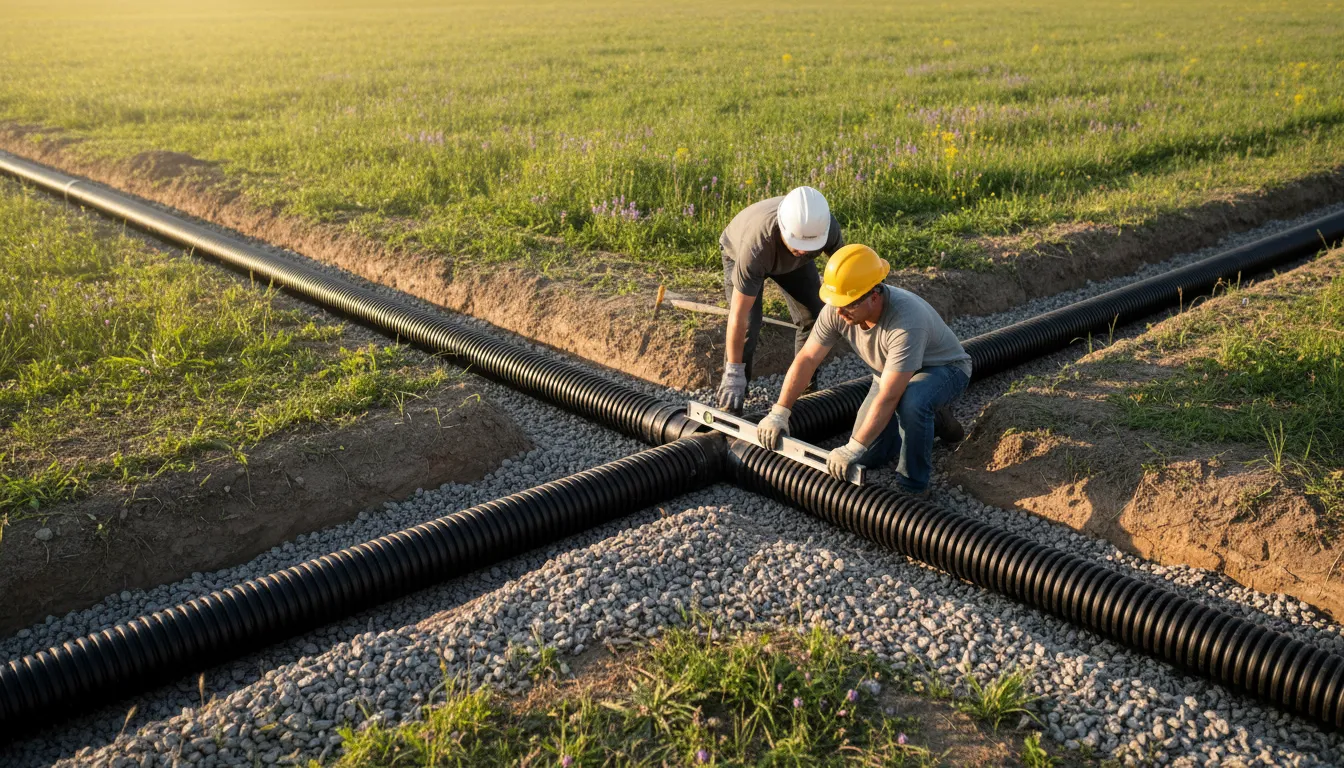
The drain field is the final stage of your onsite wastewater treatment system. After solids settle in the septic tank, the liquid effluent flows into a network of perforated pipes buried in trenches filled with gravel. This effluent slowly percolates through the soil, where natural processes provide final treatment before it rejoins the groundwater. A healthy leach field is essential for protecting both your property and public health.
Common signs of drain field failure include:
- Sewage odors in the yard or home.
- Spongy, soggy, or standing water over the field area, even in dry weather.
- Unusually lush, green grass growing over the field.
- Slow drains or sewage backups in the house.
- Gurgling sounds in the plumbing system.
If you notice any of these issues, it's crucial to act quickly to prevent further damage and potential regulatory action.
Costa Mesa and Orange County Regulations
All work on septic systems, especially leach field repair or replacement, is strictly regulated in Costa Mesa. The permitting authority is the Orange County Health Care Agency, Environmental Health Division 1. Any project must be approved by this agency and must comply with both local and stringent California state water quality standards 1 2.
Key regulatory factors that directly impact drain field projects include:
- Soil Percolation Rate: The soil must allow water to absorb at a rate between 1 and 12 inches per hour. Soil with high clay content, which absorbs slowly, may require a much larger leach field or an alternative treatment system.
- Groundwater Separation: California regulations mandate a minimum of 5 feet of vertical separation between the bottom of the drain field trenches and the seasonal high groundwater level 3.
- Slope and Space: Properties with slopes exceeding 20% may require a geotechnical report, and slopes over 35% are generally not suitable for conventional systems4. The system must also fit within your property lines with required setbacks from homes, wells, property lines, and waterways.
Navigating these regulations requires expertise. A licensed professional will handle the necessary site evaluations and paperwork to ensure your system is compliant.
The Step-by-Step Process for Drain Field Work
Repairing or replacing a leach field is a multi-stage process that involves diagnosis, design, permitting, and construction.
1. Site Assessment and Cause of Failure
The first step is a thorough inspection by a qualified septic professional. They will determine the root cause of the failure, which could be due to hydraulic overloading, soil clogging (biomat formation), a high water table, crushed or broken pipes, or tree root intrusion5. This assessment includes evaluating the existing system and the soil conditions on your property.
2. Soil Evaluation and Percolation Test
A critical part of the design process is the soil percolation test, or "perc test." A licensed professional conducts this test to measure the soil's absorption rate. The results determine the size and design specifications for the new or repaired absorption field. In Costa Mesa, this test is a standard requirement for permit approval6.
3. Engineering Plans and Permit Acquisition
Based on the site assessment and perc test results, engineered plans are drawn up. These plans detail the proposed repair or replacement system. Your contractor will submit these plans, along with the application, to the Orange County Health Care Agency for review and permit issuance. This step ensures the proposed solution meets all health and environmental codes.
4. Construction and Installation
Once permits are secured, construction begins. For a full replacement, this typically involves:
- Excavation of the old leach field (if necessary).
- Digging new trenches to the specified depth and layout.
- Laying a bed of gravel or sand.
- Installing new perforated distribution pipes.
- Covering the system with more gravel and soil.
- Final grading and seeding to restore the landscape.
5. Final Inspection
After construction, a final inspection by the county health inspector is required to ensure the installation matches the approved plans and complies with all regulations. Only after passing this inspection is the system approved for use.
Find the perfect drain field repair companies for your needs
Get personalized recommendations and expert advice
Cost Breakdown for Drain Field Services in Costa Mesa
Costs for leach field work vary widely based on the extent of the problem, soil conditions, property accessibility, and the type of system required. The figures below are estimates based on regional data.
Permit Fees: Permit costs with the Orange County Health Care Agency typically range from $450 to $2,000, depending on the project's complexity.
Soil Percolation Test: A required perc test in California generally costs between $300 and $3,0007. The price depends on the number of test holes needed and the consultant's fees.
Labor and Construction: Labor for excavation and installation can range from $1,000 to $5,000 or more, influenced by the depth of excavation, machinery needed, and site obstacles 8.
Project-Specific Cost Ranges
- Minor Drain Field Repairs: Addressing a single clogged lateral line or a small section of the field may cost between $1,000 and $4,000.
- Major Drain Field Replacement: A full conventional leach field replacement in Costa Mesa typically falls between $5,000 and $16,000+ 9. The high end of this range accounts for challenging soil, limited space, or the need for deeper excavation.
- Alternative Treatment Systems: If your soil fails a standard perc test, you may need an advanced treatment system like an aerobic treatment unit (ATU) or mound system. These can cost $8,000 to $30,000 or more installed10 11.
Disclaimer: These are estimated ranges. The only way to get an accurate cost for your property is through a professional site evaluation and quote.
Choosing a System: Repair vs. Replacement
Sometimes, a repair can solve the problem. If the issue is isolated-like a single crushed pipe or a clog in one lateral-a targeted repair is the most cost-effective solution. However, if the entire soil absorption area is saturated or clogged, or if the system is old and undersized, a full leach field replacement is often the only permanent fix12.
An experienced professional can advise whether a repair might extend the system's life or if replacement is the necessary long-term investment. In many cases in Costa Mesa, where older systems meet modern water usage and stricter environmental standards, replacement becomes inevitable.
Maintaining Your New Drain Field
Protecting your investment in a new or repaired absorption field is key. Proper maintenance includes:
- Regular Septic Tank Pumping: Pumping the tank every 3-5 years prevents solids from flowing into and clogging the new drain field.
- Water Conservation: Spreading out laundry loads, fixing leaks, and using water-efficient fixtures reduces hydraulic loading on the field.
- Mindful Flushing: Only human waste and toilet paper should go down the drain. Avoid chemicals, grease, wipes, and feminine hygiene products.
- Protect the Area: Never drive or park vehicles over the drain field, and avoid planting trees or deep-rooted shrubs nearby.
Frequently asked questions
Sources
Footnotes
-
Septic System Regulations in Southern California: What You ... - https://www.lanikseptic.com/socal-septic-regulations/ ↩ ↩2
-
Chapter 6.4 SEWAGE STANDARDS - https://www.codepublishing.com/CA/SolanoCounty/html/SolanoCounty0604.html ↩
-
The Californian's Guide To Septic Tanks - https://cacciaplumbing.com/blog/california-septic-tank-guide/ ↩
-
The SoCal Guide to Septic Tank Installation - https://www.lanikseptic.com/socal-guide-septic-tank-installation/ ↩
-
Repairing Septic Systems: A Detailed Manual - https://ky-pd.com/blog/fixing-septic-system/ ↩
-
California Septic Tank Requirements | Onsite Wastewater ... - https://www.ntotank.com/blog/california-septic-tank-requirements ↩
-
How Much Does a Septic Soil Test Cost in 2026? - Land Perc - https://landperc.com/septic-soil-test-cost/ ↩
-
Cost to Replace Septic Tank and Drain Field [2026 Data] | Angi - https://www.angi.com/articles/how-much-new-drain-fields-foot.htm ↩
-
How Much Does It Cost to Replace a Septic System? - https://alphaenvironmental.net/blog/how-much-cost-replace-septic-system/ ↩
-
Septic Repair Cost in California: Complete Breakdown of Pricing ... - https://www.lanikseptic.com/septic-repair-cost/ ↩
-
Septic Tank Replacement and Drain Field Cost in California - https://www.lanikseptic.com/how-much-does-it-cost-to-replace-a-septic-tank-and-drain-field-in-california/ ↩
-
The Ultimate Guide to Replacing a Septic Drain Field - https://www.rciseptic.com/the-ultimate-guide-to-replacing-a-septic-drain-field ↩