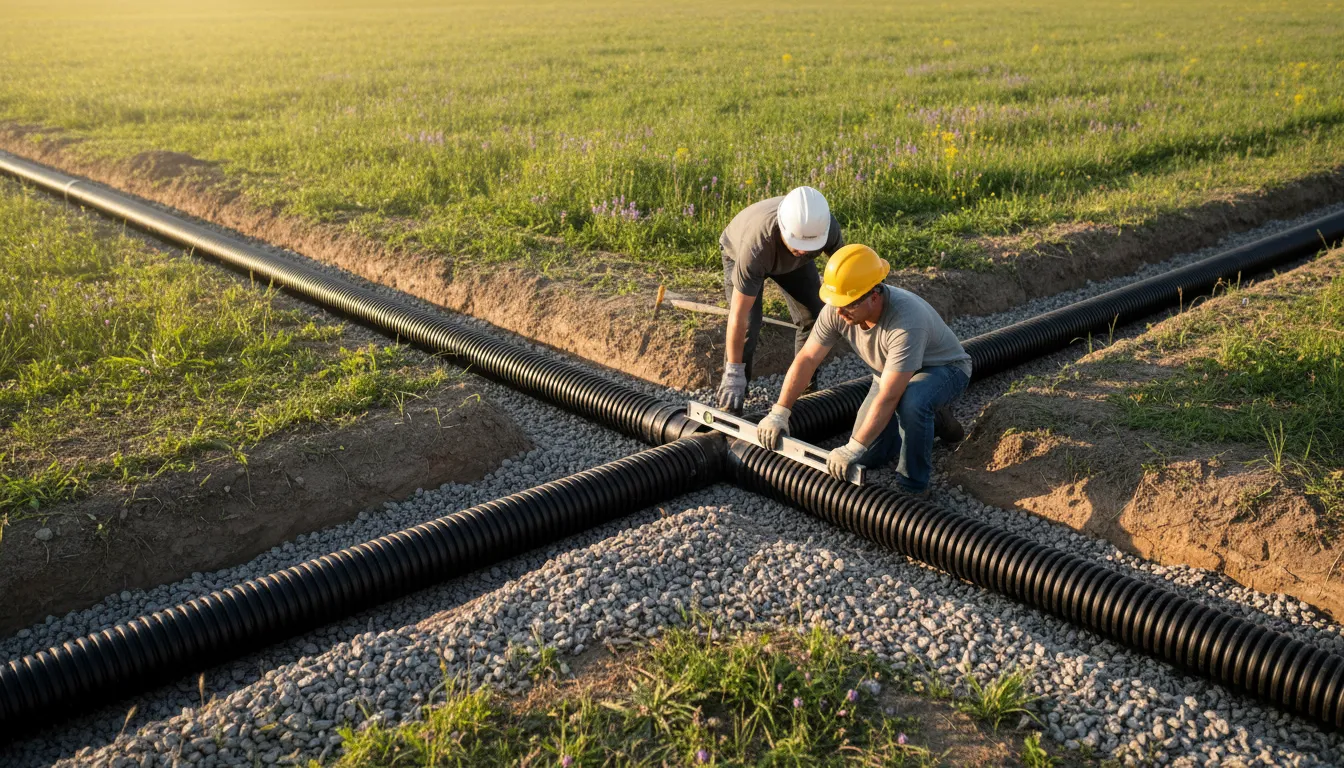
Find the Best Drain Field Repair Companies for Your Business
No obligation • Fast responses • Nationwide coverage

Why you can trust Septic Spot
Septic Spot is a leading United States resource for understanding and comparing septic services. Our editors review providers using consistent criteria and verify key business details. Listings and scores are independent, and companies cannot pay to influence our content.
Search providers near you
Top Drain Field Repair Companies in Downey, California Ranked
A failing drain field, also known as a leach field, is a serious issue for any home with a septic system. It's the final and most critical stage where treated wastewater is safely returned to the soil. When this component fails, it can lead to soggy yards, foul odors, and even sewage backups into your home. This guide explains everything you need to know about diagnosing, repairing, and replacing a septic drain field in Downey, California. It will help you understand the local regulations, costs, and process so you can find and evaluate qualified local professionals to restore your system's function.
Septic Tank Pumping Guys
6360 Van Nuys Blvd ste 113, Van Nuys, CA 91401
Septic Tank Pumping Guys provides a full range of septic services in Los Angeles, CA, including pumping, inspections, repairs, and installations for residential and commercial properties. They offer 24/7 emergency septic services and specialize in maintaining system health through regular pump-outs, cleaning, and drain field repairs. Their capabilities include septic tank installation, effluent filter replacement, and grease trap pumping. The company is family owned and operated, serving multiple communities within Los Angeles County.
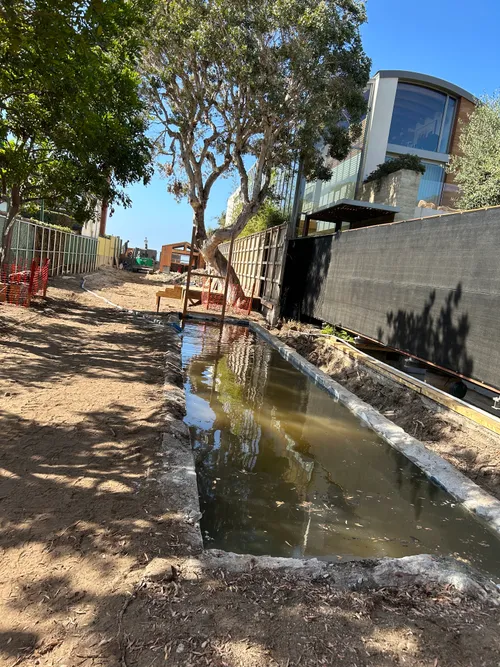
Septic Tank Pumping USA
1367 Foothill Blvd, La Cañada Flintridge, CA 91011
Septic Tank Pumping USA provides septic tank pumping, inspection, and repair services in Los Angeles, CA. They handle routine maintenance and emergency repairs, including drain field repair or replacement. The company emphasizes regular pumping every 3-5 years to prevent system failures and environmental risks. They also offer thorough inspections to assess tank and drain field conditions. Septic Tank Pumping USA serves the local area with expertise in managing septic system health and compliance with local regulations.
Understanding Your Septic System's Drain Field
Your septic system is a two-part underground wastewater treatment structure. The septic tank holds solid waste, allowing it to decompose and separate from the liquid effluent. This effluent then flows into the drain field (or absorption field). This network of perforated pipes buried in gravel-filled trenches allows the pre-treated liquid to slowly percolate into the soil, where natural processes provide final purification.
In Downey and throughout Los Angeles County, these systems are formally regulated as Onsite Wastewater Treatment Systems (OWTS). The health and longevity of your entire system depend on the drain field's ability to absorb water. When the soil becomes saturated or clogged-a condition known as "failure"-the system can no longer process wastewater effectively.
Signs of a Failing Leach Field
Recognizing early warning signs can prevent more extensive damage and costly emergency repairs. Common indicators include:
- Soggy Ground or Standing Water: Puddles or consistently wet, spongy soil over the drain field area, especially when it hasn't rained.
- Sewage Odors: Unpleasant smells emanating from your yard, particularly near the septic tank or drain field.
- Slow Drains and Backups: Gurgling pipes, slow-draining sinks and toilets, or sewage backing up into household drains.
- Unusually Green Grass: Patches of grass over the drain field that are much lusher and grow faster than the rest of the lawn, indicating a nutrient surge from effluent.
- Algae Blooms in Nearby Ditches or Ponds: Nutrient-rich wastewater may be surfacing and running off.
If you notice any of these signs, it's crucial to contact a licensed septic professional immediately for an assessment.
The Downey Septic Repair and Replacement Process
Addressing a drain field issue is a multi-step process governed by strict local codes. Here's what you can expect from start to finish.
1. Professional System Assessment
A qualified contractor will first pump your septic tank. This is a critical diagnostic step, as a full tank can mimic drain field failure. Once emptied, they will inspect the tank's components (baffles, outlet tee) and may use a sewer camera to check the distribution box and the beginning of the drain field lines for blockages or collapse 1.
2. Mandatory Site Evaluation and Testing
If a drain field problem is suspected, a formal site evaluation is required by the Los Angeles County Department of Public Health. This typically involves:
- Percolation Test ("Perc Test"): Measures how quickly water drains through your soil. Soils in Downey with high clay content often have slow percolation rates, which can limit design options or indicate failure 2.
- Soil Analysis: Determines soil type, depth to bedrock, and seasonal high groundwater table. California plumbing code mandates a minimum of 5 feet of vertical separation between the bottom of the drain field trench and the highest groundwater level. The county also reviews property slope and required setbacks from buildings, property lines, and water wells.
3. Permit Acquisition
You cannot legally repair or replace a drain field in Downey without a permit. The Los Angeles County Department of Public Health is the sole permitting authority for OWTS. Your septic professional will submit a detailed site plan and system design for approval. The permit ensures the new or repaired system complies with all health and environmental standards designed to protect groundwater and public safety.
4. Repair vs. Replacement: Understanding Your Options
The solution depends on the extent of the failure:
- Minor Repairs: Issues might be isolated to a clogged or crushed pipe, a malfunctioning distribution box, or a damaged tank baffle. Spot repairs can sometimes restore function.
- Major Drain Field Rehabilitation: For a partially failed field, techniques like terracing on sloped lots or installing an entirely new leach field in a different area of your property (a "repair area") may be viable if space allows.
- Complete System Replacement: When the soil is permanently clogged (a condition called biomat saturation) or the existing field is too small or poorly located, a full replacement is necessary. This involves designing and constructing a new drain field that meets current code, which may include advanced systems for challenging sites 3.
5. Final Inspection
Once construction is complete, but before the trenches are backfilled, a final inspection by the county is mandatory. Passing this inspection is required to close the permit and legally put your system into operation 4.
Find the perfect drain field repair companies for your needs
Get personalized recommendations and expert advice
Cost Factors for Drain Field Work in Downey
Costs can vary widely based on the solution. Here is a breakdown of what to expect for drain field repair and replacement in the Downey area:
- Minor Repairs (Pipes, Baffles): $250 - $1,500.
- Major Drain Field Repairs: $1,000 - $5,000. This covers partial field fixes or rehabilitating a section 5.
- Full Drain Field Replacement: $6,000 - $15,000+. This is the most common range for a complete new leach field installation in Southern California. The high end can exceed $20,000 for large homes or complex sites 6 7.
- Permits and Testing: $500 - $2,000+. This is usually included in the contractor's total quote but covers county permit fees, percolation tests, and soil evaluations.
- Excavation and Site Restoration: $1,000 - $3,300+. Difficult site access, rocky soil, or the need to remove old concrete or landscaping can add significant cost. Restoring your yard after construction is also a factor 8 9.
Key factors influencing price: Soil conditions (clay is more challenging), property slope, size of the home (system capacity), local labor rates, and the chosen technology (conventional trench vs. advanced pressurized system).
Los Angeles County Regulations You Must Know
Working with a provider well-versed in local code is non-negotiable. Key regulations include:
- Permit Requirement: All new installations, replacements, and major alterations require an OWTS permit from LA County Public Health.
- Setbacks: Strict distances must be maintained from the septic tank and drain field to buildings, property lines, wells, and waterways. For example, leach fields generally need to be at least 10 feet from a property line and 100 feet from a water well, though specifics depend on your site plan.
- Soil and Groundwater: The 5-foot vertical separation from groundwater is a critical California standard that directly impacts drain field depth and design 10.
- System Design: The county must approve the design plan, which is based on your home's size (bedroom count), soil percolation rate, and lot characteristics 11 12.
Choosing a Provider in Downey
Selecting the right contractor is as important as understanding the process. Look for a professional who:
- Is licensed, insured, and has extensive experience with the Los Angeles County permit process.
- Provides detailed, written estimates that break down costs for testing, permits, labor, materials, and restoration.
- Can explain the pros and cons of different system types relevant to Downey's soil conditions.
- Has positive local references and reviews specifically for drain field projects.
- Handles the entire process from diagnosis and permitting to construction and final inspection.
Frequently asked questions
Sources
Footnotes
-
Southern California Septic System Regulations: What You Need to ... - https://www.lanikseptic.com/socal-septic-regulations/ ↩
-
Perc Test Cost | Septic Perc Test Cost - https://www.fixr.com/costs/perc-test ↩
-
The SoCal Guide to Septic Tank Installation - https://www.lanikseptic.com/socal-guide-septic-tank-installation/ ↩
-
The Permitting Process for a New Septic System in Northern Kentucky - https://www.kysepticservice.com/helpful-info/permitting-process-new-septic-system-northern-kentucky.html ↩
-
How Much Does Septic System Repair Really Cost in California - https://www.lanikseptic.com/septic-repair-cost/ ↩
-
Cost to Replace Septic Tank and Drain Field [2026 Data] | Angi - https://www.angi.com/articles/how-much-new-drain-fields-foot.htm ↩
-
How Much Does a Septic System & Septic Tank Cost - https://www.nexgenseptics.com/septic-system-cost/ ↩
-
Drain Field Installation Services in Downey, CA - Arcadia Septic - https://arcadiaseptic.com/drain-field-installation-downey-ca ↩
-
Septic Repair Cost in California: Complete Breakdown of Pricing Factors and Variations - https://www.lanikseptic.com/septic-repair-cost/ ↩
-
The Californian's Guide To Septic Tanks - https://cacciaplumbing.com/blog/california-septic-tank-guide/ ↩
-
California Septic Tank Requirements | Onsite Wastewater ... - https://www.ntotank.com/blog/california-septic-tank-requirements ↩
-
onsite-wastewater-treatment-system-requirements-procedures ... - http://www.publichealth.lacounty.gov/eh/docs/permit/onsite-wastewater-treatment-system-requirements-procedures.pdf ↩