Find the Best Drain Field Repair Companies for Your Business
No obligation • Fast responses • Nationwide coverage

Why you can trust Septic Spot
Septic Spot is a leading United States resource for understanding and comparing septic services. Our editors review providers using consistent criteria and verify key business details. Listings and scores are independent, and companies cannot pay to influence our content.
Search providers near you
Top Drain Field Repair Companies in El Cajon, California Ranked
A failing drain field is a serious issue that can lead to sewage backups, soggy lawns, and environmental contamination. This guide explains the process, regulations, and costs for drain field repair and replacement for homeowners in El Cajon. By understanding the local requirements and what to expect, you can make informed decisions when selecting a qualified professional to restore your onsite wastewater system.
Dr. Septic
San Diego, CA
Dr. Septic is a septic tank pumping, inspection, and repair company based in San Diego, CA. They provide services including septic tank pumping, certification, and drain field repair or replacement. Known for attention to detail, Dr. Septic handles complex issues such as clogged septic systems and leach field replacements. Customers have noted their thorough approach and willingness to accommodate urgent needs, including weekend work.
USA Septic
1317 Simpson Way Suite B, Escondido, CA 92029
USA Septic is a septic tank pumping, inspection, repair, and installation company serving San Diego, CA. They provide services including septic system construction, pumping, drain cleaning, and certifications. Their expertise covers drain field repair and replacement, helping maintain and protect septic systems. USA Septic offers guidance on septic system ownership to help customers care for their systems properly.

Abbott Septic Service
3833 Linda Vista Dr, San Marcos, CA 92078
Abbott Septic Service is a septic tank company serving Los Angeles, CA, and the surrounding San Diego County area. They provide septic tank pumping, cleaning, repair, installation, and locating services. Abbott Septic Service is a licensed Class A general engineering contractor capable of major septic system construction work, including excavation, grading, trenching, and drain field installation. Established in 1948, the company has decades of experience and offers 24/7 phone availability for septic system needs.
Understanding Your Septic System's Drain Field
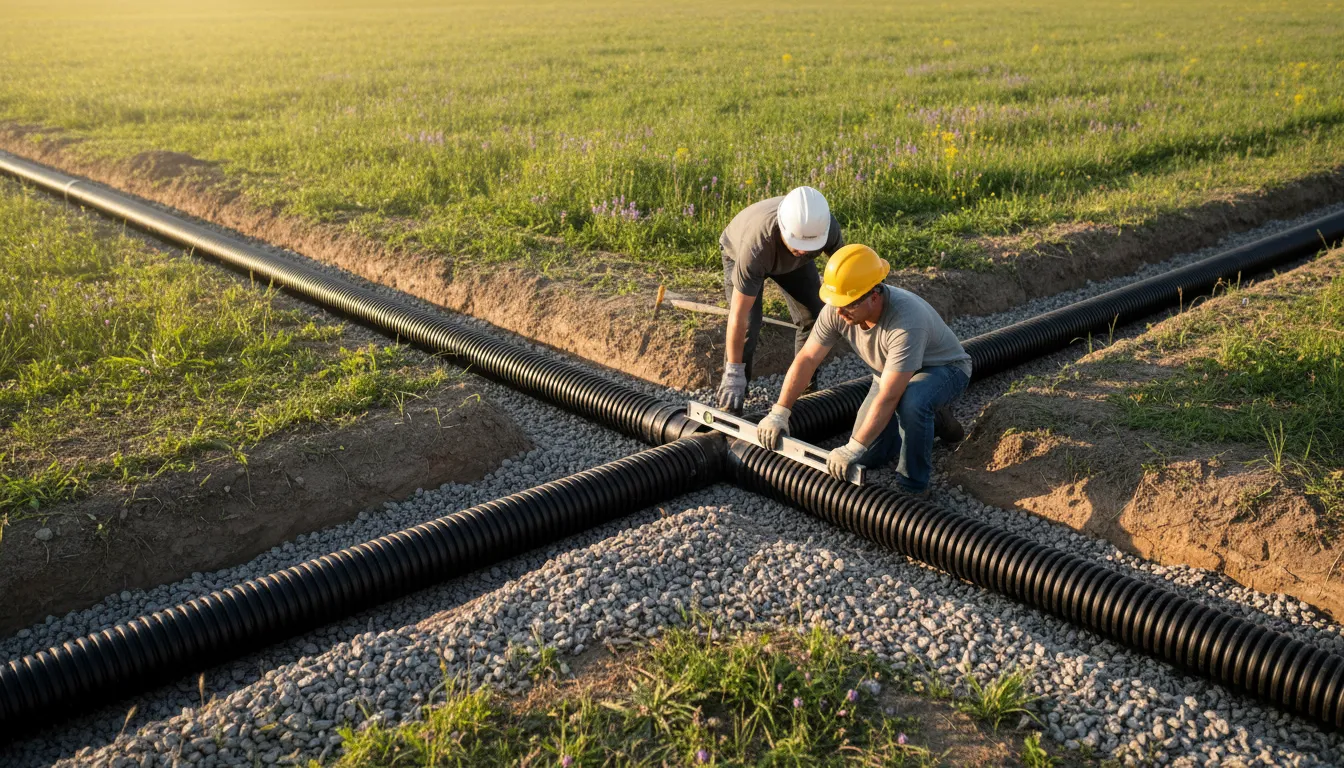
The drain field, also known as a leach field or absorption field, is the final and most critical stage of a septic system. After solids settle in the tank, the clarified liquid effluent flows into a network of perforated pipes buried in trenches. This effluent slowly percolates through the soil, where natural processes filter and treat it before it rejoins the groundwater. When this area fails, the entire system's function is compromised, requiring prompt attention.
Signs You Need Drain Field Repair or Replacement
Recognizing early warning signs can prevent a complete system failure and more expensive repairs. Common indicators include:
- Sewage Odors: Foul smells around the drain field or inside the home.
- Soggy Ground or Standing Water: Spongy, wet patches or puddles over the leach field, especially when it hasn't rained.
- Slow Drains & Backups: Gurgling pipes, slow-draining sinks and toilets, or sewage backups into the home.
- Unusually Green Grass: Lush, fast-growing grass specifically over the drain field area.
- Failed Inspection: High sludge levels in the tank or visible surfacing of effluent during a professional inspection.
El Cajon and San Diego County Regulations
All septic system work in El Cajon falls under the jurisdiction of the County of San Diego Department of Environmental Health and Quality (DEHQ). No repair or reconstruction can begin without a permit from this agency 1. A critical county rule is that if a public sewer line is available adjacent to your property, you are required to connect to it, and a septic system is prohibited 1. For properties that must use a septic system, the county permits conventional rock-and-pipe systems or modern plastic chamber systems, provided they are approved by the DEHQ.
The Permit and Inspection Process
- System Evaluation: A licensed professional assesses the failure and determines the necessary repair or replacement scope.
- Soil & Site Testing: This often includes a new percolation ("perc") test and evaluation of groundwater depth 2.
- Permit Application: Your contractor will submit plans and test results to the DEHQ for a permit.
- Construction & Inspection: The work is performed, and a DEHQ inspector must check the installation of new components (like pipes or chambers) before they are buried.
- Final Approval: Once the inspector signs off, the system can be covered and put back into service.
Key Factors Affecting Drain Field Work
Several site-specific factors dictated by county code will influence the repair strategy and cost.
- Soil Percolation Rate: The soil's ability to absorb water is paramount. For standard systems, San Diego County requires a percolation rate not exceeding 30 minutes per inch for deep bed systems. Soil with high clay content drains too slowly, while overly sandy or rocky soil may not provide adequate filtration.
- Groundwater Separation: A minimum of 5 feet of unsaturated soil must exist between the bottom of the drain field and the seasonal high groundwater table 3 4. This prevents contamination and system failure.
- Slope and Space: Properties with slopes over 20% require specialized engineering to ensure stability and proper function 5. Adequate space must also be available for the required size of the new leach field.
- System Age and Type: Older systems may have failing clay pipes or be undersized for current household use. The type of system originally installed will determine compatible repair methods.
Find the perfect drain field repair companies for your needs
Get personalized recommendations and expert advice
The Repair and Replacement Process
Step 1: Professional Diagnosis
A certified inspector or septic professional will perform a thorough evaluation. This includes checking the septic tank for sludge levels and leaks, inspecting distribution boxes and pipes, and diagnosing the exact cause of the drain field failure 6 7.
Step 2: Exploring Repair Options
Not all failures require a full replacement. Possible repairs include:
- Jet Cleaning: High-pressure water jetting to clear minor clogs in lateral lines.
- Pipe Replacement: Excavating and replacing a section of collapsed or clogged perforated pipe.
- Adding Capacity: Expanding the existing field or adding a new section if space and soil conditions allow.
Step 3: Full Leach Field Replacement
When repairs are insufficient, a full replacement is necessary. This involves:
- Design: Creating a new system plan based on current household size, soil tests, and county codes.
- Excavation: Removing the old, failed drain field components.
- Installation: Placing new gravel, chambers, or other approved media and perforated pipes.
- Inspection & Backfill: The DEHQ inspects the installation before the trenches are filled 8.
Cost of Drain Field Work in El Cajon
Costs vary widely based on the extent of the problem, soil conditions, and system size. The figures below are estimates based on regional data.
- Minor Repairs: Fixing components like baffles or distribution boxes typically ranges from $250 to $1,500.
- Major Leach Field Repair/Replacement: This is a significant investment, generally ranging from $5,000 to over $15,0009 10. The average cost for many repairs in California falls between $1,000 and $5,0009 11.
- Factors Influencing Cost: The primary cost drivers are the size of the field needed, accessibility for heavy equipment, soil type (rocky soil increases excavation costs), and whether an alternative system is required due to failing a standard perc test.
Choosing a Service Provider in El Cajon
Selecting the right contractor is crucial. Look for professionals who are:
- Licensed & Insured: They must hold current California contractor licenses for septic work.
- County-Knowledgeable: Experienced with the specific permit and inspection processes of the San Diego County DEHQ.
- Transparent: Willing to provide detailed written estimates, explain the recommended solution, and pull all required permits.
- Reputable: Check for positive reviews, references from local jobs, and a history of successful inspections.
Maintaining Your New Drain Field
Protect your investment with proper care:
- Practice Water Conservation: Spread out laundry loads and fix leaks to avoid hydraulically overloading the field.
- Mind What You Flush: Only human waste and toilet paper. Avoid chemicals, grease, wipes, and feminine products.
- Keep It Clear: Never drive or park vehicles over the drain field, and avoid planting trees with deep roots nearby.
- Pump Regularly: Have your septic tank pumped every 3-5 years to prevent solids from washing out into the new field.
Frequently asked questions
Sources
Footnotes
-
City of El Cajon, CA SEWERS AND SEWAGE DISPOSAL ... - https://ecode360.com/44371682 ↩ ↩2
-
The Californian's Guide To Septic Tanks - https://cacciaplumbing.com/blog/california-septic-tank-guide/ ↩
-
Septic Systems - County of San Diego - https://www.sandiegocounty.gov/content/sdc/deh/lwqd/lu_septic_systems.html ↩
-
Frequently Asked Questions on Septic Systems - https://www.sandiegocounty.gov/content/sdc/deh/lwqd/lu_septic_systems/lu_septic_faqs_page.html ↩
-
What is the best septic system if your land fails a perc test? - https://www.premiertechaqua.com/en-us/blog/best-septic-system-failed-perc-test ↩
-
Southern California Septic System Regulations: What You Need to ... - https://www.lanikseptic.com/socal-septic-regulations/ ↩
-
California Septic Tank Requirements | Onsite Wastewater ... - https://www.ntotank.com/blog/california-septic-tank-requirements ↩
-
Homeowner's Guide to Septic Systems - El Dorado County - https://www.eldoradocounty.ca.gov/files/assets/county/v/1/documents/government/environmental-management/environmental-management/septic-documents/epa_homeowner_septic_guide.pdf ↩
-
How Much Does Septic System Repair Really Cost in California - https://www.lanikseptic.com/septic-repair-cost/ ↩ ↩2
-
Septic Tank Replacement and Drain Field Cost in California - https://www.lanikseptic.com/how-much-does-it-cost-to-replace-a-septic-tank-and-drain-field-in-california/ ↩
-
Cost to Replace Septic Tank and Drain Field [2026 Data] | Angi - https://www.angi.com/articles/how-much-new-drain-fields-foot.htm ↩