Find the Best Drain Field Repair Companies for Your Business
No obligation • Fast responses • Nationwide coverage

Why you can trust Septic Spot
Septic Spot is a leading United States resource for understanding and comparing septic services. Our editors review providers using consistent criteria and verify key business details. Listings and scores are independent, and companies cannot pay to influence our content.
Search providers near you
Top Drain Field Repair Companies in Escondido, California Ranked
A failing drain field, also known as a leach field or absorption field, is a serious issue for any home with a septic system. It's the component responsible for safely filtering and dispersing treated wastewater into the soil. When it fails, you may notice soggy ground, sewage odors, or slow-draining fixtures. In Escondido, addressing this problem requires navigating specific local regulations and soil conditions. This guide explains the process, costs, and key considerations for drain field repair and replacement, helping you understand what's involved in finding qualified local professionals to restore your system's function.
Dr. Septic
San Diego, CA
Dr. Septic is a septic tank pumping, inspection, and repair company based in San Diego, CA. They provide services including septic tank pumping, certification, and drain field repair or replacement. Known for attention to detail, Dr. Septic handles complex issues such as clogged septic systems and leach field replacements. Customers have noted their thorough approach and willingness to accommodate urgent needs, including weekend work.

Center Septic
San Diego, CA
Center Septic is a family-owned septic service provider based in San Diego, CA, serving North San Diego County including Valley Center and surrounding areas. The company offers septic tank pumping, cleaning, inspections, repairs, new system installations, and drain field diagnosis and repairs. Center Septic holds a C42 license through the California State Contractor License Board and has been operating since 1995, providing a range of septic system services with trained and knowledgeable staff.
USA Septic
1317 Simpson Way Suite B, Escondido, CA 92029
USA Septic is a septic tank pumping, inspection, repair, and installation company serving San Diego, CA. They provide services including septic system construction, pumping, drain cleaning, and certifications. Their expertise covers drain field repair and replacement, helping maintain and protect septic systems. USA Septic offers guidance on septic system ownership to help customers care for their systems properly.
Abbott Septic Service
3833 Linda Vista Dr, San Marcos, CA 92078
Abbott Septic Service is a septic tank company serving Los Angeles, CA, and the surrounding San Diego County area. They provide septic tank pumping, cleaning, repair, installation, and locating services. Abbott Septic Service is a licensed Class A general engineering contractor capable of major septic system construction work, including excavation, grading, trenching, and drain field installation. Established in 1948, the company has decades of experience and offers 24/7 phone availability for septic system needs.
Understanding Drain Field Failure in Escondido
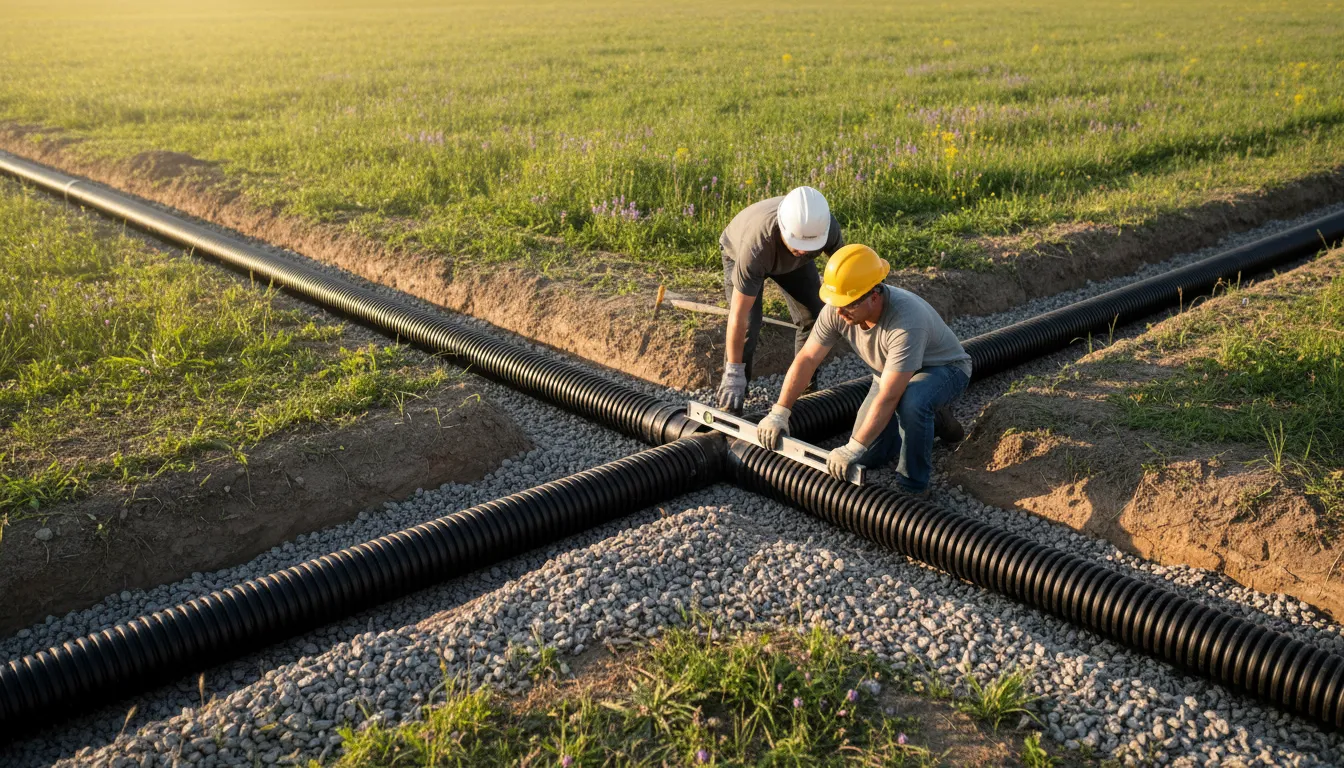
A septic system's leach field is a network of perforated pipes buried in trenches filled with gravel or proprietary chambers. Over time, this critical area can fail due to several factors common in the Escondido area:
- Biomat Buildup: A layer of organic material can form around the gravel, eventually clogging the soil and preventing proper drainage.
- Soil Compaction: Heavy vehicles or equipment driving over the field can compact the soil, destroying its ability to absorb effluent.
- Root Intrusion: Tree and shrub roots seeking moisture can infiltrate and physically clog the pipes.
- System Age and Overuse: All components have a lifespan, typically 20-40 years for a drain field, and exceeding the system's daily design capacity can lead to premature failure.
In Escondido, the local soil composition and topography add unique challenges. The presence of clay soils, which drain slowly, or areas with a high seasonal groundwater table, are significant factors that can cause a system to malfunction or fail a required percolation test.
The Regulatory Landscape: San Diego County Permits
Any significant repair or full replacement of a septic system component in Escondido requires a permit from the County of San Diego Department of Environmental Health and Quality (DEHQ). You cannot simply hire a contractor to dig up and replace your leach field without county oversight. The process is designed to protect public health and groundwater quality.
Key regulatory steps include:
- Permit Application: Your chosen qualified professional (a licensed engineer or contractor) will typically handle the permit application process on your behalf.
- System Design: A new system design, based on a current site evaluation, must be submitted for approval. All septic tanks used must have IAPMO (International Association of Plumbing and Mechanical Officials) approval.
- Final Inspection: County officials must inspect the newly installed system before the trenches are backfilled to ensure it complies with the approved design and all regulations.
Critical Site and Soil Requirements
San Diego County enforces strict standards for septic system installation, which directly impact repair and replacement projects in Escondido.
- Soil Percolation (Perc Test): A certified professional must perform a test to determine the soil's absorption rate. Sites with heavy clay often fail this test, necessitating an alternative system design.
- Groundwater Separation: There must be a minimum of 5 feet of unsaturated soil between the bottom of the drain field trench and the high groundwater table. This is a crucial rule for managing Escondido's areas with high water tables.
- Slope Restrictions: Properties with slopes over 20% require a detailed geotechnical report. The maximum allowable slope for a conventional system is 35% 1.
- Setbacks: The system must be located specific minimum distances from your home, property lines, wells, streams, and other watercourses.
The Step-by-Step Process for Replacement
Replacing a drain field is a multi-stage project that involves several professionals.
- Site Evaluation and Testing: A certified soil evaluator or engineer conducts a comprehensive site assessment, including a percolation test, to determine soil suitability, absorption rates, and seasonal groundwater levels.
- System Design and Permitting: Based on the evaluation data, a new system is designed. This could be a conventional trench system or, if soil conditions require it, an advanced treatment system. The design and permit application are then submitted to the County DEHQ for approval 2.
- Excavation and Construction: Once permitted, construction begins. This involves safely removing or abandoning the old drain field (often by crushing the old pipes in place), excavating new trenches, installing new distribution pipes within gravel or chambers, and connecting them to the existing septic tank 3.
- Final Inspection and Restoration: After construction but before backfilling, a county inspector visits to approve the installation. Once approved, the trenches are covered with soil and the landscape is restored as much as possible.
Find the perfect drain field repair companies for your needs
Get personalized recommendations and expert advice
Cost Factors for Drain Field Work in Escondido
Costs for leach field repair or replacement vary widely based on system type, soil conditions, and property specifics. The figures below are typical ranges for the region, but site-specific challenges in Escondido, like steep slopes or poor soil, can increase costs significantly 4.
- Drain Field Replacement Only: $5,000 to $16,000+. This covers removing the old absorption field and installing a new one, assuming the existing septic tank is still functional and compliant 5.
- Full Conventional System Replacement (Tank & Field): $6,000 to $12,000. This is a common cost if both the tank and drain field have reached the end of their service life 6 7.
- Alternative or Advanced Treatment System: $15,000 to $30,000+. If your property fails a standard perc test due to clay soil or high groundwater, a more complex system like a mound, aerobic treatment unit (ATU), or drip irrigation field may be required, per County guidelines 8 9 10.
It's important to note that these are installation costs. The initial site evaluation, engineering design, and permit fees are typically additional.
Choosing Between Repair and Full Replacement
Sometimes, a full leach field replacement is unavoidable. However, in certain cases, targeted repairs might be a solution.
- Consider Repair If: The problem is isolated (e.g., a single clogged pipe section, minor root intrusion in one area) and a camera inspection confirms the rest of the field is functional. Some companies offer techniques like hydro-jetting to clear blockages or trenchless pipe lining for spot repairs.
- Replacement is Likely Needed If: You have widespread soggy areas or surfacing effluent, the system is very old (25+ years), or a county inspector has condemned the field. If the soil itself is saturated and clogged (a condition called "biomat failure"), repair is not possible; the field must be relocated or replaced.
Always base this critical decision on a professional diagnosis from a licensed septic contractor who can provide a detailed assessment and explain the long-term viability of any repair option.
Maintaining Your New Drain Field
Protecting your investment in a new absorption field is essential. Proper maintenance can extend its lifespan for decades.
- Practice Water Conservation: Spread out laundry loads, fix leaky fixtures, and consider installing water-efficient appliances to avoid hydraulically overloading the system.
- Mind What You Flush: Only human waste and toilet paper should go down the drain. Avoid chemicals, grease, wipes (even "flushable" ones), and feminine hygiene products.
- Protect the Area: Never drive or park vehicles on the drain field. Avoid planting trees or deep-rooted shrubs near it. Keep roof drains and sump pump discharges directed away from the field.
- Pump the Tank Regularly: Having the septic tank pumped every 3-5 years (as recommended by a professional) prevents solids from washing out into the new field and clogging it.
Frequently asked questions
Sources
Footnotes
-
The Californian's Guide To Septic Tanks - https://cacciaplumbing.com/blog/california-septic-tank-guide/ ↩
-
California Septic Tank Requirements | Onsite Wastewater ... - https://www.ntotank.com/blog/california-septic-tank-requirements ↩
-
Septic System Regulations in Southern California: What You ... - https://www.lanikseptic.com/socal-septic-regulations/ ↩
-
Septic Systems - County of San Diego - https://www.sandiegocounty.gov/content/sdc/deh/lwqd/lu_septic_systems.html ↩
-
Cost to Replace Septic Tank and Drain Field [2026 Data] | Angi - https://www.angi.com/articles/how-much-new-drain-fields-foot.htm ↩
-
Septic Repair Cost in California: Complete Breakdown of Pricing ... - https://www.lanikseptic.com/septic-repair-cost/ ↩
-
Septic Tank Replacement and Drain Field Cost in California - https://www.lanikseptic.com/how-much-does-it-cost-to-replace-a-septic-tank-and-drain-field-in-california/ ↩
-
Frequently Asked Questions on Septic Systems - https://www.sandiegocounty.gov/content/sdc/deh/lwqd/lu_septic_systems/lu_septic_faqs_page.html ↩
-
What is the best septic system if your land fails a perc test? - https://www.premiertechaqua.com/en-us/blog/best-septic-system-failed-perc-test ↩
-
How Much Does a Septic System & Septic Tank Cost - https://www.nexgenseptics.com/septic-system-cost/ ↩