Find the Best Drain Field Repair Companies for Your Business
No obligation • Fast responses • Nationwide coverage

Why you can trust Septic Spot
Septic Spot is a leading United States resource for understanding and comparing septic services. Our editors review providers using consistent criteria and verify key business details. Listings and scores are independent, and companies cannot pay to influence our content.
Search providers near you
Top Drain Field Repair Companies in Fountain Valley, California Ranked
A failing drain field is a serious issue that can lead to sewage backups, soggy lawns, and environmental contamination. Drain field repair and replacement involves diagnosing and fixing the underground network of pipes and soil that treats wastewater from your septic system. In Fountain Valley, this work is highly regulated to protect local groundwater and public health. This guide explains the local process, costs, and regulations to help you understand your options and connect with qualified professionals for your leach field project.

Understanding Your Drain Field in Fountain Valley
Your septic system's drain field, also known as a leach field or absorption field, is the final stage of wastewater treatment. After solids settle in the tank, liquid effluent flows into a series of perforated pipes buried in trenches filled with gravel. This effluent slowly percolates through the soil, where natural processes filter and purify it before it rejoins the groundwater.
In Fountain Valley, the performance of this critical component is heavily influenced by local conditions. Soil type, the depth of the groundwater table, and available space are key factors that determine a system's design and longevity. When a drain field fails, it's often due to soil saturation, clogging of the pipes or soil, or physical damage.
Local Regulations and Permitting
All septic system work in Fountain Valley requires strict adherence to state and county regulations. The primary regulatory bodies are the Santa Ana Regional Water Quality Control Board and Orange County Environmental Health 1. These agencies set the standards that protect water quality in our region.
Before any repair or replacement can begin, a permit must be obtained. The permitting process ensures that any new or repaired system complies with current environmental standards, which are often more stringent than when older systems were installed. Compliance involves meeting specific site evaluation criteria, including mandatory soil percolation testing and verification of the depth-to-groundwater. Ignoring these permit requirements can result in significant fines and legal liability, making it essential to work with licensed professionals familiar with the local bureaucratic landscape.
The Site Evaluation Process
The first technical step toward fixing a failed leach field is a comprehensive site evaluation conducted by a qualified Onsite Wastewater Treatment System (OWTS) Design Professional2. This evaluation determines the root cause of the failure and identifies the best solution. Key components include:
- Site Inspection: A professional assesses the property's topography, existing system layout, and evidence of failure.
- Soil Percolation Test: A certified tester performs this crucial exam to measure how quickly water drains through your soil. The results, often called "perc rates," directly dictate the size and type of drain field needed. In California, perc test costs can range from $300 to $3,000 depending on the site's complexity3.
- Groundwater Assessment: The highest possible level of groundwater is determined, as regulations require a minimum separation between the bottom of the drain field and the water table.
- Identification of Constraints: The evaluator will note challenges like clay-heavy soils, high water tables, limited suitable space, or steep slopes4. For properties with a ground slope of 20% or greater, a technical slope stability analysis is required5.
Common Causes of Drain Field Failure
Understanding why drain fields fail can help with prevention and diagnosis. Common issues in the Fountain Valley area include:
- Soil Clogging (Biomat): Over time, a layer of organic material can form around the drain field pipes, severely slowing drainage.
- Compaction: Driving or parking heavy vehicles over the drain field area compacts the soil, destroying its ability to absorb water.
- Root Intrusion: Tree and shrub roots can infiltrate and clog perforated pipes.
- Hydraulic Overload: Consistently exceeding the system's design capacity by using too much water overwhelms the field.
- Poor Original Design/Installation: Older systems may not meet current standards or were improperly installed.
- Soil Type: Dense clay soils, which drain poorly, are a common challenge in site evaluations and a frequent culprit in system failure.
Repair vs. Replacement: Understanding Your Options
The solution for your failing system depends on the extent of the damage and the site evaluation results.
Minor Repairs ($300-$900): If the problem is isolated, such as a crushed pipe section or a small area of clogging, a targeted repair may be sufficient. This could involve excavating a portion of the field to replace a pipe or clean a distribution box.
Major System Repairs ($1,000-$5,000): More extensive issues, like repairing a clogged distribution line or addressing a failing segment of the field, fall into this category. Sometimes, a technique called "resting" the field or installing additional lines can extend its life.
Find the perfect drain field repair companies for your needs
Get personalized recommendations and expert advice
Complete Drain Field Replacement ($5,000-$15,000+): When the entire absorption area has failed or the soil is permanently compromised, a full replacement is necessary 6. This is the most common and significant cost for homeowners facing septic failure. The price varies widely based on:
- Soil Conditions: Poor-draining soil requires a larger field.
- System Size: Determined by the home's number of bedrooms.
- Site Accessibility: Easy access for heavy equipment keeps costs down.
- Permitting and Design Fees: Included in the total project cost.
- Need for Advanced Systems: If a conventional trench system isn't viable due to soil or space constraints, an advanced pretreatment system (like an aerobic treatment unit or sand filter) may be required, pushing costs to $10,000 or more7 8.
The Installation and Repair Process
Once a design is approved by the county, the physical work begins. For a full replacement, the process typically follows these steps:
- Preparation & Excavation: The old drain field area is marked and carefully excavated using heavy machinery.
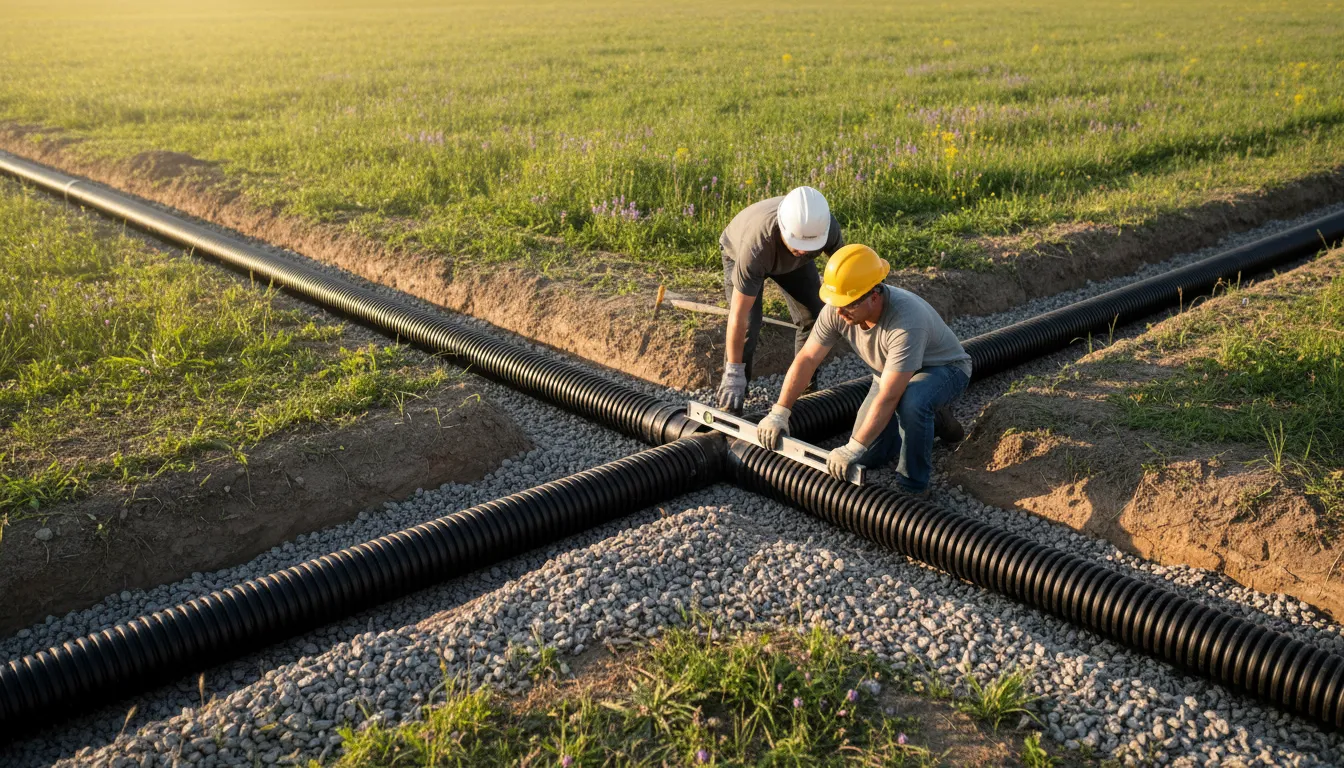
- System Installation: New perforated pipes are laid in gravel-filled trenches according to the engineered plan. All components, including the distribution box and connecting pipes to the septic tank, are installed.
- Backfilling and Compaction: The trenches are filled with specific soil materials. A soils engineer often certifies the compaction of these fill materials to ensure proper function.
- Final Inspection: The county inspector visits the site to verify the installation matches the permitted plans before the area is fully landscaped.
It's important to note that construction cannot take place during unfavorable weather conditions or heavy rains, as stipulated by local public works standards.
Maintaining Your New or Repaired Drain Field
Protecting your investment is crucial. Proper maintenance includes:
- Water Conservation: Spread out laundry and dishwasher use. Fix leaky faucets and toilets immediately.
- Mind What You Flush: Only human waste and toilet paper should go down the drain. Avoid chemicals, grease, and non-biodegradable items.
- Protect the Area: Never drive, park, or build structures over your drain field. Plant only grass or shallow-rooted plants nearby.
- Regular Pumping: Have your septic tank pumped every 3-5 years by a licensed professional to prevent solids from escaping into the drain field9.
Frequently asked questions
Sources
Footnotes
-
Order No. R8-2024-0001 Santa Ana Regional MS4 Permit - https://www.waterboards.ca.gov/santaana/board_info/agendas/2024/3-15-2024/item_10_ms4_permit_r8-2024-0001.pdf ↩
-
California Septic Tank Requirements | Onsite Wastewater ... - https://www.ntotank.com/blog/california-septic-tank-requirements ↩
-
How Much Does a Septic Soil Test Cost in 2026? - Land Perc - https://landperc.com/septic-soil-test-cost/ ↩
-
The Californian's Guide To Septic Tanks - https://cacciaplumbing.com/blog/california-septic-tank-guide/ ↩
-
public works standard notes - Fountain Valley - https://fountainvalley.gov/DocumentCenter/View/2541 ↩
-
Septic Tank Replacement and Drain Field Cost in California - https://www.lanikseptic.com/how-much-does-it-cost-to-replace-a-septic-tank-and-drain-field-in-california/ ↩
-
Septic Repair Cost in California: Complete Breakdown of Pricing ... - https://www.lanikseptic.com/septic-repair-cost/ ↩
-
What is the best septic system if your land fails a perc test? - https://www.premiertechaqua.com/en-us/blog/best-septic-system-failed-perc-test ↩
-
California Septic System Maintenance Guide - Lynch Plumbing - https://lynchplumbing.com/blog/california-septic-system-maintenance-guide/ ↩