Find the Best Drain Field Repair Companies for Your Business
No obligation • Fast responses • Nationwide coverage

Why you can trust Septic Spot
Septic Spot is a leading United States resource for understanding and comparing septic services. Our editors review providers using consistent criteria and verify key business details. Listings and scores are independent, and companies cannot pay to influence our content.
Search providers near you
Top Drain Field Repair Companies in Gilroy, California Ranked
A failing drain field, also known as a leach field or absorption system, is a serious issue for any property with a septic system. When this critical component stops properly dispersing treated wastewater, it can lead to soggy yards, foul odors, and even environmental contamination. In Gilroy, addressing these problems requires navigating specific local regulations and soil conditions. This resource helps you understand the process, costs, and key considerations for leach field repair or replacement, connecting you with qualified local professionals who can assess your situation.
Understanding Your Gilroy Drain Field
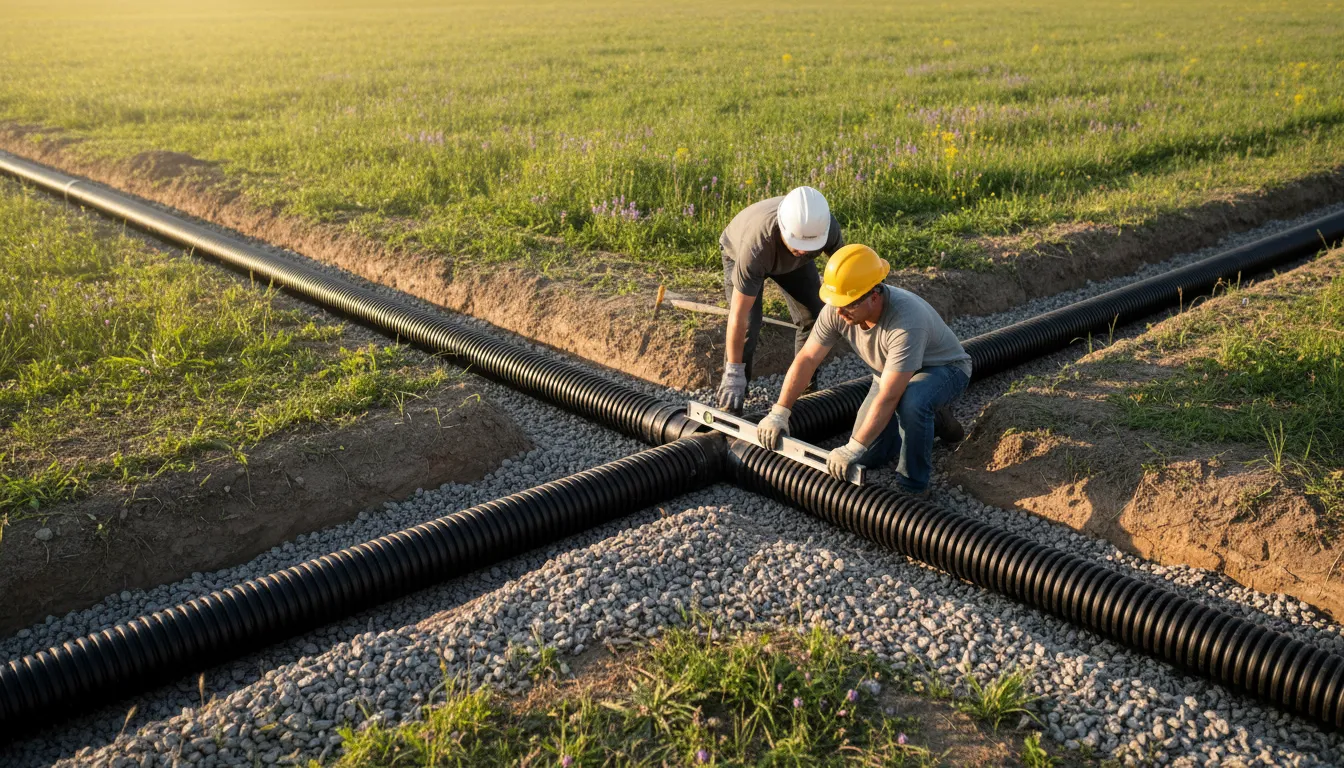
The drain field is the final stage of your onsite wastewater treatment system. After solids settle in the septic tank, liquid effluent flows into a network of perforated pipes buried in trenches filled with gravel. This effluent slowly percolates into the soil, where natural processes provide final treatment. In Gilroy, the performance of this system is heavily influenced by local geology. The area's clay soils and potential for high groundwater tables can significantly impact how a leach field functions and its longevity.
Common signs of a failing absorption system include:
- Sewage odors in the yard or home.
- Spongy, soggy, or standing water over the drain field area.
- Unusually green, lush grass over the field.
- Slow drains or sewage backups in the house.
If you notice any of these signs, it's crucial to act quickly. A failing system is a health hazard and violates Santa Clara County environmental codes.
Gilroy and Santa Clara County Regulations
Any work on a septic system in Gilroy is governed by strict regulations from the Santa Clara County Department of Environmental Health (DEH) and the City of Gilroy Building Division. You cannot simply hire a contractor to dig up and replace a leach line; the process is highly regulated to protect public health and groundwater.
Key regulatory steps include:
- Permitting: All repairs, alterations, or full replacements require a permit from the City of Gilroy Building Division.
- Local Agency Management Plan (LAMP): All systems must comply with Santa Clara County's LAMP, which outlines standards for design, construction, and maintenance. This plan often mandates engineered systems for properties with challenging soil or slope conditions.
- Setbacks: Your system must maintain minimum separation distances from property lines, wells, buildings, and watercourses. These setbacks are non-negotiable and can limit where a new drain field can be placed on your lot.
- Final Approval: The county requires inspections during construction and a final approval before the system can be put into use.
The Critical Role of Site Evaluation and Soil Testing
Before any repair or replacement plan is drawn, a licensed site evaluator or soil consultant must conduct a thorough site evaluation. This is the most important first step. The evaluation will determine if a conventional gravity-fed system is possible or if an advanced, engineered system is required.
The cornerstone of this evaluation is the soil percolation (perc) test. This test measures how quickly water drains through your soil. Santa Clara County regulations typically require a percolation rate between 1 and 12 inches per hour for a conventional system. In many parts of Gilroy, clay-heavy soils fail this test, meaning water drains too slowly for a standard leach field to work.
The evaluation will also assess:
- Soil Type: Clay soils are common and problematic.
- Slope: Properties with slopes over 20% face additional design challenges 1.
- Water Table: The depth of seasonal high groundwater is critical. A high water table can saturate a drain field, causing it to fail.
- Site Constraints: The location must avoid driveways, large trees, and future construction sites.
This professional evaluation, which typically costs between $300 and $800, provides the data needed to design a system that will work for your specific property 2.
Repair vs. Full Leach Field Replacement
The solution for your failing system depends on the extent of the damage and the results of the site evaluation.
Minor Repairs or Patching: In some cases, only a section of the drain field is damaged. Perhaps a tree root has invaded a single line, or soil compaction from vehicle traffic has caused a localized failure. A contractor may be able to excavate and repair just that portion. These targeted repairs can range from $500 to $2,500, but they are only a temporary fix if the overall system is old or the soil conditions are poor.
Full Drain Field Replacement: More often, a complete failure requires a full leach field replacement. This involves designing and installing an entirely new absorption system. Costs for a full replacement in Gilroy typically range from $5,000 to $20,000 or more 3 4. The wide range depends on:
- System Size: Based on your home's bedroom count and water usage.
- Excavation Complexity: Rocky soil or difficult access increases cost.
- System Type: Whether a conventional or more expensive engineered system is needed.
Find the perfect drain field repair companies for your needs
Get personalized recommendations and expert advice
Engineered System Solutions for Challenging Sites
If your property has poor percolation, a high water table, or excessive slope, a conventional gravity system will not be approved. Fortunately, several engineered or alternative system designs can work where conventional systems cannot. These are often required under the Santa Clara County LAMP for challenging sites 5.
- Mound Systems: Effluent is pumped to a raised, constructed sand mound above the natural soil. This is a common solution for high water tables or shallow bedrock.
- Sand Filter Systems: Wastewater passes through a lined bed of sand for treatment before dispersal, offering high-level treatment in a small area.
- Drip Irrigation Systems: Treated effluent is slowly dispersed under pressure through a network of small drip lines, often placed closer to the surface.
These engineered systems involve more complex components like pumps, timers, and alarms, and they come with higher installation costs and more stringent maintenance requirements. However, they are often the only viable solution to get a failing system back into compliance on a difficult lot.
The Step-by-Step Process for Gilroy Homeowners
Navigating a drain field project can feel overwhelming. Here's a typical roadmap:
- Diagnosis & Evaluation: Contact a licensed septic professional to diagnose the failure. They will likely recommend a full site evaluation and soil perc test by a qualified consultant 6.
- Design & Engineering: Using the site evaluation data, an engineer or qualified designer creates a system plan that meets county and state codes for your specific property.
- Permit Submission: The design plans are submitted to the Santa Clara County DEH and the City of Gilroy Building Division for review and permit approval 7 8.
- Construction: Once permitted, a licensed installer constructs the system. The county will require inspections at key stages, such as after trench excavation and before backfilling 9.
- Final Inspection & Approval: After construction, a final inspection by the county is required to approve the system for use.
Maintaining Your New or Repaired System
A new drain field is a major investment. Protect it with proper care:
- Pump Regularly: Have your septic tank pumped every 3-5 years by a licensed pumper to prevent solids from clogging the new field.
- Conserve Water: Spread out laundry loads and fix leaks to avoid hydraulically overloading the system.
- Mind What You Flush: Only human waste and toilet paper. Never flush chemicals, wipes, or grease.
- Protect the Area: Never drive or park over the drain field, and avoid planting trees or shrubs with deep roots nearby.