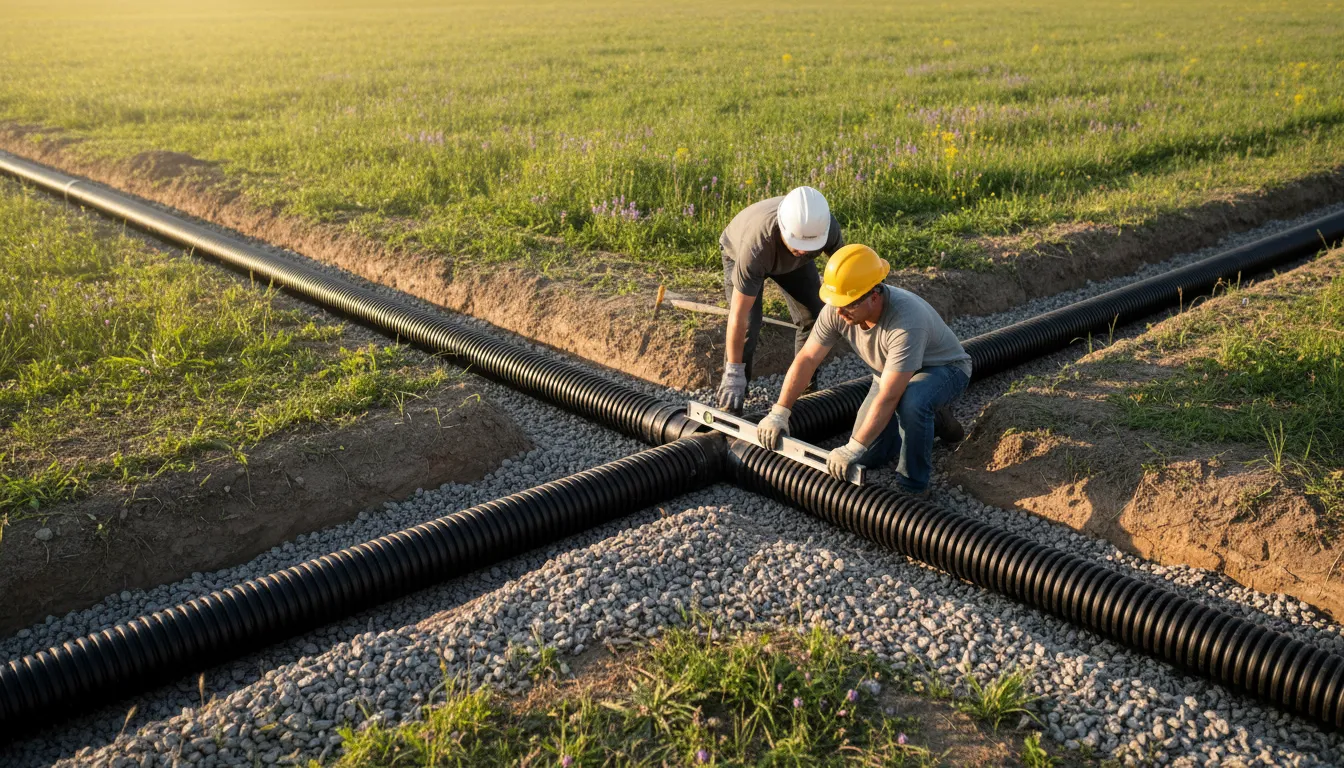
Find the Best Drain Field Repair Companies for Your Business
No obligation • Fast responses • Nationwide coverage

Why you can trust Septic Spot
Septic Spot is a leading United States resource for understanding and comparing septic services. Our editors review providers using consistent criteria and verify key business details. Listings and scores are independent, and companies cannot pay to influence our content.
Search providers near you
Top Drain Field Repair Companies in Glendora, California Ranked
A failing septic drain field is a serious issue that can lead to sewage backups, soggy lawns, and environmental contamination. Drain field repair or replacement involves addressing the underground network of perforated pipes and soil that treats and disperses wastewater from your home. In Glendora, this process is strictly regulated to protect public health and local groundwater. This guide helps you understand the local requirements, typical costs, and steps involved in restoring your onsite wastewater system.
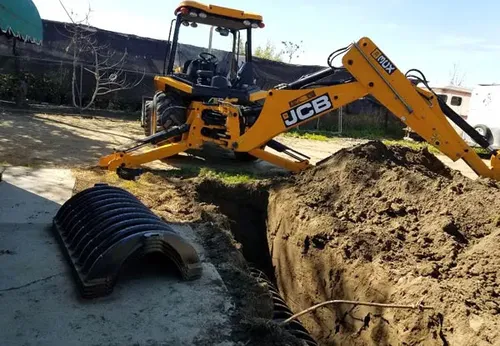
Señor Septic Construction & Pumping
Los Angeles, CA
Señor Septic Construction & Pumping is a family-owned septic system contractor serving Los Angeles, CA, and surrounding areas including San Bernardino and Riverside counties. With over 23 years of experience, they provide septic tank pumping, inspection, repair, installation, and drain field services. The company is licensed and follows local codes, offering services such as septic tank clean-outs using modern equipment, new system installations including tanks and drain fields, and aerobic wastewater treatment system installations. They also handle all necessary permits and health inspections. Señor Septic is available Monday through Friday with Saturday appointments by request.
Septic Tank Pumping USA
1367 Foothill Blvd, La Cañada Flintridge, CA 91011
Septic Tank Pumping USA provides septic tank pumping, inspection, and repair services in Los Angeles, CA. They handle routine maintenance and emergency repairs, including drain field repair or replacement. The company emphasizes regular pumping every 3-5 years to prevent system failures and environmental risks. They also offer thorough inspections to assess tank and drain field conditions. Septic Tank Pumping USA serves the local area with expertise in managing septic system health and compliance with local regulations.
Understanding Your Septic Drain Field
The drain field, also known as a leach field or absorption field, is the final and most critical stage of a septic system. After solids settle in the tank, liquid effluent flows into a distribution box and out through a series of perforated pipes buried in trenches filled with gravel. This effluent slowly percolates into the soil, where natural processes provide final treatment. When this area fails, it's often due to soil clogging (biomat formation), physical damage, or hydraulic overload. Recognizing early signs-like slow drains, sewage odors, or unusually lush, wet patches in your yard-is key to preventing a complete system shutdown and more expensive repairs.
Glendora's Regulatory Landscape
Any work on a septic system in Glendora requires formal approval. The City of Glendora Building Division is the primary permitting authority, and they typically enforce regulations aligned with Los Angeles County Department of Public Health guidelines. You cannot begin excavation or replacement without the proper permits, which involve submitting a detailed site plan and system design for review.
Mandatory Site Evaluation: The Percolation Test
A cornerstone of the permitting process is the soil percolation test, or "perc test." This test, conducted by a qualified professional, measures how quickly water drains through your soil at the proposed drain field site. The results, reported in minutes per inch, determine the soil's suitability and the size of the drain field required. Soils in Glendora must demonstrate adequate infiltration rates, typically within a specific range, to receive approval. This test alone can cost around $1,300 and is a non-negotiable first step for any new installation or major replacement.
Critical Design Setbacks and Slope Restrictions
Your system design must comply with strict separation distances from property lines, wells, streams, and structures. Furthermore, slope is a major factor. Installation on slopes exceeding 35% is generally prohibited, and slopes over 20% often require a detailed geotechnical report 1. The design must also ensure a minimum vertical separation (typically greater than 5 feet) from the seasonal high groundwater table to prevent contamination 2. These rules ensure the system functions properly and protects both your property and the community's water resources.
The Repair vs. Replacement Decision
Not all drain field problems require a full replacement. A professional assessment is essential to determine the best course of action.
Drain Field Repair might be possible for localized issues. This could involve:
- Jet Cleaning: Using high-pressure water to clear clogged perforations in the pipes.
- Trench Rejuvenation: Adding new gravel or replacing a section of crushed pipe.
- Biomat Reduction: Introducing specific bacteria or oxygen to break down the clogging layer in the soil.
However, if the soil is permanently saturated or the entire field has failed, complete drain field replacement becomes necessary. This involves designing a new leach field in a different location or using an advanced alternative technology on the same site.
Find the perfect drain field repair companies for your needs
Get personalized recommendations and expert advice
The Drain Field Replacement Process in Glendora
Replacing a leach field is a multi-step project that requires professional expertise. Here's what you can generally expect:
- Professional Site Assessment & Perc Test: A licensed septic contractor or engineer evaluates your property, performs the mandatory perc test, and assesses the condition of your existing tank and plumbing.
- System Design & Permit Application: Based on the site evaluation, a new system is designed to meet all city and county codes. These plans are submitted to the Glendora Building Division for permit approval 3.
- Excavation & Removal: The old, failing drain field is excavated. Old pipes and gravel may be removed or, in some cases, abandoned in place if approved.
- New Field Installation: New trenches are dug according to the approved plan. Perforated pipes are laid in beds of clean gravel, connected to the distribution box, and covered with a geotextile fabric and soil.
- Final Inspection & Restoration: A city or county inspector will visit to approve the installation before the trenches are fully backfilled. Once approved, the yard can be graded and landscaped 4.
Cost Factors for Drain Field Work in Glendora
Costs for septic leach field work vary significantly based on the scope and site conditions. Major repairs or a full replacement is a substantial investment.
- Drain Field Repair: Costs can vary wildly based on the extent of damage, but significant repairs often start around $7,000 or more.
- Full Drain Field Replacement: For a conventional gravity-fed system, total replacement costs typically range from $5,000 to $12,000. If your site requires an advanced alternative system (like a mound, drip irrigation, or aerobic treatment unit) due to poor soil or space constraints, costs can range from $8,000 to over $30,000 5 6.
- Permit Fees: Plan for permit fees to range from approximately $450 to $2,000, depending on the project's complexity 7.
- Key Cost Drivers: The final price is heavily influenced by soil conditions (revealed by the perc test), site accessibility for heavy equipment, the size of the system required for your household, and whether an engineered alternative system is needed 8.
Disclaimer: All cost estimates and regulatory information are subject to change. Always consult directly with the City of Glendora Building Division and obtain quotes from licensed local contractors for your specific project.
Frequently asked questions
Sources
Footnotes
-
The Californian's Guide To Septic Tanks - https://cacciaplumbing.com/blog/california-septic-tank-guide/ ↩
-
California Septic Tank Requirements | Onsite Wastewater Treatment ... - https://www.ntotank.com/blog/california-septic-tank-requirements ↩
-
city of glendora - building division (818) 914-8222 - https://etrakit.ci.glendora.ca.us/etrakit3/viewAttachment.aspx?Group=GEO&ActivityNo=CONV:121111213406016674&key=SCNR%3A140918043734530 ↩
-
Septic Tank Replacement and Drain Field Cost in California - https://www.lanikseptic.com/how-much-does-it-cost-to-replace-a-septic-tank-and-drain-field-in-california/ ↩
-
How Much Does Septic System Repair Really Cost in California - https://www.lanikseptic.com/septic-repair-cost/ ↩
-
Septic System Installation Cost [2025 Data] - HomeAdvisor - https://www.homeadvisor.com/cost/plumbing/install-a-septic-tank/ ↩
-
Cost to Replace Septic Tank and Drain Field [2026 Data] | Angi - https://www.angi.com/articles/how-much-new-drain-fields-foot.htm ↩
-
Cost to Replace Septic Tank and Drain Field [2026 Data] - https://www.angi.com/articles/how-much-new-drain-fields-foot.htm ↩