Find the Best Drain Field Repair Companies for Your Business
No obligation • Fast responses • Nationwide coverage

Why you can trust Septic Spot
Septic Spot is a leading United States resource for understanding and comparing septic services. Our editors review providers using consistent criteria and verify key business details. Listings and scores are independent, and companies cannot pay to influence our content.
Search providers near you
Top Drain Field Repair Companies in La Mesa, California Ranked
A failing drain field, also known as a leach field or absorption field, is a serious issue for any home with a septic system. This critical component is responsible for safely dispersing and filtering treated wastewater into the soil. When it malfunctions, it can lead to sewage backups, foul odors, and environmental contamination. For La Mesa homeowners, navigating the repair or replacement of a septic drain field involves understanding local regulations, soil conditions, and associated costs. This guide provides the essential information to help you identify problems, understand the process, and connect with qualified local professionals for your leach field project.
Dr. Septic
San Diego, CA
Dr. Septic is a septic tank pumping, inspection, and repair company based in San Diego, CA. They provide services including septic tank pumping, certification, and drain field repair or replacement. Known for attention to detail, Dr. Septic handles complex issues such as clogged septic systems and leach field replacements. Customers have noted their thorough approach and willingness to accommodate urgent needs, including weekend work.
USA Septic
1317 Simpson Way Suite B, Escondido, CA 92029
USA Septic is a septic tank pumping, inspection, repair, and installation company serving San Diego, CA. They provide services including septic system construction, pumping, drain cleaning, and certifications. Their expertise covers drain field repair and replacement, helping maintain and protect septic systems. USA Septic offers guidance on septic system ownership to help customers care for their systems properly.

Abbott Septic Service
3833 Linda Vista Dr, San Marcos, CA 92078
Abbott Septic Service is a septic tank company serving Los Angeles, CA, and the surrounding San Diego County area. They provide septic tank pumping, cleaning, repair, installation, and locating services. Abbott Septic Service is a licensed Class A general engineering contractor capable of major septic system construction work, including excavation, grading, trenching, and drain field installation. Established in 1948, the company has decades of experience and offers 24/7 phone availability for septic system needs.
Understanding Your Septic Drain Field
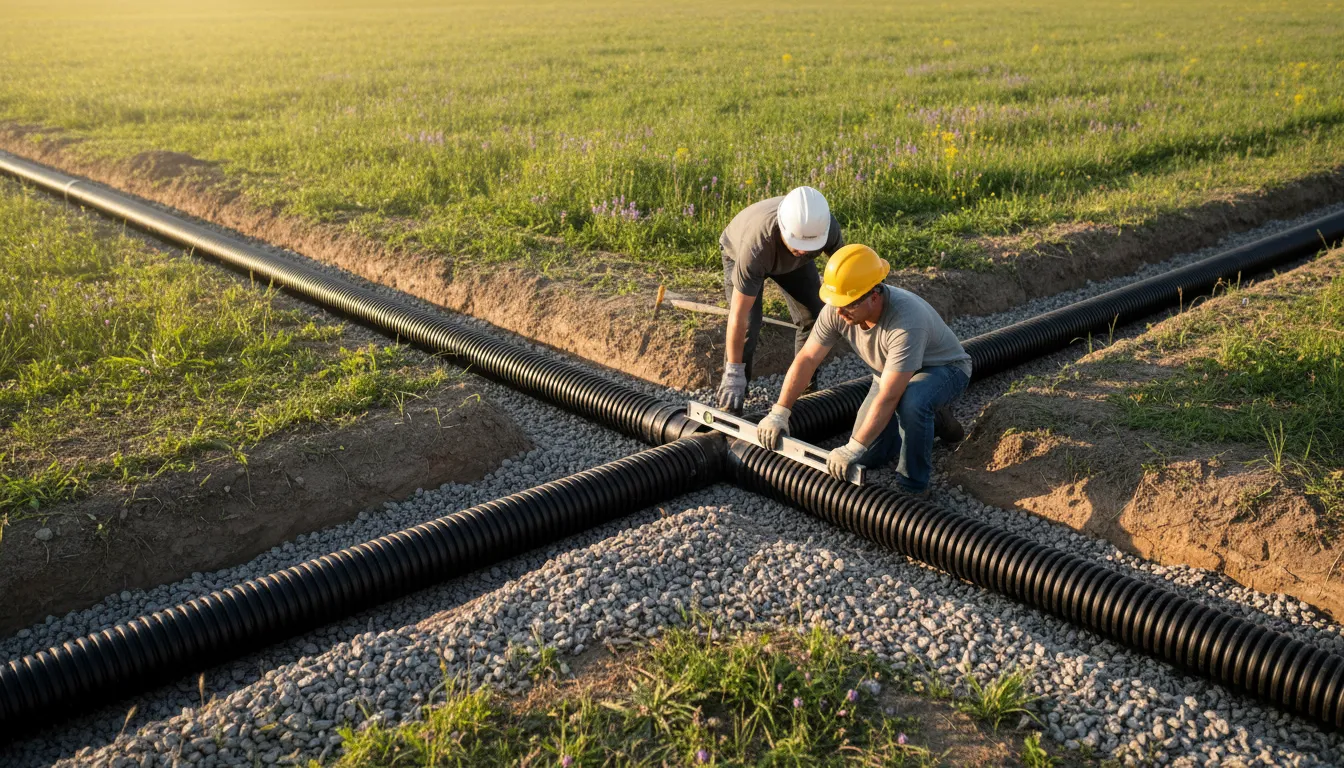
The drain field is the final stage of your onsite wastewater treatment system. After solids settle in the septic tank, the liquid effluent flows into a network of perforated pipes buried in trenches filled with gravel. This effluent slowly percolates into the surrounding soil, where natural processes provide final treatment. A properly functioning leach field is vital for protecting both your property and public health. In La Mesa, with its specific soil types and regulations, ensuring your system is up to code is especially important.
Signs You Need Drain Field Service
Recognizing early warning signs can prevent a complete system failure and more expensive repairs. Common indicators that your absorption field may need attention include:
- Slow Drains and Sewage Backups: If multiple household drains are slow or toilets back up, especially after rain, it could signal that the drain field is saturated and not absorbing water.
- Foul Odors: Unpleasant smells around the drain field area or inside your home often indicate that wastewater is not percolating properly and is pooling near the surface 1.
- Lush, Wet Patches: Grass over the drain field that is unusually green, spongy, or wet when the rest of the yard is dry is a classic sign of effluent surfacing.
- Gurgling Sounds: Strange noises from your plumbing can suggest a blockage or failure in the system.
If you notice any of these issues, it's crucial to contact a septic professional for an inspection immediately. Soil failure, often due to high clay content or a rising water table, is a common reason for drain field failure in our region and typically requires a professional assessment.
La Mesa Regulations and Permit Requirements
All work on septic systems in La Mesa falls under the jurisdiction of the San Diego County Department of Environmental Health and Quality (DEHQ). You cannot begin any repair or replacement without the proper permits.
- Permit Authority: The County DEHQ oversees all septic systems and requires permits for new installations, replacements, and significant repairs 2. A failed system must be upgraded or replaced to meet current California code standards.
- Local Compliance: The City of La Mesa also requires compliance with its own grading and stormwater management standards. For any significant excavation, you may need a Stormwater Pollution Prevention Plan (SWPPP) or Construction Stormwater Management Plan (CSWMP) 3.
- System Standards: All components used in the system must be IAPMO-approved (International Association of Plumbing and Mechanical Officials) 4.
The permit process ensures your new or repaired leach field is designed and installed to protect groundwater and comply with all health and safety regulations.
Key Site and Soil Requirements
The feasibility and design of your drain field are dictated by your property's specific conditions. San Diego County enforces strict standards:
- Percolation Rate: The soil must absorb water at a rate between 1 and 12 inches per hour. A soil test (perc test) is required to determine this.
- Groundwater Separation: There must be a minimum of 5 feet of unsaturated soil between the bottom of the drain field trench and the seasonal high groundwater level 5 6.
- Slope Restrictions: Drain fields should generally not be placed on slopes exceeding 35%. Slopes over 20% typically require a geotechnical report 7.
- Setbacks: Systems must maintain specific distances from wells (typically 100 feet minimum), buildings, property lines, and water lines.
Find the perfect drain field repair companies for your needs
Get personalized recommendations and expert advice
The Drain Field Repair & Replacement Process
Replacing or repairing a leach field is a multi-step project that requires professional expertise from start to finish.
- Site Evaluation and Soil Test: A licensed professional performs a percolation test to evaluate the soil's absorption capacity. This test, which can cost between $300 and $3,000 for complex sites, is the foundation for the system design 8.
- System Design and Permit Submission: Based on the soil test and site evaluation, an engineer or qualified designer creates a plan for the new or repaired drain field. This plan, along with the permit application, is submitted to the San Diego County DEHQ for approval 9.
- Construction: Once permitted, excavation begins. For a full replacement, the old leach field is typically abandoned, and new trenches are dug. The system is constructed with approved materials according to the engineered plan.
- Inspections: The City of La Mesa requires inspections at critical phases, such as before the drain field trenches are backfilled 10. County inspectors will also visit to ensure compliance with the approved design.
- Final Approval: After passing all inspections and ensuring the system is functioning correctly, you will receive final approval from the county.
Understanding the Costs Involved
The cost for drain field work in La Mesa varies widely based on the extent of the failure, soil conditions, and the size of the system required.
- Soil Percolation Test: $300 - $800, potentially up to $3,000 for difficult sites 11.
- Drain Field Repairs: Targeted repairs to specific leach lines or sections typically range from $6,000 to $10,000.
- Full Drain Field Replacement: Completely replacing the absorption field often costs between $8,000 and $20,000 or more 12 13 14. Complex sites with poor soil or the need for an advanced, engineered treatment system will be at the higher end of this range or exceed it.
- Permits and Design: These are additional costs that vary based on the project's scope and jurisdiction.
It's important to get detailed, written estimates from several licensed contractors. The lowest bid may not include all necessary permits, engineering, or compliance measures, leading to costly problems down the line.
Choosing a Professional in La Mesa
Selecting the right contractor is the most important decision you'll make. Look for a professional with:
- A valid C-42 (Sanitation System) contractor's license from the California Contractors State License Board (CSLB).
- Extensive local experience in La Mesa and San Diego County.
- Strong knowledge of DEHQ and City of La Mesa permit processes.
- Positive references and reviews from past clients for similar leach field projects.
- Clear, detailed written proposals and warranties.
A reputable provider will handle the entire process-from the initial site evaluation and soil testing to securing permits, performing the work, and scheduling all necessary inspections.
Frequently asked questions
Sources
Footnotes
-
The SoCal Guide to Septic Tank Installation - https://www.lanikseptic.com/socal-guide-septic-tank-installation/ ↩
-
Septic Systems - County of San Diego - https://www.sandiegocounty.gov/content/sdc/deh/lwqd/lu_septic_systems.html ↩
-
Construction Requirements | La Mesa, CA - Official Website - https://www.cityoflamesa.gov/236/Construction-Requirements ↩
-
Southern California Septic System Regulations: What You Need to ... - https://www.lanikseptic.com/socal-septic-regulations/ ↩
-
Frequently Asked Questions on Septic Systems - https://www.sandiegocounty.gov/content/sdc/deh/lwqd/lu_septic_systems/lu_septic_faqs_page.html ↩
-
The Californian's Guide To Septic Tanks - https://cacciaplumbing.com/blog/california-septic-tank-guide/ ↩
-
Septic Installation in San Diego vs Other Regions: Key Differences - Mineo Bros Septic - https://www.mineobrosseptic.com/news/septic-installation-in-san-diego-vs-other-regions-key-differences/ ↩
-
From Start to Finish: How Long Does It Take to Install a Septic System? - https://westcoastsanitationinc.com/how-long-does-it-take-to-install-a-septic-system/ ↩
-
California Septic Tank Requirements | Onsite Wastewater ... - https://www.ntotank.com/blog/california-septic-tank-requirements ↩
-
Permits for Homeowners | La Mesa, CA - Official Website - https://www.cityoflamesa.gov/1112/Permits-for-Homeowners ↩
-
How Much Does a Septic Soil Test Cost in 2026? - Land Perc - https://landperc.com/septic-soil-test-cost/ ↩
-
How Much Does Septic System Repair Really Cost in California - https://www.lanikseptic.com/septic-repair-cost/ ↩
-
Septic Tank Replacement and Drain Field Cost in California - https://www.lanikseptic.com/how-much-does-it-cost-to-replace-a-septic-tank-and-drain-field-in-california/ ↩
-
Cost to Replace Septic Tank and Drain Field [2026 Data] | Angi - https://www.angi.com/articles/how-much-new-drain-fields-foot.htm ↩