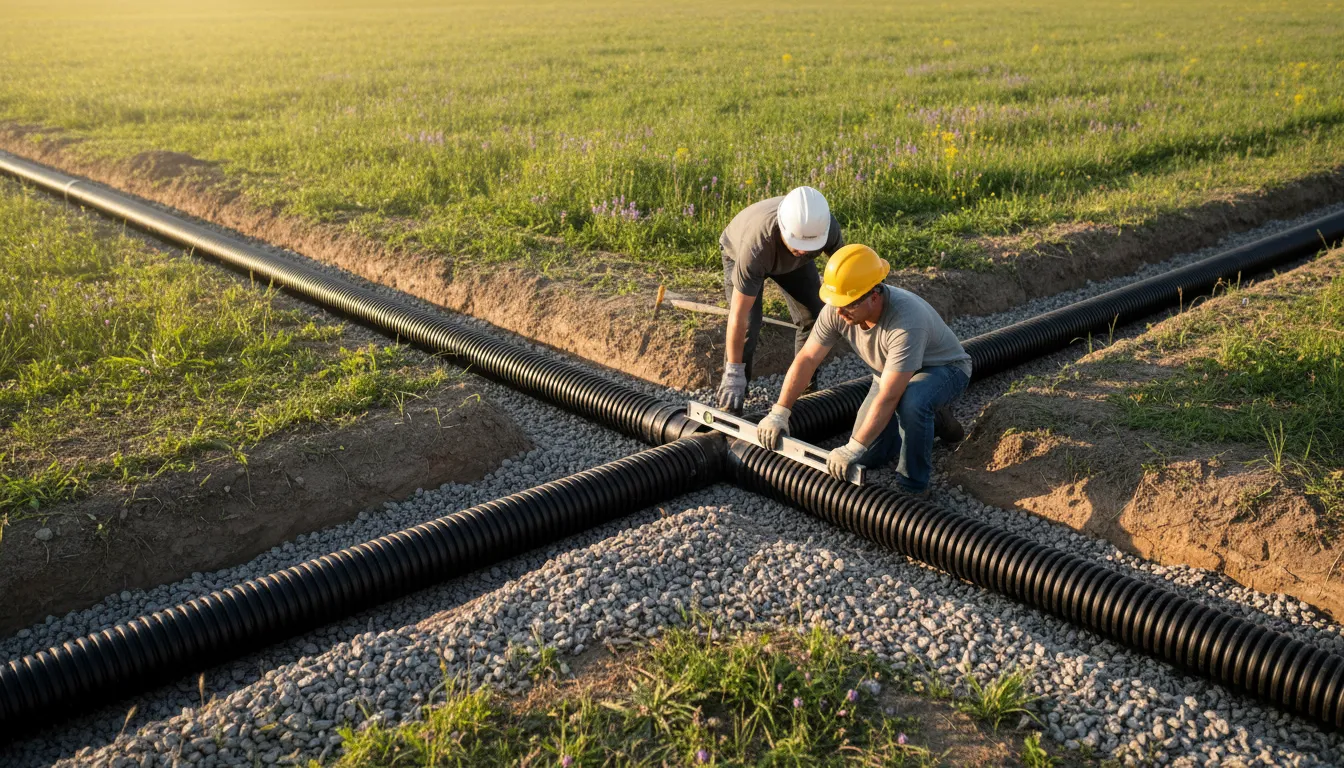
Find the Best Drain Field Repair Companies for Your Business
No obligation • Fast responses • Nationwide coverage

Why you can trust Septic Spot
Septic Spot is a leading United States resource for understanding and comparing septic services. Our editors review providers using consistent criteria and verify key business details. Listings and scores are independent, and companies cannot pay to influence our content.
Search providers near you
Top Drain Field Repair Companies in Lake Forest, California Ranked
A failing drain field, also known as a leach field or absorption field, is a serious issue for any home with a septic system. This critical component is responsible for safely dispersing and filtering treated wastewater into the soil. When it malfunctions, it can lead to soggy yards, foul odors, and even sewage backups into your home. For Lake Forest residents, navigating the repair or replacement of a septic drain field involves strict adherence to Orange County Environmental Health guidelines, specialized local contractors, and a significant investment. This guide explains the process, costs, and local regulations to help you understand your options and connect with qualified professionals in the area.
Gardner Septic Services
Los Angeles, CA
Gardner Septic Services is a family-owned company based in Los Angeles, CA, specializing in septic system design, installation, pumping, repairs, inspections, and certifications. Serving the Inland Empire area including Riverside, Moreno Valley, Woodcrest, Yucaipa, Redlands, and nearby communities, they handle projects ranging from small repairs to complete septic system installations. With over 20 years of experience and licensed as a C-42 sanitation systems contractor, Gardner Septic Services offers comprehensive septic solutions including septic tank locating, riser and lid installations, and drain field repairs. They provide 24/7 emergency septic services to address urgent needs at any time.
Aztec Excavation Inc. & Septic
37801 Oxford Dr, Murrieta, CA 92562
Aztec Excavation Inc. & Septic is a licensed sanitation system contractor based near Los Angeles, CA, specializing in septic system installation, repair, and excavation services. Serving Riverside and San Diego counties, the company handles septic tank installation, drain field repair, trench building, lot preparation, and utility line installation. With over a decade of experience, Aztec Excavation offers capabilities such as advanced treatment unit installation and septic system component repairs. The business operates 24/7 to support residential septic and excavation needs in areas including Murrieta, Temecula, and Wildomar.

AMC Contractors
21657 Temescal Canyon Rd, Corona, CA 92883
AMC Contractors is a family-owned septic system contractor serving Los Angeles, CA, and surrounding areas. With over 30 years of experience since 1981, they provide a full range of septic services including installation, repair of leach lines and seepage pits, septic tank pumping, and inspections for real estate transactions or building permits. AMC Contractors combines extensive industry knowledge with the latest technology to address various septic system needs. Their team is available to assist with questions and provide reliable service.
Understanding Your Septic Drain Field
The drain field is the final stage of your onsite wastewater treatment system. After solids settle in the septic tank, the liquid effluent flows through a distribution box into a network of perforated pipes buried in trenches filled with gravel. This effluent slowly percolates into the soil, where natural processes provide final treatment. Over time, these systems can fail due to soil compaction, hydraulic overloading, root intrusion, or the natural buildup of a biomat layer that prevents proper drainage. In Lake Forest, the specific soil conditions and local topography mean that a professional evaluation is the essential first step.
Local Regulations and Permit Requirements in Orange County
Any significant repair or full replacement of a septic system component in Lake Forest requires a permit from the Orange County Environmental Health Department. The regulations are designed to protect public health and groundwater quality. Key requirements include:
- Site Setbacks: The system must maintain proper separation distances from groundwater (typically 5 feet from the trench bottom), buildings, property lines, and water wells.
- Soil Suitability: The soil must have an acceptable percolation rate, generally between 1 and 12 inches per hour, to absorb the effluent. A site evaluation with at least two test pits in the proposed repair area is mandatory to determine this 1.
- Geotechnical Reports: For properties with steep slopes (often over 35%), a formal geotechnical report may be required to assess stability and suitability 2 3.
- Engineered Design: For most replacements and many repairs, a licensed engineer or qualified professional must design the system and submit plans for approval.
It's crucial to work with a contractor familiar with these local codes, as regulations can change. Always verify current requirements with Orange County Environmental Health and your chosen professional.
The Step-by-Step Process for Drain Field Work
Addressing a failing leach field is a multi-stage process that involves both evaluation and construction.
- System Evaluation & Inspection: A licensed professional will perform a full inspection, which requires access to the septic tank to assess the entire system's condition and confirm the drain field is the source of the problem 4.
- Site Assessment & Soil Testing: This critical phase involves conducting percolation tests and digging soil evaluation pits to determine the absorption capacity of your property and size the new or repaired field appropriately 5.
- Engineered Design & Planning: Based on the site assessment, a detailed plan for the repair or new absorption field is created. This plan specifies the type of system, layout, materials, and construction methods.
- Permit Acquisition: The design plans, along with the required fees, are submitted to the local environmental health department for review and approval before any work can begin.
- Construction & Final Inspection: The old field may be abandoned, and the new lateral lines are installed. The work must be inspected by the county health inspector before the trenches are backfilled and the site is restored.
Find the perfect drain field repair companies for your needs
Get personalized recommendations and expert advice
Types of Drain Field Systems and Repair Options
The solution for your property depends on the site evaluation. Common options in the Lake Forest area include:
- Conventional Trenches: The most common type, involving gravel-filled trenches with perforated pipes. Repair might involve replacing clogged sections or adding new lateral lines.
- Advanced Treatment Systems: For sites with poor soil or space constraints, alternative systems like aerobic treatment units (ATUs) or mound systems may be necessary. These systems provide additional treatment before the effluent reaches the drain field and can be significantly more expensive 6.
- Partial Repairs vs. Full Replacement: Sometimes, only a portion of the field has failed and can be repaired. However, if the entire field is saturated or the soil is spent, a full replacement in a new location on the property is often required.
Cost Breakdown for Drain Field Projects
The cost for leach field repair or replacement in Lake Forest varies widely based on system type, soil conditions, and site accessibility. Here is a general breakdown based on available data:
- Conventional Drain Field Replacement: Costs typically range from $5,000 to $12,000 for a standard system.
- Alternative/Advanced System Replacement: For properties requiring engineered solutions like aerobic systems or mounds, costs can range from $8,000 to $30,000 or more.
- Component and Material Costs: The lateral piping itself averages $9 to $12 per linear foot 7.
- Associated Soft Costs: Permit fees, soil testing, and engineering design can add several thousand dollars to the total project cost 8. Optional components, like a septic aerator for certain systems, can cost between $300 and $900 9.
These are estimates, and obtaining multiple quotes from licensed local contractors is essential for an accurate price for your specific situation.
Maintaining Your New or Repaired Drain Field
Once your absorption field is repaired or replaced, proper maintenance is key to its longevity. This includes regular septic tank pumping (every 3-5 years), conserving water to avoid overloading the system, avoiding planting trees near the field, and never driving or parking heavy equipment over it. Protecting your investment starts with the quality of the installation and continues with responsible homeowner habits.
Frequently asked questions
Sources
Footnotes
-
The Californian's Guide To Septic Tanks - https://cacciaplumbing.com/blog/california-septic-tank-guide/ ↩
-
California Septic Tank Requirements | Onsite Wastewater ... - https://www.ntotank.com/blog/california-septic-tank-requirements ↩
-
Procedures for Installing a Septic System - Lake County - https://www.lakecountyca.gov/DocumentCenter/View/643/Procedures-for-Installing-a-Septic-System-PDF ↩
-
Septic Tank Inspection Preparation | Lake Forest Park - https://thesepticgroup.com/how-to-prepare-for-your-septic-tank-inspection/ ↩
-
Southern California Septic System Regulations: What You Need to ... - https://www.lanikseptic.com/socal-septic-regulations/ ↩
-
The SoCal Guide to Septic Tank Installation - https://www.lanikseptic.com/socal-guide-septic-tank-installation/ ↩
-
Cost to Replace Septic Tank and Drain Field [2026 Data] | Angi - https://www.angi.com/articles/how-much-new-drain-fields-foot.htm ↩
-
Septic Repair Cost in California: Complete Breakdown of Pricing ... - https://www.lanikseptic.com/septic-repair-cost/ ↩
-
How Much Does A Septic System Cost? - https://uniquedrainseptic.com/blogs/resources/how-much-does-a-septic-system-cost ↩