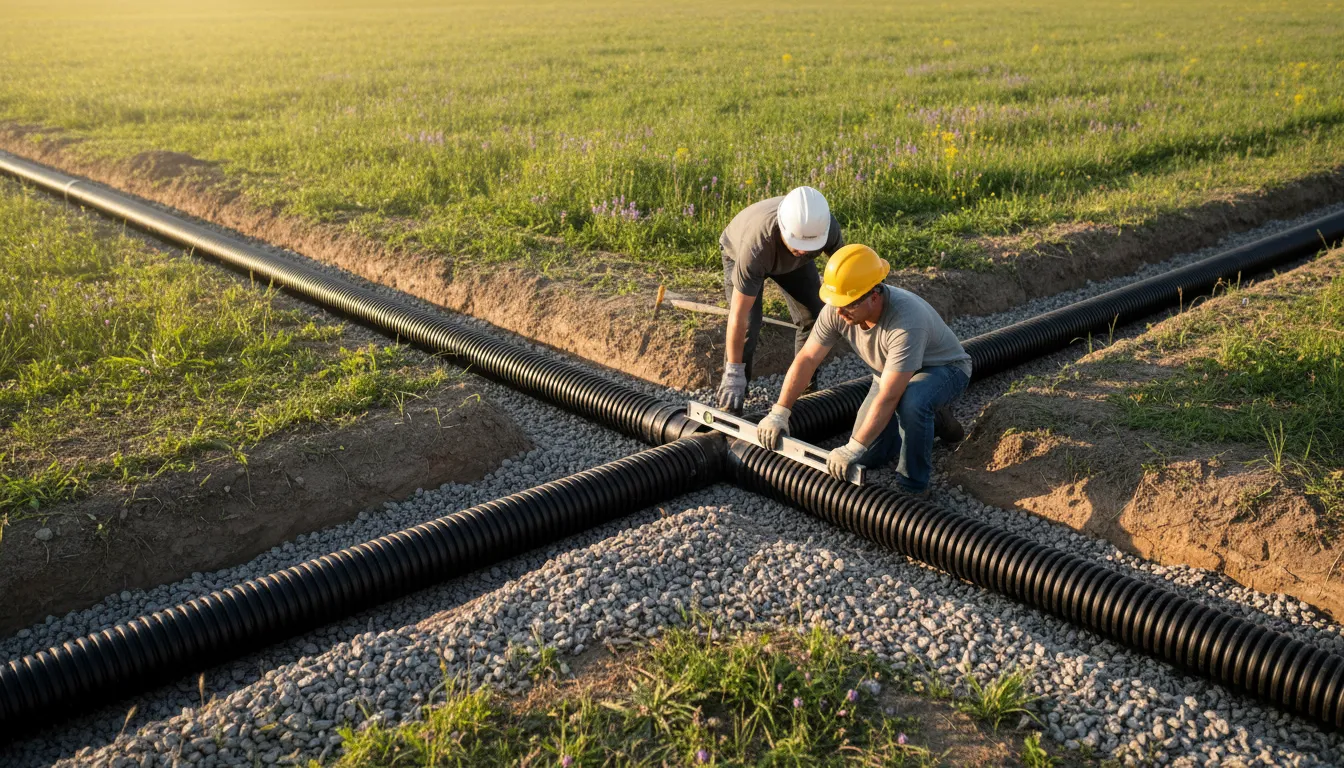
Find the Best Drain Field Repair Companies for Your Business
No obligation • Fast responses • Nationwide coverage

Why you can trust Septic Spot
Septic Spot is a leading United States resource for understanding and comparing septic services. Our editors review providers using consistent criteria and verify key business details. Listings and scores are independent, and companies cannot pay to influence our content.
Search providers near you
Top Drain Field Repair Companies in Lynwood, California Ranked
A failing drain field is a serious issue for any home with a septic system. This critical component, also known as a leach field or absorption field, is responsible for safely dispersing and filtering treated wastewater into the soil. When it malfunctions, it can lead to sewage backups, soggy yards, and environmental contamination. In Lynwood, navigating the repair or replacement of a septic drain field involves specific local regulations and site conditions. This guide will help you understand the process, costs, and key considerations for finding qualified professionals to restore your system's function.
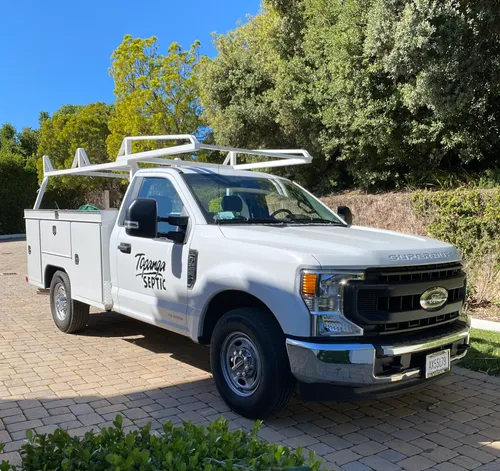
Topanga Septic
22028 Ventura Blvd Ste. 101, Woodland Hills, CA 91364
Topanga Septic is a septic tank service provider located in Los Angeles, CA. They offer a range of services including septic tank pumping, inspections, repairs, installations, and drain field repair or replacement. Their capabilities include excavation, grading, and advanced system monitoring to support system upgrades and maintenance in compliance with new regulations. The company is licensed, bonded, and insured, with certifications from COWA and NAWT. They serve Topanga Canyon, Malibu, and the Greater Los Angeles Area, focusing on preserving natural surroundings during their work.
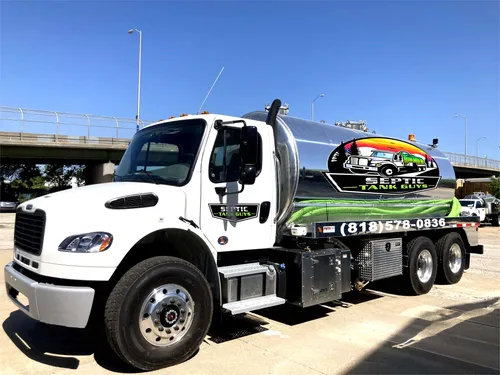
Septic Tank Pumping Guys
6360 Van Nuys Blvd ste 113, Van Nuys, CA 91401
Septic Tank Pumping Guys provides a full range of septic services in Los Angeles, CA, including pumping, inspections, repairs, and installations for residential and commercial properties. They offer 24/7 emergency septic services and specialize in maintaining system health through regular pump-outs, cleaning, and drain field repairs. Their capabilities include septic tank installation, effluent filter replacement, and grease trap pumping. The company is family owned and operated, serving multiple communities within Los Angeles County.
Septic Tank Pumping USA
1367 Foothill Blvd, La Cañada Flintridge, CA 91011
Septic Tank Pumping USA provides septic tank pumping, inspection, and repair services in Los Angeles, CA. They handle routine maintenance and emergency repairs, including drain field repair or replacement. The company emphasizes regular pumping every 3-5 years to prevent system failures and environmental risks. They also offer thorough inspections to assess tank and drain field conditions. Septic Tank Pumping USA serves the local area with expertise in managing septic system health and compliance with local regulations.
Understanding Your Drain Field System
Your septic system is a two-part wastewater treatment plant for your property. The septic tank holds solids and begins the breakdown process, while the drain field performs the final treatment. A network of perforated pipes buried in gravel-filled trenches allows the liquid effluent from the tank to slowly seep into the soil, where natural processes remove harmful bacteria and nutrients. In Lynwood and across Los Angeles County, these systems must be designed to protect both public health and groundwater quality. Common signs of a failing leach field include persistently wet or soggy soil over the area, sewage odors, slow-draining household fixtures, and unusually lush grass growth directly over the trenches.
Lynwood and Los Angeles County Regulations
All work on septic systems in Lynwood falls under the jurisdiction of the Los Angeles County Department of Public Works. The county enforces California's statewide Onsite Wastewater Treatment Systems (OWTS) policy, which sets strict standards for design, installation, and repair. You cannot begin any repair or replacement project without first obtaining the necessary permits. The county requires that the entire system, including the new absorption field, be located entirely on your property. Furthermore, there are mandatory setback distances from structures, property lines, wells, and water lines that must be adhered to, often ranging from 50 to 100 feet from wells and 10 to 20 feet from buildings and property lines.
The Critical Role of Site Evaluation
Before any plans are drawn, a professional must conduct a thorough site evaluation. This is the most important step in the process, as the soil and site conditions dictate the entire project's feasibility, design, and cost. The evaluation focuses on several key factors:
- Soil Percolation Test: Often called a "perc test," this measures how quickly water drains through your soil. For a conventional system to be approved in California, the soil must have a percolation rate between 1 and 12 inches per hour 1. This test typically costs between $300 and $800.
- Groundwater Depth: Regulations require a minimum of 5 feet of vertical separation between the bottom of the drain field trench and the highest seasonal groundwater level. Shallow groundwater can disqualify a site for a conventional field.
- Soil Type and Slope: Sites with high clay content, fill dirt, or areas prone to flooding are not suitable for standard effluent dispersal 2. Furthermore, properties with steep slopes-generally over 35%, or over 20% with other concerns-will require a specially engineered system 3.
When Repair or Replacement is Necessary
Not all problems require a full leach field replacement. Sometimes, issues like crushed pipes or a clogged biomat (a layer that naturally forms but can become too thick) can be addressed with targeted repairs. However, a complete system failure due to age, hydraulic overloading, or soil saturation often means replacement is the only viable, long-term solution. A professional inspection will determine the extent of the damage and recommend the appropriate course of action.
The Process: From Evaluation to Completion
The journey to a new or repaired drain field follows a structured path:
- Professional Inspection & Site Evaluation: A licensed contractor or engineer assesses the existing system failure and evaluates the property's layout, soil, and slope.
- Soil Percolation Test: A certified professional performs the official perc test to gather the data required for the permit application 4.
- System Design & Permit Acquisition: Based on the site evaluation, a system is designed (conventional or engineered). These plans, along with the perc test results, are submitted to LA County Public Works for review and approval before any work can begin.
- Construction: Once permitted, the licensed contractor excavates the area, installs the new gravel bed and distribution pipes, and connects them to the existing or new septic tank.
- Final Inspection & Restoration: County inspectors will review the installation. After passing inspection, the area is backfilled and landscaped restoration can begin.
Find the perfect drain field repair companies for your needs
Get personalized recommendations and expert advice
Cost Factors for Drain Field Projects in Lynwood
The cost for drain field repair or replacement in Lynwood is highly variable, but generally falls within a range of $5,000 to over $20,000 for a full replacement. Several factors influence the final price:
- System Size: Larger homes requiring a larger drainage area will cost more.
- Soil and Site Conditions: This is the biggest variable. Sites that pass a standard perc test and have deep groundwater will be at the lower end of the cost spectrum. Problematic conditions lead to higher costs.
- Need for an Engineered System: If your site has poor soil percolation, high groundwater, or a significant slope, you will likely need an engineered system, such as a mound system or sand filter. These systems are more complex to design and install and can significantly increase the project cost.
- Septic Tank Condition: If your existing septic tank is also failing or undersized, it may need to be replaced concurrently, adding $9,000 to $15,000+ to the project 5.
- Permit and Testing Fees: Budget for county permit fees (often $100-$250+ for leach field abandonment and new installation) and the cost of the perc test 6.
- Landscaping Restoration: After installation, you'll need to restore your yard. Sod installation typically adds $1 to $2 per square foot 7.
Choosing the Right Professional
Given the technical and regulatory complexity, selecting the right contractor is paramount. Look for professionals who are:
- Licensed, bonded, and insured for septic system work in Los Angeles County.
- Experienced with the specific soil types and regulations in the Lynwood area.
- Willing to handle or guide you through the entire permitting process with the county.
- Able to provide detailed, written estimates that break down costs for design, permits, materials, labor, and restoration.
Frequently asked questions
Sources
Footnotes
-
The Californian's Guide To Septic Tanks - https://cacciaplumbing.com/blog/california-septic-tank-guide/ ↩
-
Best Drain Field Installation in Lynwood, CA Near Me - https://lynwood-ca.petersensepticsystems.com/services/drain-field-installation ↩
-
California Septic Tank Requirements | Onsite Wastewater Treatment ... - https://www.ntotank.com/blog/california-septic-tank-requirements ↩
-
SEWER STANDARD SPECIFICATIONS AND DETAILS AUGUST 2024 - https://www.twainhartecsd.com/files/719742f77/06B-2+-+Sewer+Standards.pdf ↩
-
Septic Tank Replacement and Drain Field Cost in California - https://www.lanikseptic.com/how-much-does-it-cost-to-replace-a-septic-tank-and-drain-field-in-california/ ↩
-
How Much Does Septic System Repair Really Cost in California - https://www.lanikseptic.com/septic-repair-cost/ ↩
-
Leach Field Replacement: Cost Breakdown - Aqua Pro Solutions - https://www.aquaprosolutions.com/resources/leach-field-replacement-cost-breakdown/ ↩