Find the Best Drain Field Repair Companies for Your Business
No obligation • Fast responses • Nationwide coverage

Why you can trust Septic Spot
Septic Spot is a leading United States resource for understanding and comparing septic services. Our editors review providers using consistent criteria and verify key business details. Listings and scores are independent, and companies cannot pay to influence our content.
Search providers near you
Top Drain Field Repair Companies in Milpitas, California Ranked
A failing drain field is a serious issue for any home with a septic system, leading to soggy yards, foul odors, and potential environmental contamination. Drain field repair and replacement involves diagnosing and fixing the underground network of perforated pipes and soil that treats wastewater from your septic tank. This guide provides essential information for Milpitas homeowners on the process, regulations, and costs associated with restoring this critical component of your onsite wastewater system.
Understanding Your Drain Field
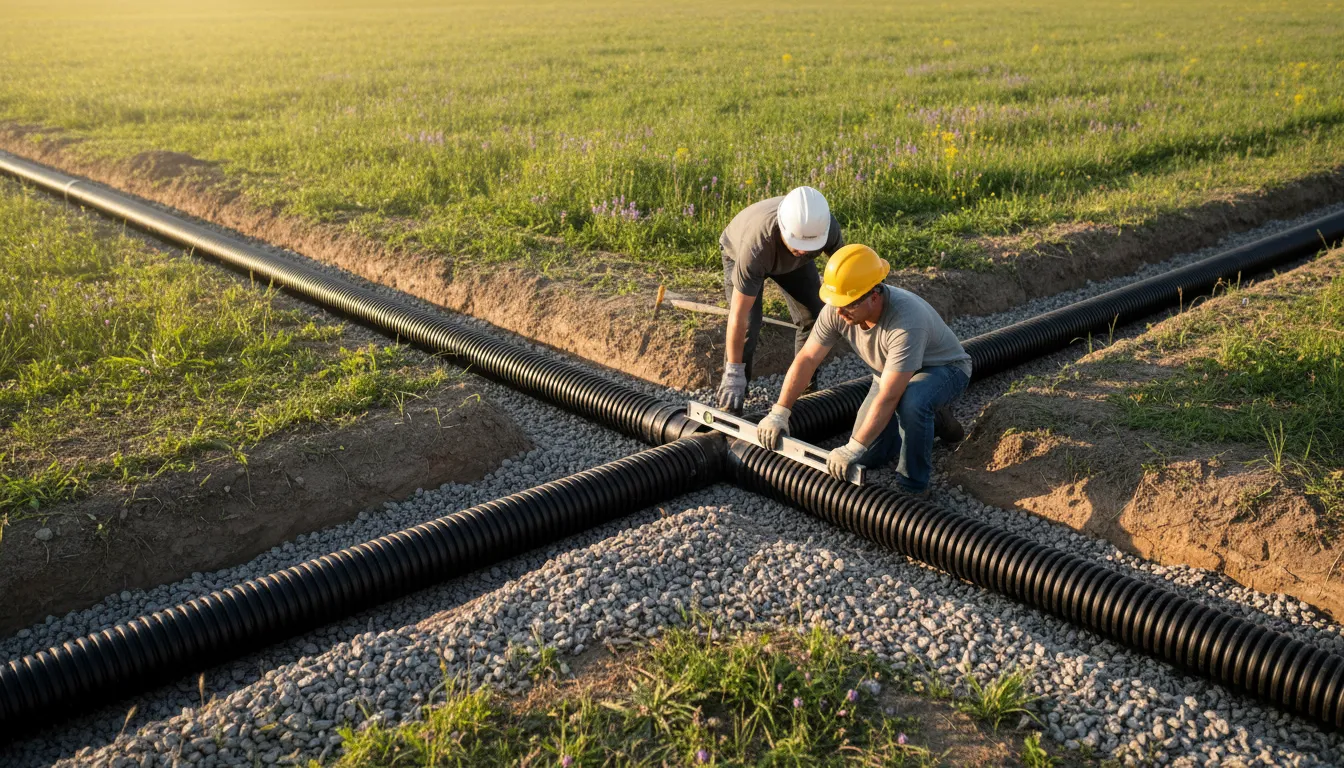
Often called a leach field or absorption field, the drain field is the final stage of your septic system. After solids settle in the septic tank, the clarified liquid effluent flows into a distribution box and out through a series of perforated pipes buried in trenches filled with gravel. This effluent slowly percolates through the soil, where natural processes remove harmful bacteria, viruses, and nutrients before the water rejoins the groundwater table.
When this area fails, it's a clear sign that your system needs professional attention. Common symptoms include:
- Sewage odors in the yard or home.
- Soggy, spongy, or standing water over the drain field area.
- Unusually green, lush grass over the field.
- Slow drains or sewage backups in the house.
The Regulatory Landscape in Milpitas and Santa Clara County
Any significant repair or full replacement of a septic system component, including the drain field, is strictly regulated. In Milpitas, permitting and oversight are handled by the Santa Clara County Department of Environmental Health. Their primary goal is to protect public health and local groundwater from contamination.
Key regulations you must follow include:
- Permits: A permit is mandatory before any repair or replacement work begins. The process requires submitting a detailed site plan and system design for approval 1.
- Codes: All work must comply with the California Plumbing Code (CPC) and standards set by the regional water quality control board.
- Setbacks: Drain fields must be located specific distances from property lines, buildings, wells, and waterways. For example, a minimum of 10 feet from foundations and property lines is typical, though local codes may dictate greater distances.
- Soil Separation: There must be a minimum of 5 feet of unsaturated soil between the bottom of the drain field trenches and the seasonal high groundwater table. This separation is crucial for proper treatment.
The Step-by-Step Process for Repair or Replacement
Addressing drain field issues is a multi-stage process that involves evaluation, design, permitting, and construction.
1. Site Evaluation and Testing
A professional begins with a thorough inspection of your entire septic system to confirm the drain field is the source of the problem. The most critical test is the soil percolation (perc) test, which measures how quickly water drains through your soil. The results determine the size and type of drain field your property can support 2 3. If your soil fails a standard perc test due to high clay content or other issues, alternative system designs may be necessary 4.
2. Design and Permitting
Using the site evaluation data, a certified designer or engineer creates a plan for the repair or new leach field. This plan must account for soil type, slope, groundwater depth, and all local setbacks. The completed design package is then submitted to the Santa Clara County Department of Environmental Health to obtain the required construction permit.
3. Construction and Installation
Once permitted, the physical work begins. For a full replacement, this typically involves:
- Excavation: Using heavy machinery to carefully remove the old, failed drain field materials.
- Site Preparation: Grading the area to the proper slope (generally not exceeding 35% without special engineering) and excavating new trenches to precise depths 5 6.
- Installation: Laying a bed of gravel, placing the perforated distribution pipes, adding more gravel, and covering with a protective geotextile fabric and soil.
- Final Connection: Integrating the new leach field with the existing septic tank and distribution box.
4. Final Inspection and Restoration
Before the new trenches are covered with topsoil, a county inspector must visit the site to approve the installation 7 8. After passing inspection, the area is backfilled, graded, and seeded or sodded to restore your landscape.
Find the perfect drain field repair companies for your needs
Get personalized recommendations and expert advice
Cost Considerations for Milpitas Homeowners
The cost to address drain field problems varies widely based on the extent of the damage, soil conditions, system size, and permit fees. The figures below are estimates based on regional data.
- Permitting & Inspection Fees: These administrative costs typically range from $200 to $1,000.
- Site Preparation (Grading/Excavation): Preparing the land for a new system can cost between $1,000 and $3,000.
- Drain Field Repair: Targeted repairs to a portion of the leach field generally fall in the range of $2,500 to $8,000.
- Complete Drain Field Replacement: A full replacement of the entire absorption field is a more significant investment, often ranging from $5,000 to over $12,000, depending on the complexity and size of the system required 9 10.
A full septic system installation, including a new tank and drain field, would be at the higher end of this spectrum. It's important to get detailed, written estimates from licensed professionals that break down all expected costs.
Maintaining Your New or Repaired Drain Field
Protecting your investment is key. Proper maintenance can extend the life of your drain field for decades:
- Conserve Water: Reduce strain on the system by fixing leaks and using water-efficient fixtures.
- Mind What You Flush: Only human waste and toilet paper should go down the drain. Avoid chemicals, grease, wipes, and feminine hygiene products.
- Protect the Area: Never drive or park vehicles over the drain field, and avoid planting trees or deep-rooted shrubs nearby.
- Pump Regularly: Have your septic tank pumped every 3-5 years by a licensed service to prevent solids from clogging the drain field.
Frequently asked questions
Sources
Footnotes
-
RESIDENTIAL SEWER LINE REPLACEMENT - Milpitas.gov - https://www.milpitas.gov/DocumentCenter/View/1062/Sewer-Line-PDF ↩
-
Chapter 6.4 SEWAGE STANDARDS - https://www.codepublishing.com/CA/SolanoCounty/html/SolanoCounty0604.html ↩
-
How Much Does a Septic Soil Test Cost in 2026? - https://landperc.com/septic-soil-test-cost/ ↩
-
What is the best septic system if your land fails a perc test? - https://www.premiertechaqua.com/en-us/blog/best-septic-system-failed-perc-test ↩
-
The Californian's Guide To Septic Tanks - https://cacciaplumbing.com/blog/california-septic-tank-guide/ ↩
-
Stormwater C.3 Guidebook | Milpitas.gov - https://www.milpitas.gov/DocumentCenter/View/2314/Stormwater-C3-Guidebook-PDF ↩
-
California Septic Tank Requirements | Onsite Wastewater Treatment ... - https://www.ntotank.com/blog/california-septic-tank-requirements ↩
-
The Ultimate Guide to Septic System Installation Process | Septic System Professionals - https://septic911.com/septic-system-installation-process/ ↩
-
Get Drain Field Installation in Milpitas, CA - Menlo Park Septic - https://menloparkseptic.com/drain-field-installation-milpitas-ca ↩
-
Septic System Installation Cost [2025 Data] - HomeAdvisor - https://www.homeadvisor.com/cost/plumbing/install-a-septic-tank/ ↩