Find the Best Drain Field Repair Companies for Your Business
No obligation • Fast responses • Nationwide coverage

Why you can trust Septic Spot
Septic Spot is a leading United States resource for understanding and comparing septic services. Our editors review providers using consistent criteria and verify key business details. Listings and scores are independent, and companies cannot pay to influence our content.
Search providers near you
Top Drain Field Repair Companies in Montebello, California Ranked
A failing drain field, also known as a leach field or absorption field, is a serious issue for any home with a septic system. It's the final, critical stage where treated wastewater is dispersed into the soil. When it fails, it can lead to sewage backups, soggy yards, and environmental contamination. For Montebello homeowners, navigating the repair or replacement of this component involves understanding local regulations, site-specific challenges, and finding qualified professionals. This guide explains the process, costs, and key considerations for restoring your onsite wastewater system to proper function.
The Drain Dude
13113 San Fernando Rd, Sylmar, CA 91342
The Drain Dude is a full-service plumbing company based in Los Angeles, CA, offering a wide range of plumbing solutions including septic tank inspection, septic system repair, and drain field repair or replacement. They provide 24/7 emergency plumbing services and use advanced technology such as video inspection and electronic leak detection to accurately diagnose issues. Their trenchless sewer and underground pipe installation services minimize disruption with low-dig or no-dig methods. The Drain Dude serves all of Southern California, combining family-owned values with professional expertise.
Septic Tank Pumping Guys
6360 Van Nuys Blvd ste 113, Van Nuys, CA 91401
Septic Tank Pumping Guys provides a full range of septic services in Los Angeles, CA, including pumping, inspections, repairs, and installations for residential and commercial properties. They offer 24/7 emergency septic services and specialize in maintaining system health through regular pump-outs, cleaning, and drain field repairs. Their capabilities include septic tank installation, effluent filter replacement, and grease trap pumping. The company is family owned and operated, serving multiple communities within Los Angeles County.
Septic Tank Pumping USA
1367 Foothill Blvd, La Cañada Flintridge, CA 91011
Septic Tank Pumping USA provides septic tank pumping, inspection, and repair services in Los Angeles, CA. They handle routine maintenance and emergency repairs, including drain field repair or replacement. The company emphasizes regular pumping every 3-5 years to prevent system failures and environmental risks. They also offer thorough inspections to assess tank and drain field conditions. Septic Tank Pumping USA serves the local area with expertise in managing septic system health and compliance with local regulations.
Understanding Your Drain Field and Signs of Failure
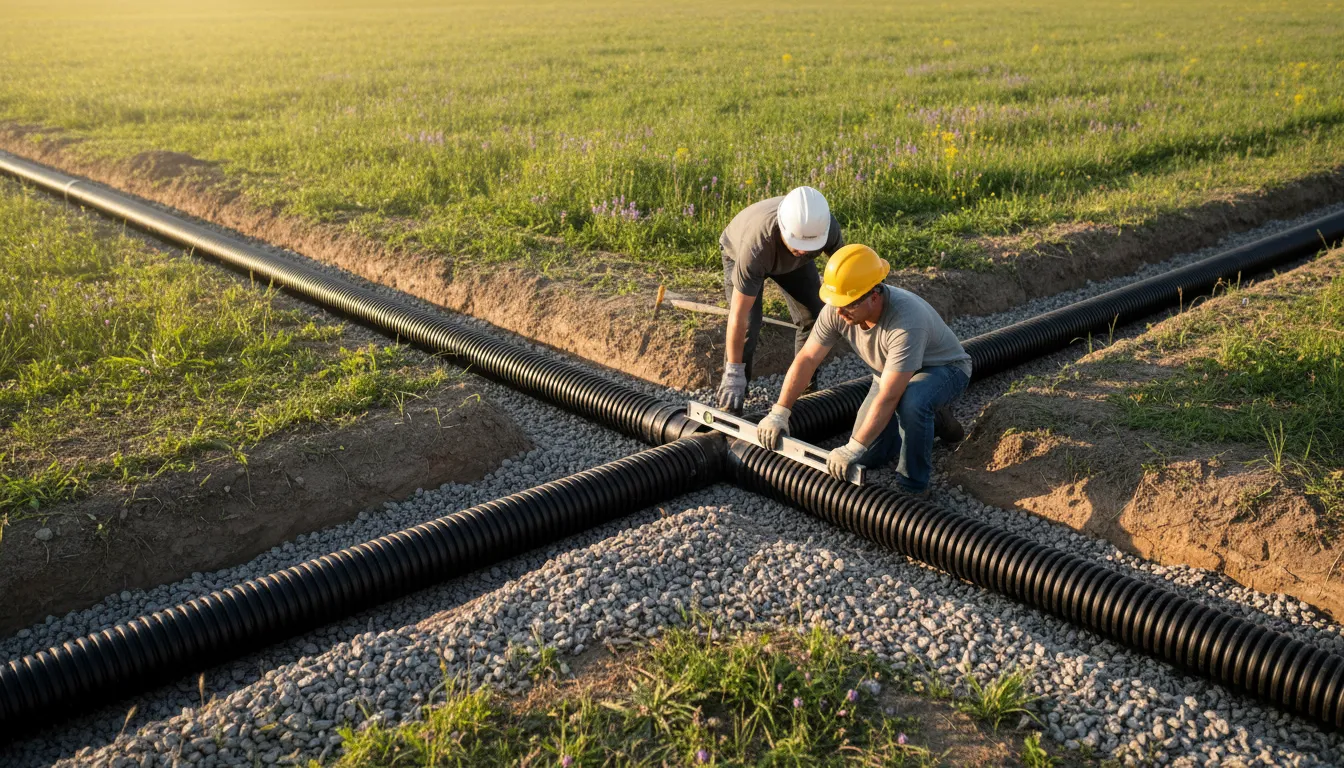
The drain field is a network of perforated pipes buried in trenches filled with gravel. After solids settle in the septic tank, the liquid effluent flows into these pipes and slowly percolates into the surrounding soil, where natural processes provide final treatment. A system fails when the soil can no longer absorb the water. Common warning signs include:
- Sewage odors in the yard or home.
- Slow-draining sinks, toilets, and showers.
- Standing water or unusually lush, soggy grass over the drain field area.
- Gurgling sounds in plumbing fixtures.
If you notice these issues, the first step is to have your septic tank pumped and inspected by a licensed contractor (typically costing $150-$250) to rule out a simple tank blockage before diagnosing the leach field.
Montebello's Regulatory Landscape: Permits and Standards
Because Montebello is within Los Angeles County, all regulatory authority for septic systems is held by the Los Angeles County Department of Public Health 1. You cannot begin any significant repair or replacement work without their approval.
Key Regulations to Know:
- Permits are Mandatory: Any drain field repair or replacement requires a permit from the county.
- Upgrades vs. Repairs: California and county regulations often require that a failed system be upgraded to meet current, more stringent standards rather than simply receiving a like-for-like repair 2. This means your new system will likely need to be more efficient and environmentally protective.
- State Guidelines: All work must comply with the California State Water Resources Control Board's guidelines for Onsite Wastewater Treatment Systems (OWTS), which set the baseline for performance and safety.
- Professional Requirement: Installation and major repairs must be performed by a state-licensed septic contractor.
The Critical Role of Site Evaluation and Soil Testing
The feasibility and design of your new absorption field depend almost entirely on your property's conditions. A professional site evaluation is the cornerstone of the permit process.
- Soil Percolation Test: This is a mandatory test to measure how quickly water drains through your soil. Performed by a qualified professional, it costs between $300 and $3,000, with higher costs for complex or difficult-to-access sites. The results determine the size and type of system your land can support.
- Soil Type: Montebello's soil conditions vary. Heavy clay or poorly draining soils may fail a standard perc test, necessitating an engineered system like a mound system or one that includes an advanced treatment unit.
- Setbacks and Separation: Strict distances must be maintained. Most critically, there must be a minimum of 5 feet of vertical separation between the bottom of the drain field trench and the seasonal high groundwater table 3. Systems must also be set back from wells (often 100 feet), property lines, water lines, and structures 3.
- Slope: Properties with a slope greater than 20% will require a detailed geotechnical report and special engineering 4.
The Process: From Failure to a New System
- Professional Assessment: Contact a licensed septic contractor to confirm the drain field is the source of the problem via an inspection and tank pump-out.
- Site Evaluation & Design: The contractor or a specialized engineer will conduct the necessary soil tests and evaluate the site for topography and setbacks. They will then design a replacement system that meets county and state codes for your specific property.
- Plan Submission and Permit: The design plans are submitted to the Los Angeles County Department of Public Health for review and approval. Only after receiving the permit can work begin 5.
- Installation: The old field may be abandoned in place, and a new one constructed in a suitable location on your property. All installation must be done by the licensed professional 6.
- Final Inspection: The county will conduct a final inspection to ensure the installation matches the approved plans and complies with all regulations.
Find the perfect drain field repair companies for your needs
Get personalized recommendations and expert advice
Cost Breakdown for Drain Field Projects
Costs in Montebello can vary widely based on soil conditions, system size, site accessibility, and the level of engineering required. The following ranges are based on regional data for California:
- Initial Inspection & Tank Pump-out: $150 - $250 7 8
- Soil Percolation Test: $300 - $3,000 9
- Drain Field Replacement: $3,000 - $10,000+. This is typically for replacing the leach field itself when the septic tank is still functional.
- Full Septic System Replacement: $8,000 - $20,000+. This comprehensive cost includes a new tank and drain field, which is often required for older systems or complete failures 10 11.
Note: Sites with poor soil or steep slopes that require an engineered alternative system (like a mound or aerobic treatment unit) will be at the very top of these ranges or even exceed them.
Engineered System Alternatives for Challenging Sites
Not every property can support a conventional leach field. If your soil fails the perc test or you have space constraints, licensed professionals can design alternative systems approved for use in California 12:
- Mound Systems: A constructed sand mound is built above the natural grade, providing suitable drainage conditions.
- Aerobic Treatment Units (ATUs): These systems use oxygen to break down waste more efficiently, producing a higher-quality effluent that can be used in drip irrigation fields, which require less space.
- Sand Filter Systems: Effluent is pumped through a sand filter for treatment before dispersal.
These systems are more expensive to install and may have higher ongoing maintenance costs, but they make septic treatment possible on sites where it otherwise wouldn't be.
Maintaining Your New Drain Field
Protect your investment and avoid future problems with proper care:
- Direct Water Away: Ensure roof drains and surface runoff are directed away from the drain field area.
- No Driving or Building: Never park vehicles or build structures (like sheds or patios) over the drain field. The weight can crush pipes and compact the soil.
- Mind Your Landscaping: Only plant grass or shallow-rooted plants over the field. Tree and shrub roots can clog and damage pipes.
- Conserve Water: Spread out laundry loads and fix leaky fixtures to avoid hydraulically overloading the system.
- Pump Regularly: Stick to a routine septic tank pumping schedule (every 3-5 years, typically) to prevent solids from escaping into and clogging the new drain field.
Frequently asked questions
Sources
Footnotes
-
CITY OF MONTEBELLO - Huntington Park - https://www.hpca.gov/DocumentCenter/View/11192 ↩
-
Local Agency Management Program (LAMP) - https://www.lassencounty.org/sites/default/files/departments/environmental_health/LiquidWaste_Wells/Final_LassenLAMP_04.2020.pdf ↩
-
Your Essential Guide to Septic System Permits in Utah County - https://www.andersoneng.com/septic-system-permit-in-utah-county-a-guide-to-for-general-contractors/ ↩ ↩2
-
The Californian's Guide To Septic Tanks - https://cacciaplumbing.com/blog/california-septic-tank-guide/ ↩
-
ENVIRONMENTAL HEALTH - https://www.waterboards.ca.gov/lahontan/water_issues/programs/owts/docs/lamp_tracking/la_lamp_20180517.pdf ↩
-
California Septic Tank Requirements | Onsite Wastewater ... - https://www.ntotank.com/blog/california-septic-tank-requirements ↩
-
Maintaining your Septic System A Guide for Homeowners - https://www.ihs.gov/california/tasks/sites/default/assets/File/SFC-MaintainingYourSepticSystemGuide.pdf ↩
-
Southern California Septic System Regulations: What You Need to ... - https://www.lanikseptic.com/socal-septic-regulations/ ↩
-
How Much Does a Septic Soil Test Cost in 2026? - Land Perc - https://landperc.com/septic-soil-test-cost/ ↩
-
How Much Does Septic System Repair Really Cost in California - https://www.lanikseptic.com/septic-repair-cost/ ↩
-
Septic Tank Replacement and Drain Field Cost in California - https://www.lanikseptic.com/how-much-does-it-cost-to-replace-a-septic-tank-and-drain-field-in-california/ ↩
-
What is the best septic system if your land fails a perc test? - https://www.premiertechaqua.com/en-us/blog/best-septic-system-failed-perc-test ↩