Find the Best Drain Field Repair Companies for Your Business
No obligation • Fast responses • Nationwide coverage

Why you can trust Septic Spot
Septic Spot is a leading United States resource for understanding and comparing septic services. Our editors review providers using consistent criteria and verify key business details. Listings and scores are independent, and companies cannot pay to influence our content.
Search providers near you
Top Drain Field Repair Companies in Napa, California Ranked
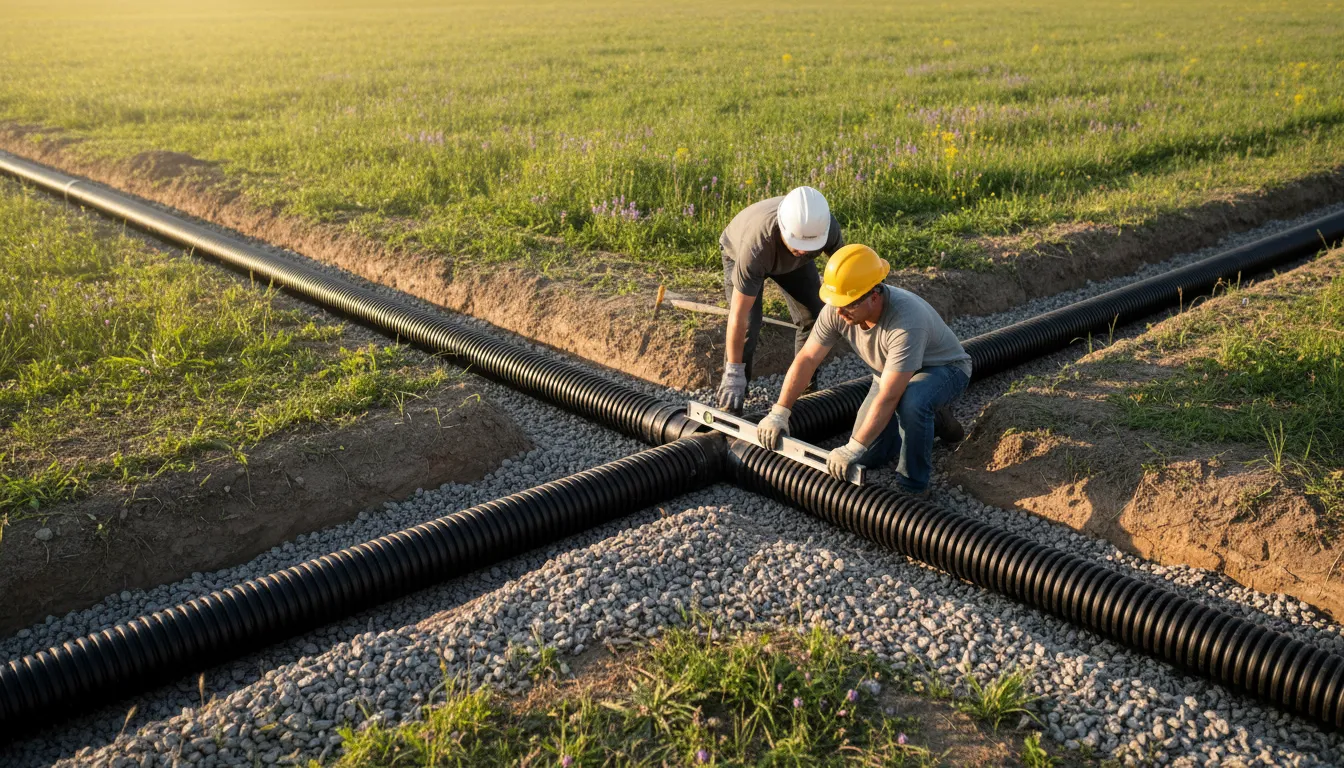
A failing drain field, also known as a leach field or soil absorption system, is a serious issue for any Napa property owner relying on a septic system. This critical component is responsible for the final treatment and dispersal of wastewater into the soil. When it fails, it can lead to sewage backups, soggy yards, and environmental contamination. In Napa County, repairing or replacing a drain field is a strictly regulated process overseen by the Environmental Health Division to protect local groundwater and public health. This guide explains the local requirements, processes, and costs to help you understand your options and connect with qualified, licensed professionals who can navigate the county's specific codes for you.

Superior Septic Pumping Service
Santa Rosa, CA
Superior Septic Pumping Service is a septic system maintenance and repair company based in Santa Rosa, CA. They offer services including septic pumping, tank cleanouts, repairs, and real estate inspections. With over 20 years of experience, the owner-operated business uses advanced equipment to handle issues such as sludge buildup, cracked pipes, and faulty drain fields. Their team serves Santa Rosa and surrounding areas, providing comprehensive septic solutions to help prevent backups and contamination.
Frank's Septic Service, Inc.
Fairfield, CA
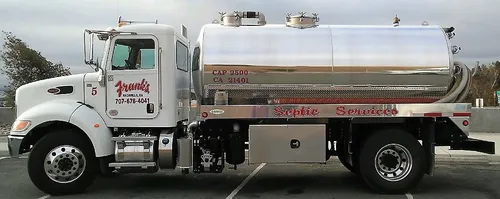
Frank's Septic Service, Inc. is a family-owned and operated company based in Fairfield, CA, providing septic system services since 1949. They offer a range of services including septic tank pumping, inspections, repairs, installations, and trucked waste removal for residential, agricultural, commercial, and municipal clients. Serving areas across Colusa, Solano, and Yolo Counties, including Vacaville, Woodland, and Davis, the company specializes in system upgrades, leach field repairs, and certified inspections. Their fleet includes vacuum tankers with capacities between 5,000 and 6,500 gallons. Frank's Septic Service also provides 24/7 after-hours and emergency support.
Understanding Drain Field Failure in Napa
A drain field fails when the soil can no longer absorb and treat the liquid effluent flowing from the septic tank. Common signs include:
- Sewage odors in the yard or home.
- Soggy, spongy, or overly green grass directly over the field.
- Sewage backing up into household drains.
- Standing water or surfacing effluent.
In Napa County, a system is officially considered "failing" if it causes surfacing sewage, contamination of groundwater, or is unable to treat wastewater adequately 1. Once a failure is identified, the property owner is typically required to upgrade the system to meet current, more rigorous standards.
Napa County Regulations and Permitting
All significant work on a septic system's leach field in Napa requires a permit from the Environmental Health Division. The process is designed to ensure any repair or new installation protects the environment, particularly the region's vital groundwater resources.
Key Regulatory Points:
- Permit Required: A sewage permit is mandatory for most repairs and all replacements. You cannot begin any excavation or construction without county approval.
- Upgrades to Current Code: If your system is damaged or failing, it will likely need to be upgraded to meet today's stricter standards, which may include requirements for dual leach fields.
- Professional Licensing: Any contractor performing the evaluation, design, or installation must hold a valid California contractor's license, such as a Type A, C-42, or C-36 license.
- Setbacks: The county enforces strict minimum separation distances between the drain field and buildings, property lines, water supply pipes, and the seasonal high groundwater table 2.
The Critical Role of Soil Evaluation
The success of any soil absorption system hinges entirely on the property's soil conditions. Napa County requires a detailed site evaluation by a qualified professional to determine the appropriate system type 3.
Soil and Site Requirements:
- Percolation Rate: For a conventional system, soil must have a percolation rate between 1 and 120 minutes per inch (MPI). Slower soils may require an alternative system.
- Groundwater Depth: A minimum of 5 feet of vertical separation is typically required between the bottom of the drain field trenches and the seasonal high groundwater level.
- Useable Soil Depth: At least 3 feet of suitable soil must be available above limiting layers like hardpan or bedrock.
- Slope: Properties with slopes over 20% may require a geotechnical report, and systems generally cannot be installed on slopes exceeding 35% 4 5.
This evaluation involves digging deep test pits (typically 5 feet or to bedrock/groundwater) to assess soil texture, structure, and water movement.
Types of Drain Field Systems Used in Napa
Depending on your site's soil evaluation, one of several system types may be approved.
- Conventional Replacement: If soil conditions are favorable, a standard trench or bed system may be approved. Napa County now often requires dual leach fields for new and replacement systems, allowing you to alternate use between two fields to extend the system's lifespan and prevent premature failure.
- Alternative Sewage Treatment Systems (ASTS): If conventional drainage is not possible due to poor soil, high groundwater, or limited space, an engineered alternative system will be necessary 6. Common ASTS options include:
- Mound Systems: Effluent is pumped to a raised bed of sand and gravel.
- Pre-treatment Systems: Advanced treatment units process wastewater before it reaches the drain field, allowing for use in more challenging sites.
- Evapotranspiration-Infiltration (ETI) Systems: Designed for specific, arid climates.
Find the perfect drain field repair companies for your needs
Get personalized recommendations and expert advice
The Step-by-Step Process for Repair or Replacement
Navigating a drain field project involves multiple coordinated steps with your contractor and the county.
- Hire a Qualified Professional: Your first step is to hire a licensed sewage contractor or engineer. They will manage the entire process 7.
- Pump and Inspect: The septic tank must be pumped and thoroughly inspected for structural integrity and functionality 8.
- Site Evaluation & Design: Your professional will conduct the required soil evaluation and percolation tests, then prepare engineered plans for the repair or new system 9.
- Submit for Permit: The design plans and permit application are submitted to Napa County Environmental Health for review and approval.
- Schedule Inspections: All phases of construction-from test pits to final installation-must be inspected by the county. Inspections must be scheduled at least 48 hours in advance 10.
- Construction: Once permitted, the licensed contractor installs the new or repaired drain field.
- Final Approval: The system cannot be covered or used until it receives final inspection approval from the county inspector 11.
Understanding the Costs Involved
Drain field repair and replacement are major capital expenses for homeowners. Costs in Napa can vary widely based on system type, soil conditions, and site accessibility.
- Pre-Construction Costs: Thousands of dollars may be spent upfront on permits, detailed soil tests, and engineered design plans before any physical work begins.
- Conventional System Replacement: Replacing a traditional leach field is typically estimated between $5,000 and $12,000.
- Alternative System (ASTS) Replacement: Due to added materials, engineering, and equipment, these systems range from $8,000 to $20,000 or more 12.
- Advanced Treatment Systems: Systems with pre-treatment components can cost $15,000 to $30,000+ 13.
- Additional Costs: Remember to budget for septic tank pumping, inspection reports, and site restoration (landscaping, etc.) after construction is complete.
Maintaining Your New Drain Field
Protecting your investment is crucial. Proper maintenance includes:
- Directing all roof and surface drainage away from the field.
- Never driving or parking vehicles over the area.
- Planting only grass over the field; avoid trees and deep-rooted plants.
- Practicing water conservation to avoid hydraulically overloading the system.
- Having the septic tank pumped regularly (every 3-5 years, typically).
Frequently asked questions
Sources
Footnotes
-
Marin seeks state approval for onsite septic regulations - https://www.marinij.com/2025/10/15/marin-seeks-state-approval-for-onsite-septic-regulations/ ↩
-
res_79-5.pdf - California State Water Resources Control Board - https://www.waterboards.ca.gov/rwqcb2/water_issues/programs/planningtmdls/basinplan/web/res/res_79-5.pdf ↩
-
Engineered Septic System Design: A Complete Guide - https://landperc.com/engineered-septic-system-design/ ↩
-
NAPA COUNTY ONSITE WASTEWATER TREATMENT ... - https://d2l2jhoszs7d12.cloudfront.net/state/CA/Counties/Napa%20County/Planning,%20Building%20&%20Environmental%20Services/httpswww.countyofnapa.org/Forms/Final%20Draft%20Technical%20Standards%20January2016%20%28AB%20885%29%20%28PDF%29.pdf ↩
-
The Californian's Guide To Septic Tanks - https://cacciaplumbing.com/blog/california-septic-tank-guide/ ↩
-
design, construction, and installation of alternative sewage ... - https://www.napacounty.gov/DocumentCenter/View/3940/ASTS-Standards-PDF ↩
-
design, construction, and installation of alternative sewage ... - https://www.napacounty.gov/DocumentCenter/View/3940/ASTS-Standards-PDF ↩
-
Title 4 - Sewer Use 4.01 General Provisions 4.01 ... - NapaSan - https://napasan.com/DocumentCenter/View/226/Title-4-Sewer-Use-PDF ↩
-
design, construction, and installation of alternative sewage ... - https://www.napacounty.gov/DocumentCenter/View/3940/ASTS-Standards-PDF ↩
-
BURNED DWELLING REPLACEMENT AND WASTEWATER ... - https://www.napacounty.gov/DocumentCenter/View/7624/Burned-Dwelling-Replacement-and-Wastewater-Systems?bidId= ↩
-
ENVIRONMENTAL HEALTH DIVISION BUILDING PERMIT ... - https://www.napacounty.gov/DocumentCenter/View/3941/Building-Permit-Requirements-Well-Septic-2025?bidId= ↩
-
Septic Tank Replacement and Drain Field Cost in California - https://www.lanikseptic.com/how-much-does-it-cost-to-replace-a-septic-tank-and-drain-field-in-california/ ↩
-
Septic Repair Cost in California: Complete Breakdown of Pricing ... - https://www.lanikseptic.com/septic-repair-cost/ ↩