Find the Best Drain Field Repair Companies for Your Business
No obligation • Fast responses • Nationwide coverage

Why you can trust Septic Spot
Septic Spot is a leading United States resource for understanding and comparing septic services. Our editors review providers using consistent criteria and verify key business details. Listings and scores are independent, and companies cannot pay to influence our content.
Search providers near you
Top Drain Field Repair Companies in National City, California Ranked
A failing drain field, also known as a leach field or absorption field, is a serious issue that can lead to sewage backups, soggy lawns, and environmental contamination. In National City, addressing this problem requires navigating specific local and county regulations to ensure the repair or replacement is safe, legal, and long-lasting. This guide explains the process, costs, and critical steps for managing drain field work, helping you connect with qualified local professionals who understand the necessary permits and soil requirements.
Understanding Drain Field Failure
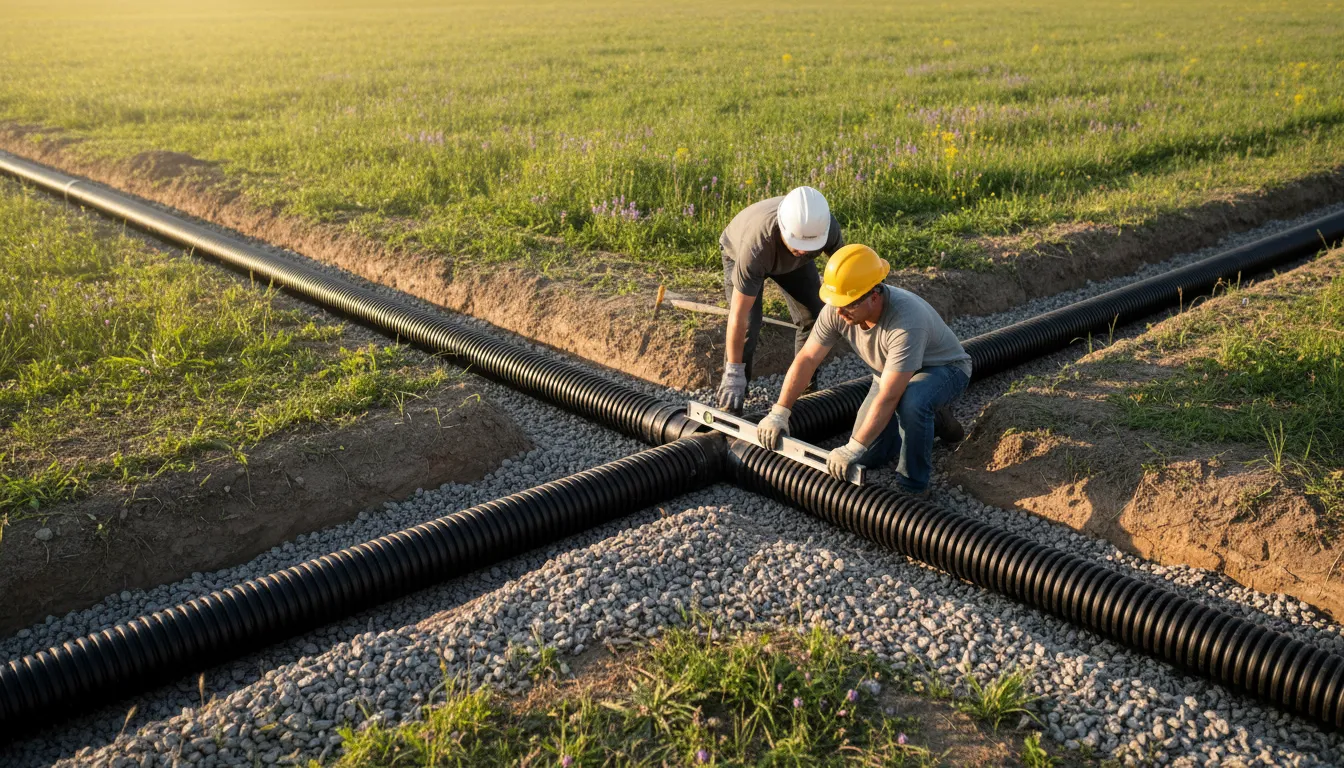
The drain field is the final, crucial stage of your onsite wastewater treatment system. After solids settle in the septic tank, liquid effluent flows into a network of perforated pipes buried in trenches filled with gravel. This effluent slowly percolates into the soil, where natural processes provide final treatment. When this system fails, it's often due to:
- Clogging: A biomat (a layer of sludge and bacteria) can form on the trench walls, severely reducing the soil's ability to absorb water.
- Compaction: Driving or building over the drain field compacts the soil.
- Root Intrusion: Tree and shrub roots can clog and crush distribution pipes.
- System Age: Older systems may simply be undersized for current household use or have reached the end of their functional lifespan.
Signs of failure include sewage odors, unusually lush or soggy grass over the field, and slow-draining or backing-up household drains.
National City & San Diego County Regulations
Any significant repair or full replacement of a septic system drain field in National City is governed by a dual-permitting process. Understanding this framework is the first step.
Primary Authority: San Diego County LAMP The County of San Diego Department of Environmental Health (DEH) administers the Local Agency Management Program (LAMP) for all onsite wastewater systems. This means your project must comply with county standards for siting, soil evaluation, and groundwater protection. All design plans and permits for the septic system itself are submitted to and approved by the county.
Local Authority: National City Building Department While the county permits the system, the City of National City Building Department is responsible for construction inspections related to the installation. This includes checking trench dimensions, pipe placement, and gravel depth before the system is backfilled. Inspections must be scheduled at least 24 hours in advance and are typically available Monday through Thursday, 9:00 AM to 4:00 PM.
The Critical Role of Soil Evaluation
Before any new drain field can be designed, a certified soil evaluator must conduct a percolation (perc) test. This test measures how quickly water drains through the soil at the proposed site, determining its suitability and the required size of the absorption field.
Soil conditions in National City can present challenges:
- High Clay Content: Clay soils have very slow percolation rates, which can cause premature failure of standard systems.
- High Water Table: If the seasonal groundwater level is too close to the surface, effluent cannot be properly treated before entering the groundwater.
- Steep Slopes: Sites with slopes over 20% require specialized engineering to prevent system failure and runoff 1.
If a standard perc test is failed, you are not out of options. Alternative or engineered systems, such as mound systems, aerobic treatment units (ATUs), or sand filters, are designed to overcome poor soil conditions. These systems provide advanced treatment but come at a higher installation cost.
Step-by-Step Process for Repair or Replacement
Navigating a drain field project involves a series of coordinated steps.
- Initial Site Evaluation & Soil Testing: A licensed contractor or engineer assesses the existing system, identifies the cause of failure, and performs the mandatory perc test and soil analysis to determine the best course of action 2.
- System Design & Permit Submission: Based on the soil evaluation, a qualified professional creates engineered design plans. These plans, along with permit applications, are submitted to the San Diego County DEH for review and approval under LAMP guidelines.
- Construction & City Inspection: Once county permits are secured, excavation and construction begin. Before the new trenches are backfilled, a National City building inspector must visit the site to verify that the construction-including trench dimensions, gravel bed, and pipe placement-meets the approved plans and code requirements 3 4.
- Final Approval & System Start-Up: After passing the construction inspection and completing backfill, a final inspection is conducted. Once the system is approved, it can be put into operation. Proper maintenance from day one is essential for its longevity 5.
Find the perfect drain field repair companies for your needs
Get personalized recommendations and expert advice
Cost Factors for Drain Field Work in National City
The total cost for drain field repair or replacement varies widely based on the scope of the problem and site-specific conditions. Here's a general breakdown:
- Targeted Drain Field Repairs: For localized issues like a clogged line or a small section of damaged pipe, repairs may range from $1,000 to $10,000.
- Full Conventional Drain Field Replacement: Completely replacing a standard leach field for an average home typically costs between $5,000 and $12,000 6. This includes new trenches, gravel, distribution pipes, and labor.
- Alternative/Engineered System Replacement: If poor soil requires a mound, aerobic, or other advanced system, costs can rise significantly, ranging from $8,000 to over $30,0007 8 9.
- Additional Costs: Always budget for permit fees (which vary by project scope), soil testing fees, and engineering design fees.
Choosing a Qualified Professional
Given the regulatory complexity, selecting the right contractor is paramount. Look for a professional who is:
- Licensed and Insured: They must hold appropriate California contractor licenses for septic system work.
- Locally Experienced: They should have a proven track record with projects in National City and San Diego County, with knowledge of both LAMP and city inspection protocols.
- Transparent with Permits: A reputable provider will handle the county permit application and city inspection scheduling on your behalf, clearly explaining the process.
- Knowledgeable on Soil & Alternatives: They should thoroughly explain your soil test results and discuss all viable system options, not just a standard replacement.
Proximity and Siting Requirements
California law and county LAMP standards mandate minimum separation distances to protect health and the environment. Your new drain field must be sited a specific distance from:
- Water wells (to prevent contamination)
- Property lines
- Buildings and foundations
- Streams, lakes, and other water bodies
- Swimming pools
A qualified designer will ensure the proposed location meets all these siting requirements, which can influence the placement and layout of your replacement field 10 11.
Frequently asked questions
Sources
Footnotes
-
The SoCal Guide to Septic Tank Installation - https://www.lanikseptic.com/socal-guide-septic-tank-installation/ ↩
-
California Septic Tank Requirements | Onsite Wastewater ... - https://www.ntotank.com/blog/california-septic-tank-requirements ↩
-
Building Inspections | National City, CA - https://www.nationalcityca.gov/government/community-development/building/building-inspections ↩
-
Septic Tank Replacement and Drain Field Cost in California - https://www.lanikseptic.com/how-much-does-it-cost-to-replace-a-septic-tank-and-drain-field-in-california/ ↩
-
Maintaining your Septic System A Guide for Homeowners - https://www.ihs.gov/california/tasks/sites/default/assets/File/SFC-MaintainingYourSepticSystemGuide.pdf ↩
-
Cost to Replace Septic Tank and Drain Field [2026 Data] | Angi - https://www.angi.com/articles/how-much-new-drain-fields-foot.htm ↩
-
How Much Does Septic System Repair Really Cost in California - https://www.lanikseptic.com/septic-repair-cost/ ↩
-
What is the best septic system if your land fails a perc test? - https://www.premiertechaqua.com/en-us/blog/best-septic-system-failed-perc-test ↩
-
How Much Does a Septic System & Septic Tank Cost - https://www.nexgenseptics.com/septic-system-cost/ ↩
-
Local Agency Management Program (LAMP) for Onsite ... - https://www.sandiegocounty.gov/content/dam/sdc/deh/lwqd/finalLAMPeffective02012025.pdf ↩
-
The Californian's Guide To Septic Tanks - https://cacciaplumbing.com/blog/california-septic-tank-guide/ ↩