Find the Best Drain Field Repair Companies for Your Business
No obligation • Fast responses • Nationwide coverage

Why you can trust Septic Spot
Septic Spot is a leading United States resource for understanding and comparing septic services. Our editors review providers using consistent criteria and verify key business details. Listings and scores are independent, and companies cannot pay to influence our content.
Search providers near you
Top Drain Field Repair Companies in Norwalk, California Ranked
A failing drain field, also known as a leach field or absorption system, is a serious issue for any Norwalk homeowner with a septic system. When this critical component stops properly dispersing wastewater, it can lead to soggy yards, foul odors, and even sewage backups into your home. Addressing drain field problems promptly is essential for protecting your property value, your family's health, and the local environment, including the sensitive Norwalk River watershed. This guide explains the local process, costs, and regulations to help you understand your options and connect with qualified local professionals for leach field repair or a full system replacement.
Septic Tank Pumping Guys
6360 Van Nuys Blvd ste 113, Van Nuys, CA 91401
Septic Tank Pumping Guys provides a full range of septic services in Los Angeles, CA, including pumping, inspections, repairs, and installations for residential and commercial properties. They offer 24/7 emergency septic services and specialize in maintaining system health through regular pump-outs, cleaning, and drain field repairs. Their capabilities include septic tank installation, effluent filter replacement, and grease trap pumping. The company is family owned and operated, serving multiple communities within Los Angeles County.
Septic Tank Pumping USA
1367 Foothill Blvd, La Cañada Flintridge, CA 91011
Septic Tank Pumping USA provides septic tank pumping, inspection, and repair services in Los Angeles, CA. They handle routine maintenance and emergency repairs, including drain field repair or replacement. The company emphasizes regular pumping every 3-5 years to prevent system failures and environmental risks. They also offer thorough inspections to assess tank and drain field conditions. Septic Tank Pumping USA serves the local area with expertise in managing septic system health and compliance with local regulations.
Understanding Your Drain Field in Norwalk
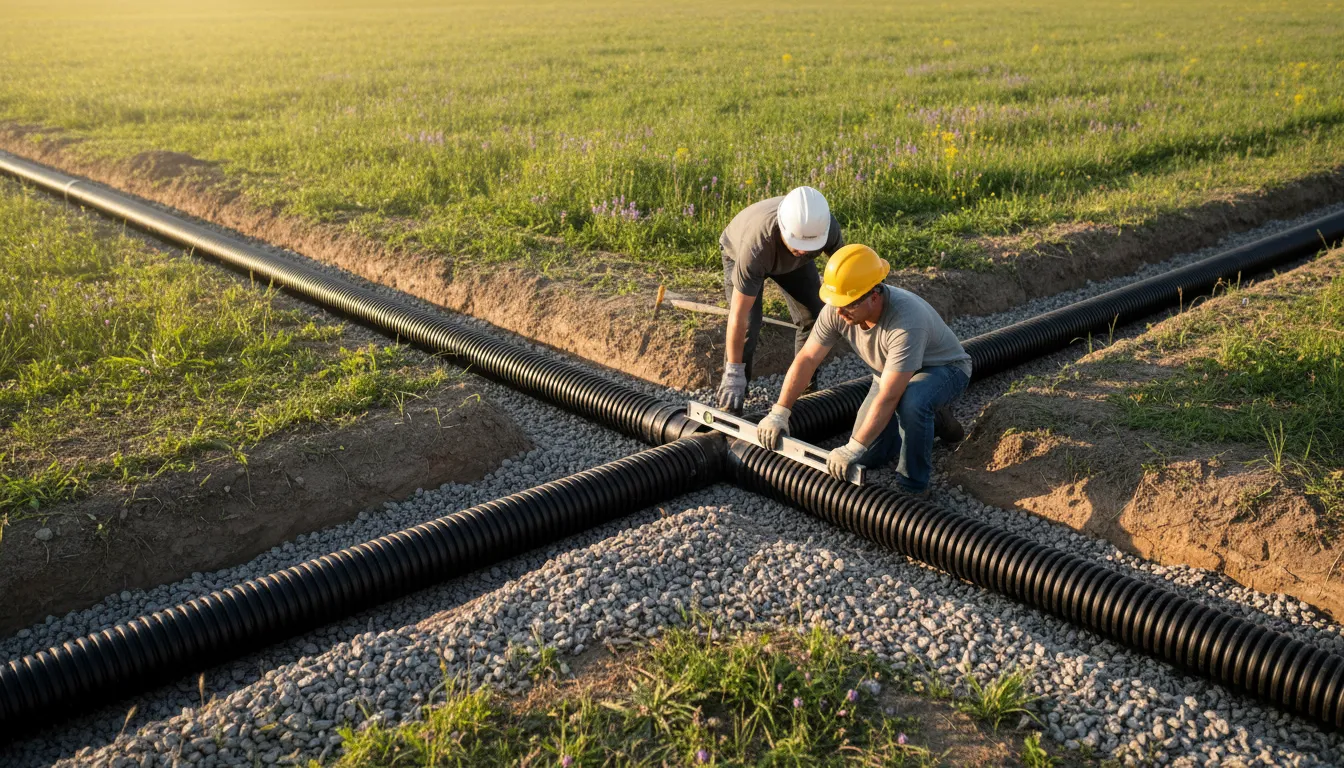
The drain field is the final stage of your onsite wastewater treatment system. After solids settle in the septic tank, liquid effluent flows into a network of perforated pipes buried in trenches filled with gravel. This effluent slowly percolates through the soil, where natural processes provide final treatment. In Norwalk, soil conditions, high groundwater tables, and system age can all contribute to drain field failure. Common signs include persistently wet or spongy soil over the field, sewage odors, slow-draining household fixtures, or unusually lush grass growth over the area.
All work on septic systems, including any repair or replacement of the leaching system, is regulated by the City of Norwalk and the State of Connecticut. The Norwalk Health Department enforces the Connecticut Public Health Code, which sets strict standards to ensure systems function properly and don't create a public health nuisance 1.
The Regulatory Process for Repairs and Replacements
Before any shovel hits the ground, you must navigate a permit process designed to ensure the new system is safe and compliant.
1. Hire a Licensed Professional: Your first step is to engage a septic contractor licensed by the State of Connecticut. Only licensed professionals are authorized to design, install, and inspect septic system work in Norwalk. They will assess your failed system and prepare the necessary plans.
2. Permit Application and Site Evaluation: Your contractor will submit detailed plans and a permit application to the Norwalk Health Department. A key part of this submission is proving your property has a suitable "reserve area." City and state codes require that a code-complying area be identified for a potential future replacement system, which is often a major consideration for properties with space constraints 2. A sanitarian from the health department will evaluate the site, which includes reviewing or conducting soil tests, such as a percolation test, to determine the soil's hydraulic capacity. State guidelines require a minimum of 18 inches between the bottom of the leaching system and the maximum groundwater level.
3. Installation and Final Inspection: Once a permit is issued, your licensed contractor can proceed with the drain field installation or replacement. Crucially, the health department must perform a final inspection before the new system is covered with soil. This ensures the installation matches the approved plans and complies with all codes 3.
Key Design and Installation Standards
Norwalk and Connecticut have specific technical requirements that influence any drain field project:
- System Specifications: Septic tanks serving a typical single-family home in Connecticut often require a minimum capacity of 1,250 gallons, two compartments, and risers with lids extended to the ground surface for easy access 4.
- Soil and Site Constraints: Proper slope, adequate separation from wells and property lines, and the soil's ability to absorb effluent are all critically evaluated. The site must accommodate the necessary system size without creating an environmental nuisance 5.
- Construction Best Practices: To prevent costly future failures, it's vital to avoid driving or parking heavy machinery over the drain field area. This compacts the soil, crushing pipes and reducing the soil's ability to absorb water, a common point of failure noted by local environmental groups like the Norwalk River Watershed Association 6.
Cost Considerations for Drain Field Work
The cost to address a failing leaching system in Norwalk can vary widely based on the extent of the problem, soil conditions, and the size of the system needed.
- Full System Replacement: Replacing both the septic tank and the entire drain field is a major project. In the Norwalk area, total costs for this typically range from $5,000 to $12,000, though complex sites can cost more 7.
- Drain Field-Only Replacement: If the septic tank is still functional, replacing just the absorption field averages between $2,000 and $10,000 8.
- Septic Tank Installation: The tank portion alone, if needed, averages between $4,982 and $7,119 for installation in Norwalk 9.
Find the perfect drain field repair companies for your needs
Get personalized recommendations and expert advice
Financial Assistance: For homeowners facing a failed system, financial help may be available. The State of Connecticut offers potential loan programs to assist with the repair or replacement of failed subsurface sewage disposal systems for residential units 10. Your licensed contractor or the Norwalk Health Department may have information on current assistance programs.
Maintaining Your New Drain Field
Protecting your investment in a new leaching system is crucial. Proper operation and maintenance can extend its lifespan for decades. Key practices include:
- Regular Pumping: Have your septic tank pumped every 3-5 years by a licensed pumper to prevent solids from clogging the drain field.
- Water Conservation: Spread out laundry loads and fix leaky fixtures to avoid hydraulically overloading the system.
- Mind What You Flush: Only human waste and toilet paper should go down the drain. Avoid chemicals, grease, and non-biodegradable items.
- Protect the Area: Keep the drain field clear of structures, pavement, and deep-rooted plants. Never drive or park over it.
By understanding the local requirements and costs for leach field work, Norwalk homeowners can make informed decisions and take proactive steps to manage their essential wastewater systems.
Frequently asked questions
Sources
Footnotes
-
Septic Systems | Norwalk, CT - Official Website - https://www.norwalkct.gov/871/Septic-Systems ↩
-
Chapter 57: Health and Sanitation - City of Norwalk, CT - eCode360 - https://ecode360.com/27049839 ↩
-
Septic Homeowners - North Central District Health Department - https://www.ncdhd.org/septic-homeowners ↩
-
Connecticut Septic Tank Requirements - https://www.ntotank.com/blog/connecticut-septic-tank-requirements ↩
-
Operation and Maintenance - CT.gov - https://portal.ct.gov/dph/environmental-health/environmental-engineering/operation-and-maintenance ↩
-
Maintain Your Septic - Norwalk River Watershed Association - https://norwalkriver.org/maintain-your-septic/ ↩
-
Cost to Replace Septic Tank and Drain Field [2026 Data] | Angi - https://www.angi.com/articles/how-much-new-drain-fields-foot.htm ↩
-
How Much Does A Septic System Cost? - https://uniquedrainseptic.com/blogs/resources/how-much-does-a-septic-system-cost ↩
-
Septic Tank Installation in Norwalk, CT - Costs 03 / 2026 - Homeyou - https://www.homeyou.com/ct/septic-tank-installation-norwalk-costs ↩
-
Septic System Repair - Connecticut eRegulations System - https://eregulations.ct.gov/eRegsPortal/Browse/RCSA/Title_8Subtitle_8-416_HTML/ ↩